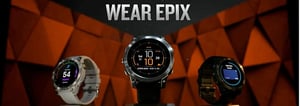
[caption id="attachment_68886" align="aligncenter" width="1024"] Image|Garmin[/caption] Does Garmin Fenix 7 mark the slide of the Fenix sub-brand toward obscurity? The Garmin Fenix 7 is the second-best Garmin watch ever and, obviously, the best Fenix ever. Yet this could be the start of the demise of the Fenix...here's why. Must Read: Garmin Fenix 7 Review & Thoughts Must Read: Garmin Epix 2 Review - Best Ever Sportswatch Simply Put In a nutshell: For the vast majority of people, the Garmin Epix Gen 2 is a better watch. Its screen is WAY prettier, it has a battery life that most athletes need and, well, that's it. Some more detail Many athletes, wannabe athletes and fitness fanatics have a Garmin Fenix, I'm one of them. But it's a bit boring though, isn't it? I mean, everyone's got one. Fēnix has a funny accent on the e...nobody likes that. That's so uncool that almost everyone omits it when they write it down; Garmin often does and I usually do too. That's never good for branding but, hey, it seems to have worked well so far :-) The Epix? Well, that's just Epic. I aspire to be occasionally Epic and maybe you do too? Look here, even Garmin thinks it's Epic... [caption id="attachment_68885" align="aligncenter" width="1024"] Image|Garmin[/caption] Plus I'm not quite sure what ashes the Fēnix is rising from. Taking this a bit more seriously, Garmin has mostly solved the battery-life conundrum that faces most watchmakers. The conundrum was that until recently a pretty screen (AMOLED) needed so much power that any watch that used one would only last a day and a half or so...like my Apple Watch 7. Garmin now combines awesome, unbeatable sports features with a beautiful screen and some pretty darned good, but not excellent, smart features. But this screen is only found on the Epix and its somewhat inferior cousin the Venu 2 Plus. What I suspect will happen with the simultaneous launches of the Fenix 7 and Epix Gen 2 is that many traditional Fenix owners will be tempted by all the features they know and trust in a pretty shell. Judging from the clicks on the various links on this site I reckon the interest level amongst existing owners & early adopters is something like One Epix for every Six Fenixes. We shall probably see Fenix 7+/7 LTE and then Fenix 8 along with Epix Gen2+ and Epix 3. I reckon that even as soon as Epix 3, the Epix could sell more than the Fenix. #Cannabalisation But it will be more than just cannibalization. There will be many new customers who have previously wanted to wear a Garmin watch 24x7 but didn't find it classy enough. Perhaps those who had an Apple Watch or a Wear OS/Samsung Watch just because they liked the all-day aesthetic. They got by with inferior sports features but now they have a new choice and some of them WILL take it. Maybe also the 'everything watch' represented by the Epix will also encourage upgrades from within the Garmin family? I think so. As of now in January 2022, it's not yet so clear cut. The Epix still lacks in some aspects whilst winning on prettiness. But the things that are lacking right now are simple things for Garmin to rectify...like a 'large' version and a small version. Super Simple. Simple because the potential sales volumes DEFINITELY WILL be there to justify those new sizes of Epix. Let's take a closer look at the more important differences that matter to most people. What are the differences between Epix 2 and Garmin Fenix 7? These are the material differences between Fenix 7 and Epix Gen 2. 1. Size Fenix 7s is the small one and 7x is the big one. The middle-sized, goldilocks Fenix 7 is essentially the exact same size & weight format as the Epix Gen 2. Of the 3 size formats, this one sells the most. Here you can see all the physical factors are identical...apart from the screen. Epix Gen 2 Fenix 7 Fenix 7S Fenix 7X Size 47 x 47 x 14.5 mm 47 x 47 x 14.5 mm 42 x 42 x 14.1 mm 51 x 51 x 14.9 mm Display Size 1.30″ (33.02 mm) diameter 1.30″ (33.02 mm) diameter 1.20″ (30.40 mm) diameter 1.40″ (35.56 mm) diameter Display Resolution 416 x 416 pixels 260 x 260 pixels 240 x 240 pixels 280 x 280 pixels Display Type AMOLED (always-on) Sunlight-visible, transflective memory-in-pixel (MIP) Sunlight-visible, transflective memory-in-pixel (MIP) Sunlight-visible, transflective memory-in-pixel (MIP) Weight 76 g (case only: 53 g, Sapphire 70g/47g) 79 g (case only: 56 g) 63 g (case only: 47 g) 96 g (case only: 68 g) 2. Display Both Epix & Fenix have a touchscreen and optional sapphire screens that offer better protection against scratching. Whilst Fenix 7 and Epix Gen 2 share the same size screen, Epix displays superior resolutions, brightness and colours in every respect. Simply put, maps and charts look WAY better and work better, the AMOLED screen is brighter and more visible in every light condition. Fun Fact: Apple Watch 7 displays 396×484 pixels The display - Sounds simple so far? A: No The everything-on screen modes still have battery consequences, thus Garmin jumps through many of the same hoops that Samsung and Apple have to jump through to save battery at every turn. The following chart from Garmin summarises Epix's screen behaviour in a somewhat complicated way. The screen's overall brightness is dimmed when not in use and turned off when REALLY not in use. Because Garmin has achieved some great battery lives here; they do NOT have to make some of the occasionally silly compromises that Apple/Samsung have to. So far, the always-on display for Epix seems like the real deal ie Always-on means SENSIBLY always-on...and I'm cool with that. [caption id="attachment_68887" align="aligncenter" width="982"] Image|Garmin[/caption] 3. Solar & Sapphire Epix has no Solar option. We'll come back to this. Both Fenix and Epix have a Sapphire option for lens protection 4. Battery Life Here are the detailed battery mode comparisons with some comments afterwards. Have a quick scan at the performances highlighted in bold Epix Gen 2 Sapphire Fenix 7 Sapphire Solar Fenix 7S Sapphire Solar Fenix 7X Sapphire Solar Smartwatch: Up to 16 days (6 days always-on) Smartwatch: Up to 18 days/22 days with solar* Smartwatch: Up to 11 days/14 days with solar* Smartwatch: Up to 28 days/37 days with solar* Battery saver watch mode: Up to 21 days Battery Saver Watch Mode: Up to 57 days/173 days with solar* Battery Saver Watch Mode: Up to 38 days/87 days with solar* Battery Saver Watch Mode: Up to 90 days/ 1+ year with solar* GPS Only: Up to 42 hours (30 hours always-on) GPS Only: Up to 57 hours/73 hours with solar** GPS Only: Up to 37 hours/46 hours with solar** GPS Only: Up to 89 hours/122 hours with solar** All Satellite Systems: Up to 32 hours (24 hours always-on) All Satellite Systems: Up to 40 hours/48 hours with solar* All Satellite Systems: Up to 26 hours/30 hours with solar* All Satellite Systems: Up to 63 hours/77 hours with solar* All Satellite Systems + Multi-band: Up to 20 hours (15 hours always-on) All Satellite Systems and Multi-band: Up to 23 hours/ 26 hours with solar** All Satellite Systems and Multi-band: Up to 15 hours/ 16 hours with solar** All Satellite Systems and Multi-band: Up to 36 hours/ 41 hours with solar** All Satellite Systems + Music: Up to 10 hours (9 hours always-on) All Satellite Systems and Music: Up to 10 hours All Satellite Systems and Music: Up to 7 hours All Satellite Systems and Music: Up to 16 hours Max Battery GPS: Up to 75 hours Max Battery GPS: Up to 136 hours/ 289 hours with solar** Max Battery GPS: Up to 90 hours/ 162 hours with solar** Max Battery GPS: Up to 213 hours/ 578 hours with solar** Expedition GPS: Up to 14 days Expedition GPS: Up to 40 days/ 74 days with solar* Expedition GPS: Up to 26 days/ 43 days with solar* Expedition GPS: Up to 62 days/ 139 days with solar* . *Solar charging, assuming all-day wear with 3 hours per day outside in 50,000 lux conditions *Solar charging, assuming all-day wear with 3 hours per day outside in 50,000 lux conditions *Solar charging, assuming all-day wear with 3 hours per day outside in 50,000 lux conditions . **Solar charging, assuming use in 50,000 lux conditions **Solar charging, assuming use in 50,000 lux conditions **Solar charging, assuming use in 50,000 lux conditions How much battery life do we really need? For 95% of us, the Epix 2 is surely fine? At least it is if it lives up to those claims after a few years of use. Sure, battery life will degrade over time and typical estimates of battery degradation are that maximum capacity is reduced by about 20% after 2 or 3 years of typical usage. But that would still give the Epix over 30 hours of GPS-only usage. Sure, some of us won't always fully recharge the battery. Actually, that's good practice for charging lithium-ion batteries as it makes them last longer if you don't charge above about 80%. We'll have to check the Garmin claims for recharge times. If Epix 2 really doesn't meet your battery needs then perhaps you have a serious need for every ounce of battery juice? So, I guess you'd want to buy Solar Fenix just to de-risk yourself in every scenario? Is there any point in a non-Solar Fenix 7plus or non-Solar Fenix 8? 5. External LED Flashlight Only the Fenix 7X has an external red/white flashlight. #Shrug Speculation & Predictions I like the speculation and predictions. It's a bit of fun and it's even more fun to get it right. The leaks are a bit tedious. This prediction of AMOLED for Fenix in 2020 (link) was derided somewhat...just sayin'. AMOLED is definitely here now. Please feel free to add your thoughts on the Future of the Fenix, below Pricing To compare like with like pricing, we need to look at non-Sapphire and Sapphire models. Sapphire IS an important consideration as the only way to get better quality, multi-frequency GNSS is if you buy a sapphire version. Non-Solar Models Garmin Epix Gen 2 - £800 Garmin Fenix 7 - £600 Sapphire Models Garmin Epix Gen 2 (non-Solar) - £900-£1000 Garmin Fenix 7 (Solar) - £780-£990 Garmin Fenix - the demise In my opinion, Epix will become the dominant model in Garmin's watch range. It will expand into different size versions and might get Solar. Fenix will have sales cannibalised by Epix but will continue to exist as a Solar-only model, Fenix will nevertheless remain a significant revenue-earner. Fenix may well become the Ultra-endurance watch option somewhat similar to the Garmin Enduro but with maps! and never get LTE/Voice. Indeed, maybe that's why Enduro never got maps in the first place? Back to the Epix, that will eventually get LTE/Voice. Thus Epix and Venu together start to veer towards inevitably increased conflict with the Apple Watch as that becomes more sporty in years to come. For example, it is rumoured that there will be a rugged/outdoors Apple Watch this year (hmmm #Sceptical). More important than that, I will bet that every key Garmin sports watch in the future will embrace high-resolution AMOLED screen technology to some degree. Pretty screens are the future. Always have been. Always will be. Garmin Fenix 7 Pricing Adding Solar, Sapphire and Titanium each bump up the prices. You should seriously consider sapphire to protect the lens and Sapphire is the ONLY way to get the dual-frequency GNSS goodness. Buy Fenix 7/7S - prices start at $/Eu700 (£600) up to $/Eu1000 (£860) Buy Fenix 7X - prices from $/Eu900 (£779) to $/Eu1100 (£1050) Buy Garmin Epix 2 - prices from £800/$900/Eu900 to £900/$1000/Eu1000 When widely available (now looks like late Jan 2022 onwards), this single link clicks to a choice of retail stores in your country eg Wiggle, PowerMeterCity, Amazon, REI, B&H, Walmart, Competitive Cyclist & Backcountry