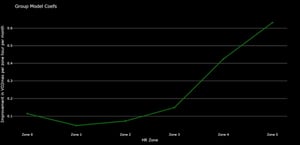
[caption id="attachment_80291" align="aligncenter" width="1024"] https://twitter.com/Alan_Couzens/status/1638175807570051073[/caption] How to Make Your VO2max Higher — Training Methods That Actually Work For a full explanation of what VO2max is, how Garmin calculates it, and what the number means, see the Garmin VO2max reference page. This article focuses on the training methods that move the number. [caption id="attachment_25483" align="aligncenter" width="1024"] I had 65 in a lab a few years back and sometimes Garmins give me as low as 50 - to be fair, generally on a new device when, maybe, the data is not all there.[/caption] VO2max is an important measure of fitness, and it can be a valuable tool for athletes and fitness enthusiasts. People can improve their overall fitness and athletic performance by understanding the factors that affect VO2max and how to improve it. Here is some additional information about VO2max: VO2max can be improved through endurance, strength, and interval training. VO2max is a good measure of progress in fitness training. VO2max is a good indicator of overall fitness age and health. A higher VO2max is associated with a lower risk of cardiovascular disease, stroke, and type 2 diabetes. How to Improve Your VO2max There are several ways to improve your VO2max, including: Endurance training: This is the most effective way to improve VO2max. Endurance training involves gradually increasing the intensity and duration of your workouts. You can do this by running, biking, swimming, or other aerobic activities. Strength training: Strength training can also help to improve VO2max. Strength training helps to increase muscle mass and muscle power. This can help you burn more calories during exercise and improve your fitness. Interval training: Interval training is a type of training that involves alternating periods of high-intensity exercise with periods of low-intensity exercise. Interval training can be a very effective way to improve your VO2max. Tabata-like Intervals: Super short intervals with even shorter recoveries, e.g. 40 seconds on and 20 off. Your heart rate doesn't recover in the 'rest' and probably mimics you being in a VO2-like effort; hence, the time at the higher zones is boosted. Lose weight (fat). The VO2max calculation uses your weight. Other things are equal; if you lower your weight, your VO2 max rises accordingly. Seen another way your broad strategy might be either Maintain weight, lose fat (by definition, increase muscle percentage); or Maintain weight, maintain muscle mass, and improve muscle function. Effectiveness of Different Exercise Intensities [caption id="attachment_80291" align="alignright" width="150"] https://twitter.com/Alan_Couzens/status/1638175807570051073[/caption] The chart to the right (via ace-coach and researcher Alan Couzens) clearly shows that an hour spent at Zone 4 or 5 intensity will increase your VO2max far more than an hour of endurance exercise. However, frequent high-intensity workouts are unsustainable as they accumulate too much fatigue. Most research suggests that elite athletes favour high volumes of low-intensity work to slowly and progressively increase VO2max. There will be numerous other associated benefits, such as an improved running/cycling economy. However, you're not a pro and probably have significantly less time for training. Thus, the time-crunched athlete might favour a higher proportion of more arduous training than Pro's, which would be where your 2x20-minute threshold sessions on the bike come in or when 1-mile/1-kilometre running reps pay off. The chart implies you can increase your VO2max by 1.0 relatively easily with about two hours of hard training a month. https://the5krunner.com/2025/08/27/garmin-vo2max-scientific-study-roasts-it-and-loves-it-when-a-it-dpends/ Is Garmin VO2max Accurate? Garmin's VO2max seems to change quickly, and it has always seemed to me to move quicker than the likely change in my physiology. However, the improvement the chart indicates is possible, and a half-point increase in VO2max in a week appears quite plausible for many people. Perhaps even more than that. The only way to truly test accuracy is with a lab-based test, which is extremely difficult for the average person to find, organize, and execute. It can also be expensive regularly. I haven't done a lab test for quite a few years now, but when I last did, the lab test was significantly higher than what Garmin showed. This was on an older Garmin watch, and I'm reasonably sure Garmin has improved its algorithm since then. I've also noted big differences between Apple's VO2max and Garmin's, where the latter is higher for me. Apple tends to be highly rigorous in its metrics, but I believe it shows a walking VO2max, which I believe can come out lower. Pre-Requisites & Other Points For full details on what qualifies an activity to update the VO2max estimate, see the Garmin VO2max reference page. VO2max is a decent indicator of performance. However, runners must remember that running gait efficiency and other factors can make two people with identical VO2max scores perform differently as runners. VO2max is one of the best indicators of LONGEVITY because it considers your fitness and weight together in one number. https://the5krunner.com/garmin-features/physiology/vo2-max/ Garmin's VO2max So, that is the kind of short-term training you will want to undertake to boost your VO2max metrics, according to Garmin. I would caution you that Garmin's VO2max algorithms are NOT identical across all its devices, but they should be consistent across devices launched after about 2019. I would also point you to a measure called vVO2max. This is your actual running speed while at your VO2max level of effort. It considers your running economy and is a far more important measure that determines how fast you will be in real life. Still, it's always good to see your Garmin VO2max rising, and it's always good to compare VO2max values among friends. https://the5krunner.com/2021/01/28/new-vo2max-features-for-fenix-forerunners-and-enduro/ This article is part of the site's sports science reference for endurance athletes.