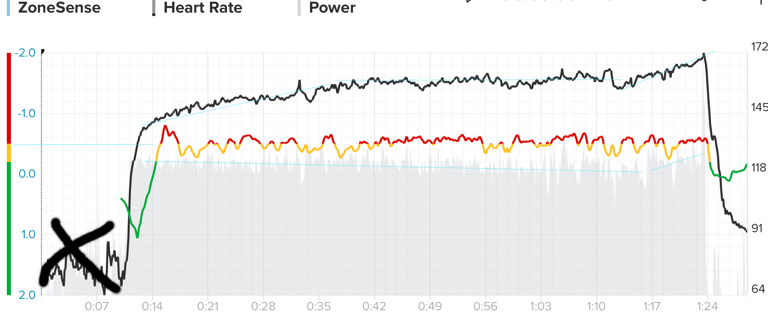
[caption id="attachment_94126" align="aligncenter" width="1024"] Recorded on Suunto RACE with Garmin HRM PRO Plus strap recording RR beats[/caption] The multicoloured line on the chart is Suunto's new ZoneSense from a Suunto RACE Watch. It's a complex mathematical calculation (DDFA) based on HRV that dynamically and persistently determines your physiological state...green is aerobic, yellow is anaerobic up to the threshold, and red is over the lactate threshold (VO2max). The algorithm correlates to LT2 (LTHR), VT2 (ventilatory threshold), and LT1 (aerobic threshold). Run Overview Before this run, I was pretty well warmed up. This run was probably a 97% maximal effort for me over a flat route. I had little fatigue coming into the run and was well prepared for it; I also took Maurten 100 bicarb gels, which I mentioned as they may have reduced lactate build-up. I also had a maximal caffeine dose, which raises my heart rate by 2-5 bpm. I did a reasonable job and paced to a constant perceived effort with a consistent cadence. The graph above shows heart rate (black) and power (grey). The recorded pace and power were reasonably consistent, with a slight drop off in power/pace as I got tired. My heart rate steadily rose to about 160 bpm (0:35) and was then constant until I upped the pace toward the end (1:14). I wouldn't be surprised if you said 160 bpm was my current lactate threshold heart rate when consuming caffeine. ZoneSense DDFA Chart A few thoughts come to me from Suunto's ZoneSense curve. It might have an excellent link to my LTHR However, it seems to be at a constant level throughout the run (fair enough), but I thought DDFA was supposed to recalculate the threshold during individual workouts. Perhaps the chart software cannot colour a particular line? It might have been interesting if I also had SmO2 data from TrainRed or Moxy (I do have the sensors and thought about wearing one) There is a strange initial bump in the DDFA curve. Maybe this indicates I wasn't as warmed up as I thought or that something else in my physiology was adjusting. The DDFA chart doesn't seem to react to a marked increase in effort toward the end. I would have expected it to peak higher. DDFA is not supposed to respond to shorter efforts like that. I started the watch before the run to keep the 10-minute automatic calibration period out of the data. Maybe that was a mistake if it needs exercise-level RR data. There are some interesting observations from @Brad here on DCR's site where he finds good links between measured lactate and ZoneSense. A similar chart from Suunto This chart is similar; I think it comes from a Suunto employee in a half marathon race. Superficially, my effort seems shorter, more challenging and more consistent. Take Out I'm not sure what conclusion you can draw from my chart other than it reinforces my belief that it was a near-maximal threshold effort. I had the same ZoneSense feedback on the watch app during the run. I frequently looked at the ZoneSense assessment but didn't feel the need to change anything in my running. One helpful point is that zoneSense should automatically consider factors that might otherwise affect HR - such as carried-over fatigue and caffeine use. Even the threshold values you measured two days ago in a lab could be significantly wrong with fatigue and caffeine. Musing: perhaps this data might prove more helpful in determining training load. I've used the watch app more for pacing to the lower threshold, where I've specifically trained to rein in my efforts on easy/long runs, keeping aerobic. It has been helpful for that. Thoughts?