Apple Watch Heads Up Display – Navigr8 and ActiveLook
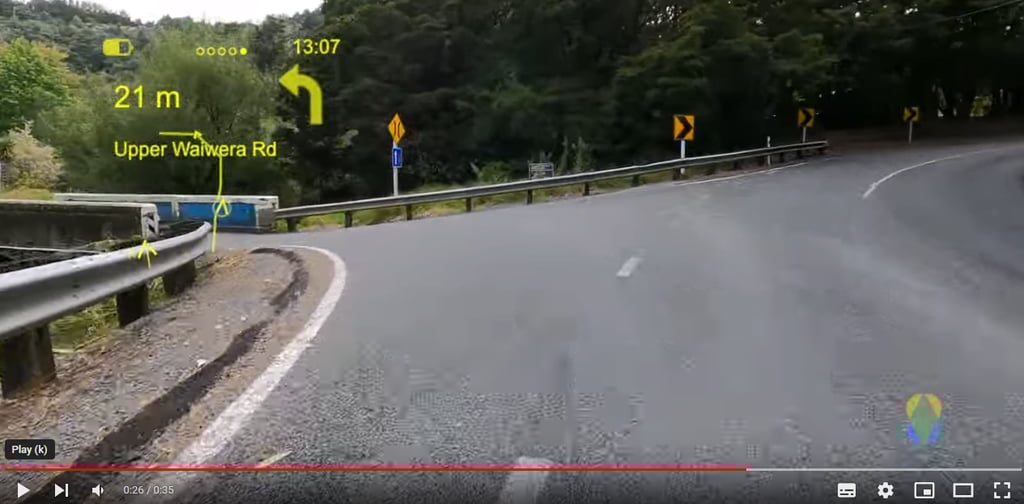
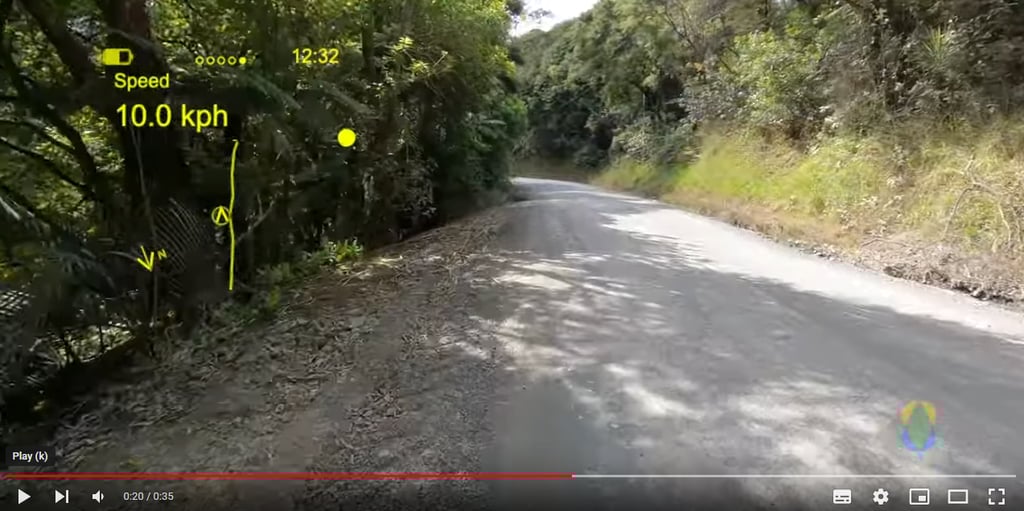
Navigr8 is a highly featured sports app that works on iOS and the Apple Watch. Recently it announced Garmin Varia RADAR support and today we see support for the heads-up display from ActiveLook. OK, it’s not Vision Pro but it’s still a considerably more practical and cool way to get performance metrics beamed into your field of vision as you exercise.
Opinion
I’m not sure of the huge benefit of seeing performance metrics in your field of vision except maybe in a TT.
However, TBT directions are a great thing to have beamed into goggles. While you can take in the value of a single numeric metric in a split second, my opinion is that you often take a second or longer to process ever-changing directional information. If you are travelling over a dangerous route or following complex instructions it must be beneficial to have that info in your field of vision without being distracted from the way ahead by looking down at your bike computer or, worse still, the map on your Watch bouncing around
Similarly, a quick visual note about an approaching car or your direction of travel is also useful.
More: navigr8
More: Activelook
Last Updated on 28 January 2026 by the5krunner
Small things I always use
- Garmin 90-degree charging adapter: Charges your Garmin from any USB-C cable. Essential when travelling. I use one.
- Body Glide: The blue anti-chafe stick swimmers and runners carry. I use it.
- Speedo earplugs: Fewer ear infections and no cold-water dizziness. I use them.
- Dryrobe Advance: My winter changing robe for open-water swims. I use one. A cheaper option is the AONYIYI changing robe.
- Maurten: Race fuel that stays easy on the stomach. I use them.
- Garmin charging puck: The quickest way to top up before a session. I use one.
- Injinji: Toe socks that stop rubbing, so you run more. I use them.
- Ultimate toe protectors: Stop black toenails on long runs. They work. I use them.
- Compressport R2 v2 calf sleeves: My calf sleeves of choice. I use them.
- Cellucor C4: My pre-workout before hard sessions.
- TPU tubes: Schwalbe Aerothan, Tubolito and Pirelli SmarTube. Light, tiny spares. I use all three.
- G8 insoles: Adjustable insoles that are good. I use them.
- Cycplus Cube: A 97g electric pump that gets a road tyre rideable in two minutes. I carry one. 5% off with code THE5KRUNNER.
Watches and sensors
- Polar H10: My daily driver for waking HRV.
- Polar Verity Sense: My backup arm-worn HR sensor.
- Nomad bedside charger: Charges my iPhone and Apple Watch overnight. I use it, and many of their bands.
- Train.Red: The best muscle oxygen sensor I’ve used.
- Tymewear: Accurate heart rate and reliable ventilatory zones. I use it to pace endurance rides over an hour.
- Garmin Forerunner 970: A pro-grade triathlon watch. I use this.
- Apple Watch Ultra 4: My daily smartwatch. No phone needed on rides.
- Garmin Fenix 9 Pro: I’ve just bought one.
On the bike
- Continental GP5000 for everyday riding, and Aero 111 on the front for special occasions.
- Helmets: Specialized S-Works Evade 3 for road riding, and Rudy Project Wing for TT-style races. I use both.
- Ravemen FR300: A front light that mounts under your Garmin or Wahoo. I use one.
- Wahoo TRACKR Radar: I use it on one bike and Varia on the other. They perform the same.
- Garmin Varia RTL515: Radar that warns you of cars from behind. I use this model.
- Wahoo ELEMNT Roam 3: The bike computer that’s easy to use. I use mine on most rides.
- Favero Assioma Pro RS2: Accurate power pedals that swap easily between bikes. I use this model.
Home and indoor training
- NPE Runn: Makes my basic treadmill smart, sending more accurate speed and distance to my watch and Zwift. I use it.
- Google Wifi: Keeps Zwift connected in my pain cave. I use it.
- Apple TV 4K: Zwift on the big screen. I use two.
- Google Nest Doorbell (wired, 2nd gen): My video doorbell, running in both Google Home and Apple Home. I use it.
Health, recovery and sleep
- FreeStyle Libre 3 Plus: Shows how my blood sugar responds to diet.
- hDrop: Measures my sweat loss in summer and indoors.
- Fourth Frontier Zone: Checks my heart under load in hard sessions.
- Oura Ring 5: My partner’s recovery tracker of choice.
- Kineon MOVE+: Red light therapy for niggles. It works.
- Eight Sleep: A cooling mattress cover my partner and I use nightly.
Reader-Powered Content

This content is not sponsored. It’s mostly me behind the labour of love, which is this site, and I appreciate everyone who supports it.
Support the site: Follow (free, fewer ads) · Subscribe (paid, ad-free) · Buy Me A Coffee ❤️
Written by real people, with AI assistance. Fact-checked and verified for originality. See the Editorial Policy. FTC: Affiliate Disclosure — some links pay commission. As an Amazon Associate, I earn from qualifying purchases.
tfk is the founder and author of the5krunner, an independent endurance sports technology publication. With 20 years of hands-on testing of GPS watches and wearables, and competing in triathlons at an international age-group level, tfk provides in-depth expert analysis of fitness technology for serious athletes and endurance sport competitors. ID

2016 Garmin Varia Vision still rules..
Such a pity Garmin never came up with a successor.
I have recently tested Navigr8 with activelook Engo2 Glases.
Basic question was: Is it worth the money.
My short conclusion: It depends.
As i know navigr8 ist, at the monent the only complete navigation tool with seamless integration in Avtivelook. In addition to the nice integration of varia radar.
If you are travelling a route that is less compex and road crossings for example do not need much of your your concentration . It may be enough to get turn by turn indications and radar warnings as accoustic signals and you are fine with your headphones only. If you are using open ear versions it is clear enough and you can still notice your traffic around you.
If you are locking for a very well “add hoc” navigation esspecially when you are travveling to new locations and are unaware about possible routes . The combination of activelook, varia and navigr8 are great. Yes all 3 components have their specific limitations. EXspecially navigr8 is very limited compared with other vav tools like bikemap,….
But in compination of all 3 , they simple do what they are made for, nothing more and nothing less.
Does this answer the question: Is this all woth the money ?
It is very expensive toolkit, ActiveLook Photocromatic and Varia(without camera and light) will cost ~500€
plus licence fee for navigr8
Because this package is unique on the market without usefull alternative: On A scale Between 0-10 i would say i give a fair : 5.
It can be very usefull time to time, for a daily use i don’t nedd until i became familiar with routes by myself.
thank you for the detailed opinion.
Value must depend on the individual.
For those of us who navigate regularly, a wrist watch can’t do the job properly when cycling. Or at least it can’t do it safely and at speed. Activelook’s HUD *DOES* improve those situations with simple TBT. But simple TBT also has failing when the visual context of your position can only be given with a map.