Garmin Features: A Reference Guide for Runners and Athletes
Garmin watches and cycling computers generate a large number of metrics, each drawing on a combination of sensor data, proprietary algorithms and published sports science. This section provides encyclopedic reference pages for each Garmin feature: what the number means, how it is calculated, how accurate it is, and how it connects to other metrics in the Garmin ecosystem.
Each page is written to answer the questions that Garmin’s own documentation does not address. The focus is on practical accuracy, physiological context and the conditions under which each metric becomes unreliable. No page declares any feature good or bad; the aim is to give athletes the information they need to interpret their own data.
Features are organised into seven categories. Select a category to see reference pages for every metric within it.
Feature Categories
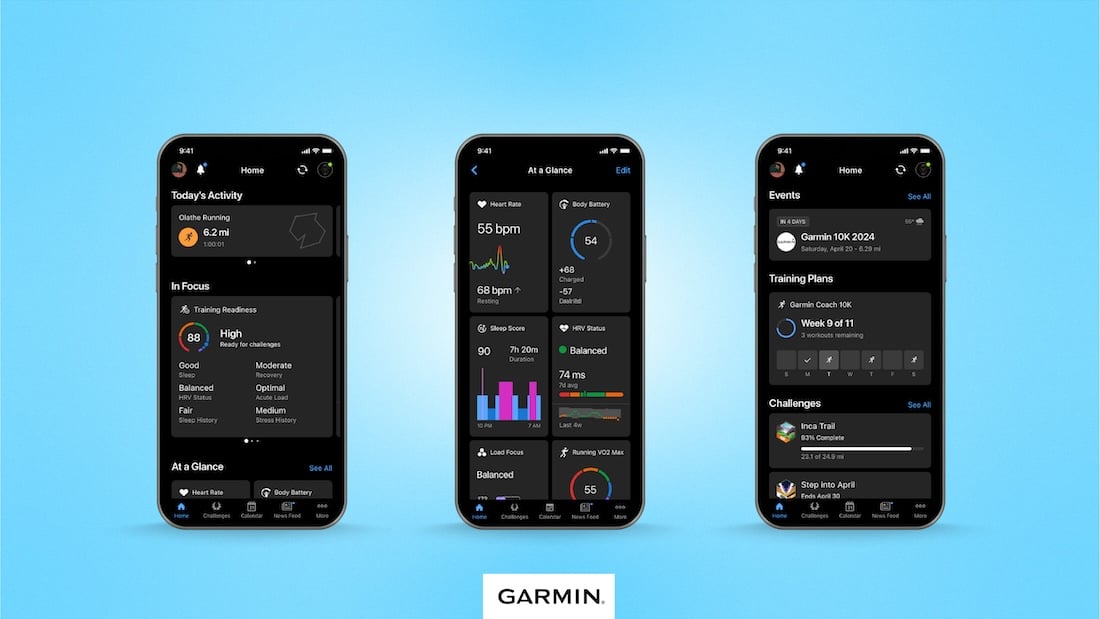
- Physiological Measurements — metrics that estimate or track underlying biological capacity, including VO2 max, HRV Status, lactate threshold, respiration rate and Pulse Ox. These are the foundational numbers from which many of Garmin’s training and recovery features are derived.
- Training Intelligence — features that analyse training load, stimulus and adaptation over days and weeks, including Training Readiness, Training Status, Training Load and race predictions.
- Sleep and Recovery — features that assess recovery between training sessions, including Sleep Score, Body Battery, Recovery Time and Sleep Stages.
- Real-Time Running Metrics — metrics measured or calculated during a recorded running activity, including running power, ground contact time, vertical oscillation, cadence and grade-adjusted pace.
- Heart Rate and Stress — features that monitor cardiovascular and autonomic nervous system response throughout the day and during activity, including wrist heart rate, Stress Score and Intensity Minutes.
- Health and Wellness — long-term health markers including Fitness Age, daily steps and calorie estimation, intended to give context about overall health trends over weeks and months.
- Navigation and Safety — features that support route navigation, location sharing and emergency assistance, including LiveTrack, Incident Detection and Assistance Plus.
About This Section
Every page in this section is written to a consistent structure that covers: what the metric measures, how Garmin calculates it, what affects the reading, how accurate the published evidence suggests it is, which devices support it, and how it connects to other features in the ecosystem. Competitor equivalents on Polar, Apple, Coros, Suunto and Wahoo are documented where they exist.
Sources are weighted by tier. Garmin’s official documentation and Firstbeat Analytics white papers take precedence, followed by peer-reviewed research from journals including Medicine and Science in Sports and Exercise and the Journal of Sports Sciences. Where evidence is limited or disputed, the pages say so.
Pages are updated when Garmin releases firmware changes that materially affect how a metric is calculated or displayed. The publication date and most recent update date are shown at the foot of each page.
