A Garmin Smartwatch Identified a Subtype of Depression That Clinicians Missed
Researchers at Dartmouth College have found that passive data collected from a Garmin Vivoactive 4s, worn continuously by 297 adults with confirmed major depressive disorder over 90 days, identified a clinically distinct group of patients whose impairment was not apparent by standard assessment.
The finding has meaningful implications for how depression is monitored and detected. It also raises questions that require further work.
The Study
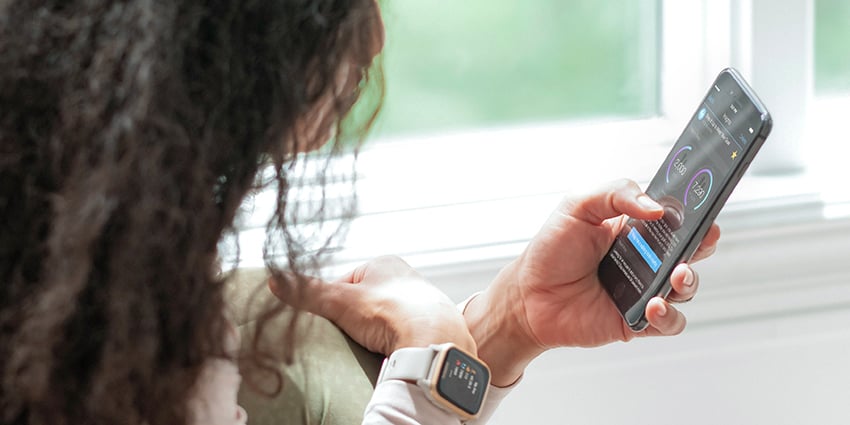
Participants were asked to wear a Garmin watch throughout the observation period. A smartphone application ran passively in the background, logging behaviours like screen time, outgoing calls and texts, and microphone-detected conversation duration. No active input from participants was required at any stage.
Analysis of the accumulated data produced two groups. The larger group, comprising 85.7% of participants, showed broadly average readings across all measures. The second, accounting for the remaining 14.3%, displayed a consistent pattern of disrupted sleep, chronically low heart rate variability, and reduced social engagement.
Both groups reported similar levels of depressive symptoms on standard clinical questionnaires. When researchers assessed how well participants were functioning in daily life — maintaining employment, sustaining relationships — the second group was measurably worse off. The watch had detected a distinction that the clinical interview had not.
What Heart Rate Variability Measures
Heart rate variability is a measure of the variation in time between successive heartbeats. A high reading indicates an autonomic nervous system that is adaptable and responsive — one that shifts efficiently between states of exertion and recovery. A persistently low reading indicates the opposite: a system under strain, with impaired capacity for emotional regulation and stress recovery.
The connection to depression is well established in the literature (example). What is less established is whether a consumer wrist device can measure it reliably enough to be useful.
Significant Caveats
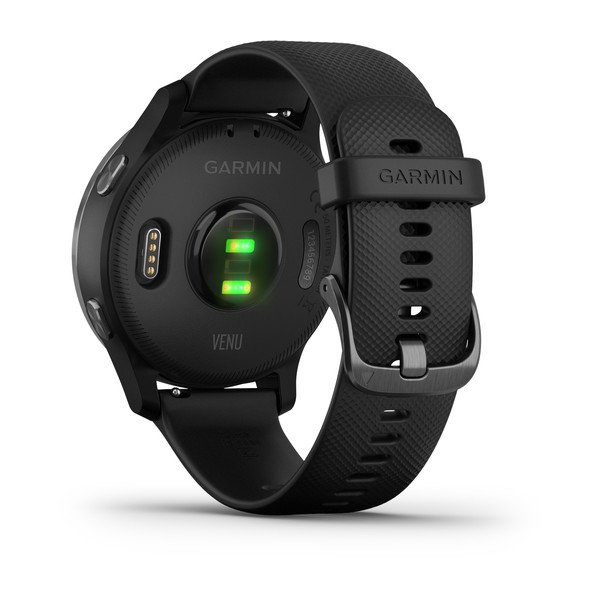
This publication reported two days ago on separate research demonstrating that Garmin’s optical wrist sensor produces heart rate variability readings that deviate substantially from clinical electrocardiogram measurements, with errors exceeding 100 milliseconds in some participants and no consistent direction of error across individuals. The depression study relies on the same generation of sensor technology.
The accuracy problem is not a function of device generation or software version. It is a function that measures blood flow optically through the wrist — a method with known limitations that no firmware update or newer-generation sensor will resolve.
The study carries additional weaknesses.
- The sample was 84% women and 79% white, which limits the extent to which the findings can be generalised.
- There was no healthy control group, making it impossible to determine whether the identified patterns are specific to depression or simply markers of poor health more broadly.
- The headline finding — that the two groups differed in daily functioning — did not survive correction for multiple statistical comparisons.
- Participants were missing an average of 37 days of sensor data, and those most severely affected by their condition were the most likely to have gaps.
What the Research Does Not Claim
The study does not suggest that consumer wearables can diagnose depression. Every participant already carried a confirmed diagnosis. The device potentially identified a subset. A period of low overnight HRV readings does not indicate illness.
The research suggests that continuous passive data from a device already on a patient’s wrist can yield clinically relevant information that neither the patient nor their clinician would otherwise have access to. For the roughly one in seven participants in the more impaired group, their watch reflected a burden their questionnaire answers did not.
That is, at minimum, a finding worth pursuing in larger and more representative samples.
Source: Lampe et al., Behaviour Research and Therapy, April 2026.
Last Updated on 20 February 2026 by the5krunner
My favourite kit and nutrition
- Garmin Fenix 9 Pro — I’ve just bought one.
- Injinji – Runners protect your toes. Avoid discomfort and minor injury. Run more. Run faster. I use them.
- Garmin 90-degree charging adapter — A small keyring adapter you can use anywhere. Essential when away. I use one.
- Garmin charging puck — the fastest and most reliable way to top up your Garmin before a session. I use one.
- Ravemen FR300 — Front light that mounts directly under your Garmin or Wahoo head unit. Keeps your bars clean and your beam pointed where it matters. I use one.
- Body Glide – The blue anti-chafe stick that all swimmers and many runners use. I use it.
- Maurten — The race nutrition trusted by elite athletes. Gels and drink mixes engineered to be easy on the stomach. I use them.
- Garmin Varia RTL515 — A radar rear light that alerts you to vehicles approaching from behind. Pairs with your Edge or Wahoo. I use this model.
- Favero Assioma Pro RS2 — The power-meter pedals most serious cyclists choose. Accurate, easy to move between bikes. I use this model.
- Garmin Forerunner 970 — A serious choice for a pro-grade triathlon watch. I use this.
- Polar H10 — My daily driver for accurate, waking HRV readings.
- Wahoo ELEMNT Roam 3 — The bike computer that has the feature Garmin lacks: usability. I use mine on most rides.
Reader-Powered Content

This content is not sponsored. It’s mostly me behind the labour of love, which is this site, and I appreciate everyone who supports it.
Support the site: Follow (free, fewer ads) · Subscribe (paid, ad-free) · Buy Me A Coffee ❤️
All articles are written by real people, fact-checked, and verified for originality. See the Editorial Policy. FTC: Affiliate Disclosure — some links pay commission. As an Amazon Associate, I earn from qualifying purchases.
tfk is the founder and author of the5krunner, an independent endurance sports technology publication. With 20 years of hands-on testing of GPS watches and wearables, and competing in triathlons at an international age-group level, tfk provides in-depth expert analysis of fitness technology for serious athletes and endurance sport competitors. ID
