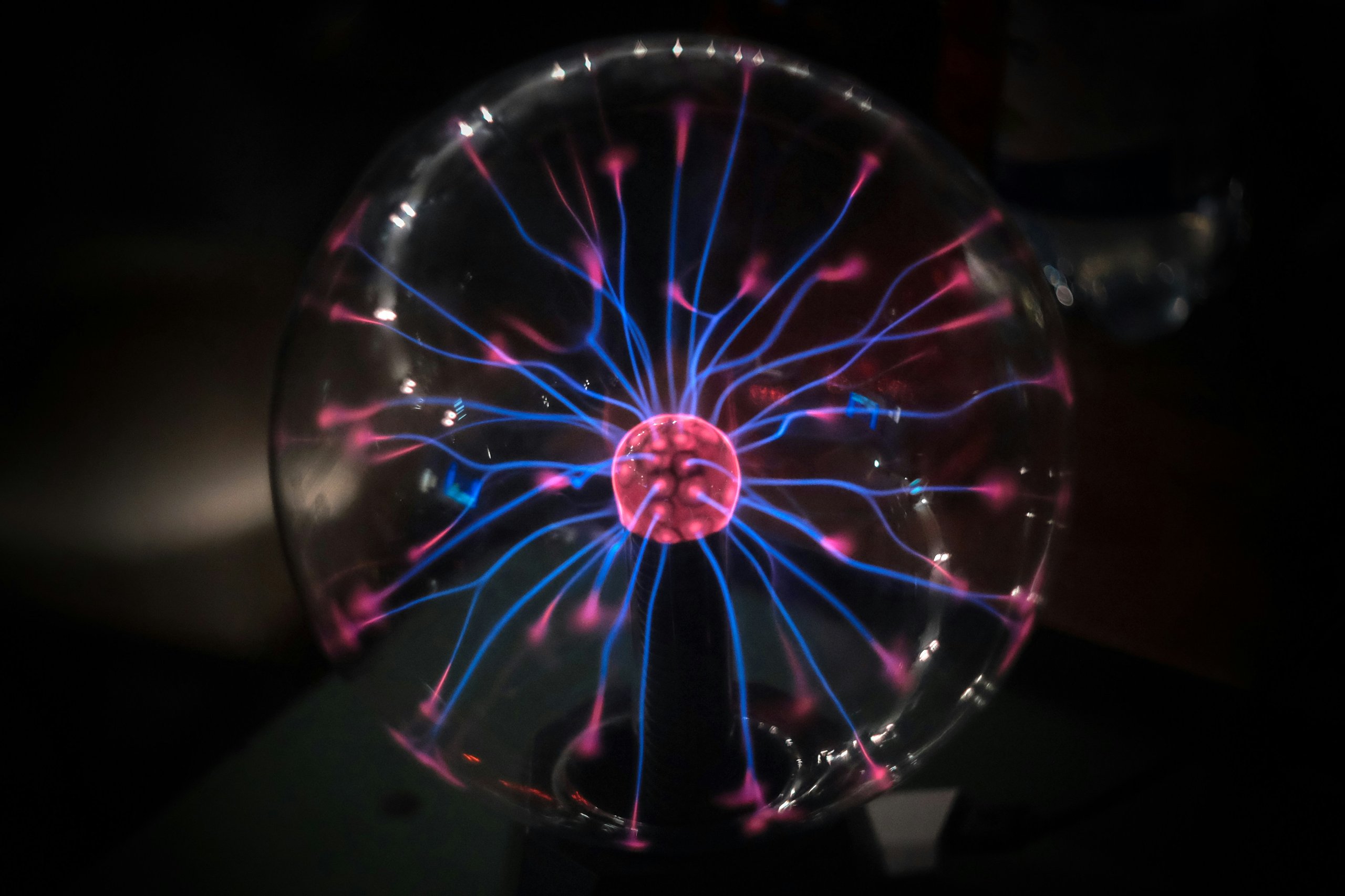
Spintronics: The Ultra-Low Power Future for Wearables
This Nobel Prize winning invention (2007) is already used in hard disk drives.
Spintronics, short for spin electronics, is a new tech wave that will deliver next-gen energy efficiency and revolutionise consumer electronics. Unlike traditional electronics, which rely on the electron’s electric charge to transmit data, spintronics utilises the electron’s intrinsic spin—a quantum property that gives it a tiny magnetic moment.
Working with electron spin requires significantly less energy (30-90% less) than manipulating the electron charge, making spintronic devices inherently more energy efficient. This core property is the driver for extending the battery life of devices such as wearables, phones, and laptops. The tech will be used in smartphones very soon, followed closely by wearables (2028-29).
Next-Generation Memory and Power Savings
We will see this tech used first in RAM, more specifically, Magnetoresistive Random Access Memory (MRAM).
MRAM and its Impact on our Wrists
Unlike conventional DRAM memory, MRAM is non-volatile and retains data even when powered off. It works with access times of only a few nanoseconds, drastically improving on the current 50-nanosecond range. This combination of speed and non-volatility directly translates to:
- Extended Battery Life
- Faster Performance: Quicker device wake-up and overall faster performance
However, the improvements are confined to the DRAM component. Overall performance will be improved, but by a smaller margin. An interesting sidenote is that the same tech will also be used in AI processing to significantly reduce power consumption.
Instant wake times, snappier performance, and improved battery lives.
Scientific References
- Huang, Y.-L. et al. (2025). A 64-kilobit spin–orbit torque magnetic random-access memory… Nature Electronics. DOI: 10.1038/s41928-025-01434-x
- Choi, W.-Y. et al. (2025). Magnetization switching driven by magnonic spin dissipation. Nature Communications. DOI: 10.1038/s41467-025-61073-w
- Plummer, D. Z. et al. (2025). 2D Spintronics for Neuromorphic Computing with Scalability and Energy Efficiency. Journal of Low Power Electronics and Applications. DOI: 10.3390/jlpea15020016
Last Updated on 30 January 2026 by the5krunner
Reader-Powered Content

This content is not sponsored. It’s mostly me behind the labour of love, which is this site, and I appreciate everyone who supports it.
Support the site: Follow (free, fewer ads) · Subscribe (paid, ad-free) · Buy Me A Coffee ❤️
All articles are written by real people, fact-checked, and verified for originality. See the Editorial Policy. FTC: Affiliate Disclosure — some links pay commission. As an Amazon Associate, I earn from qualifying purchases.
tfk is the founder and author of the5krunner, an independent endurance sports technology publication. With 20 years of hands-on testing of GPS watches and wearables, and competing in triathlons at an international age-group level, tfk provides in-depth expert analysis of fitness technology for serious athletes and endurance sport competitors.
