One Watch, Two Testers, Opposite GPS Results
I had a quiet inkling that Ray Maker at DC Rainmaker and I might not land in exactly the same place on the Huawei Watch GT Runner 2. As it turned out, our GPS findings diverged more than I expected — and, more interestingly, more than a simple thumbs-up or thumbs-down on the watch.
This piece is not a verdict on who is right. We both tested rigorously, we both tested independently, and we both got the results we got. N=1 and all that. What is worth unpacking is why two careful testers can reach genuinely different conclusions from the same device — and what that tells us about GPS testing methodologies, and about this watch in particular.
What I Found
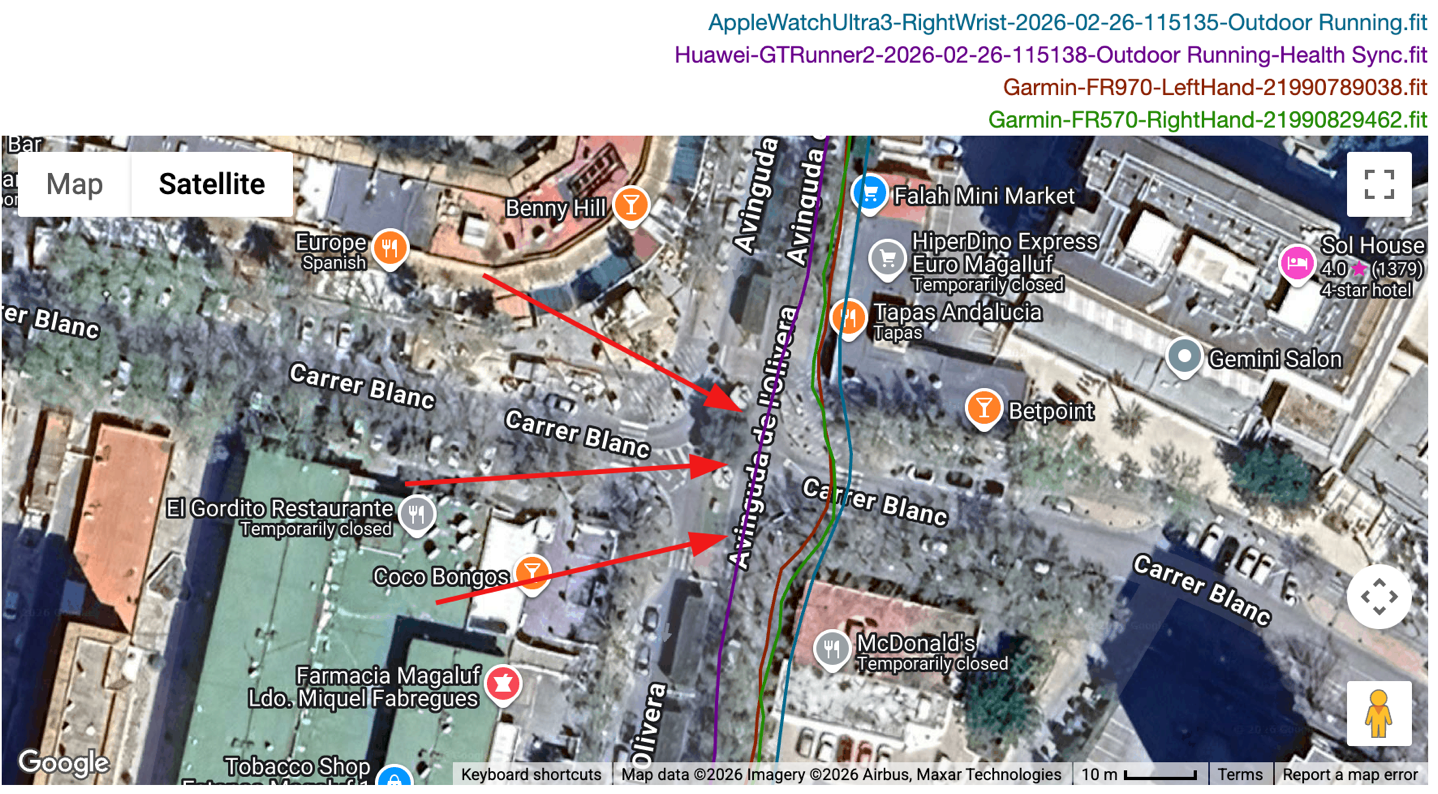
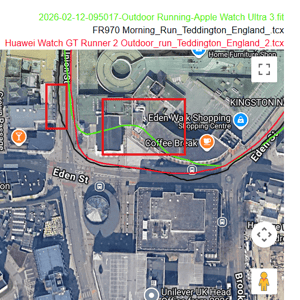
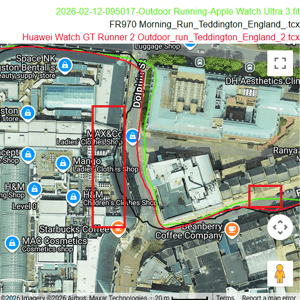
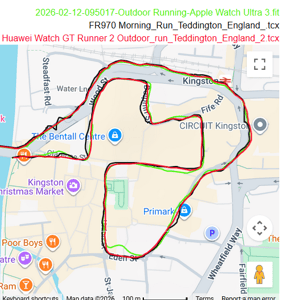
After a month of testing in winter conditions, some of my GPS tracks from the Runner 2 were among the best I have ever recorded. I say that, having run the same standard test route with every significant GPS watch for over a decade. A separate built-up urban run had sections that were particularly striking: where both Garmin and Apple agreed they were not where I knew for certain I had run, the Runner 2 recorded exactly where I ran. That is not a marginal shrug of disagreement — it was unambiguously different.
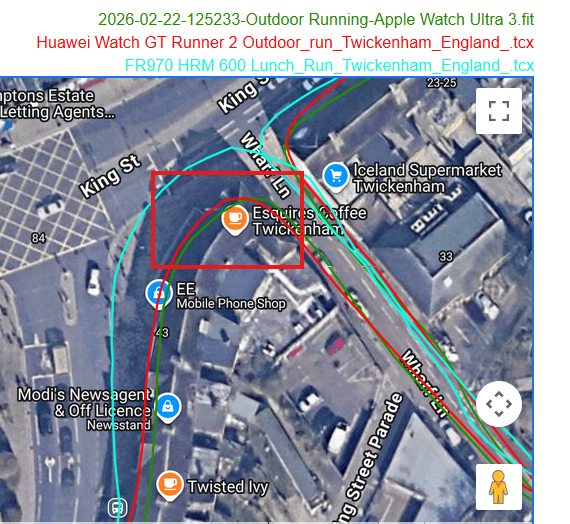
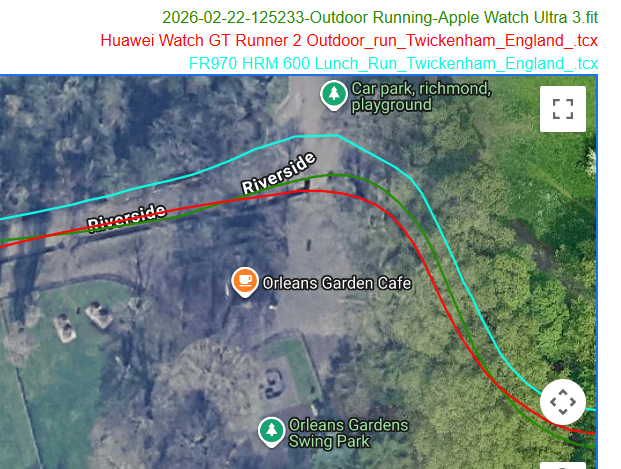
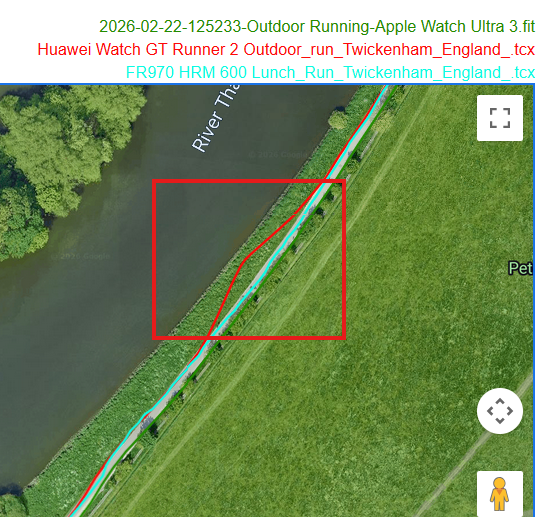
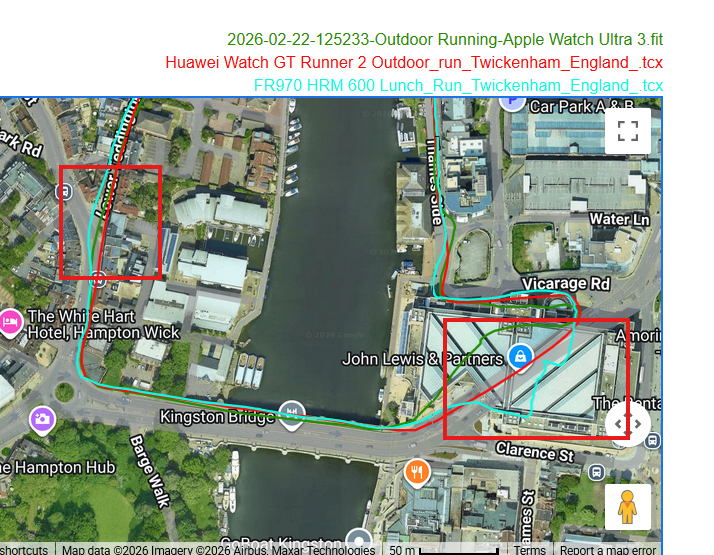
Back on the standard decade-long test route, the scores were similarly excellent in the hardest sections. There were oddities — a small jump away from a straight track in open sky in a field, and one moment where the track briefly diverged into the Thames rather than staying on the towpath where I was running. The FIT and TCX files are available for anyone who wants to examine the raw data, as they have been for every test I have published over the past decade.
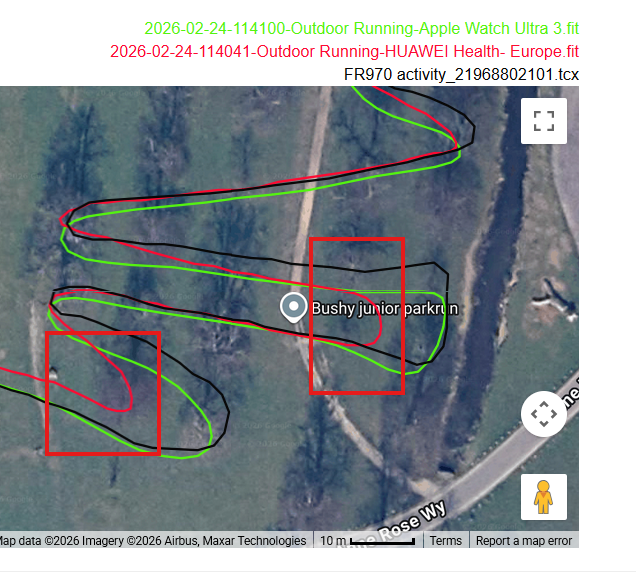
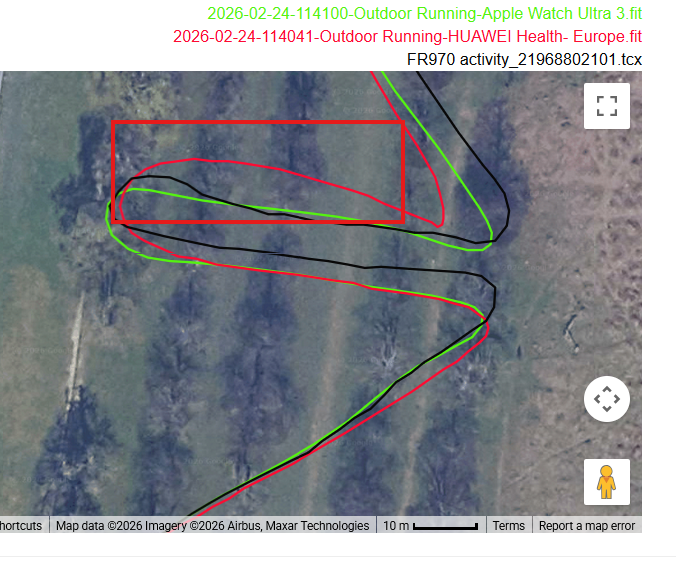
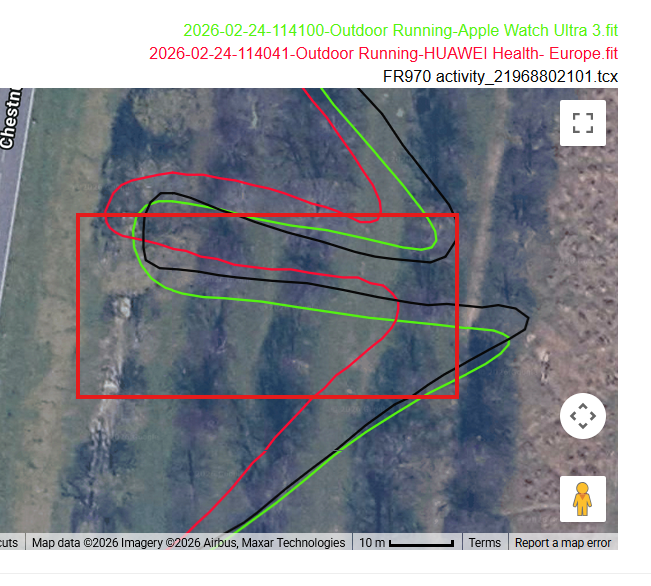
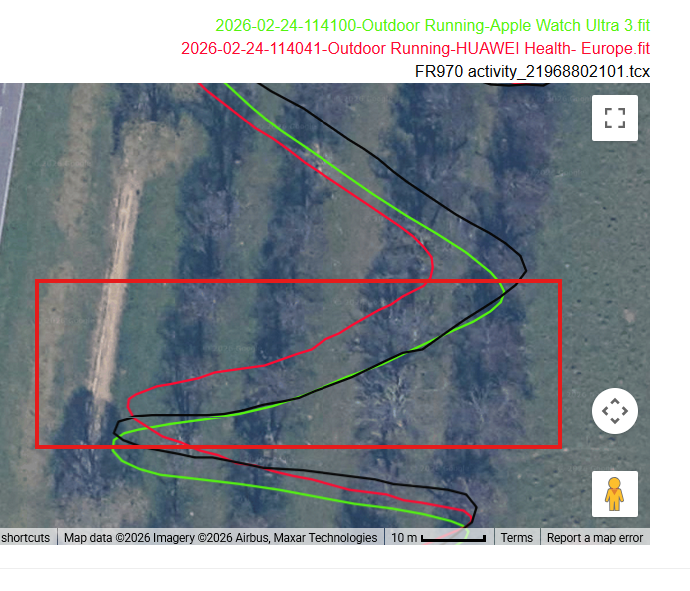
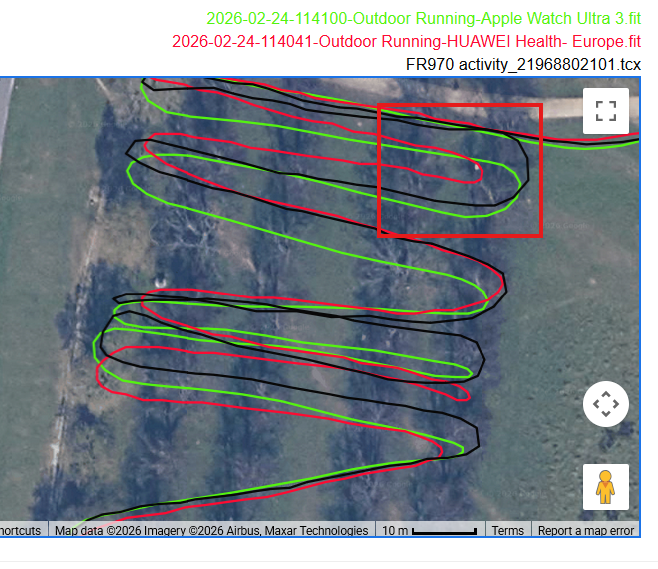
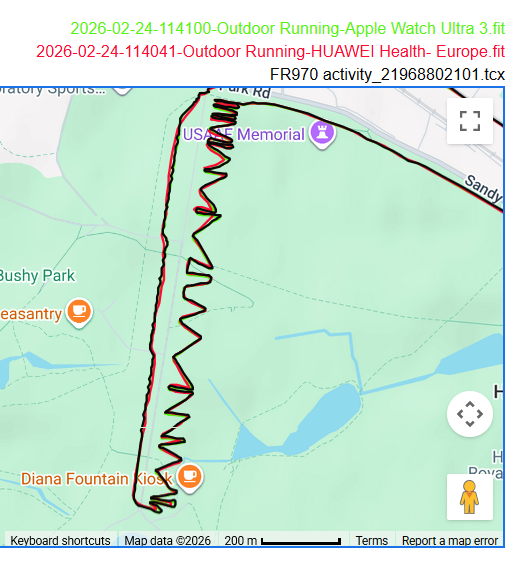
I also ran a contrived switchback test — deliberately designed so the watch could not benefit from any map-matching — and found a positioning error of around 10 metres on some switchback occurrences, appearing on perhaps 10 to 20 per cent of turns. Which is a lot.
Listen to the discussion
What DCRainmaker Found
Ray’s experience was meaningfully different in places. He found the watch drifting significantly in easier, more open conditions — suburban streets, good sky visibility — with errors of up to 50 metres on switchback sections. He also observed what appeared to be aggressive map-snapping behaviour: the watch placed him in the centre of a road when he was running on the pavement, and then held that position even when he crossed to the other side.
His tunnel performance findings aligned with mine: both of us found the Runner 2 handled signal loss in tunnels better than almost any competing device, using sensor fusion to maintain a clean line through sections where GPS is simply unavailable.
Why Might We Disagree?
A few possibilities are worth considering, none of which I can state as fact.
GPS firmware is one factor. I updated my device as the 120 release became available.
Unit variation is another consideration. Both watches are almost certainly from the same manufacturing batch — neither of us had special pre-production hardware — but component variation at this level of precision engineering is not impossible.
The testing environment is probably the most significant factor. My best results came in dense urban conditions — tall buildings, reflected signals, the kind of multipath environment where the Runner 2’s dielectric bezel antenna design appears to offer a genuine advantage by catching polarised signals from multiple angles. Ray’s most problematic results came in more mountainous conditions.
Ray suggested snap-to-road processing as a possible explanation for some of the behaviours we both observed. Snap-to-route could also be a cause. I run all GPS tests without a route loaded, as does Ray.
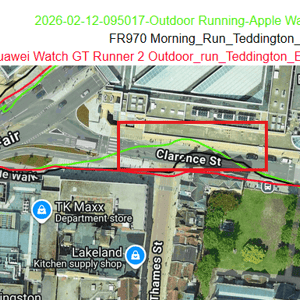
The more interesting case is where Ray found the watch, placing him on the road rather than the pavement — snap-to behaviour working in the opposite direction, overcorrecting in a way that made the output less accurate, not more. For the same test type, I found the opposite: the Runner 2 tracked correctly on the pavement, while Garmin and Apple drifted into the road.
We’ve both put clear GPS track results on our respective sites, and we even used dcrainmaker’s Analyser software to compare tracks.
What Huawei’s Own Testing Showed
Prior to launch, Huawei shared details of its internal testing methodology. They used a NovAtel CPT7 reference GNSS device carried in a backpack to verify the Runner 2 against a city marathon course, finding performance on par with the Forerunner 970. The NovAtel CPT7 is a centimetre-level accuracy instrument used in survey and autonomous vehicle applications — not a device most reviewers will have encountered — and its use here suggests a serious approach to baseline measurement by the company.
They also noted wrist-to-wrist differences in GPS accuracy during their internal tests — an unexpected finding.
Wrist placement can matter in GPS testing, primarily because wearing a watch on the inside of the wrist can alter antenna orientation and bring it closer to surfaces that reflect the signal. No reviewer does that.
My own testing methodology accounts for interference between closely spaced devices for either HR or GPS. I give each watch a wrist of its own.
The media guide issued to reviewers recommended keeping two test watches 4 centimetres apart and suggested wearing additional devices on the back of the hand or upper arm rather than in a normal wrist position. Spacing devices is reasonable for heart rate comparison, but a watch worn on the upper arm sits in a fundamentally different antenna orientation to one worn in normal use. Results gathered under those conditions add a potential source of error, and the implications for any comparative GPS data gathered by reviewers following those instructions are worth bearing in mind.
What This Means in Practice
Both units were almost certainly from the same batch and were almost certainly running the same firmware. That does not mean they behaved identically. The same firmware can produce different outcomes depending on conditions, and unit-level hardware variation — however small — can compound that. A flawed result is a flawed result regardless of cause, and Ray’s 50-metre errors in easy, open conditions are not explained away by environment or methodology.
Edit: Montre Cardio GPS finds Good Accuracy
My own results were better, but not without finding other faults. The same watch scored 90% on my often-used test route — second-best ever score — while also producing a Thames diversion, an open-sky positional jump, and switchback errors on another test on roughly one turn in every eight. Those are real flaws. My estimate that targeted firmware tweaks could push my test score to 96-98% applies only to my standard test route and my unit. It says nothing about what the same changes would do for the issues Ray observed.
Where both units agreed, they agreed clearly: tunnel performance was excellent, better than any competing device either of us has tested. Urban canyon performance on my unit was the best I have ever recorded. Those results are real, too.
The watch is capable and flawed. How consistently flawed, and whether firmware can close that gap across all units and conditions, are questions that launch-day testing cannot answer.
The raw FIT and TCX files from my standard test route are available on request.
HJ Ublox NEO-M8N
Last Updated on 16 March 2026 by the5krunner
Reader-Powered Content

This content is not sponsored. It’s mostly me behind the labour of love, which is this site, and I appreciate everyone who supports it.
Support the site: Follow (free, fewer ads) · Subscribe (paid, ad-free) · Buy Me A Coffee ❤️
All articles are written by real people, fact-checked, and verified for originality. See the Editorial Policy. FTC: Affiliate Disclosure — some links pay commission. As an Amazon Associate, I earn from qualifying purchases.
tfk is the founder and author of the5krunner, an independent endurance sports technology publication. With 20 years of hands-on testing of GPS watches and wearables, and competing in triathlons at an international age-group level, tfk provides in-depth expert analysis of fitness technology for serious athletes and endurance sport competitors.
