Huge Suunto Software Bump for January 2026 (Q4.2025 update)
Suunto owners will be delighted to hear that the company has just launched what must be one of the most wide-ranging software releases (v 2.50.26) from any sports watch company. This is a significant set of improvements focused on what multisport athletes need, but there is definitely something here for everyone with a Suunto watch.
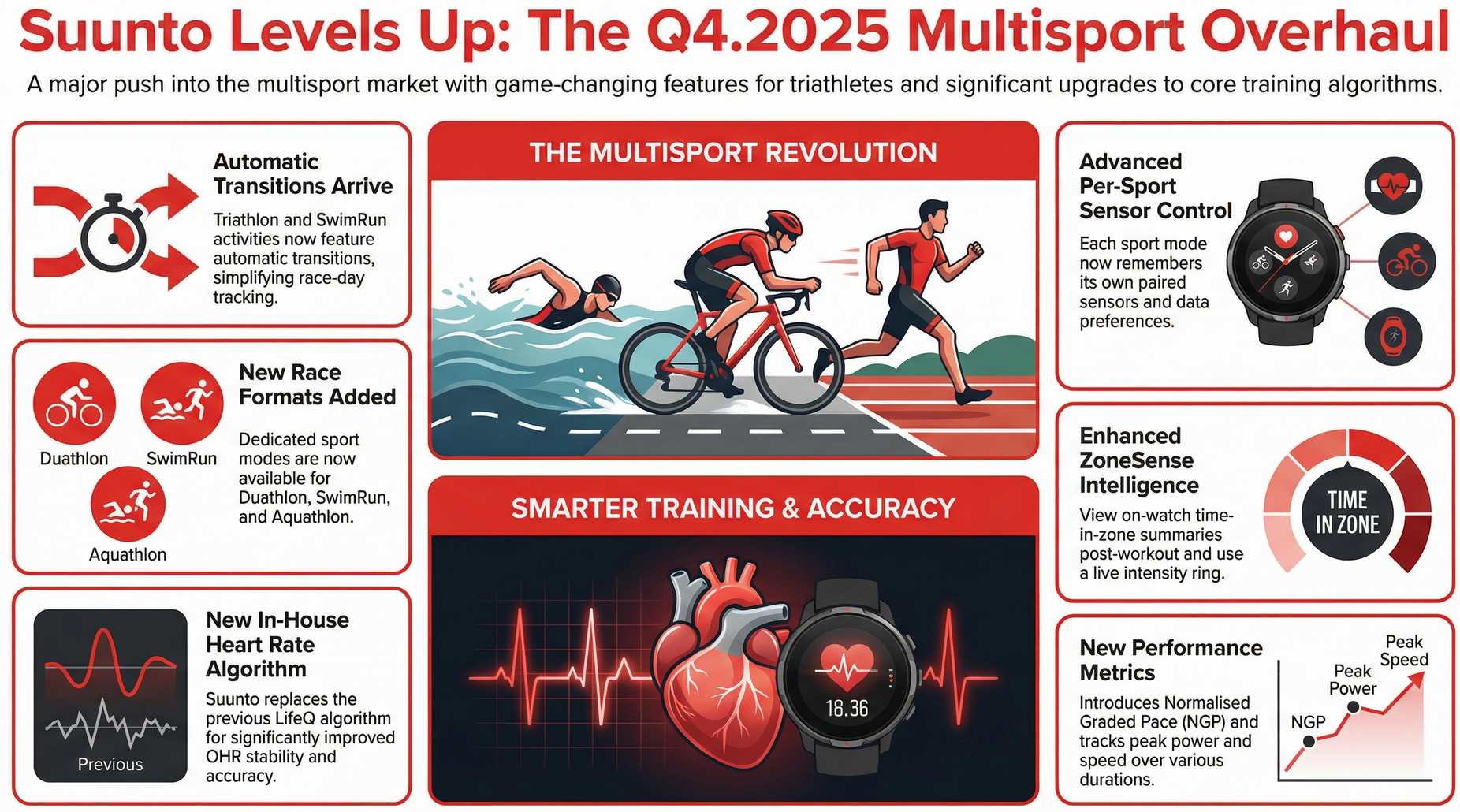
Which Watches Get These Features
All recent Suunto key models get significant improvements: Race 2, Vertical 2, Race, Vertical, 9 Peak Pro, and Race S.
| Feature | Race 2 / Vertical 2 | Race / Vertical / Race S | 9 Peak Pro |
|---|---|---|---|
| SuuntoPlus App Limit | 3 Apps | 2 Apps | 2 Apps |
| In-House OHR Algorithm | Optimized v2 | New v1 | No (LifeQ) |
| Automatic Transitions | Yes | Yes | Yes |
| New Multisport Formats | Yes | Yes | Yes |
| Selective Sensor Data | Yes | Yes | Yes |
| NGP & Peak Power Metrics | Yes | Yes | Yes |
| Running Dynamics (Native) | Yes | No | No |
| LED Flashlight Control | Vertical 2 Only | No | No |
| WiFi Weather Sync | Yes | Yes | Yes |
Game-Changing Multisport Updates?
Garmin has remained the triathlon-tech leader for years, primarily because the market is relatively niche but offers some features that are technically complex to implement, meaning few competitors had the incentive to catch up with Garmin. Worse still, these useful tri features are really only useful to the more dedicated triathlete; anyone getting ready for the first and perhaps only triathlon would never need them.
Suunto is aware of this as several of its product team are highly competent triathletes themselves.
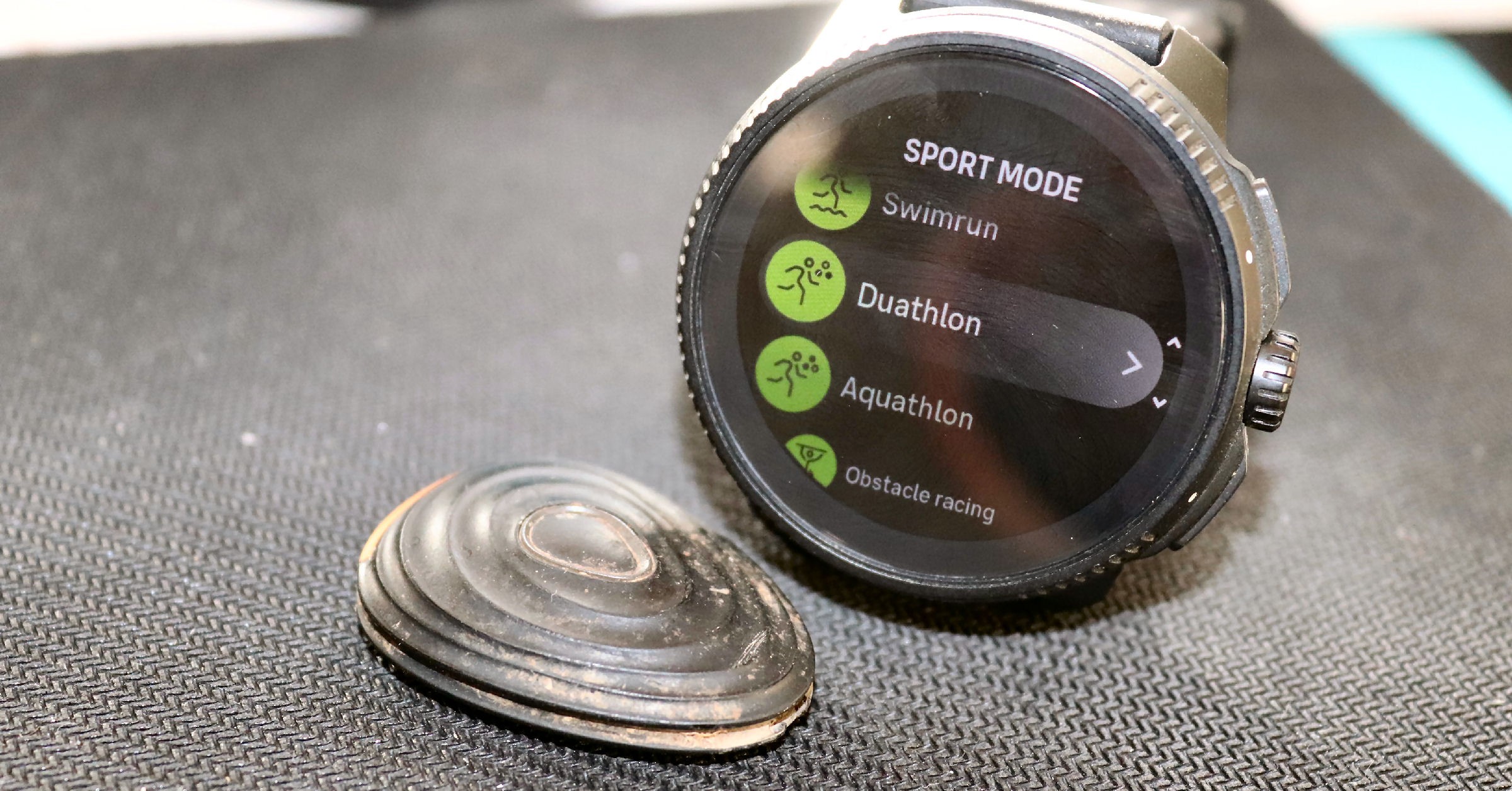
The world moves on, and perhaps Suunto’s new owners had the means and inclination to significantly improve Suunto’s triathlon features by adding these capabilities
- Automatic transitions now work in triathlon and SwimRun – like Garmin, this will never get transitions right, but will mean you get sensible data when you forget to press the ‘next’ button
- Repeat training blocks are now supported, i.e., you no longer have to create RBRBRBRBRBRBR; you create repeats of RB. Perfect for brick training.
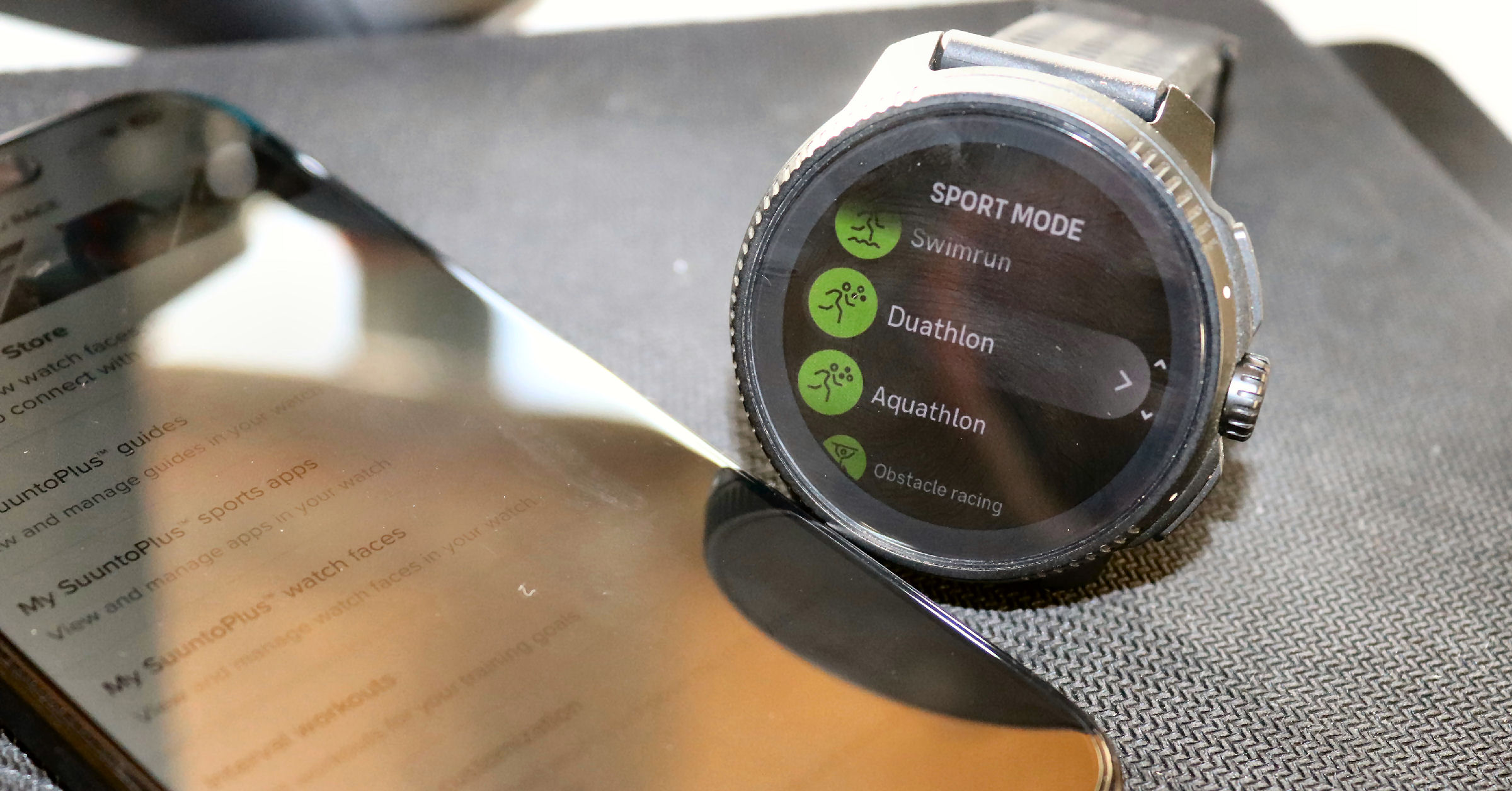
- The new race formats of Duathlon, SwimRun, and Aquathlon have been added. This is a halfway solution. A better alternative would have been to allow custom multiport profiles, so these new race formats and more unusual race types could have been manually added.
- Race 2 and Vertical 2 can run three SuuntoPlus apps at once during activities. Older models are not sufficiently powered to do this.
Improved Metrics
- NGP (Instant, Average, Lap average)
- Peak power or speed (3 s, 1 min, 3 min, 5 min)
- Route-specific data showing climbs and descents to the end or next waypoint
- General preferences are remembered for each sport
ZoneSense Gets Better
ZoneSense is an extremely interesting HRV-like feature based on DFA A1, essentially reevaluating your zones in real time as you exercise. It’s a pretty good scientific concept, but it can be tricky to implement due to data quality issues. It’s worth looking into for long-duration training.
- The time-in-zone(sense) summary appears on the watch immediately after finishing
- Intensity tracking now works across all cardio activities
- Visual intensity ring as an option during workouts
Clearer Navigation
Suunto has played catch-up by adding a North-Up heading option, but the faster maps, POIs, and bigger arrows are modest yet welcomed improvements.
- Bigger, clearer arrows and turn indicators
- Option for north-up map orientation
- Points of interest are more visible
- Faster map loading
Heart Rate Accuracy Overhaul
LifeQ previously provided the HR algorithms, and they’ve been dropped in favour of internal ones. This is an interesting move and probably represents a significant effort by Suunto’s internal team to nail this. OHR signal filtering algorithms are notoriously difficult to get right.
- Race and Race S get a completely new in-house optical HR algorithm
- Major improvements during descents and terrain changes
- Better recovery tracking after pauses
- Race 2 and Vertical 2 get optimised altitude-change filtering
Smarter Sensors and Connectivity
Suunto’s sensor management has been poor for years, though improvements were made in 2025. Its sensor management was fine for the majority of its customers; however, a significant minority (e.g. triathletes) need more precise and comprehensive management of multiple sensors.
Suunto has long been aware of this shortcoming and has now moved forward with several changes, most notably each sport remembering which sensors it needs to pair with. Alongside that is the ability to globally ignore some of the sensor’s data – e.g., you might want power only from a STRYD footpod, but not want its pace determination, and instead use GPS.
- Each sport remembers which sensors to use
- Selective sensor data usage (example: power-only from Stryd)
- Automatic weather updates via WiFi overnight
- Sensors activate automatically when paired
Swimming and Intervals
The key change here is to the rest and stroke detection algorithms, which are claimed to be more accurate and more responsive.
Next are changes to swim workouts that improve the display of interval metrics and better describe intervals.
Barometer and Elevation
Suunto’s barometers using sensor fusion have always been generally good enough for me. So I’m not entirely sure what problem is being fixed here. It looks like it is specialist, niche cases that are addressed
- New “SMART” algorithm measures altitude on a per metre basis after an initial 2m change
- Better filtering for wind, rain, and humidity effects
- Eliminates false elevation spikes
- More accurate total ascent/descent tracking
Vertical 2 Exclusives
Vertical’s flashlight remembers your last brightness setting. There’s also quick flashlight access during activities and anew touch gesture for instant shutoff.
Affected Models
- Suunto 9 Peak Pro
- Suunto Race S
- Suunto Race
- Suunto Race 2
- Suunto Vertical
- Suunto Vertical 2
General Improvements
These probably come under a bugs and usability heading.
- Smoother menu transitions
- Airplane mode works from quick settings
- Sleep tracking no longer misidentifies short rests as naps
Takeout
This is a free update benefiting a large number of Suunto owners. Although Suunto has recently been adding a steady stream of features, this big release gives further confidence in the company’s future and its sports watches under the relatively new owners.
There are generic improvements to heart rate, elevation, pace and other metrics. The big wins are for triathletes with improved sensor management and more advanced multisport profile management options. Suunto has clearly taken on board the need to improve sensor management and multisport capabilities.
A good update.
Last Updated on 31 January 2026 by the5krunner
Reader-Powered Content

This content is not sponsored. It’s mostly me behind the labour of love, which is this site, and I appreciate everyone who supports it.
Support the site: Follow (free, fewer ads) · Subscribe (paid, ad-free) · Buy Me A Coffee ❤️
All articles are written by real people, fact-checked, and verified for originality. See the Editorial Policy. FTC: Affiliate Disclosure — some links pay commission. As an Amazon Associate, I earn from qualifying purchases.
tfk is the founder and author of the5krunner, an independent endurance sports technology publication. With 20 years of hands-on testing of GPS watches and wearables, and competing in triathlons at an international age-group level, tfk provides in-depth expert analysis of fitness technology for serious athletes and endurance sport competitors.

Great recap, thanks!
You can create a pool-bike-run triathlon mode if you wish. Even with turbo trainer and Treadmill. Just create a multisport mode and voila.
This is a really a solid update.
I’m not sure about the swimming workout improvement though, did not see this. I just hope they’ll improve pool swim in the future (drills, and a proper rest feature, with a dedicated screen and the ability to iterate swim/rest using lap button.
ty!
With this new transition-detection (and particularly the brick training update), does this make Suunto a very viable option for Hyrox? I’ve used my Suunto watch during all my races, but have been stuck with it being a glorified stopwatch and HRM.
very coincidentally i just wrote this: https://the5krunner.com/2026/01/08/hyrox-sports-science-training/
TBH all the watches are glorified stopwatches in HYROX.
that said the new Suunto repeat mode would allow you to do the arena run bit properly with dedicated pages for that and then the station legs youd probably just show time and hr.
with garmin/apple you get to use the royfit app which addresses each setion correctly. the main benefit ive found is that they simply remind you what is coming up next!
what are you actually trying to achieve? e.g. proper logging of reps in a hyrox sim at the stations
Cheers for this – I’m trying to get an accurate view on my pace in the runs, where I can gain time competing (i’m doing Pro in Manchester in a few weeks). If I have the ability to set up bricks, I’ll set it up as Indoor Run / Crossfit (closest to functional station as possible without breaking it down too much). Will also be looking at getting a Stryd now, as this will help too – hadn’t thought of that before I read your article.
as per the article that’ll help pacing BUT garmin might do a decent job with an rd pod (clips onto shorts) or , as i say, with an hrm (some function as an rd pod). i’ve never really tested out their accuracy as i assumed they wouldnt be as accurate as stryd. but they may be acceptable (look at dcrainmakers site he may have tested a garmin hrm for that. idk) waffling but a garmin hrm dual might act as a running pod for a suunto to get pace from.
stryd you’ll need to do a few runs on autocalibrate in good gps conditions. then make sure the calibration factor locks in when used indoors. again check how suunto can handle this as they were always a bit wierd with stryd
if you are at a pro level the muscle oxygen stuff will be interesting. its a totally different metric, great for spotting break points. i still havent given mine a go with wall balls (frickin wall balls!), would be a good tool also for pairs to figure out who REALLY breaks first per station to determine who is doing what.
smo2 works with suunto from memory.
summary: this is all why people use garmin if you have complex situations.
UPDATE (pre-race):
– Got a Stryd pod, no issues with Suunto compatibility. Ran a few calibration runs.
– Set up a multisport mode with indoor running / functional training and repeating transtions
– Tested all 3 doing a flushout of 500m run (assault runner) / 500m ski / row (alternating every set. Power and pace was way off. Found out after that I need to update the Stryd pod weight to *1.25 current weight, or run a CP test and use those settings. (https://docs.google.com/document/u/1/d/e/2PACX-1vTeJhTbZkL7XsVUK7k8hNtUPtWRrMfq4fIKJK0Q_vKDiOd4qT14aw_AzDBZTcFTq-mumpdOss4Ejv1O/pub?fbclid=IwAR3QQkIgI87yEGkMQ77vKhyQ01sKGT8rkpizbhM_fEH20Y-UpN4wQxJdiX4)
However, the multisport mode was EXCELLENT; worked really well. Transitions are seamless.
I’m going to test this properly on Thursday evening