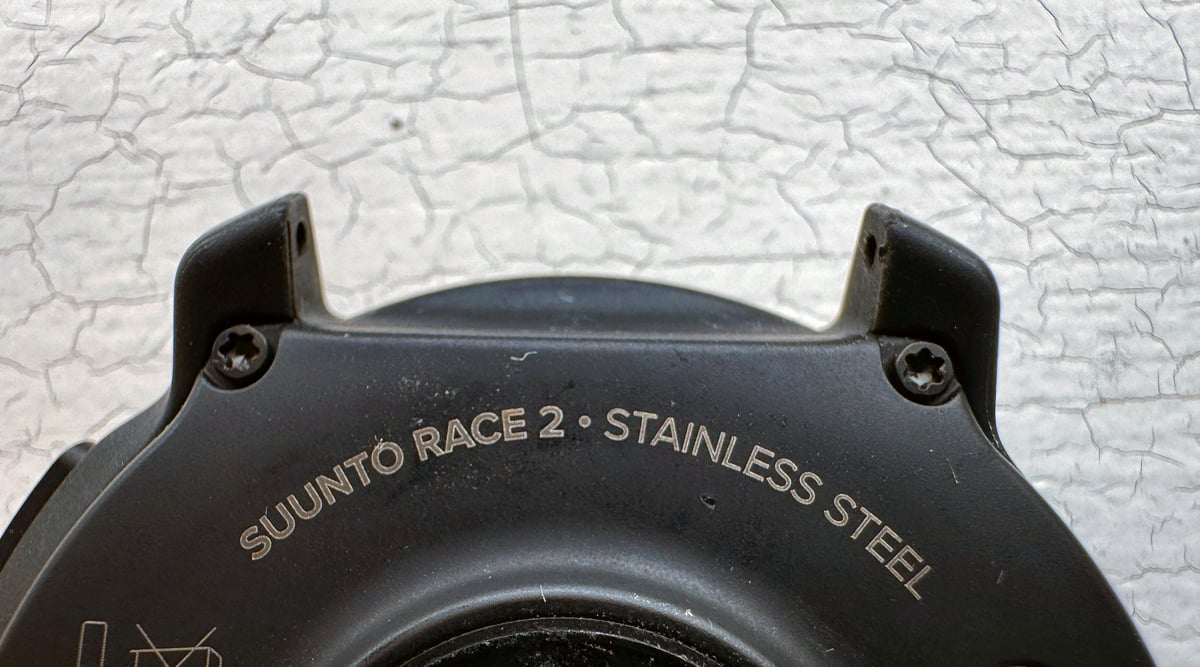
Suunto Race 2 Review – All you need to know – Tested
A crisp, Alpine dawn. Your Saucony trail shoes are laced, your breath ghosts in the cool air, and Suunto Race 2 graces your wrist. Your latest purchase. You feel confident that this isn’t just a watch, perhaps more like a command centre for the epic day ahead, a tool ready to help you navigate the testing climbs, sweeping descents, and hard-to-find waypoints in the day ahead.
Suunto’s newest flagship multisport GPS watch, the Race 2, sits within the Suunto sports watch range and enters a crowded field with an ambitious promise: to deliver an excellent blend of elegant design and rugged performance. Next to you, your running buddy-cum-competitor Jo mutters, “Jeez, my battery is only at 64%.” Lol. Battery life is one problem you’ll never have.
For those who live for the next race, train with a mission, and want something beautiful to wear all day, a sports watch is as much a lifestyle statement as a tool. So, does the Suunto Race 2 truly hold its own in 2026’s highly competitive sports tech landscape? Does it offer the precision and reliability serious athletes demand? Let’s see…
Suunto Race 2 – how it stacks up to the competition, an opinion
Suunto Race 2 is a premium multisport watch; premium means high-quality materials and deep sports features. It’s also designed for a broad range of sports, including trail running and open water swimming. The competition includes Polar Vantage V3, Garmin Forerunner 970 and, in some ways, the Apple Watch Ultra. There is no directly comparable Coros watch.
Interestingly, Race 2 is now priced $100 more than its predecessor, which makes it less of an obvious value choice. However, it is still temptingly priced even compared to competitors’ discounts during sale periods.
- Suunto Race 2 (Steel model) — $499.99, (Titanium model) $599.99
- Garmin Forerunner 970 (Titanium) — $749.99
- Apple Watch Ultra 2 (Titanium) — $799.99
- Polar Vantage V3 (Aluminium) — $699.99
Opinion: Watch Ultra wins on smarts and smartphone integration. Polar offers an easier-to-use ecosystem backed by good sports science. Garmin gives you every possible feature in a complex interface. Suunto gives you perhaps the best looks and a quality shell, complementing a great overall offering with features.
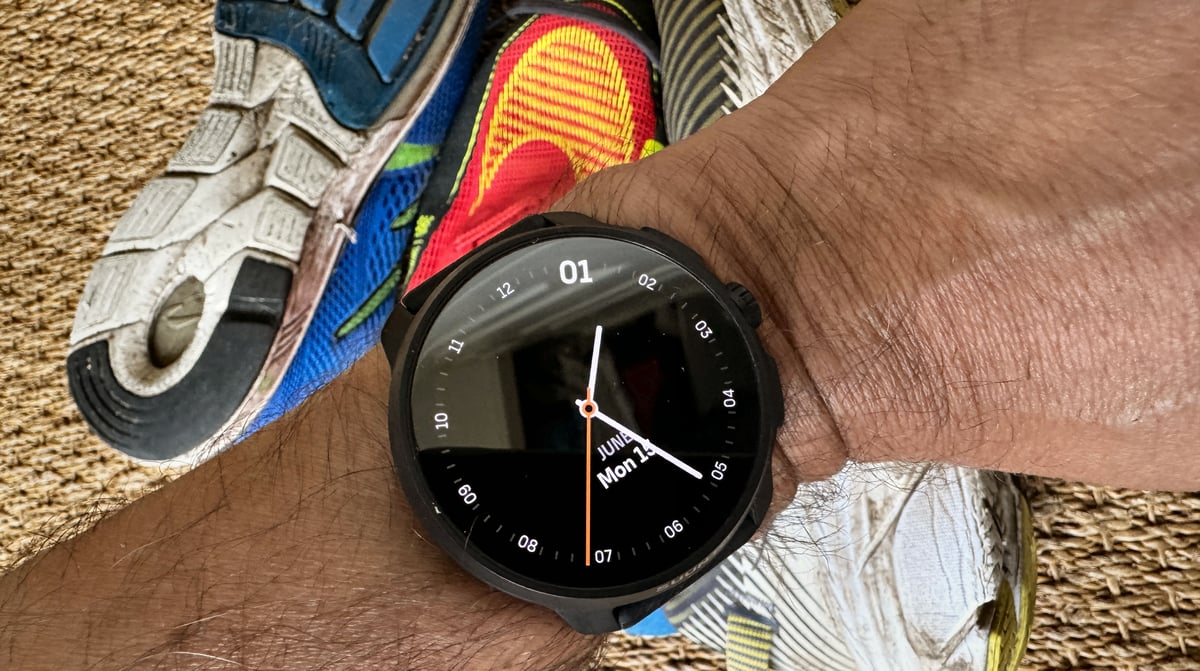
Suunto Race 2 – Key Strengths
The GPS battery life of 55 hours is market-leading for a watch with a battery-eating AMOLED display. That display is bright, readable and protected by one of the best sapphire lenses. The physical package looks stunning, IMHO, and the on-watch ergonomics are well thought through and further enhanced by new, faster tech.
Here is a summary review of the Suunto Race 2 with the key pros and cons. There are many more insights, details and tips if you scroll further down.
A definite improvement but not enough to recommend an upgrade from the original Race
Suunto Race 2 Review Summary
A great sports watch and capable adventure watch. The only unexpected disappointment for me is the price bump back up to a level where it deserved to be two years ago. Still good value.
Pros
- Market-leading design and build
Improved hardware, eg new OHR sensor - Superb battery life
- Detailed, offline topo maps
Welcomed & Novel tweaks
- Multi-pairing of same sensor type
- Waypoint and climb guidance integration
- Wi-Fi maps and uploads
- Improved charger
Cons
- Price Creep – cheaper Race S sibling, even better value
- Limited Smartwatch Functionality – payments, streaming music, advanced notifications
- Lacks map intelligence – rerouting and round-trip routing
- GPS scored 81% on the standard 10-mile test, behind the original Race’s 87%. Consistent underperformance just below the very top devices across all difficulty levels points to a firmware filtering issue rather than a chipset limitation.
- Consistent underreporting in the first 4 to 5 minutes of activity across multiple sessions. Performs adequately during sustained effort but needs further manufacturer tweaks to handle transitions between efforts.
Suunto Race 2 – What’s New?
Race 2 has a spec and price bump. This means it’s not worth upgrading from the predecessor, but if you’re buying new, you should get Race 2 rather than Race 1. The software features are very similar, but the hardware is more future-proof.
Significant Hardware Improvements
- Display
- Bigger – Increased to 1.5″ (was 1.43″), the bezel feels smaller
- Brighter – Peak brightness increased to 2000 nits (was 1000 nits)
- More Efficient – New LTPO AMOLED technology is the same as the latest Apple Watch and gives dynamic refresh rates, better battery efficiency and an always-on display.
- Design & Comfort:
- Slimmer – 12.5mm (was 13.3mm)
- Lighter: 76g (was 83g, Steel model)
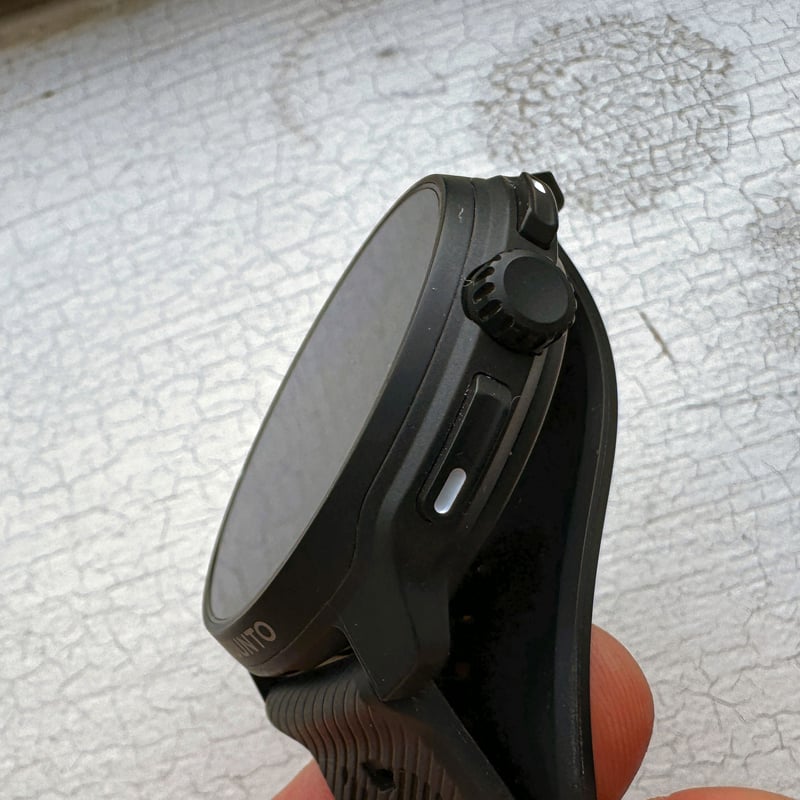
- Refined aesthetic: A less industrial look with removal of bezel ridges (which I liked). Flatter lugs for improved wrist comfort. The case now combines durable plastic and metal, with the lugs made of polymer.
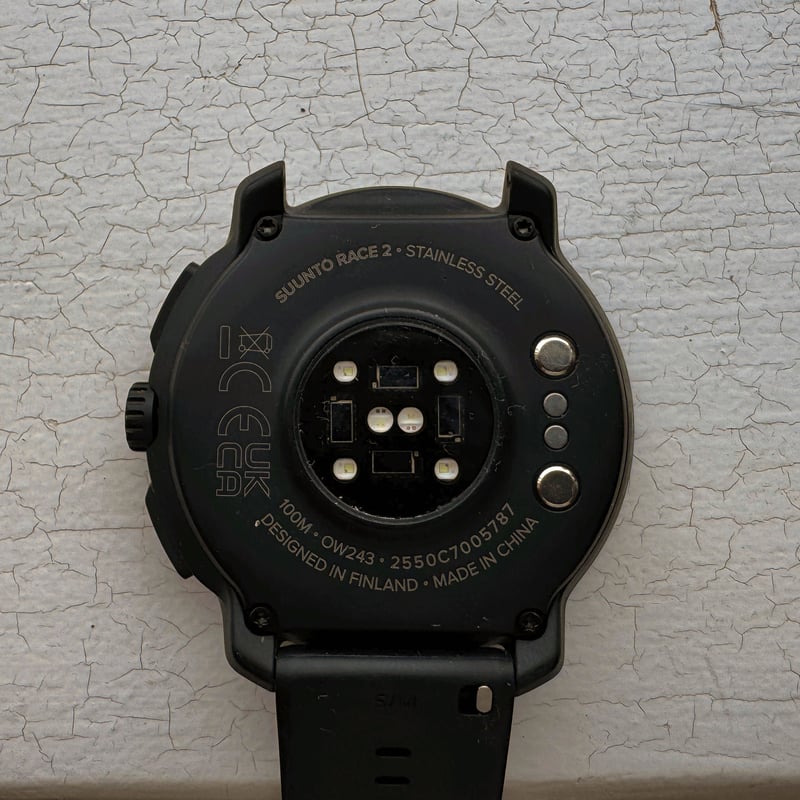
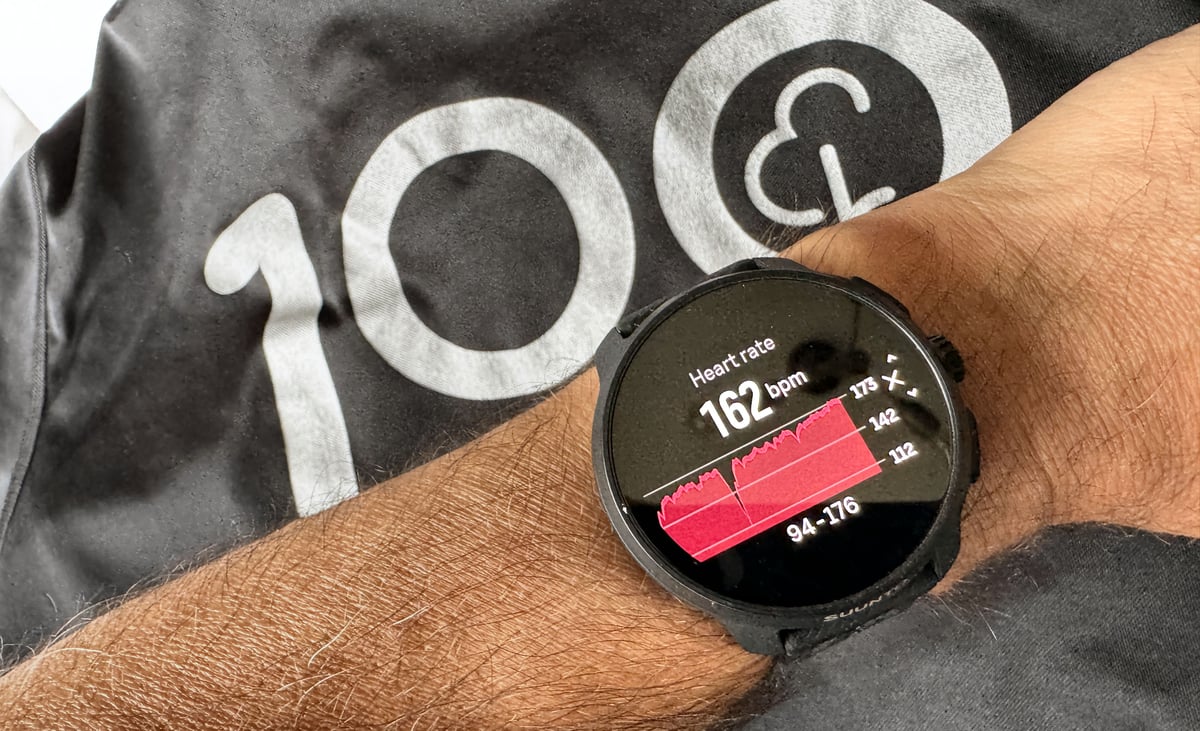
- Heart Rate Sensor: Completely redesigned. It features 6 LEDs and 4 photodetectors, intending to improve accuracy.
- Internal Components:
- Faster processor: The Apollo 510 MCU claims to have twice the processing speed and more RAM for smoother, quicker operation.
- Increased storage: All models have 32GB of internal storage intended for onboard maps.
- Increased dual-frequency GPS Battery Life: Claims as up to 55 hours (was 50 hours)
- Charging System: Much improved charger with USB-C Connector
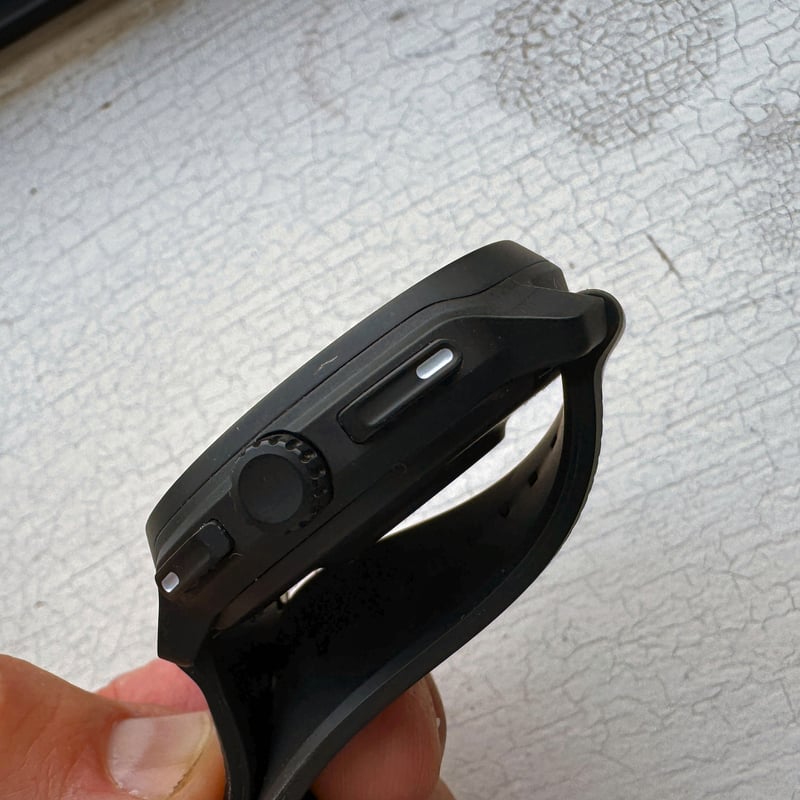
Welcomed Software Enhancements
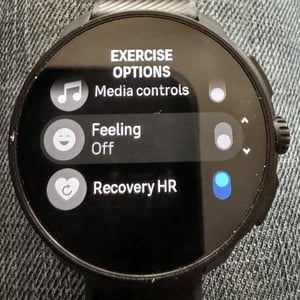
- Multi-Type Sensor Support – more than one sensor of each type can be saved.
- Climb Guidance – Improved to include waypoints and added detail
- Watch Face & Widgets – A new watch face and a dynamic recovery widget
- Map Download – Improved via Wi-Fi even when not charging.
- Security/Compliance – A passcode lock was added.
- Custom Multisport Profiles: Expanded capabilities
- Use the app to combine multiple sports into one multisport profile
- Transition can be selectively enabled/disabled
- Changes to the base profile are updated in the linked multisport profiles.
Opinion: This is an excellent set of features to keep existing Suunto owners happy. As a package, they offer more than enough to demonstrate that the brand maintains momentum.
Suunto Race 2 – How it sits in the Suunto Range
Suunto Race 2 sits atop the company’s sports watch range. The original RACE, Vertical and 9 Peak Pro models will be phased out as stocks decline. The latter two will likely be refreshed at some point.
From a tech and capability perspective, Race 2 has the best of everything Suunto offers, built on a mature platform. It will likely be the hardware platform for at least the next 2-3 years, with some experiments made with the RUN model appearing to be left behind.
Let’s make some comparisons…
vs. Race 1
Race 1 was a game-changer for the company. It introduced AMOLED and dropped the price, perhaps conceding defeat to Garmin at those higher price points. Yet those changes, coupled with a great design, resulted in a significant bump in sales. Race 2 is the direct successor and improves upon Race 1 in nearly every hardware aspect, including display size, brightness, thickness, weight, processor speed, memory, and especially the optical heart rate sensor and charging system. The software is very similar, but Race 2 has some tweaks with a niche appeal.
vs Race S
Suunto Race S is the smaller version of Race 1, with both on a broadly similar prior-gen tech stack. As a smaller watch, all the other physical characteristics fall into line – smaller battery, smaller screen, and lighter.
Race S is priced exceptionally well and is by far the best value mid-range sports watch.
Buy Race S US: $349, EU: 349€, UK: £299
vs. Vertical
Vertical is positioned as more of an adventure watch than a sports watch, although it’s a somewhat arbitrary classification by the company.
Vertical has an older-gen MIP display, which gives superior battery life, and there is a SOLAR option to boost battery potential even more. But that’s about it, they have similar features.
vs Range Strategy
Whilst Suunto has decided on what seems to be a sensible hardware platform, it still has more hard choices to make.
The company appears to play the “catch up with Garmin” game. A game that all Garmin’s competition find tricky to excel at. As an example, it took Suunto at least 5 years to introduce customisable multisport profiles – perhaps only now can we say that it has a proper multisport feature set. Similarly, the multi-sensor support is now sensible but requires further tweaks to meet the real needs of many kit-laden triathletes looking to name and pause sensors. then, if we look at maps, the company has made great strides, but its map and navigation lack detailed features compared to Garmin, such as on-watch smart maps with route map/node intelligence.
But strategy is also about trying to get ahead. It’s plain to see that Satellite-SOS is happening on watches now. Whether Apple Watch Ultra 3 or Garmin Fenix 8 Pro have this feature this year is a moot point…the feature is coming, and where will Suunto be on this? Vertical Watch is an adventure watch that is due for a refresh. Will it play catch-up to Fenix 8 or try to get ahead and compete with next-gen Satellite SOS?
Then there are the watchfaces, watch apps and smart features. Suunto is leading much of the competition with its 3rd party app store and highly linked ecosystem. It can support novel sensor types more easily than Coros or Polar, but why can’t we get 3rd party watchfaces? People want a 24/7 watch to look good; the watch face is part of that, and their choice is personal.
Suunto Race 2 as a Triathlon Watch
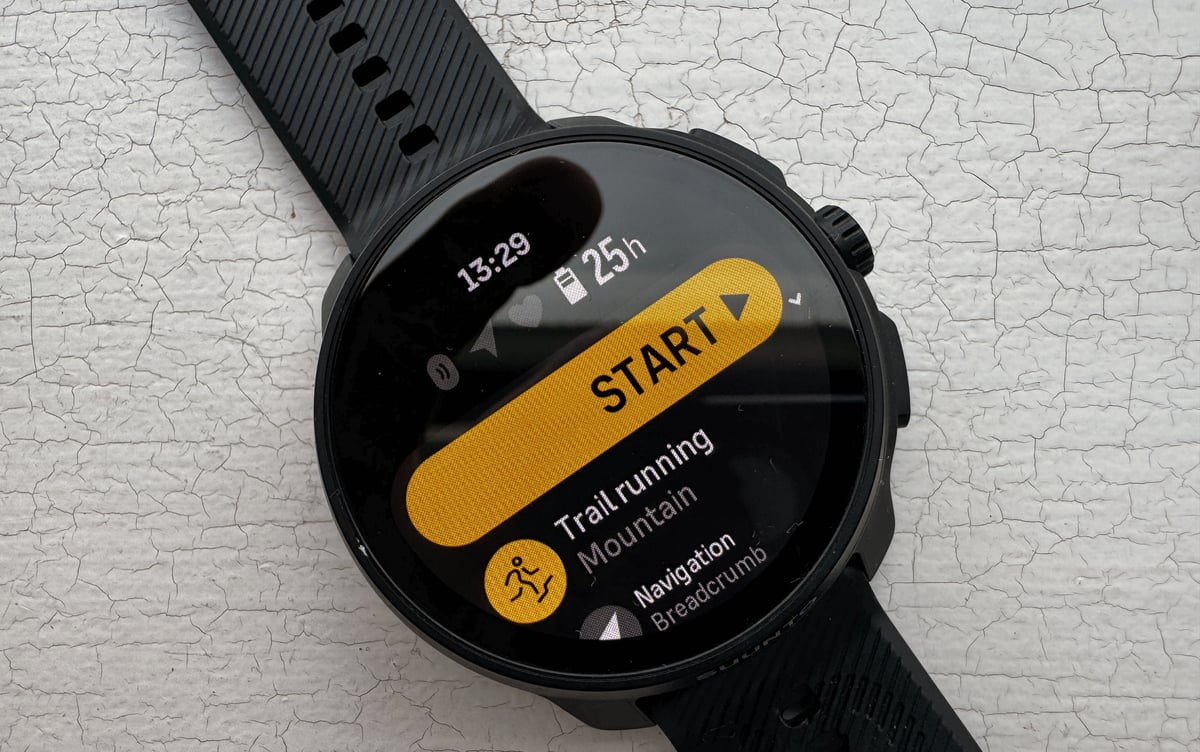
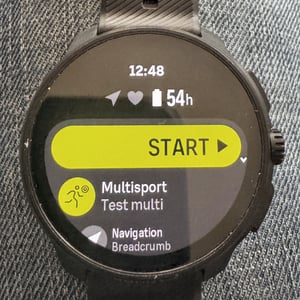
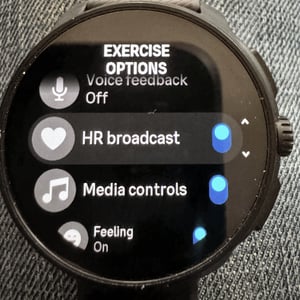
The H1 2026 firmware updates are the most significant the Race series has received for multisport athletes. Automatic transitions, heart rate broadcast to bike computers, pool drill sets, and default modes for duathlon, aquathlon and swimrun all arrived in two updates across the first half of the year. Testing revealed a clear split between what works and what does not. Heart rate broadcast paired immediately with a Wahoo ELEMNT. Pool drill mode logged multiple sets per session cleanly, though without drill-type tagging. Manual transitions produce correct segmented output with separate swim, T1, bike, T2 and run files. Auto transition requires a custom multisport mode built into the app, with Triathlon selected as the activity type and open-water swim, cycling, and running added as the three sport legs. In the current firmware, however, it records the entire activity as a single blended file with no segment breaks. For race-day recording, manual transitions are the reliable option until a firmware update resolves this issue. A full test report is at the dedicated article: Suunto Race 2 Triathlon: H1 2026 Features Tested.
Suunto Race 2 Accuracy Results & Tests
GPS Accuracy
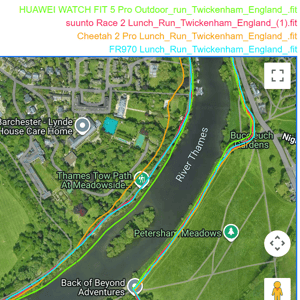
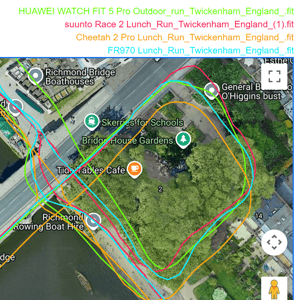
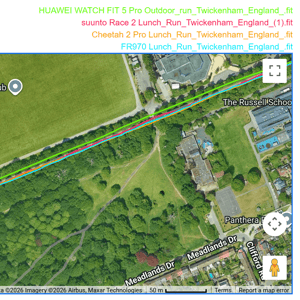
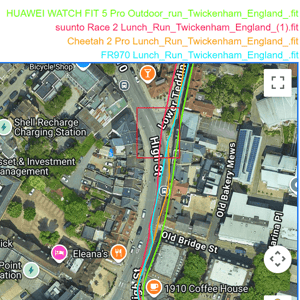
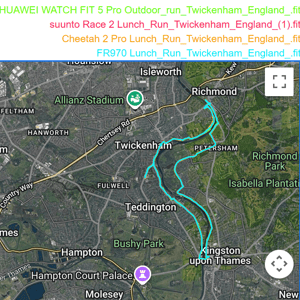
The Race 2 scored 81% on the standard 10-mile GPS accuracy test, against the Forerunner 970 at 92%. The original Race scored 87%, so this is a step back. The Sony GPS chipset used here produces consistent, mid-pack accuracy rather than best-in-class, and unlike most watches, where performance degrades predictably on harder sections and holds on easier ones, the Race 2 showed flat, uniform performance across all difficulty levels. That pattern suggests a firmware-level filtering issue rather than a chipset limitation. This is corroborated by reports on the Suunto community forum, where multiple users have identified a consistent 1 to 1.5% distance shortfall in the FIT file versus raw GPS data, across running, walking and cycling, which does not affect other current Suunto models. The gap appears to stem from conservative accelerometer-based filtering that discards valid GNSS distance data, particularly during pace changes and turns. A firmware fix is the logical resolution.
GPS Accuracy Test Results
Images showing typical performance at points of critical GPS difficulty on a standard 10-mile route. This type of performance was replicated in several other tests.
Heart Rate Accuracy
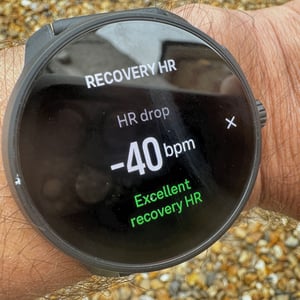
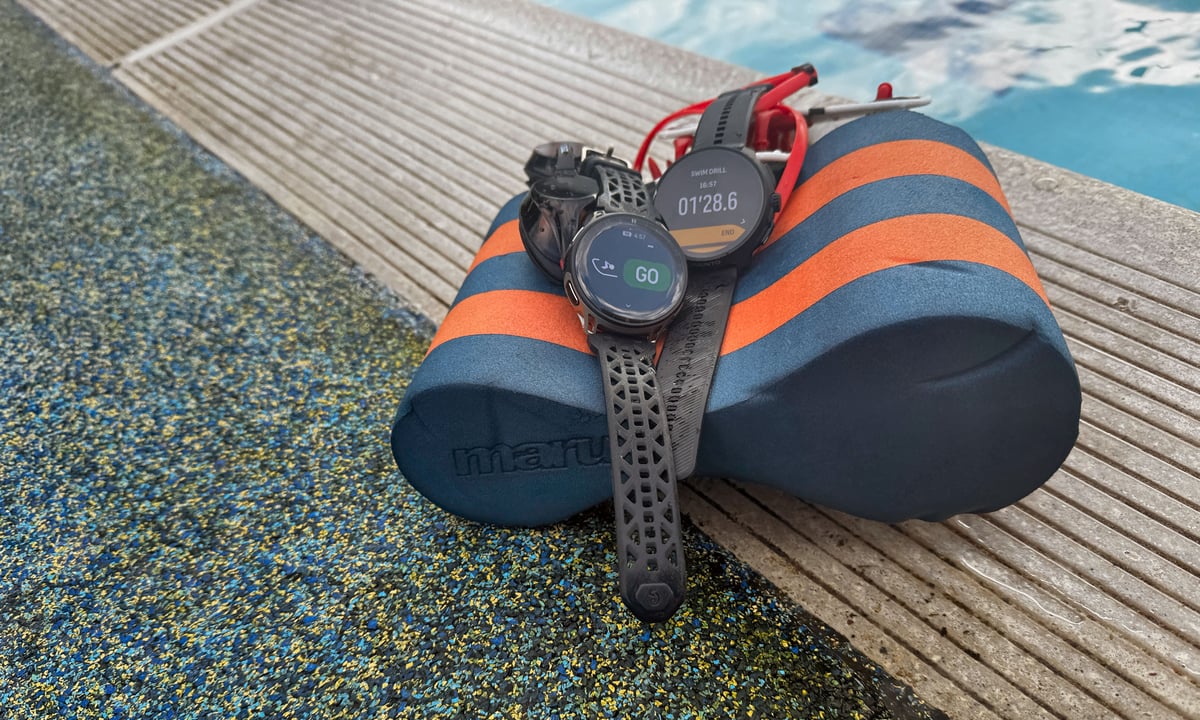
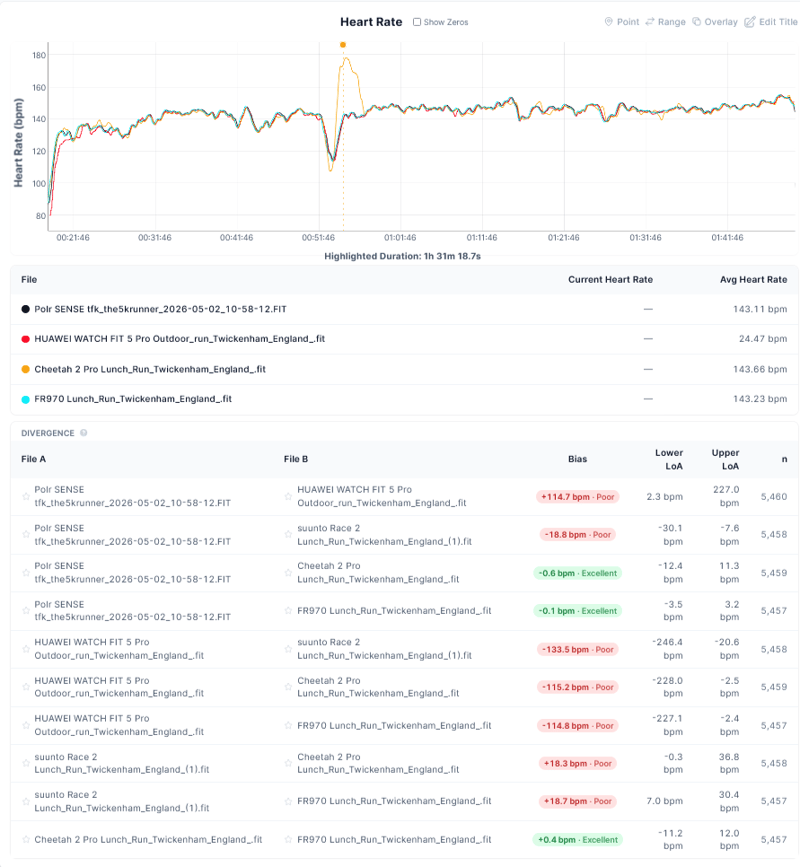
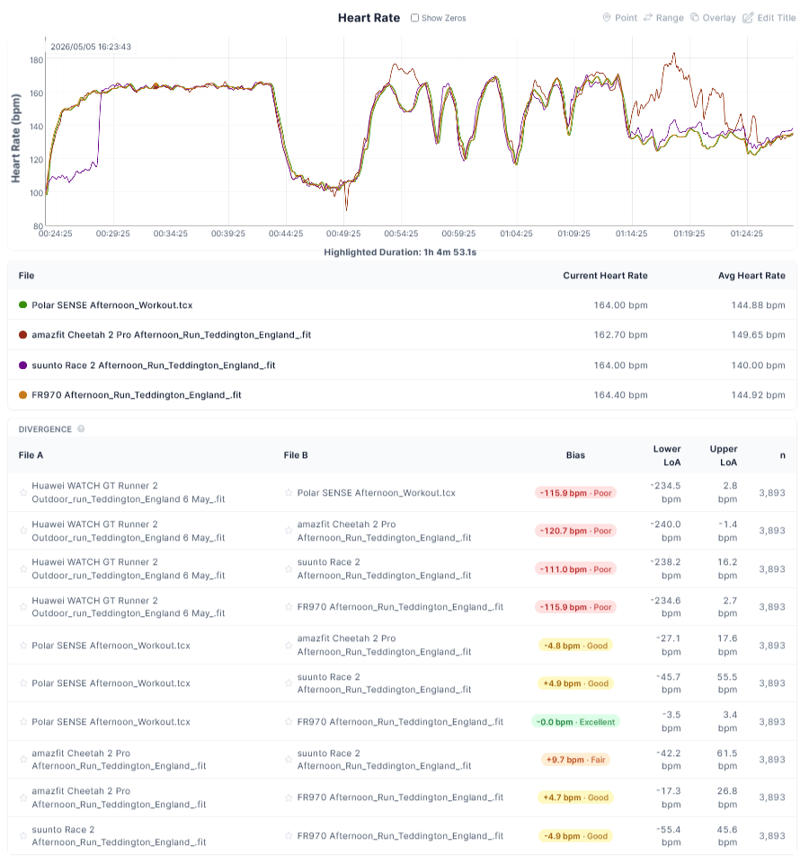
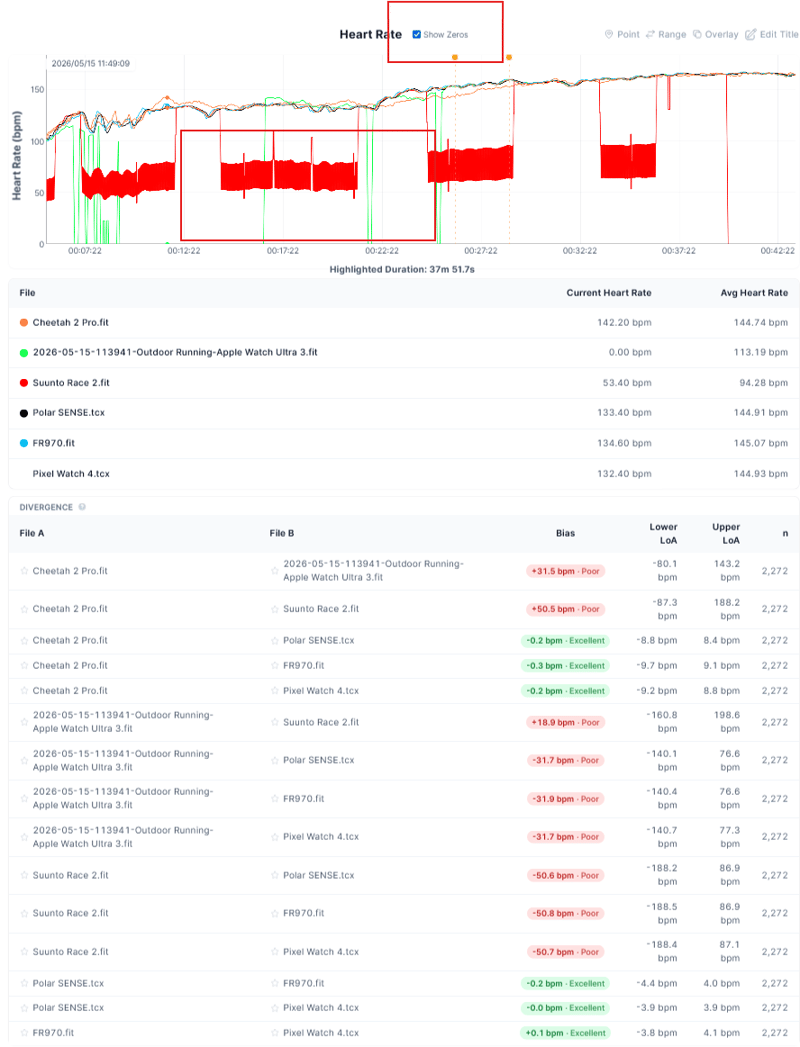
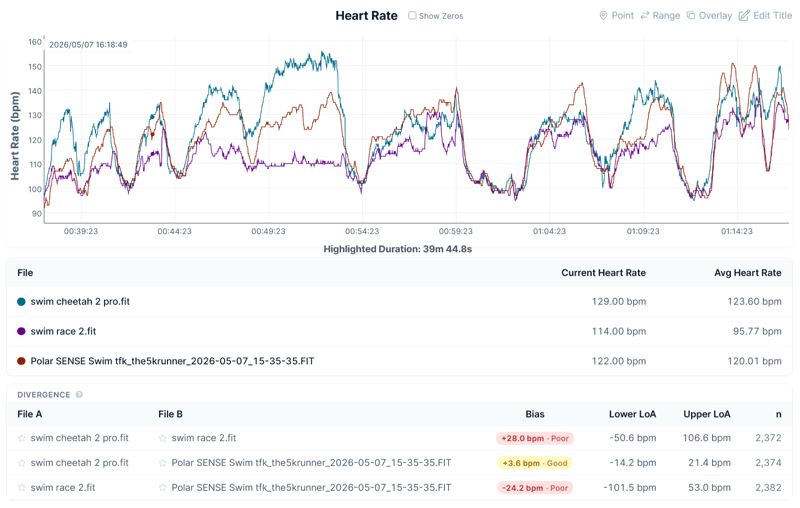
Heart rate performance is below average at present, but shows promise. The redesigned 6-LED sensor produces visually reasonable charts during steady aerobic running, but statistical analysis against the Polar Verity Sense reference reveals a consistent bias of -18.8 bpm on a steady-state Twickenham run, driven by underreporting in the first five minutes of activity. The Cheetah 2 Pro and the Forerunner 970, both in the same session, were rated Excellent. On a mixed threshold and VO2 run, the Polar Sense versus Race 2 pair rated Good (+4.9 bpm bias) but with a wide limit of agreement (-45.7 to +55.5 bpm), again explained by a four-minute underreporting window at the start, this time following a warm-up and immediately after an effort step-change. The sensor handles the transition from recovery to hard effort poorly. Pool swim results showed Race 2 averaging 95.77 bpm against Polar Sense at 120 bpm, a -24.2 bpm Poor rating, though with limited third-device corroboration. Most concerning was a gradual ramp run where the chart appeared smooth, but the Race 2 averaged 94.28 bpm against Polar Sense at 144.91 bpm and the Forerunner 970 at 145.07 bpm: the device recorded extended periods of around 80 bpm while the reference devices agreed on values around 30 to 50 bpm higher. The qualitative verdict is that the hardware is present and that accuracy during sustained, steady effort is reasonable, but the sensor needs a firmware update to handle effort transitions without underreporting.
Heart Rate Test Results
Images showing typical heart rate performance across endurance, threshold and VO2 runs for the author. This type of performance was replicated in several other running tests. Results vary by person, by sports and due to environmental factors.
Suunto Race 2 Review Takeout
Race 2 is foremost a sports first, and ‘smarts’ second.
The sports features are excellent and, for the first time, have eliminated a couple of longstanding annoyances for triathletes using the watch in more advanced training scenarios. A similar argument applies to the improvements to maps and navigation.
These watches offer all the features that most people ever really need. There are just a few little omissions that reviewers like me might dwell on too much as we compare to other brands’ alternatives.
If you are a triathlete, occasional adventurer, or runner of any sort, then Suunto Race 2 is a sound choice. The third-party app and connected sports ecosystem are excellent and, in many ways, similar to what Garmin offers—ahead of Coros, Apple, and Polar. The smartphone partner app is one of the best, and the watch, in my opinion, looks the best. Heart rate performance, less so, and I always recommend a chest strap for anyone seeking accuracy.
Race 2 would be an even easier recommendation if they’d kept the price unchanged.
It’s still a recommendation, though, as is the Suunto platform. If you’re going to jump on board, Race 2 makes sense, as it has the hardware base for future feature additions that are coming.
Sources and Resources
- Full Suunto Race 2 specifications (the5krunner)
- Suunto Race 2 Official Product Page
- Suunto Race 2 Support Page
- Suunto User Forum (Race 2)
- Buy Suunto Race 2
- Buy Suunto Race 2 Titanium
Suunto Race 2 price: where to buy
Suunto Race 2 is listed at $499.99 for the Steel model and $599.99 for the Titanium model in this review. Check the price in your market before you buy.

Last Updated on 3 October 2026 by tfk the5krunner
Small things I always use
- Garmin 90-degree charging adapter: Charges your Garmin from any USB-C cable. Essential when travelling. I use one.
- Body Glide: The blue anti-chafe stick swimmers and runners carry. I use it.
- Speedo earplugs: Fewer ear infections and no cold-water dizziness. I use them.
- Dryrobe Advance: My winter changing robe for open-water swims. I use one. A cheaper option is the AONYIYI changing robe.
- Maurten: Race fuel that stays easy on the stomach. I use them.
- Garmin charging puck: The quickest way to top up before a session. I use one.
- Injinji: Toe socks that stop rubbing, so you run more. I use them.
- Ultimate toe protectors: Stop black toenails on long runs. They work. I use them.
- Compressport R2 v2 calf sleeves: My calf sleeves of choice. I use them.
- Cellucor C4: My pre-workout before hard sessions.
- TPU tubes: Schwalbe Aerothan, Tubolito and Pirelli SmarTube. Light, tiny spares. I use all three.
- G8 insoles: Adjustable insoles that are good. I use them.
- Cycplus Cube: A 97g electric pump that gets a road tyre rideable in two minutes. I carry one. 5% off with code THE5KRUNNER.
Watches and sensors
- Polar H10: My daily driver for waking HRV.
- Polar Verity Sense: My backup arm-worn HR sensor.
- Nomad bedside charger: Charges my iPhone and Apple Watch overnight. I use it, and many of their bands.
- Train.Red: The best muscle oxygen sensor I’ve used.
- Tymewear: Accurate heart rate and reliable ventilatory zones. I use it to pace endurance rides over an hour.
- Garmin Forerunner 970: A pro-grade triathlon watch. I use this.
- Apple Watch Ultra 4: My daily smartwatch. No phone needed on rides.
- Garmin Fenix 9 Pro: I’ve just bought one.
On the bike
- Continental GP5000 for everyday riding, and Aero 111 on the front for special occasions.
- Helmets: Specialized S-Works Evade 3 for road riding, and Rudy Project Wing for TT-style races. I use both.
- Ravemen FR300: A front light that mounts under your Garmin or Wahoo. I use one.
- Wahoo TRACKR Radar: I use it on one bike and Varia on the other. They perform the same.
- Garmin Varia RTL515: Radar that warns you of cars from behind. I use this model.
- Wahoo ELEMNT Roam 3: The bike computer that’s easy to use. I use mine on most rides.
- Favero Assioma Pro RS2: Accurate power pedals that swap easily between bikes. I use this model.
Home and indoor training
- NPE Runn: Makes my basic treadmill smart, sending more accurate speed and distance to my watch and Zwift. I use it.
- Google Wifi: Keeps Zwift connected in my pain cave. I use it.
- Apple TV 4K: Zwift on the big screen. I use two.
- Google Nest Doorbell (wired, 2nd gen): My video doorbell, running in both Google Home and Apple Home. I use it.
Health, recovery and sleep
- FreeStyle Libre 3 Plus: Shows how my blood sugar responds to diet.
- hDrop: Measures my sweat loss in summer and indoors.
- Fourth Frontier Zone: Checks my heart under load in hard sessions.
- Oura Ring 5: My partner’s recovery tracker of choice.
- Kineon MOVE+: Red light therapy for niggles. It works.
- Eight Sleep: A cooling mattress cover my partner and I use nightly.
Reader-Powered Content

This content is not sponsored. It’s mostly me behind the labour of love, which is this site, and I appreciate everyone who supports it.
Support the site: Follow (free, fewer ads) · Subscribe (paid, ad-free) · Buy Me A Coffee ❤️
Written by real people, with AI assistance. Fact-checked and verified for originality. See the Editorial Policy. FTC: Affiliate Disclosure — some links pay commission. As an Amazon Associate, I earn from qualifying purchases.
tfk is the founder and author of the5krunner, an independent endurance sports technology publication. With 20 years of hands-on testing of GPS watches and wearables, and competing in triathlons at an international age-group level, tfk provides in-depth expert analysis of fitness technology for serious athletes and endurance sport competitors. ID

Okay, so now we have a new watch with an improved heart rate monitor and questionable GPS accuracy compared to the R1, which runs on the same firmware as the R1. Damn rush, just for the UMTB?
Btw NotebookLM… nice idea!
yeah i’m experimenting with notebookLM for other media (I just haven’t got the time to produce actual content and i dont thin kit would be as good!). it’s main advantage is that it cant hallucinate , so the info is correct even if its pronunciations might not be sometiems!
Some day i might jump the Garmin ship but unfortunately i am stuck in their ecosystem. Please correct me if i got something wrong, but there is a lot to like vs. Fenix 8 (47mm):
– similar weight, but slimmer
– larger and brighter screen
– more understated aesthetics (vs. the cheesy “mimic analogue watch with minute markings bezel” Fenix)
– better battery life
– much faster processing power
So when excluding the slightly inferior GNSS chip, the hardware seems to be vastly superior.
yes.
maybe the ohr too, but suunto needs more time to give it some more love based on wider feedback.
the sony gnss chip is more than good enough.
usability of suunto watch is better. on the apps side of things garmin has improved lots recently, both are pretty decent now.
garmins features are always going to be deeper but that depth adds complexity of use, due to volume of stuff to handle and poorer design
long term reliability…who knows?
The Garmin is definitely superior in most ways. However you could buy two of most watches for what you pay for one Fenix. So if you can live with/afford that then keep on keeping on.
For most of us though we have to weigh what we want out of the watch we are buying. I don’t think that anyone will argue that there are more options on a Garmin than most people will ever use or need. If you are one that wants to pay a super lot and potentially have a ton of things you will never ever use that’s okay.
I think that there are some out there that also think that less is more. Good GPS (Suunto has always kicked Garmin and Coros’s arses in my Western US woodland with so so so much tree cover tests) and a heart rate strap because we all know that is the correct thing to do if you are really serious about accuracy then that is enough. I don’t need music, credit cards, flashlights and herd of refugee reindeer (maybe that was only on the Fenix 5 Plus) to be fit or get out there and do my thing.
I heard an Anton Krupicka interview yesterday and it resonated with me. He said when he started thru hiking people on the trail talked about Whitman, Thoreau and other nature writers while trying to experience the world they were traveling through. Now is more about what Durston tent you have or what pack you are using. As a trail runner I want to be in the trees not my watch. Politics, religion and now watches have us all tribed up,
that’s fair
except garmin’s gps is now much imrpoved. market-leading in the case of some devices.
because these devices are now so popular they have a financial momentum of their own. people who dont need them are buying them for whatever reason be that ‘looks’ or for a planned 3 hour adventure up a slightly steep hill. whatever. the point being that this HUGE number of people DO need all/some of the non essential stuff like payments, as this is often a lifestyle purchase and not a sports purchase (unless sports is your lifestyle). if you dont offer the lifestyle stuff then it adds another hurdle to make you buy something else.
I think if Garmin would bring down prices on current models they would have even more domination. TBH the only thing that holds them back is the price tag. Then again in a consumer society that is not a problem for some.
i dont think so
garmin has sale events, prior gen models and lower models in the current rage for those on lower budgets
Still pool swim is total miss
I’ve had Polar, Garmin’s and Suunto. I had no trouble jumping off the Garmin train. I did kinda miss the 3rd party apps and watch faces, but this was minor. Suunto watch’s look beautiful for half the price of Garmin, get regular updates from the manufacturer (even for old models). The Suunto app has come light years from where it was and has great partnerships not hidden behind pay walls. My Vertical Solar lasts forever and will be my primary watch for years to come. The only possible upgrade would be an Ocean (again a % of the cost of a Descent MK2).
Sure Jakub?
It almost never misses a turn for me, spot on distance each time, and maybe 3 wrongly identified swim styles for 3k session, for that matter.
So it might also be the swim style of each.
I agree that some work is needed on lap swimming (drills, and a manual interval mode using the lap button), but as far as im concerned, and despite strong evolution in ly swimming along the years, Suuntos have been as reliable as Garmins, wahoo, polar and AW I’ve owned 🙂
Sure 🙂 and i know what im talking about, doing swim split on IM 70.3 in 23-24minutes 🙂 i did 20×100 freestyle, rest 20″ and it never measured 100 interval, almost every time 125m …
Yes, I’m sure, I’m doing I’m 70.3 swim splits in 23-24minutes. Did 20×100 freestyle with 20sec rest and it never measured 100, everytime it was 125m
Strange then, as I don’t have this issue at all. Maybe you’re too fast a swimmer for Suunto !
The accuracy bit is the trade off Suunto had to make, to achieve these battery claims. Their USP for Amoled, which means slightly less accurate GNSS.
These days, most watches are accurate enough for 99% of consumers. The trade of makes sense, in order to stand out
I think the fact that Suunto now allows several BLE connections and not only one, is a huge change. That was always the one major reason why I would have never switched to Suunto. Now, if they ever install a flashlight comparable to Garmin’s, they would have my attention.
You might get Ur wish sooner than later 🙂
Yes this was a total pain the….back 🙂
I had given up recording my bike sessions with my suuntos a long time ago due to this (or maybe, due to having too many bikes/PM, according to The Wife).
This still needs a bit of polishing though, but…it’s here.
I mean flashlight 🙂 U could get it sooner than U think
Jakub, are we talking about a vertical 2?