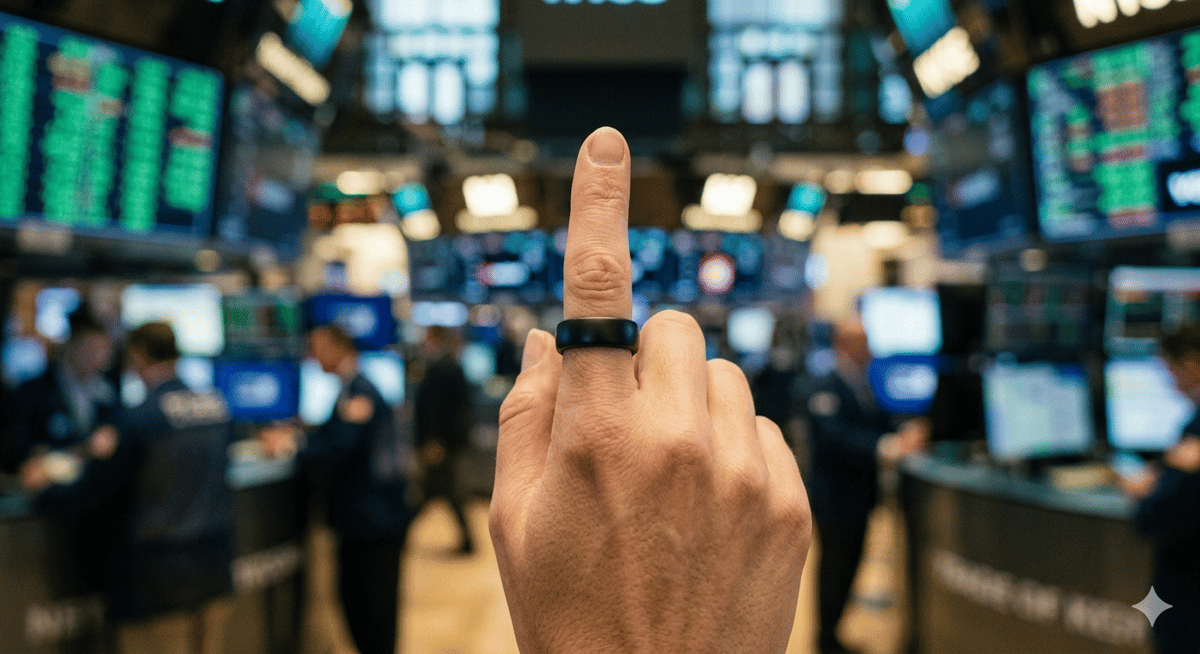
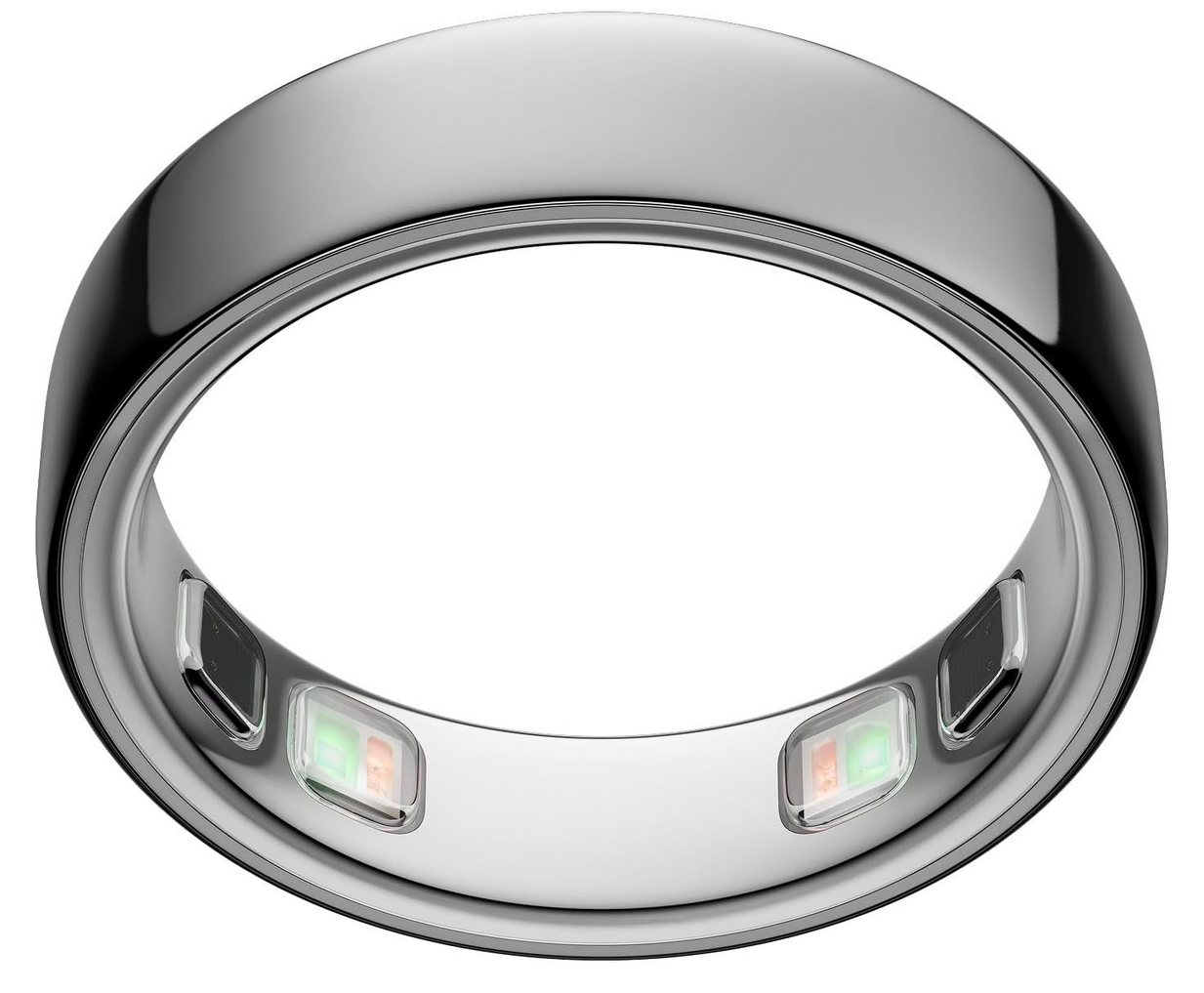
Oura Health has confidentially filed a draft IPO prospectus with the US Securities and Exchange Commission, the company confirmed on Thursday, setting up what could be one of the more consequential public-market tests for consumer health technology this decade.
The Finnish-American smart ring maker did not specify a listing timeline, saying it would proceed after the SEC completes its review, subject to market conditions. Goldman Sachs, Morgan Stanley, JPMorgan, Allen and Co., and Jefferies are managing the deal, with a public debut targeted for later in 2026.
The numbers
The figures behind the filing are difficult to ignore.
- Paid membership is on course to exceed five million this quarter, a fourfold increase over two years, with total revenue growing at the same rate.
- The company recorded revenue above $500 million in 2024 and is on track to reach roughly $1 billion in 2025, doubling its previous-year revenue.
- Chief executive Tom Hale has indicated 2026 sales could approach $2 billion.
- Cumulative ring sales have passed 5.5 million, more than doubling the 2.5 million reported as of June 2024.
- A $900 million Series E round last October valued the business at $11 billion.
- The company has raised more than $1.5 billion in total.
The retention figures make the strongest case for a premium multiple. More than 80% of Oura members renew their subscription after the first year. That figure, combined with a subscription model layered on top of hardware sales, gives Oura a more credible recurring-revenue story than most wearable businesses have demonstrated at scale.
Consumer electronics or health platform?
The central question for public-market investors is, “Which category does Oura belong to?”
Consumer electronics companies trade at modest revenue multiples. Health-tech platforms, particularly those with data assets, clinical partnerships, and demonstrated retention, attract considerably more. Oura will argue for, perhaps even need, the latter. In March, it acquired Doublepoint, the Helsinki-based AI gesture-recognition company, in what was then framed as a move to expand the platform beyond health sensing toward ambient computing. The company now counts partnerships with more than 1,200 organisations across health, wellness, and commercial brands, and has distribution across 4,600 retail locations globally.
Timing matters beyond the company’s own financials. The IPO window for profitable or near-profitable tech businesses reopened meaningfully in late 2025 after a two-year freeze. Institutional capital is available, equity markets have recovered, and a cluster of high-profile listings is expected to test appetite through the remainder of the year. Oura is moving early in that window.
The patent moat
Oura also arrives at the listing window with a patent position that its competitors cannot easily replicate. Since 2024, it has pursued a systematic campaign through the US International Trade Commission, winning an import ban against Ultrahuman and extracting a licensing agreement from RingConn. Further ITC investigations are now active against Samsung, Zepp Health, Reebok, and Noise. The core patents cover curved battery placement and internal ring architecture. These engineering constraints define the form factor itself, meaning any company building a meaningful smart ring faces Oura’s IP as a structural obstacle.
Competitors have argued the patents are drawn too broadly, and Samsung’s challenge to that position remains live. Public market investors will read the patent estate as a moat. The question in the S-1 will be how durable the ITC’s protections prove on appeal.
The contrast with other businesses in this sector is instructive. WHOOP operates in a band form factor in a less-litigated space, and its patent position has not been tested in the same way. A ring, by its geometry, concentrates IP risk into a small set of engineering solutions. Oura has spent three years acquiring and enforcing the rights to those solutions. That asset will appear nowhere on the income statement but will matter considerably to any investor thinking about the durability of Oura’s market position.
A sports tech IPO cluster
For readers of this site, the more significant context is structural. Oura is not filing in isolation. Strava confidentially filed for a US IPO in January, with Goldman Sachs advising, and targeting a 2026 listing after recording 50% year-on-year revenue growth and reaching profitability. WHOOP, now valued at $10.1 billion following a $575 million Series G, has signalled its intention to list publicly through a 600-person hiring drive and explicit CEO commentary. Three of the most closely watched companies in sports and health technology are approaching public markets within a similar window.
That cluster matters for a reason beyond investor appetite. Each listing will produce a public revenue and margin record for a business model, subscription-plus-hardware health technology, that has until now operated behind private funding. Oura’s S-1, when it surfaces, will be the first detailed look at what those economics actually look like at scale. Strava will provide the equivalent for software-only sports platforms. WHOOP sits between the two: hardware-dependent, subscription-driven, and at a valuation that implies the market believes the category is worth backing at scale.
No share count or offering price has been set. Oura has not named the exchange on which it intends to list, the share structure it will use, or the lockup terms for existing investors.

Last Updated on 3 October 2026 by tfk the5krunner
Small things I always use
- Garmin 90-degree charging adapter: Charges your Garmin from any USB-C cable. Essential when travelling. I use one.
- Body Glide: The blue anti-chafe stick swimmers and runners carry. I use it.
- Speedo earplugs: Fewer ear infections and no cold-water dizziness. I use them.
- Dryrobe Advance: My winter changing robe for open-water swims. I use one. A cheaper option is the AONYIYI changing robe.
- Maurten: Race fuel that stays easy on the stomach. I use them.
- Garmin charging puck: The quickest way to top up before a session. I use one.
- Injinji: Toe socks that stop rubbing, so you run more. I use them.
- Ultimate toe protectors: Stop black toenails on long runs. They work. I use them.
- Compressport R2 v2 calf sleeves: My calf sleeves of choice. I use them.
- Cellucor C4: My pre-workout before hard sessions.
- TPU tubes: Schwalbe Aerothan, Tubolito and Pirelli SmarTube. Light, tiny spares. I use all three.
- G8 insoles: Adjustable insoles that are good. I use them.
- Cycplus Cube: A 97g electric pump that gets a road tyre rideable in two minutes. I carry one. 5% off with code THE5KRUNNER.
Watches and sensors
- Polar H10: My daily driver for waking HRV.
- Polar Verity Sense: My backup arm-worn HR sensor.
- Nomad bedside charger: Charges my iPhone and Apple Watch overnight. I use it, and many of their bands.
- Train.Red: The best muscle oxygen sensor I’ve used.
- Tymewear: Accurate heart rate and reliable ventilatory zones. I use it to pace endurance rides over an hour.
- Garmin Forerunner 970: A pro-grade triathlon watch. I use this.
- Apple Watch Ultra 4: My daily smartwatch. No phone needed on rides.
- Garmin Fenix 9 Pro: I’ve just bought one.
On the bike
- Continental GP5000 for everyday riding, and Aero 111 on the front for special occasions.
- Helmets: Specialized S-Works Evade 3 for road riding, and Rudy Project Wing for TT-style races. I use both.
- Ravemen FR300: A front light that mounts under your Garmin or Wahoo. I use one.
- Wahoo TRACKR Radar: I use it on one bike and Varia on the other. They perform the same.
- Garmin Varia RTL515: Radar that warns you of cars from behind. I use this model.
- Wahoo ELEMNT Roam 3: The bike computer that’s easy to use. I use mine on most rides.
- Favero Assioma Pro RS2: Accurate power pedals that swap easily between bikes. I use this model.
Home and indoor training
- NPE Runn: Makes my basic treadmill smart, sending more accurate speed and distance to my watch and Zwift. I use it.
- Google Wifi: Keeps Zwift connected in my pain cave. I use it.
- Apple TV 4K: Zwift on the big screen. I use two.
- Google Nest Doorbell (wired, 2nd gen): My video doorbell, running in both Google Home and Apple Home. I use it.
Health, recovery and sleep
- FreeStyle Libre 3 Plus: Shows how my blood sugar responds to diet.
- hDrop: Measures my sweat loss in summer and indoors.
- Fourth Frontier Zone: Checks my heart under load in hard sessions.
- Oura Ring 5: My partner’s recovery tracker of choice.
- Kineon MOVE+: Red light therapy for niggles. It works.
- Eight Sleep: A cooling mattress cover my partner and I use nightly.
Reader-Powered Content

This content is not sponsored. It’s mostly me behind the labour of love, which is this site, and I appreciate everyone who supports it.
Support the site: Follow (free, fewer ads) · Subscribe (paid, ad-free) · Buy Me A Coffee ❤️
Written by real people, with AI assistance. Fact-checked and verified for originality. See the Editorial Policy. FTC: Affiliate Disclosure — some links pay commission. As an Amazon Associate, I earn from qualifying purchases.
tfk is the founder and author of the5krunner, an independent endurance sports technology publication. With 20 years of hands-on testing of GPS watches and wearables, and competing in triathlons at an international age-group level, tfk provides in-depth expert analysis of fitness technology for serious athletes and endurance sport competitors. ID
