Forerunner 170: Garmin exits sub-£200/$240 market, gives full physio metrics stack, drops MIP displays
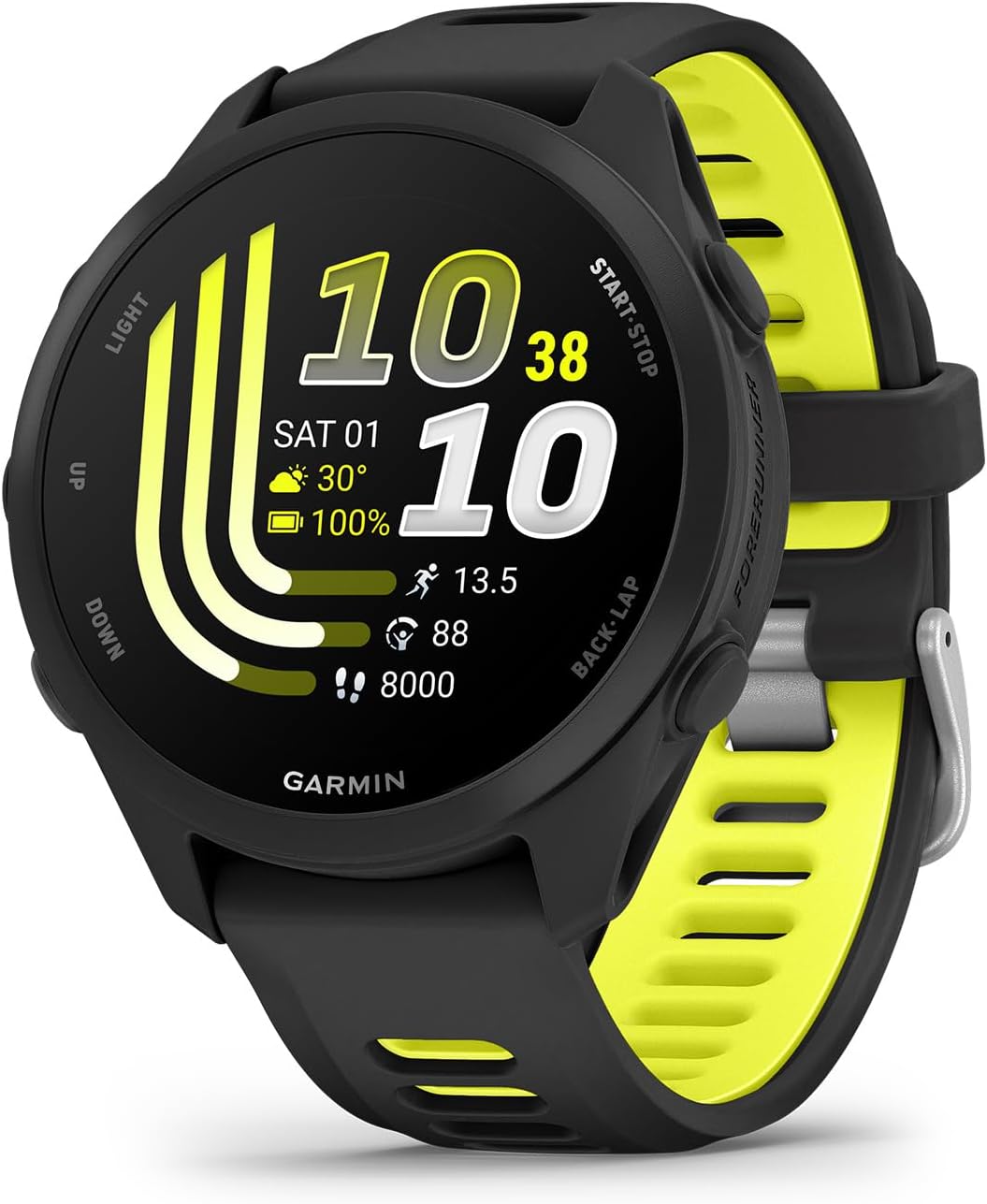
Garmin announced the Forerunner 170 at £259.99 / $299.99 on Tuesday, alongside a new £219.99 / $249.99 Forerunner 70. The FR70 replaces the FR55 and brings AMOLED and the full physio stack to Garmin’s entry tier for the first time.
Update: both watches have now been tested in full. Read the Garmin Forerunner 70 review and the Garmin Forerunner 170 review for GPS, heart rate and battery results.
There are a few interesting stories here, somewhat surprising for a low-end model launch.
- Sub-£200/$200 Garmin running watches end here. The new floor is £219.99 / $249.99, with prices rising across the line.
- MIP is dead in the Forerunner line. Every 2026 Forerunner is AMOLED.
- The full physio stack now starts at £219.99 / $249.99. Training Readiness, HRV Status, Training Load and Trail VO2max all ship on the cheapest watch.
- Elevate 4 optical HR sensor, the same generation as the FR165, thus no ECG or skin temperature.
Clearly, Garmin is betting here on its ecosystem and software depth against Coros and Amazfit, a great move. Coros and Amazfit retain the multi-band GPS edge at the price tier below the FR70, keeping the accuracy headline on their side.
On sale 15 May
Three watches go on sale on 15 May, with a total of 12 SKUs, including all colourways. The Forerunner 70 in six colours at £219.99 / $249.99. The standard Forerunner 170 in two colours at £259.99 / $299.99. The Forerunner 170 Music in four colours at £299.99 / $349.99.

Prices rise across the line
Garmin has lifted prices across all tiers. $50 for each step.
The shift aligns with the margin commentary Cliff Pemble offered during the Q1 2026 earnings call. Garmin is willing to cede the bottom of the market to Coros, Amazfit, and the rest and is repositioning the Forerunner range as a premium-feature-at-an-affordable-price brand rather than a low-cost-of-entry brand. The gap below £200 / $200 is now open.
Verdict: Sensible. Garmin must be nervous ceding the low end to the competition. That was always inevitable, but of course, it can keep selling older models and discounting newer ones as it sees fit. At least for now.
AMOLED everywhere
MIP has left the Forerunner consumer line.
Every 2026 Forerunner uses an AMOLED display. MIP survives only on the Enduro, Instinct and Fenix Solar platforms, where battery life and outdoor visibility take precedence over screen quality. For most buyers in 2026, MIP is no longer a factor in the Garmin running watch decision. AMOLED is the only choice.
Verdict: Again, sensible. The vast majority of watch buyers want a pretty screen.
Optical HR sensor: Elevate 4
The optical heart rate sensor on the back of all three new watches is Elevate 4, the same generation as the one in the Forerunner 165 it replaces.
That reading is consistent with Garmin’s recent pattern. The Vivoactive 6 launched in April 2025 with Elevate 4, two years after Elevate 5 was available, presumably to protect the Venu line above it. Holding Elevate 4 on the FR70 and FR170 keeps the same line of separation from the Forerunner 570, Forerunner 970 and Venu 4, which all carry Elevate 5.
It also means no ECG and no skin temperature on either watch. Both features require Elevate 5 hardware. They are not on the table for the FR70 or FR170 lineup.
The full physio stack at £219.99 / $249.99
The bigger surprise sits on the software side.
The Forerunner 70 shares the same physiology and running-training intelligence as the £299.99 / $349.99 Forerunner 170 Music above it. Training Readiness, Training Status, HRV Status, Training Load, Training Load Focus, Trail VO2 Max, Anaerobic Training Effect, Physio TrueUp, Unified Training Status, Improved Recovery Time and the adaptive Garmin Running Coach all appear on the FR70 spec sheet. So do wrist-based Running Power, PacePro, Quick Workout, Grade-adjusted pace and the Course- and weather-specific race predictor.
Phew. That is a significant package of physio features. Probably all people will ever need.
The FR70 stops short of the adaptive Garmin Cycling Coach, which is reserved for the FR170 and above. For a runner, this is irrelevant. For a cyclist who wanted Garmin’s adaptive plans on the bike, it is the line in the sand with an obvious place to jump to.
The headline metrics were previously the dividing line between the entry-level Forerunner and the FR255 or FR265. That dividing line has now moved up to the FR255 and FR265 themselves, which retain multi-band GPS (dual frequency) as their differentiator but no longer monopolise the training brain.
What the FR170 adds over the FR70
The step up to the standard FR170 buys five things. All of them will be useful to someone, but I doubt many would feel the need for the full package.
- Trail Runner. A barometric altimeter, and with it real-time elevation, vertical speed, total ascent and descent, and floors climbed. The FR70 estimates elevation from GPS only.
- 24/7 Smart Watch. Garmin Pay contactless payments. Useful for water, coffee or transit on long runs without a phone.
- Niche Swimmer. Open water swim metrics. The FR70 is pool only.
- Keen cyclist. Power meter compatibility with Vector, Rally and generic ANT+ power meters, plus the adaptive Garmin Cycling Coach and smart trainer control. The FR70 supports speed and cadence sensors and Varia, but it cannot use a power meter.
- Niche occasional navigator. Compass and gyroscope hardware are useful for navigation and motion-aware features.
Some of these omissions from the FR70 seem equally superficial and artificial. It is simply Garmin getting the potential buyer to think “Which Garmin?” rather than “Which watch?”. A good commercial move, but a mildly annoying one from the customer end.
What the FR170 Music adds over the FR170
The next step up buys music storage with Spotify, Amazon Music and Deezer, plus Wi-Fi. Wi-Fi matters. It is the single biggest functional difference beyond music itself, because activity uploads, software updates and music sync all run without a phone present. Music is one of those features that people either absolutely must have or do not care about at all. Binary.
The Music variant also picks up the Meditation app and Spoken Watch Face, which the standard FR170 does not list, and adds Teal Green and Red Pink to the colour options. Memory remains at 4 GB shared with the operating system and apps. Usable music storage on the FR170 Music could be tight, again prompting the buyer to think about the next model up.
The GPS battery, while streaming music, drops from 20 hours to roughly 7.5 hours in GPS-only mode and 6.5 hours in all-systems mode. For most runners, this does not matter. For ultra-distance runners, it removes music as an option for anything beyond a half-day effort. In absolute terms, the 7.5-hour battery life with music is in the normal range.
What is still missing
None of the three watches has multi-band GPS. None has maps. None has an LED flashlight. ECG and skin temperature are absent, since the optical sensor is Elevate 4 rather than Elevate 5. The Forerunner 265 and Forerunner 570 add multi-band GPS. The Forerunner 970 and Forerunner 570 carry Elevate 5. Full topographic maps require the Forerunner 970.
For a complete overview of all five active Forerunner models and how they compare in hardware, software and price, see the Garmin Forerunner guide.
The phrase “needing” is somewhat of an overstatement, as none of those features is truly needed, and there lies the rub. The FR170 has all the features to be more than competent.
Verdict
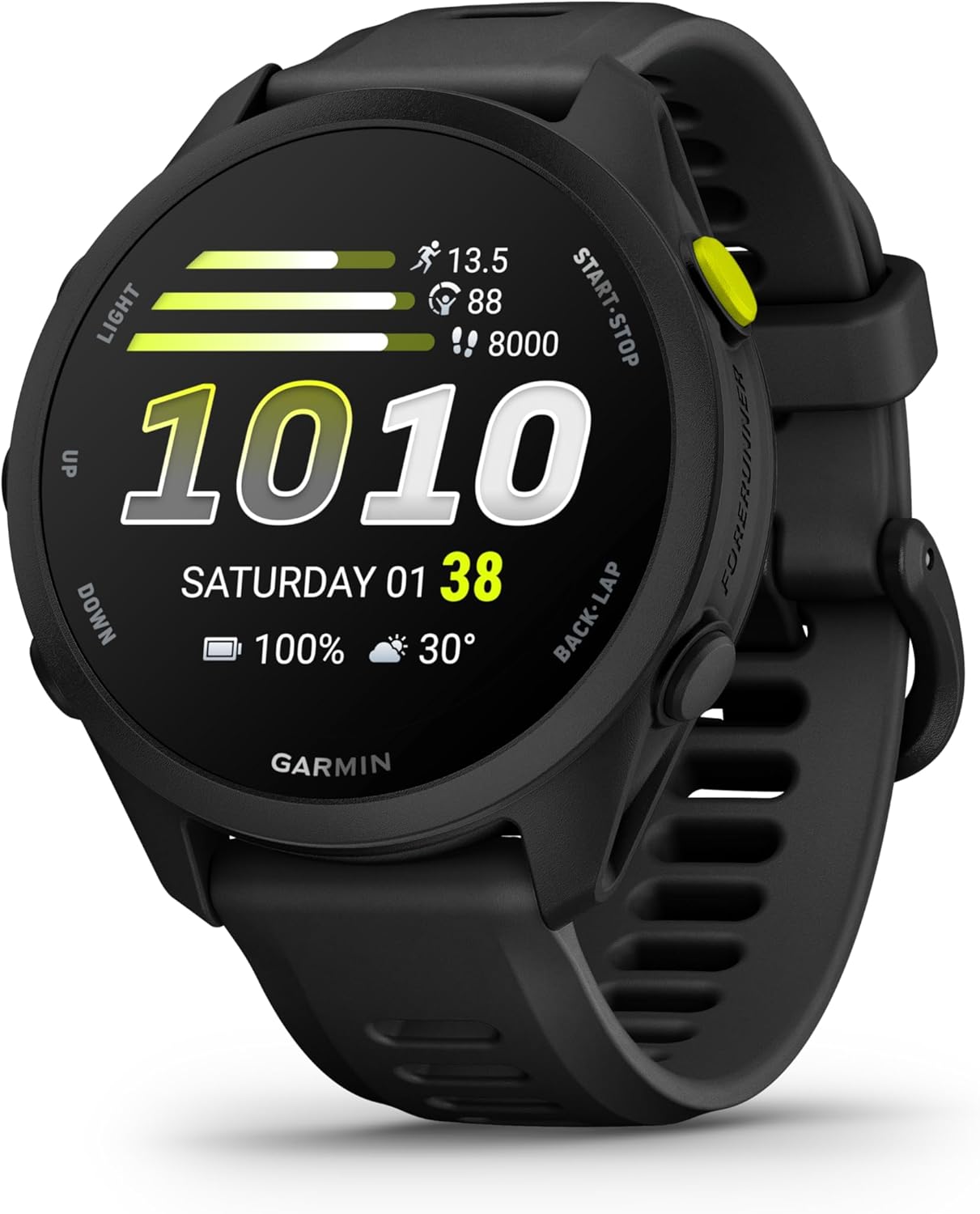
The Forerunner 70 is the most interesting watch of the three. For £219.99 / $249.99, you get the full Garmin physio stack in an AMOLED case with a 13-day smartwatch battery. Buyers who do not pay from their wrist, do not swim open water, and do not use a power meter will get the same coaching intelligence as buyers spending £299.99 / $349.99. This is a great move by Garmin, as the physiology metrics are increasingly sought after and must be a win at the entry level, where previously its cheapest Forerunner felt like the poor man of the bunch.
The standard Forerunner 170 is for runners who also cycle with a power meter, or who want accurate elevation on hilly runs. It is the most rounded watch in the lineup. That is great for the core running offer, with some interesting options that will appeal to many.
The Forerunner 170 Music is for runners who run with music phone-free, or who value Wi-Fi sync. With Garmin offering one of the best sets of streaming music compatibility on the market, this watch becomes a powerful competitor for the music-loving runner. The Meditation and Spoken Watch Face additions are bonuses, not reasons to upgrade.
Garmin has chosen software depth over headline specs to defend the segment. Most ecosystem capabilities dwarf those of the competition.
Coros and Amazfit now have a cleaner field at the price tier below the FR70, and Coros retains multi-band GPS at this price. The coaching brain is Garmin’s bet. It will hold runners already inside the ecosystem. It is a harder sell to a first-time buyer comparing the FR70 to the Coros Pace 4 at $249 with multi-band GPS, but that is only because many of the headline comparisons you see are spec-based. The true comparisons that look at the ecosystem capabilities will easily rank Garmin above Coros. You just do not see many of those in the reviews.
Does the Forerunner 70 have Training Readiness?
Yes. The Forerunner 70 carries the full Garmin physio stack, including Training Readiness, HRV Status, Training Load, Trail VO2 Max and the adaptive Garmin Running Coach. These were previously reserved for the Forerunner 255 tier and above. Full specifications are listed on the Garmin Forerunner 70 specifications page.
What optical heart rate sensor do the Forerunner 70 and 170 use?
The optical heart rate sensor on the back of the watches is Elevate 4, the same generation as the Forerunner 165 it replaces. This means no ECG and no skin temperature tracking.
Does the Forerunner 170 have multi-band GPS?
No. The Forerunner 70, Forerunner 170 and Forerunner 170 Music all use single-frequency GPS, GLONASS and Galileo. Multi-band GPS sits on the Forerunner 265, Forerunner 570 and Forerunner 970. Full sensor and positioning detail is on the Garmin Forerunner 170 specifications page.
Note: Per DC Rainmaker’s launch coverage, additional features new to FR70 include Quick Workout Creator (which looks interesting and needs testing), new ultra-trail-focused features, and an expanded sport profile list.
For a cross-brand view of where the FR170 and FR70 sit in the running watch market, see the running watches hub.
Last Updated on 29 August 2026 by the5krunner
My favourite kit and nutrition
- Garmin Fenix 9 Pro — I’ve just bought one.
- Injinji – Runners protect your toes. Avoid discomfort and minor injury. Run more. Run faster. I use them.
- Garmin 90-degree charging adapter — A small keyring adapter you can use anywhere. Essential when away. I use one.
- Garmin charging puck — the fastest and most reliable way to top up your Garmin before a session. I use one.
- Ravemen FR300 — Front light that mounts directly under your Garmin or Wahoo head unit. Keeps your bars clean and your beam pointed where it matters. I use one.
- Body Glide – The blue anti-chafe stick that all swimmers and many runners use. I use it.
- Maurten — The race nutrition trusted by elite athletes. Gels and drink mixes engineered to be easy on the stomach. I use them.
- Garmin Varia RTL515 — A radar rear light that alerts you to vehicles approaching from behind. Pairs with your Edge or Wahoo. I use this model.
- Favero Assioma Pro RS2 — The power-meter pedals most serious cyclists choose. Accurate, easy to move between bikes. I use this model.
- Garmin Forerunner 970 — A serious choice for a pro-grade triathlon watch. I use this.
- Polar H10 — My daily driver for accurate, waking HRV readings.
- Wahoo ELEMNT Roam 3 — The bike computer that has the feature Garmin lacks: usability. I use mine on most rides.
Reader-Powered Content

This content is not sponsored. It’s mostly me behind the labour of love, which is this site, and I appreciate everyone who supports it.
Support the site: Follow (free, fewer ads) · Subscribe (paid, ad-free) · Buy Me A Coffee ❤️
All articles are written by real people, fact-checked, and verified for originality. See the Editorial Policy. FTC: Affiliate Disclosure — some links pay commission. As an Amazon Associate, I earn from qualifying purchases.
tfk is the founder and author of the5krunner, an independent endurance sports technology publication. With 20 years of hands-on testing of GPS watches and wearables, and competing in triathlons at an international age-group level, tfk provides in-depth expert analysis of fitness technology for serious athletes and endurance sport competitors. ID

265(s) might be a better buy than 170 music.
Should one buy a garmin. No, too expensive for what you get. Unless you want to overquantify your life. Then buy the most expensive garmin you can afford.
Simple as that in my views.
No triathlon modes in any of the models?
probably not. that is for the middle and upper tiers. there might be a consecutive sports mode which is similar in effect
I guess there’s little information about the gps chipset. Would these also use the new Synaptic that you reviewed earlier (https://the5krunner.com/2025/04/22/garmin-changes-gps-chips-why-and-what-does-this-mean-going-forward/) or still the older Airoha as found in my FR255?
it isnt the best airoha dual frequency chipset for sure.
From memory it will be a ‘better/newer’ one than the one you have