Garmin Price Crunch: Rally Cut Signals Peak Garmin
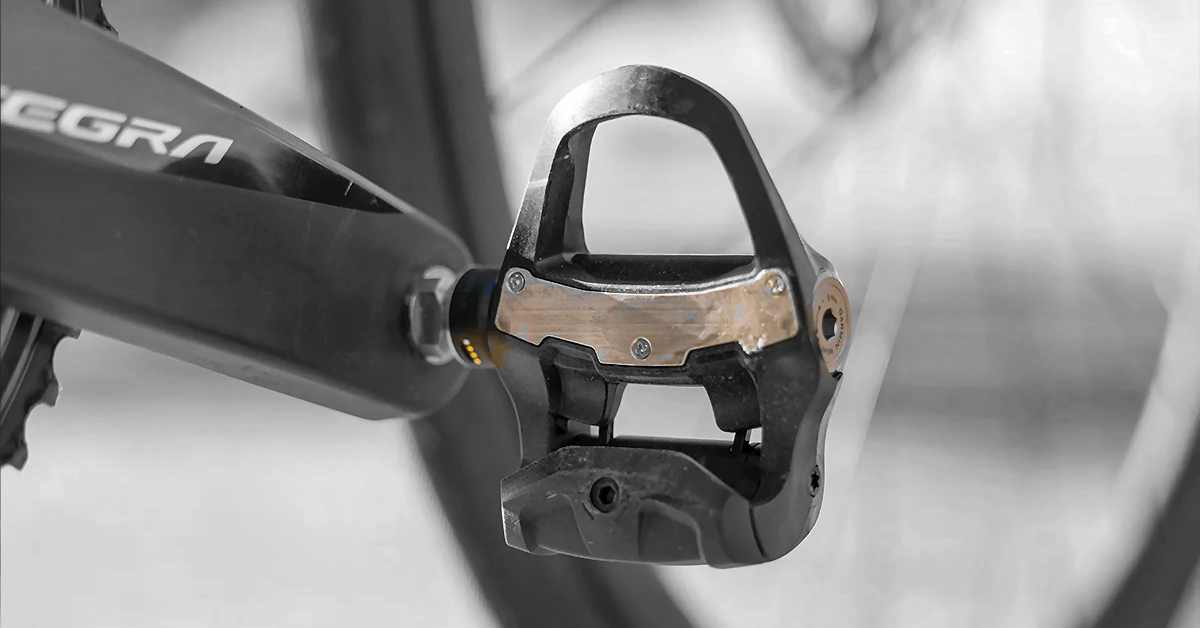
Garmin has permanently cut MSRP on the Rally x10 power meter pedal range by up to $400. The cut, announced today (14 May 2026) and first reported by DCRainmaker, lands eight months after the September 2025 launch. It is the kind of permanent reset Garmin has rarely made historically. It is also the second such cut in a few months. Combined with the Fenix 8 Pro MicroLED price cut earlier this year, the move suggests more than a single-product pricing tweak. Garmin may have reached the ceiling on its brand premium.
The new pricing
US MSRP, single-sided then dual-sided:
- Rally RS210 and RK210, road, Shimano SPD-SL or Look Keo, now $599 / $899, was $749 / $1,199
- Rally XC210, mountain bike, Shimano SPD, now $599 / $899, was $799 / $1,299
- Road and off-road bundle, now $1,199, was $1,499
- RS or RK replacement body, now $99, was $199
- XC replacement body, now $129, was $299
- RS or RK conversion kits, now $149, were $249
- XC conversion kits, now $249, were $399
The Road Dual is down $300. The XC Dual is down $400. Bundle pricing is down $300. Replacement bodies are halved or more. Conversion kits are down by around 40%.
The Favero comparison
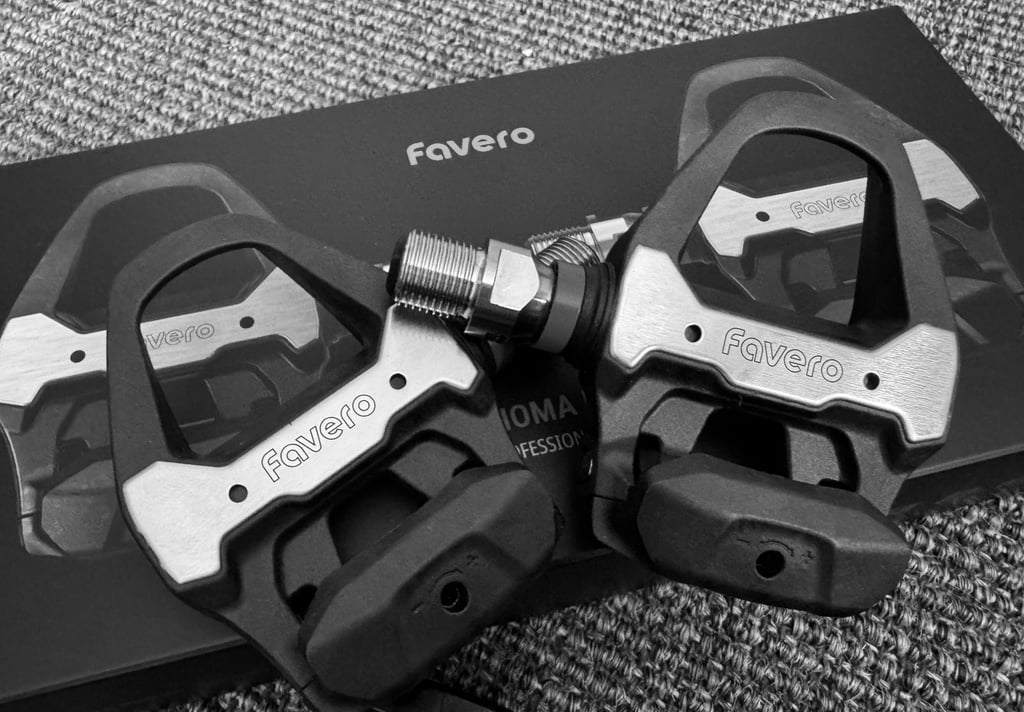
Favero’s Assioma PRO RS and PRO RL sell for $499 single and $789 dual. PRO MX off-road matches at $499 and $789. Before today, the gap to a Rally RS210 was about $400. After today, it is $110. Single-sided, the gap is $100.
The reviewer consensus over the past two years has been that Favero was the obvious go-to power meter pedal solution, at least that was the case under Garmin’s prior pricing. Today’s cut does not change that calculus by much.
Why now?
In February 2026, Garmin quietly took $300 off the Fenix 8 Pro MicroLED in the United States, dropping it from $1,999 to $1,699, with the EU and UK following in March. That watch was launched in September 2025, the same month as the Rally x10. Both products went out at premium pricing, supported, amongst other things, by the strength of the Garmin brand.
There is also the wider context. Garmin’s Forerunner 70, launched on 12 May 2026, is the first lower-end running watch the company has added to its range in some time. Pricing on the core lineup has crept upward year after year. The Forerunner 970, Tactix 8, and Fenix 8 Pro all pushed the envelope on what buyers would tolerate at launch.
Have we hit peak Garmin?
Garmin’s high-margin market position rests on three things:
- distribution,
- the best ecosystem, and
- a brand that buyers will pay extra for.
The first two are unchanged. The third…les so.
Favero remains visibly cheaper for an effectively identical pedal, with a lighter build and 160 hours of claimed battery life, compared with Garmin’s 90, following Favero’s February 2026 firmware update that boosted battery life by 167%! Magene’s P715 is cheaper still.
On watches, Coros has been chipping away at Garmin’s mid-range watch territory for years and has matured into a credible alternative. Polar and Suunto remain niche but valid lower-priced alternatives.
A permanent MSRP cut on an eight-month-old flagship is Garmin conceding that the prices are too high. It is not the end of the world by a long chalk. Demand for the Forerunner lines remains strong, and the company continues to grow.
What buyers should do
If you were waiting for Rally pricing to fall, you have your answer. At $899 dual, a Rally RS210 is a defensible purchase, particularly if local distribution and warranty support matter to you. For the full specification breakdown, accuracy testing and setup detail, see the Garmin Rally 210/110 buyer’s guide. For riders less concerned about local distribution, the Favero Assioma PRO RS remains lighter, has nearly double the claimed battery life and still costs $110 less. The buying decision is no longer super-obvious, but it certainly hasn’t flipped in Garmin’s favour.
Quick answers
How much did Garmin cut Rally pedal prices in May 2026?
Garmin cut MSRP across the Rally x10 range on 14 May 2026 by $150 to $400, depending on the model. The dual-sided Rally RS210 and RK210 fell from $1,199 to $899. The dual-sided XC210 fell from $1,299 to $899. Single-sided variants fell from $749 or $799 to $599. The road-and-off-road bundle fell from $1,499 to $1,199. Replacement bodies were halved. Conversion kits were cut by around 40%.
Is the Garmin Rally now cheaper than the Favero Assioma PRO RS?
No. The Favero Assioma PRO RS remains $110 cheaper than the Rally RS210 on a dual-sided basis and $100 cheaper on a single-sided basis. The gap was about $400 before the May 2026 cut. Favero also offers a lighter pedal and a longer claimed battery life of 160 hours, compared with Garmin’s 90.
Why did Garmin cut Rally pedal prices?
Garmin did not issue a public statement. The cut is the second permanent MSRP reduction Garmin has made in three months, following the Fenix 8 Pro MicroLED cut in February 2026. Both products launched in September 2025 at premium pricing. The pattern suggests that sell-through at launch pricing was insufficient.
Last Updated on 29 June 2026 by the5krunner
My favourite kit and nutrition
- Garmin Fenix 9 Pro — I’ve just bought one.
- Injinji – Runners protect your toes. Avoid discomfort and minor injury. Run more. Run faster. I use them.
- Garmin 90-degree charging adapter — A small keyring adapter you can use anywhere. Essential when away. I use one.
- Garmin charging puck — the fastest and most reliable way to top up your Garmin before a session. I use one.
- Ravemen FR300 — Front light that mounts directly under your Garmin or Wahoo head unit. Keeps your bars clean and your beam pointed where it matters. I use one.
- Body Glide – The blue anti-chafe stick that all swimmers and many runners use. I use it.
- Maurten — The race nutrition trusted by elite athletes. Gels and drink mixes engineered to be easy on the stomach. I use them.
- Garmin Varia RTL515 — A radar rear light that alerts you to vehicles approaching from behind. Pairs with your Edge or Wahoo. I use this model.
- Favero Assioma Pro RS2 — The power-meter pedals most serious cyclists choose. Accurate, easy to move between bikes. I use this model.
- Garmin Forerunner 970 — A serious choice for a pro-grade triathlon watch. I use this.
- Polar H10 — My daily driver for accurate, waking HRV readings.
- Wahoo ELEMNT Roam 3 — The bike computer that has the feature Garmin lacks: usability. I use mine on most rides.
Reader-Powered Content

This content is not sponsored. It’s mostly me behind the labour of love, which is this site, and I appreciate everyone who supports it.
Support the site: Follow (free, fewer ads) · Subscribe (paid, ad-free) · Buy Me A Coffee ❤️
All articles are written by real people, fact-checked, and verified for originality. See the Editorial Policy. FTC: Affiliate Disclosure — some links pay commission. As an Amazon Associate, I earn from qualifying purchases.
tfk is the founder and author of the5krunner, an independent endurance sports technology publication. With 20 years of hands-on testing of GPS watches and wearables, and competing in triathlons at an international age-group level, tfk provides in-depth expert analysis of fitness technology for serious athletes and endurance sport competitors. ID

Coros’s market dominance is not as high as expected, and the popularity of Coros in online communities is due to China’s comment manipulators.
Looking at sales volume on Amazon, Garmin’s sales volume still surpasses Coros.
Coros’ sales are focused only on the entry-level models Pace3 and Pace4, and even they sell less than Garmin’s high-end Forerunner 970.
coros nomad and apex4 have virtually zero monthly sales.
I recently took 30th place in a half marathon, and among the 40 or so users on Strava with similar records, the majority were Garmin and only 2 were Coros.
I agree with your comment in general. That said Coros has made significnat inroads in the last 2 years into certain younger demographics, other research shows it.
but your point about its limited product range, to me, is key and its probably worse than you think. Yes the chepaer models have all the sales BUT they are the ones with the lower margins.
Coros needs to find some new product ideas. It will otherwise struggle to survive despite its current sccess.