I have spent the last few mornings watching over thirty people move through the free weights and station area of my gym. Not one was logging their session in any meaningful way. More than ten had an Apple Watch or similar on their wrist, but those were for the treadmill run or Zumba class before or after, not for what happened under the bar. This is the context for what Strava announced today.
What Strava Is Launching
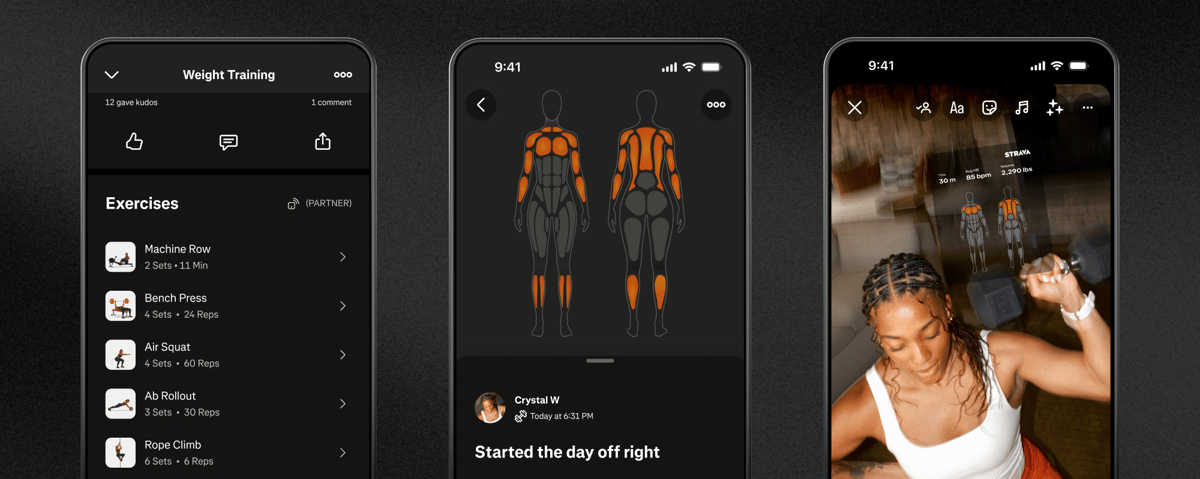
Strava has overhauled its strength training experience, adding a dedicated workout log, auto-populated muscle maps, five new sharing formats, and 14 partner integrations. The company cites more than 500 million strength-activity uploads on the platform in 2025, making it one of the fastest-growing activity types. The features roll out globally in the coming weeks.
The 14 confirmed partners are: Garmin, Amazfit, COROS, Whoop, Runna, Fitbod, Hevy, JEFIT, Caliber, iFIT Personal Trainer, Liftoff, Motra, REMAKER, and 24 Hour Fitness (joining this summer). An impressive list of some of the category’s heavyweights.
The strength-first apps tend to be better than anything the sports watches offer, so, for anyone who has been patching together strength data across their favourite apps and a smartwatch they use for cardio, the promise of an improved, consolidated view on Strava is real.
The IPO Context
The timing is not accidental. Strava is investing in growth after filing confidentially for a US IPO on 2 February 2026, reportedly working with Goldman Sachs. Its most recent private valuation was approximately $2.2 billion. Prospective investors will inevitably expect to see total addressable market expansion, and strength training is large, growing, and historically underserved by the platforms that dominate endurance sport. Strava’s own year-end data described aesthetics-focused strength training as a defining shift among its youngest and fastest-growing demographic. For a platform eyeing public markets, that is a generation worth building features for before the listing, not after.
An Industry Moving in the Same Direction
Strava is not moving alone. Garmin, one of the named integration partners here, has been converging on the same territory from the hardware side. A Garmin research survey circulated in April listed potential future features, including a Neuromuscular Readiness Score, an Acute Strength Load metric, and a Muscle Map for Recovery. A Muscle Battery trademark filing also emerged earlier this year.
Garmin’s CIRQA device, which this site has been tracking closely, fits the same pattern: a product that appears to be built around the Connect+ subscription for a different kind of athlete than the one doing a four-hour ride. The platforms and the hardware are converging on the gym from multiple directions simultaneously, and Garmin’s presence on Strava’s integration list today makes that obvious.
Is This Good for Strava’s Existing Audience?
Some will argue Strava risks diluting its focus by expanding beyond running and cycling. That criticism probably misses how many endurance athletes already incorporate strength work into their training. These users are already on the platform. They have just lacked the tools to log that work properly. Keeping all training in one place has genuine value for load management. For the social layer, Strava does better than most.
The Data Quality Problem
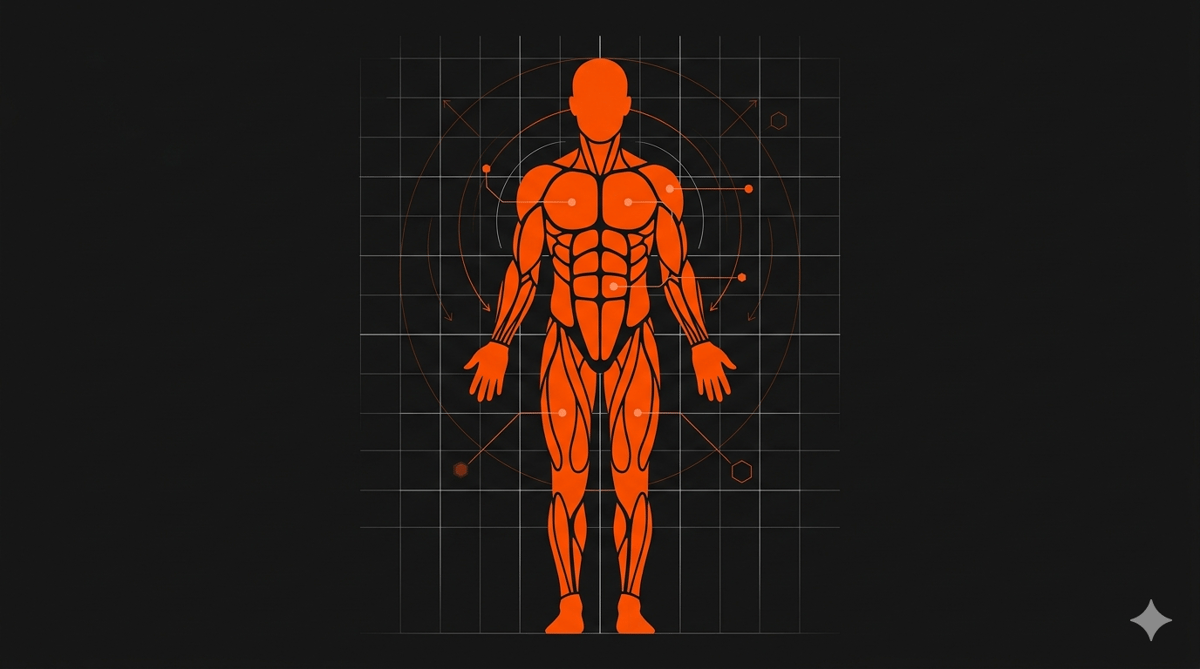
Where the optimism needs tempering is the data. Until today, Strava’s muscle maps worked by manual selection: users tapped muscle groups on an anatomical diagram after their session. The new system attempts to auto-populate those maps from logged exercise data. That is a meaningful, well-intentioned upgrade. But its quality depends entirely on whether the exercise was logged correctly — the right movement, the right weight, the right reps. In practice, most gym sessions are improvised. Sets are skipped, weights adjusted mid-workout, and exercises substituted when equipment is occupied. A muscle map generated from incomplete or approximate inputs looks informative. It is not.
There is already a strand of commentary across various forums describing the current implementation as little more than a front-and-back body-image generator. Auto-population from structured workout logs should improve on that, but only for users disciplined enough to log accurately in the first place.
The Adoption Gap
The adoption question is separate and equally relevant. In my gym, the proportion of people tracking sets and reps in any app while lifting is negligible. The wearables currently in use are almost entirely used for cardio. This will not be universal — younger gym demographics and boutique fitness environments skew differently — but the gap between integration capability and real-world logging behaviour is wide. The pipeline works only if a willing user is at the sharp end of it all.
The Real Opportunity: Becoming the Social Layer for Strength
The challenge is not that strength logging tools do not exist. Apps such as Hevy, Strong, and Fitbod already serve that market well. The problem is that no platform has yet become the default social layer for strength training, as Strava did for endurance sports. That is the gap Strava is trying to fill, and it is a harder problem than shipping a workout log. Class-based training is already social in person. Strava’s endurance community was built on shared suffering: long runs, big rides, race finishes. Replicating that dynamic in a weight room, for an audience that has never defaulted to Strava, requires more than a feature update. The opportunity is to expand the social touch to a genuinely new audience, not to add a secondary feature to an existing one.
Verdict
Strava is right to make this move. The data supports it, the commercial logic supports it, and the audience is at least partly there. The risk is not strategic. It is executional: whether the data quality that makes endurance tracking useful can be replicated in an environment where inputs are inconsistent, and users are less habituated to logging. The product announcement does not answer that. Real-world muscle maps, six months from now, will.
Quick answers
Which apps and devices now integrate with Strava's strength experience?
The 14 partners confirmed at launch are Garmin, Amazfit, COROS, Whoop, Runna, Fitbod, Hevy, JEFIT, Caliber, iFIT Personal Trainer, Liftoff, Motra, and REMAKER. 24 Hour Fitness joins this summer.
How do Strava's muscle maps work now?
The previous system required users to manually select muscle groups after a session by tapping an anatomical diagram. The updated system attempts to auto-populate muscle groups from structured exercise data logged during the workout. Accuracy depends on how completely the session is recorded.
Is the new strength experience available to all Strava users?
Strava has not specified subscriber-only restrictions in the announcement. The rollout is described as global to all users in the coming weeks.
Last Updated on 3 October 2026 by tfk the5krunner
Small things I always use
- Garmin 90-degree charging adapter: Charges your Garmin from any USB-C cable. Essential when travelling. I use one.
- Body Glide: The blue anti-chafe stick swimmers and runners carry. I use it.
- Speedo earplugs: Fewer ear infections and no cold-water dizziness. I use them.
- Dryrobe Advance: My winter changing robe for open-water swims. I use one. A cheaper option is the AONYIYI changing robe.
- Maurten: Race fuel that stays easy on the stomach. I use them.
- Garmin charging puck: The quickest way to top up before a session. I use one.
- Injinji: Toe socks that stop rubbing, so you run more. I use them.
- Ultimate toe protectors: Stop black toenails on long runs. They work. I use them.
- Compressport R2 v2 calf sleeves: My calf sleeves of choice. I use them.
- Cellucor C4: My pre-workout before hard sessions.
- TPU tubes: Schwalbe Aerothan, Tubolito and Pirelli SmarTube. Light, tiny spares. I use all three.
- G8 insoles: Adjustable insoles that are good. I use them.
- Cycplus Cube: A 97g electric pump that gets a road tyre rideable in two minutes. I carry one. 5% off with code THE5KRUNNER.
Watches and sensors
- Polar H10: My daily driver for waking HRV.
- Polar Verity Sense: My backup arm-worn HR sensor.
- Nomad bedside charger: Charges my iPhone and Apple Watch overnight. I use it, and many of their bands.
- Train.Red: The best muscle oxygen sensor I’ve used.
- Tymewear: Accurate heart rate and reliable ventilatory zones. I use it to pace endurance rides over an hour.
- Garmin Forerunner 970: A pro-grade triathlon watch. I use this.
- Apple Watch Ultra 4: My daily smartwatch. No phone needed on rides.
- Garmin Fenix 9 Pro: I’ve just bought one.
On the bike
- Continental GP5000 for everyday riding, and Aero 111 on the front for special occasions.
- Helmets: Specialized S-Works Evade 3 for road riding, and Rudy Project Wing for TT-style races. I use both.
- Ravemen FR300: A front light that mounts under your Garmin or Wahoo. I use one.
- Wahoo TRACKR Radar: I use it on one bike and Varia on the other. They perform the same.
- Garmin Varia RTL515: Radar that warns you of cars from behind. I use this model.
- Wahoo ELEMNT Roam 3: The bike computer that’s easy to use. I use mine on most rides.
- Favero Assioma Pro RS2: Accurate power pedals that swap easily between bikes. I use this model.
Home and indoor training
- NPE Runn: Makes my basic treadmill smart, sending more accurate speed and distance to my watch and Zwift. I use it.
- Google Wifi: Keeps Zwift connected in my pain cave. I use it.
- Apple TV 4K: Zwift on the big screen. I use two.
- Google Nest Doorbell (wired, 2nd gen): My video doorbell, running in both Google Home and Apple Home. I use it.
Health, recovery and sleep
- FreeStyle Libre 3 Plus: Shows how my blood sugar responds to diet.
- hDrop: Measures my sweat loss in summer and indoors.
- Fourth Frontier Zone: Checks my heart under load in hard sessions.
- Oura Ring 5: My partner’s recovery tracker of choice.
- Kineon MOVE+: Red light therapy for niggles. It works.
- Eight Sleep: A cooling mattress cover my partner and I use nightly.
Reader-Powered Content

This content is not sponsored. It’s mostly me behind the labour of love, which is this site, and I appreciate everyone who supports it.
Support the site: Follow (free, fewer ads) · Subscribe (paid, ad-free) · Buy Me A Coffee ❤️
Written by real people, with AI assistance. Fact-checked and verified for originality. See the Editorial Policy. FTC: Affiliate Disclosure — some links pay commission. As an Amazon Associate, I earn from qualifying purchases.
tfk is the founder and author of the5krunner, an independent endurance sports technology publication. With 20 years of hands-on testing of GPS watches and wearables, and competing in triathlons at an international age-group level, tfk provides in-depth expert analysis of fitness technology for serious athletes and endurance sport competitors. ID

The data are wrong, and from what I can tell, there is no way to remove the muscle map from your activity. You can edit the muscle map, choosing which muscle groups to highlight or not highlight to correct the data, but I could not save a muscle map with no groups highlighted. I also could not prevent the muscle map from displaying in the activity feed if I don’t want to show it at all.
This has been a big grievance of mine since I bought my first Garmin VivoActive 4 years ago. Strength movement tracking on watches is awful, and they seem incapable of using their data sets to improve it. My watches (all Garmins) sometimes miss entire sets of squats or deadlifts or bench presses because with heavy weight you’re moving slower. They also seem incapable of detecting that my pullups and my pushups are completely different movements and orientations. It doesn’t need to be perfect, I can enter my own load (weight moved) but the type of movement should be easier to detect. (Also, we don’t need 12 different variations of squat to choose from. Identify the movement family (i.e. “Squat” and if I really care to change it to a Pendulum Squat I can do that later.) /end rant
agreed.
proper autodetection can never detect the movement correctly , even if it could it couldn’t detect the weight. even if it could it would find it hard to work out the velocity of movement. all are needed.
so voice is the only (partial) solution to correct logging. interpretation is harder