 IRONMAN UK (BOLTON, 2017)
Having gone through an ‘Age Group’ triathlon/duathlon phase in previous years, it was always going to be interesting comparing that experience to the parallel ‘big event’ experience of a branded Ironman.
The purpose of this post is to briefly explain the event and offer a little insight into MY training, in case you are ever considering this kind of race for yourself. Since this site is what it is, I will also cover some of the gadgets.
THE EVENT
Ironman UK was definitely on another level in terms of crowd participation. You always got the impression, with the ITU/ETU age-group events, that 98% of the crowd were family and friends. I’m sure a lot of the same families and friends were also there at Bolton for Ironman UK, but it definitely seemed like there were significantly more than 2% of the crowd being locals. The good weather probably helped get everyone out and added to the ever-present good spirits.
Whilst the 6 AM start in a lake at an out-of-town location didn’t attract any local spectators, the support built up throughout the day. The first lap of the bike course had some wetness in the air and on the ground, but by the second lap, there was great support at key parts of the course. Normally, either at the bottom, middle or top of one of the hills. Moving on to the run, in total, there were probably thousands of spectators; their applause and cheers were heard numerous times during the 3-lap run. I’m never quite sure how much having an athlete’s name called out spurs the athlete on, but I’m sure it must for many – there was a lot of encouragement from the crowd. All great stuff.
The event itself is organisationally centred at Bolton Wanderers FC’s stadium (Macron) but with an out-of-town Swim and T1 at Pennington Flash Lake. T2 is at the stadium, and the finish is in the town centre. If you think about what has to be organised at these disparate locations and then integrated into 17+ hours of total race time, then you realise that, as it seemed to me, the event must be extremely well thought through and organised. We could always nitpick, but I’m in a good mood today, so I won’t. It was a good event.
The sheer overall distance of the course was very challenging for me. If you plan to do an Ironman, I would definitely recommend doing a Half IM first (I have and you really SHOULD do that). I’m sure there are easier full-distance courses (Outlaw, non-Ironman) and harder ones like IM Wales. Nevertheless, this was the hardest thing I’ve ever done sportingly by quite a long way. It turned out to be a challenge-completion more than a race for me and many others.
THE 3 DISCIPLINES
The swim is pretty much the same as any other.
The bike has a mile or so of vertical climbing, probably not too dissimilar to London-Brighton and back. If you train for the distance and the total ascent, then the bike is not particularly hard.
The marathon run at the end starts flat and then goes through 3 hilly laps. Well, it seemed hilly at the time. As a standalone marathon, you might describe it as ‘a bit more than undulating,’ but after 100+ miles of cycling, ng it did feel a little mountainous as the race progressed.
TRAINING
If you had trained well for it, then you would probably have found it easier than I did. But the vast majority of runners walked at multiple points along the course. I would say more than 95% of people did the ‘run-walk’, especially when refuelling/hydrating.
FWIW: I would consider myself a reasonably good Age Group athlete and have pre-qualified for shorter ETU/ITU events. IMO, my training (and race day strategy) was largely executed ‘properly’. I did finish quite well up the AG list in the first quarter, but not as well as I hoped/expected.
The only problem I had with the training was missing a few key weeks of running due to injury. If I then couple that with my historic avoidance of longer running distances (hence the5krunner.com), you can perhaps sense the race-day problem that I will shortly reveal.
I know that if I were doing a shorter race, then those two factors would have had a MUCH lesser impact.
To put my training into perspective, I probably do 10 hours a week on average, maybe more. I very significantly ramped up the training as the following chart shows. The dip shows the running-injury period.
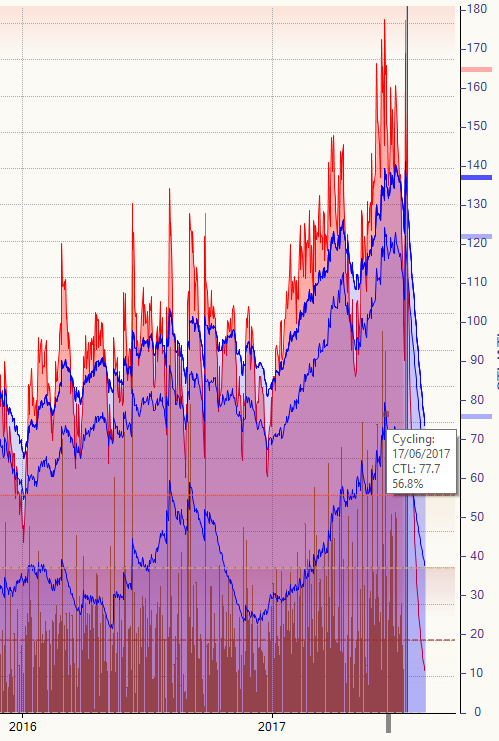
So I was probably peaking at just under 20 hours of training a week leading up to IMUK. I think most of us would consider that as ‘taking it seriously’. I’d never done these training loads before, and I was probably somewhere close to the limit of what my training load could be – hence maybe the injury.
My race goal was to ‘race it’ rather than finish it. Although I had no illusions of Kona qualification or anything like that. I’m not that good.
I had time- and position-related goals, with the time goals being scientifically based on adding up my 3-discipline times and ‘adding a bit on’ with ‘a bit’ being half an hour. Note to self: make it an hour next time. 😉
My training strategy was broadly: maintain swim and consolidate ability to do the distance; significantly increase bike load for 3-7 hours rides, including hard hills; increase an easy-paced running load to something like a ‘marathon-light’ level.
I did the swim/bike training to my satisfaction, but with running, I only got up to relatively frequent 10-16-mile runs. And I’d planned to get another 10km on either end of those limits – but didn’t.
My training was periodised, and I built, peaked, and tapered in what I would consider a broadly ‘proper’ fashion. Within the constraints of what I’ve already said about training around injury, I hit my Zone 1-2 endurance targets. I was perhaps unable to hit some of the harder Zone 4 work later on in the training due to cumulative fatigue.
My personal risk areas were: failing to hydrate/refuel properly; cramping on the run; and mechanical issues. Mitigations were, respectively: practice!; practice and magnesium; and CO2 + inner tube + bike service.
So, with all that in mind, I approached the race with nervous confidence, a degree of trepidation and a smile.
RACING
I was vaguely happy with my overall time and happy with the swim+bike time but let’s not get too far ahead.
I took a gamble with something to aid my sleep. It paid off, and I had 6 good hours of sleep. So I woke up at 4 o’clock and soon felt good.
Being fairly laid-back, I arrived later than most people, but all was good in getting to the start line, with toilet stops and the like.
The rolling start format to the swim was excellent. There was no nonsense around me at any point in the race, and no one seemed to object too much to the occasional accidental contacts. Cramp hit on lap 2. That was a bit of a worry, as I don’t normally get cramps when swimming, although I had been getting them in recent weeks. As Dory would say, “Just keep swimming”. So I followed her advice.
T1 was a leisurely affair. I even had time to put on my special running socks. Someone had tried to steal my Garmin from the bike… luckily, the cable tie helped stop them. tut, tut. You naughty person.
As an average swimmer, I always like triathlons, as I tend to overtake far more people on the bike than they overtake me. This was no exception. Indeed, it was probably better than other races as many people seemed to have tired on the second of the two bike laps. So I did keep passing people for the entire bike leg.
I wouldn’t describe the bike route as ‘technical’. Yet there are a few sharp turns, and there were SEVERAL crashes, but really, there shouldn’t have been. Perhaps there were some dicey patches of mud on the first lap, but by the second, it was all good.
Some parts of the road surface were nearly excellent. The occasional hole (apart from the only one I hit not too far from the finish) was marked with paint. But generally, the surface was better than what I’m used to in Surrey. So all was good, in my opinion.
The hills/ascents were perfectly fine.
Nice scenery, good crowd. Sorted.
I probably started to feel less than optimal (but still good) at somewhere around 80/90 miles. If I were on a 110-mile bike ride, I would have put the hammer down at that point and still finished strongly. But clearly more was to come, so the hammer stayed in the tool bag. Interestingly, this is a chart of the PERFORMANCE CONDITION metric from Firstbeat on my Garmin – it seems to agree with how I felt. I only looked at it afterwards, but it didn’t seem too unreasonable. I might have to look at that a bit more closely in the future.
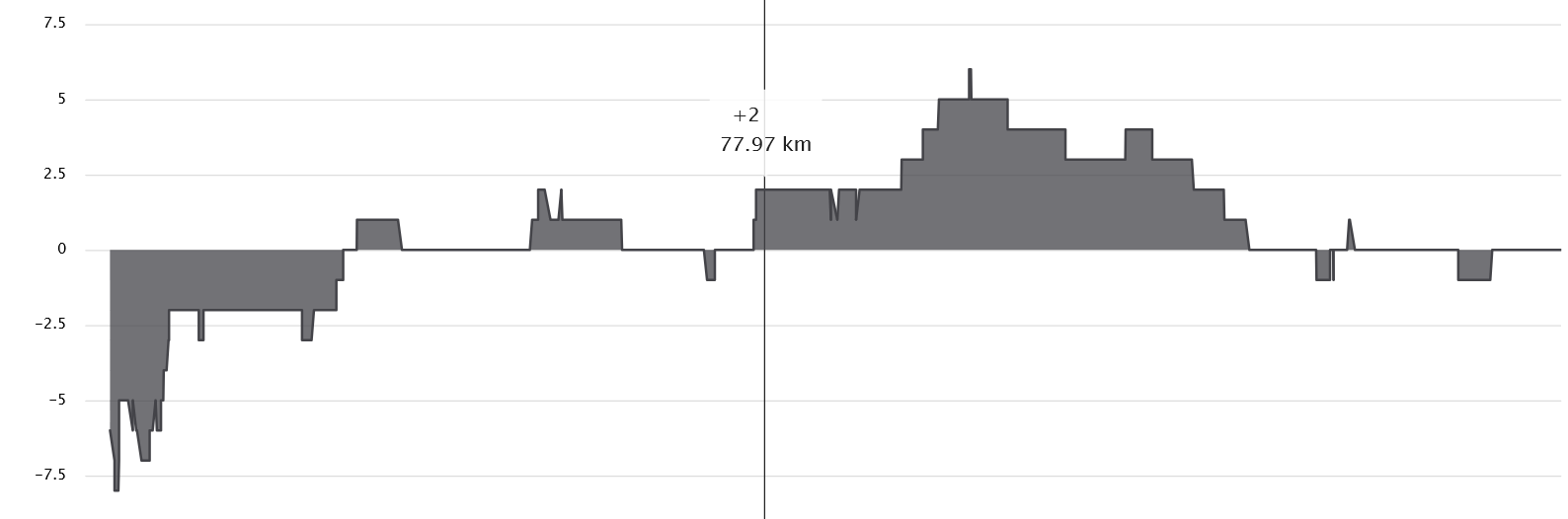
Bike NP (avg power) target was at the top of Zone 2. Didn’t quite hit the NP target, but was close enough. Zone 3 was 24% of the time – higher than I thought when riding and maybe too high on reflection. Zone 4 was 4% of the time, again a bit more than I remember. Time-in-Heart-rate zones were similar, maybe a bit lower, and HR was a bit higher at the start until it settled down.
The moment of truth, then, as we emerge from T2 onto the run. Almost straight into a hill and……no cramp. Joy. Running well (running properly). CA, a couple of km later. Still no cramp. Awesome. Still running properly. It’s going to be good.
Apparently the temperature was 25 degrees at this point. Still felt great. No problemo.
The first 10km of running felt good. Looking back at the stats, funnily enough, perhaps only the first 5k was good in reality (I should stick to my day job as the5krunner). Thereafter, the ‘hills’ on the run laps progressively took their toll. Running through the first water/fuel stop and quickly grabbing two cups turned into an amble through the stops, and eventually a walk through the later ones.
So my secret goal of “not walking” was history.
Being overly worried about insufficient nutrition, I probably over-fueled and developed mild GID. Not a big problem, just discomfort.
A glance at the watch…cadence good, heart rate loooooow, pace and power in places it’s too impolite to mention in polite society. Hey, my calves don’t hurt. That’s a first. Shame everything else seems to hurt.
The last 2 miles are mostly downhill, which was an incentive to run properly. At least it felt like running properly, given the degree of hurt, but the reality was slower. Naturally, I sped up for the finish line photo.
Medal. T-shirt. Sorted.
TIME LOST
I always agonise about what extra time I could have saved, especially on short races. Maybe 5 minutes on this one if I didn’t faff around? Maybe 10 minutes if I didn’t faff around AND if I ran a bit harder to the fabled 110% level? Either way, not enough to make that much of an overall difference.
Cycling a bit slower may have helped the run. Swimming a bit faster wouldn’t have hurt anything.
GEAR
Some thoughts on some of the gear I used. I wimped out and went all-Garmin in the end.
Swimming
- Well, I saw someone wearing some sort of gloves. Naughty boy.
- I just used my normal stuff. Nothing special or noteworthy other than the HRM-TRI for recording the HR for later viewing. Does anyone look at their watch when OW is swimming? Not me.
- Having said that, I did set the swim mode to beep/vibrate every 10 minutes; that was a reasonable way of realising I was a tad behind schedule with the last quarter to go.
- I used the Garmin 935 with some trepidation. It was mostly going to be a ‘recording device’, albeit an expensive one.
Cycling
- It’s definitely a TT bike course if you can hold the position for over 80% of your expected duration.
- Favero BePro PM – awesome. Even more so, it dangled from carbon cranks and ceramic bearings. Sweet.
- New 60mm Mavic CXR wheels (80mm rear) – awesome. I’m going to write about these at some point as they are super-sweet.
- Q-rings – only a big one, 53T I think. Nice. I used a circular inner one. Habit.
- Ultegra bits – they shift well enough for me. Likey, likey.
- My front tyre was quite narrow – maybe 21mm, I’ll have to check, they came with the wheel and a special aero tyre rim fairing. Comfy enough. I had a 23mm Speedy Schwalbe on the rear. Tyre pressure was probably in the 90s PSI on both – I’m going to write about simple bike performance bits in the future…not having 120psi or above even with tubs would be one of those areas 😉
- Garmin Edge 820 – I set it on ULTRATRAC mode for GPS, just in case of battery issues. I think the battery life is now down to 7.5/8 hours ish after a year of use??? So it should be Ok for most people for an IM. It lost the power signal, completely coming out of T,1, so I had to reboot it. Other than that, it was good. The latest firmware seems good to me, and the touchscreen now works (even when it was wet at the start… ta-da!).
- Garmin 935 – obviously was wearing this as well here on the bike, but never used it for anything but recording. I used the proper GPS settings to get a good track, preferring it over the Ultratrac track on the 820. Interesting, I got a few STRAVA top10s with the 820 on ULTRATRAC on my personal account, as it had me cutting corners!! Don’t worry, I deleted it.
- In the end, there were no notable dropouts, so both power tracks were the same.
- I used an 11-32T cassette. I probably needed a tad more spinning ability than the 32 in a few places. But a couple of minutes at 60rpm (or whatever it was) was fine. Even 32 might cause problems with chain and hanger lengths, so beware when buying.
- I’d not had a bike fit for a while and was feeling a little uncomfortable towards the end, still in aero. A bike fit might have helped.
- The discomfort was made slightly worse by a recent change I’d made back to a normal saddle FROM the ADAMO. So discomfort in the nether regions returned, but the normal saddle seems to help alleviate pain in the ITB and piriformis. Swings or roundabouts?
Running
- I ended up using New Balance Zante v3 Fresh Foam. I was torn between Newtons and Mizuno Wave Riders, but I made the right choice for me. Light and bouncy enough, maybe I should have bought a new pair a few weeks before the race for a bit of extra bounciness?
- I’d not had enough time with the Newtons to risk a relatively new pair of shoes.
- I had plenty of magnesium and only once had a hint of cramp up the short, steep hill near the end of lap 2. Magnesium + fuelling + hydration + training (!) seems to have sorted my cramp issues on longer distances.
- The 935 had its occasional glance from my embattled eyes, but its stats were never a pretty sight, so it was best to run by feel. i.e.,e if you feel like stopping, keep running.
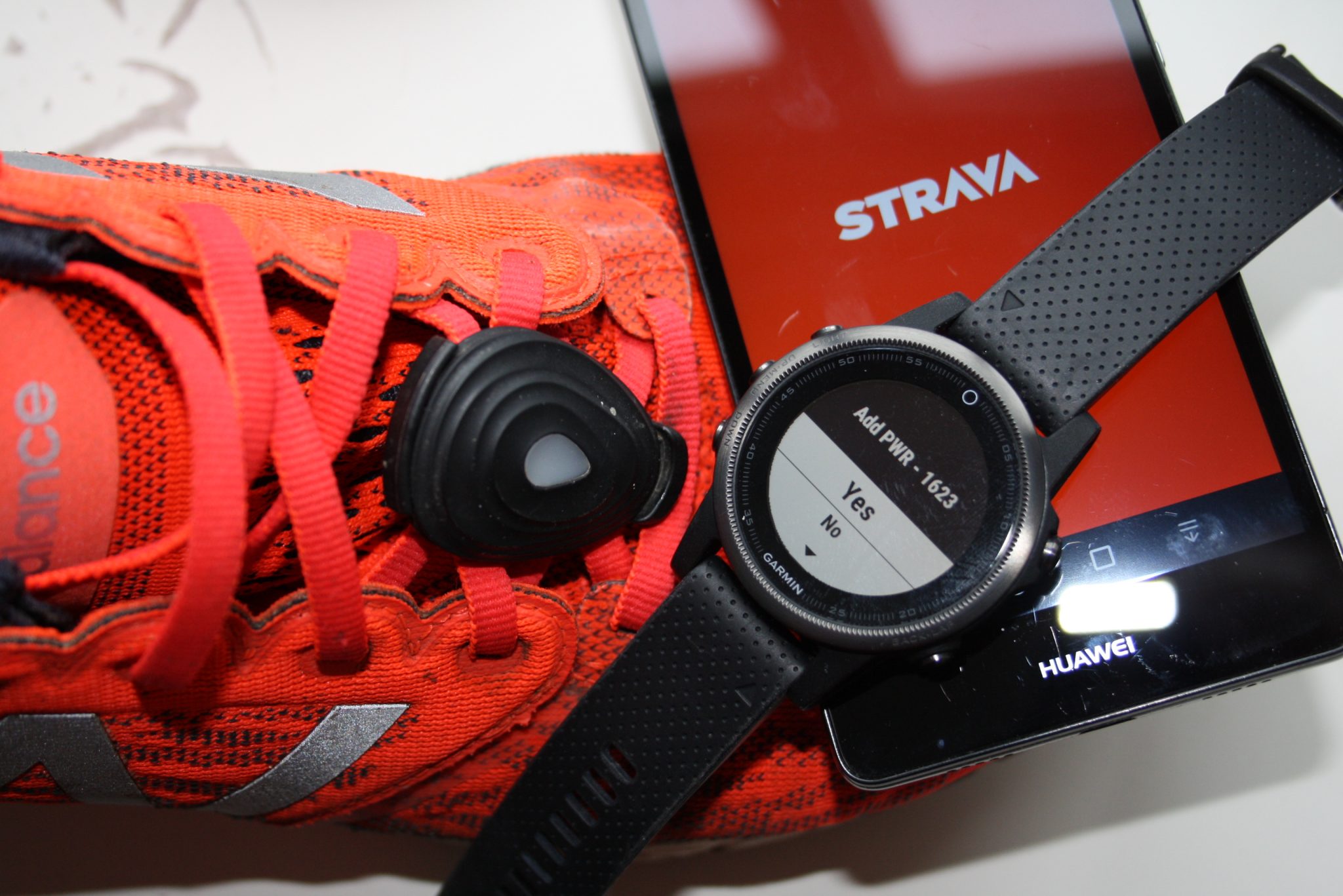
- STRYD – In reality, I had my power targets a bit too high for the run. I couldn’t hit them. I did use STRYD to temper my efforts up the hill,s and it was very useful in that respect. So it stopped me from doing silly ad-hoc efforts, but the race target was too high, so I continually revised it downwards. 🙁 . Perhaps the STRYD saved some catastrophically stupid uphill effort. I’ll never know.
- Pace was pretty meaningless to run by. It was mostly either uphill or downhill.
- HR pretty much stayed in Zone 1 …eesh. HR could have gone higher, but my legs couldn’t go faster.
- I ended up risking the Injinji running socks. Yes, they took a minute to get on, but I have no blisters as I write this, and my 9 toenails are still there.
QUESTIONS
I’m happy to answer any course- or kit-related questions below.
Last Updated on 11 March 2026 by the5krunner
Reader-Powered Content

This content is not sponsored. It’s mostly me behind the labour of love, which is this site, and I appreciate everyone who supports it.
Support the site: Follow (free, fewer ads) · Subscribe (paid, ad-free) · Buy Me A Coffee ❤️
All articles are written by real people, fact-checked, and verified for originality. See the Editorial Policy. FTC: Affiliate Disclosure — some links pay commission. As an Amazon Associate, I earn from qualifying purchases.
tfk is the founder and author of the5krunner, an independent endurance sports technology publication. With 20 years of hands-on testing of GPS watches and wearables, and competing in triathlons at an international age-group level, tfk provides in-depth expert analysis of fitness technology for serious athletes and endurance sport competitors.

Well done, fantastic achievement!
Congrats!
I agree, having a dedicated bike device alongside a totals device on the wrist is the way to go in an IM.
TY!!. but folks, don’t forget the cable tie.
Congratulations on both the race and the report. You just forgot to put your time 😉
I had a funny response around Will Clark 08:47:03 or Lucy Gossage 09:39:48 but I won’t use it.
Well done. I have enjoyed reading your IM journey, perhaps you could do Tri X next and we can vicariously feast on that on one 🙂
maybe. I’ve thought about it. am doing a HIM in the autumn.
what angle do you find interesting?? personally I think the physiology is more interesting than the gadgets (which could get repetitive) but I suppose everyone must have their own interests.
A great achievement.
Agreed that the gadget perspective feels well covered by your other posts, so would like to know more about the specifics of your training, duration, intensity levels, technique, any cross-training etc
Out of interest, how much slower do you think you would have been on a £700 bike and no gadgets at all. ie. what’s the price of performance? 🙂
Thanks.
a cheap frame and wheels…maybe 10-15 minutes? my (carbon) TT bike is still relatively heavy/rigid compared to many.
I think other gadgets, eg a PM, in this kind of race just limit the chance of stupidity and hormones taking over and causing some sort of catastrophic failure later in the race. eg Lots of people flew past me going up the hills…they were going WAY too fast for their ability levels. I’m sure they still completed the bike course (but slower than me) and I’m sure most of them would have paid for it on the run unless they were a better distance runner than me. so that sort of ‘pacing’ factor will make even more difference than the 10-15 minutes above – and I didn’t get the pacing right – maybe 10 minutes slower on the bike could have let me run 30 minutes faster?…that kind of thing
so, is the tattoo also done?
yes but not in a place that I’m going to show you a photo of it 😉