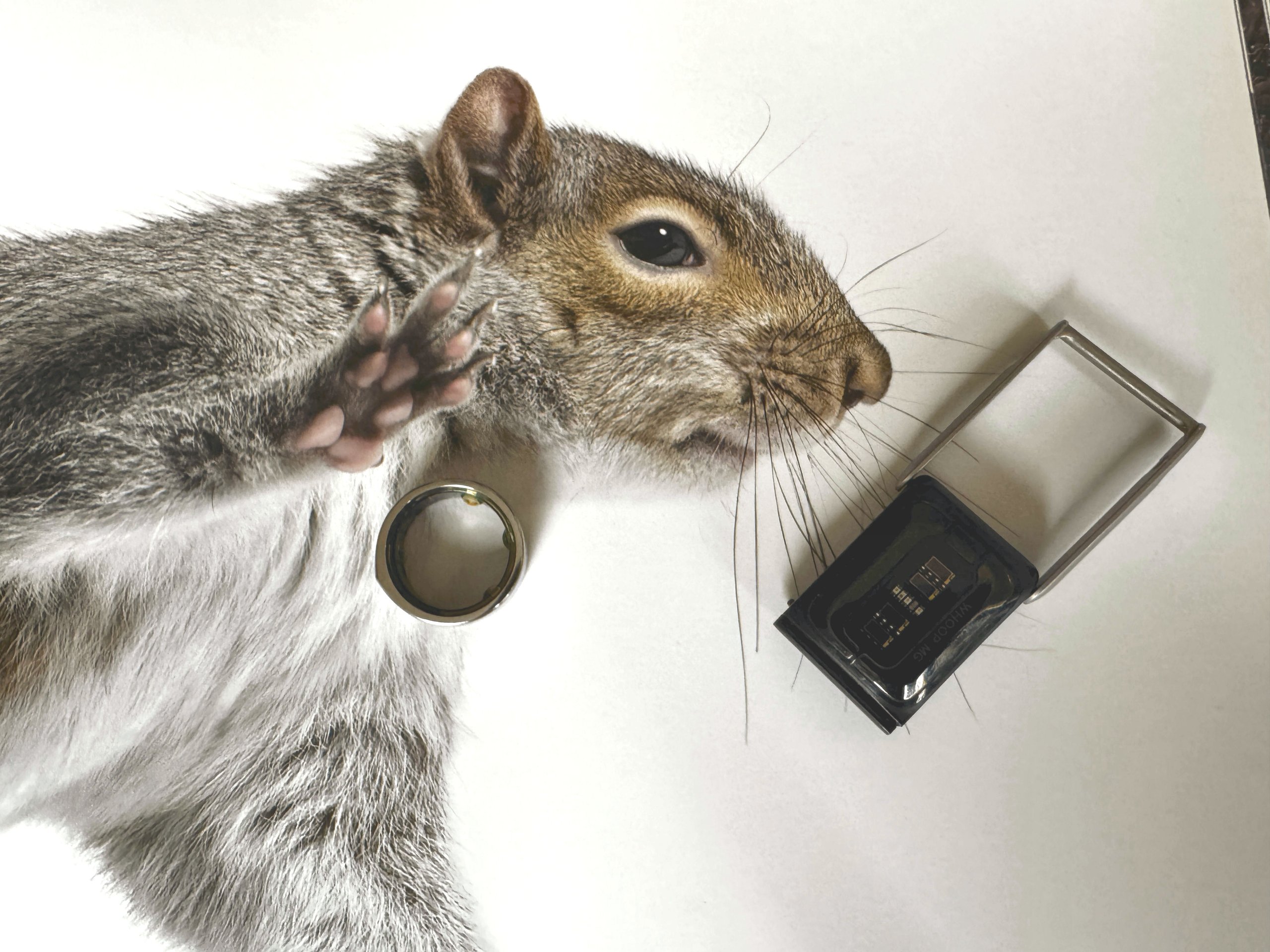
Whoop Confirms IPO Consideration and Explores Glucose Monitoring Integration
Bloomberg reports that Whoop is considering an IPO as early as 2026.
Whoop Founder and CEO, Will Ahmed, asserts his company is well-positioned with a solid ecosystem covering hardware, software, analytics, and branded apparel, justifying a potential public offering.
The Rationale for IPO: Whoop’s Ecosystem and Medical Push
Potential investors will expect to see a significant upside, and Whoop does have one.
As reported and discussed on this site, Whoop’s clear direction is toward medical-grade certification. It’s been seen to stumble a little with its potentially overzealous blood pressure trend reporting. The resolution of the issue with the FDA will be important, but also important is Whoop’s latest service—the integration of a panel of 65 blood biomarkers into the ecosystem to enrich existing correlations with behaviours and performance, plus the ability of the app to coach people towards improved biomarkers.
Leveraging 65 Blood Biomarkers for Performance and Coaching
Whoop’s biomarker service is launched this month and priced keenly. In this site’s opinion, the service offers excellent value for a service that should be of great interest to many of Whoop’s more affluent current members.
Your 65 Key Biomarkers Listed: and how to improve your Top 10
There’s more.
The Next Frontier: Integration with Glucose Monitoring
Ahmed now states that the company is exploring the integration of glucose monitoring devices. The most likely outcome here is something similar to what we saw with Supersapiens, i.e., piggybacking on a third-party sensor (Abbot Libre), rather than attempting to develop one in-house (which is very difficult) or using approximations from an existing PPG sensor (which has not been proven in the market).
Is adding 3rd-party glucose capabilities a good idea?
Yes. By integrating medical-grade blood sugar info, Whoop will again be able to leverage its existing, excellent AI coach and lifestyle logging features to determine correlations and coach future behaviours. The stumbling block to the successful integration of third-party glucose sensors is twofold:
- The cost and limited working time of third-party sensors are typically tens of dollars for two weeks of use.
- The need for precision food logging—a time-consuming manual activity, or the integration and cost of a link to a third-party app like MyFitnessPal (Whoop already has this link).
Future Hardware: New Sports Features and the Coded HR Strap
What about new sports features?
This site expects Whoop to launch a coded heart rate strap (2026) to counter claims of inaccuracies in recording HR during sport. Whilst such an initial move would generate minimal revenues, it would open up the possibility of medical-grade ECG/HRV features during sports, providing excellent indicators of cardiac health for its affluent, ageing membership base.
This would be a move that is initially sports-focussed, quickly becoming medical-focussed. Perfectly aligning with Whoop’s model and direction.
Company Profile: Business Model and Growth History
Whoop started in 2012 as a performance optimisation tool for serious athletes and has since grown into an aspirational wellness platform. The company employs approximately 1,000 full-time staff and generates most of its revenue through subscriptions (membership plans), rather than direct device sales, with minimal additional revenue from accessories and apparel.
Main Image: Zuckerman, (modified) and Whoop.com
Last Updated on 3 October 2026 by tfk the5krunner
Small things I always use
- Garmin 90-degree charging adapter: Charges your Garmin from any USB-C cable. Essential when travelling. I use one.
- Body Glide: The blue anti-chafe stick swimmers and runners carry. I use it.
- Speedo earplugs: Fewer ear infections and no cold-water dizziness. I use them.
- Dryrobe Advance: My winter changing robe for open-water swims. I use one. A cheaper option is the AONYIYI changing robe.
- Maurten: Race fuel that stays easy on the stomach. I use them.
- Garmin charging puck: The quickest way to top up before a session. I use one.
- Injinji: Toe socks that stop rubbing, so you run more. I use them.
- Ultimate toe protectors: Stop black toenails on long runs. They work. I use them.
- Compressport R2 v2 calf sleeves: My calf sleeves of choice. I use them.
- Cellucor C4: My pre-workout before hard sessions.
- TPU tubes: Schwalbe Aerothan, Tubolito and Pirelli SmarTube. Light, tiny spares. I use all three.
- G8 insoles: Adjustable insoles that are good. I use them.
- Cycplus Cube: A 97g electric pump that gets a road tyre rideable in two minutes. I carry one. 5% off with code THE5KRUNNER.
Watches and sensors
- Polar H10: My daily driver for waking HRV.
- Polar Verity Sense: My backup arm-worn HR sensor.
- Nomad bedside charger: Charges my iPhone and Apple Watch overnight. I use it, and many of their bands.
- Train.Red: The best muscle oxygen sensor I’ve used.
- Tymewear: Accurate heart rate and reliable ventilatory zones. I use it to pace endurance rides over an hour.
- Garmin Forerunner 970: A pro-grade triathlon watch. I use this.
- Apple Watch Ultra 4: My daily smartwatch. No phone needed on rides.
- Garmin Fenix 9 Pro: I’ve just bought one.
On the bike
- Continental GP5000 for everyday riding, and Aero 111 on the front for special occasions.
- Helmets: Specialized S-Works Evade 3 for road riding, and Rudy Project Wing for TT-style races. I use both.
- Ravemen FR300: A front light that mounts under your Garmin or Wahoo. I use one.
- Wahoo TRACKR Radar: I use it on one bike and Varia on the other. They perform the same.
- Garmin Varia RTL515: Radar that warns you of cars from behind. I use this model.
- Wahoo ELEMNT Roam 3: The bike computer that’s easy to use. I use mine on most rides.
- Favero Assioma Pro RS2: Accurate power pedals that swap easily between bikes. I use this model.
Home and indoor training
- NPE Runn: Makes my basic treadmill smart, sending more accurate speed and distance to my watch and Zwift. I use it.
- Google Wifi: Keeps Zwift connected in my pain cave. I use it.
- Apple TV 4K: Zwift on the big screen. I use two.
- Google Nest Doorbell (wired, 2nd gen): My video doorbell, running in both Google Home and Apple Home. I use it.
Health, recovery and sleep
- FreeStyle Libre 3 Plus: Shows how my blood sugar responds to diet.
- hDrop: Measures my sweat loss in summer and indoors.
- Fourth Frontier Zone: Checks my heart under load in hard sessions.
- Oura Ring 5: My partner’s recovery tracker of choice.
- Kineon MOVE+: Red light therapy for niggles. It works.
- Eight Sleep: A cooling mattress cover my partner and I use nightly.
Reader-Powered Content

This content is not sponsored. It’s mostly me behind the labour of love, which is this site, and I appreciate everyone who supports it.
Support the site: Follow (free, fewer ads) · Subscribe (paid, ad-free) · Buy Me A Coffee ❤️
Written by real people, with AI assistance. Fact-checked and verified for originality. See the Editorial Policy. FTC: Affiliate Disclosure — some links pay commission. As an Amazon Associate, I earn from qualifying purchases.
tfk is the founder and author of the5krunner, an independent endurance sports technology publication. With 20 years of hands-on testing of GPS watches and wearables, and competing in triathlons at an international age-group level, tfk provides in-depth expert analysis of fitness technology for serious athletes and endurance sport competitors. ID

Well from my point of view after Supersapiens went out you already get Oura, Ultrahuman integration of Glucose Monitor and even Garmin, AW and others let you use it as well with Dexcom one as far as i know
To me Oura is way better positioned to go into that path if they wanted since they also have Health Panels, don’t increased their subscription and created a lot of backlash when release new devices like Whoop did for their customers, they seem to go way better alignments with health and US government institutions overall instead of try to fight back like Whoop did with FDA. Guess if they let you upload the health biomarkers like Whoop just did and maybe get some way to get ECG/Blood Pressure through the ring would boost them even more
Ofc people would choose mostly on form factor but so far Whoop is a disappoint on the last upgrade without even add better sensors, Oura at least import all your HR from Apple Watch or Android health so I prefer that approach instead of my Whoop just getting me into zone 5 during half of my runs even on easy ones and i can’t delete it and can’t import correct values
I feel with Amazfit Helios and Polar and even Coros rumour to enter screenless space they will face way bigger competition on that “niche” market than Oura is facing right now so i think it would end up like Strava and will be a IPO on standby during quite some time
whoop sensor looks the same from the outside but its different inside with better performance characteristics: https://the5krunner.com/2025/06/16/whoop-4-0-vs-whoop-5-0-sensor-architecture-changes-detailed-technical-content/
i believe suunto is also considering a whoop-like product
oura niche: oura perhaps has better and more comprehensive patents to protect its space than whoop?
all of the hardware companies have a route forwards to grow. with strava i dont see the obvious growth prospects nor how they hope to remove their reliance on garmin-sourced data.
To really nail down the heart rate readings, it would be great if they could add two more light sensors to create a quad format instead of put 4 straight uni directional.
Think about Garmin and Apple Watch—they’re all about getting accurate readings in most situations, and they each have that quad format light to capture all wrist possible directional movement. I think Whoop could focus on making it accurate instead of small size reduction. I’d be happy to trade a bit of extra size for that.
Since they are stubborn in not release the external chest strap on their own at least would be nice to see them improve the sensor
my understanding, after speaking with sensor company Valencell, is that a “circular” array is the optimal arrangement of LEDs – I think that is what you suggest.
there will also be an optimal circumference measurements depending on the light paths but, as you suggest, likely similar to what Garmin et al already do.
yes that’s right i just assumed seeing how garmin and apple introduced that circular format made a bug accuracy jump difference so i was really expecting whoop did that on their new device but then saw it was the same as i knew it would continue to fail
That’s specially an issue on people like me who have thin and is really slim where the wrist have less contact because of the bone (saw some interview where they mention that as well) so that’s why usually some people (with fat wrists) have way better results and tracking with those optical sensors
Whoop works well on boxers (since is dark inside boxers also help to avoid reflections) and bicep both on daily usage but for running it’s a mess, before it was ok but i feel since last 2 months updates it just put me always on crazy high bpms when i’m wearing it on bicep and initially when it was launched that didn’t happen