Regular bedtimes linked to stabler blood sugar, study of 227,000 nights finds
Adults who maintain consistent sleep timing show measurably lower overnight glucose variability than those with irregular bedtimes, according to a preprint that draws on one of the largest wearable datasets assembled to date on the subject.
Researchers analysed 227,860 nights of paired sleep and continuous glucose data from 5,849 adults, using the Ultrahuman AIR smart ring and Ultrahuman M1 continuous glucose monitor. Participants were otherwise healthy and living normally outside clinical settings.
The effect is also evident in related research. Adults sleeping four to five hours showed glucose variability 2.87 percentage points higher than those sleeping eight hours. Persistently late bedtimes were associated with a 1.18 percentage-point increase in glycaemic variability, and short sleepers spent 3.11 percentage points less time with glucose in the healthy range of 3.9 to 10 mmol/L.
Clustering analysis identified distinct sleep-metabolic phenotypes within the dataset. Participants with poorer metabolic profiles also showed stronger coupling between heart-rate patterns and glucose curves overnight, suggesting cardiovascular and metabolic dynamics during sleep are more tightly linked than generally recognised in healthy adults.
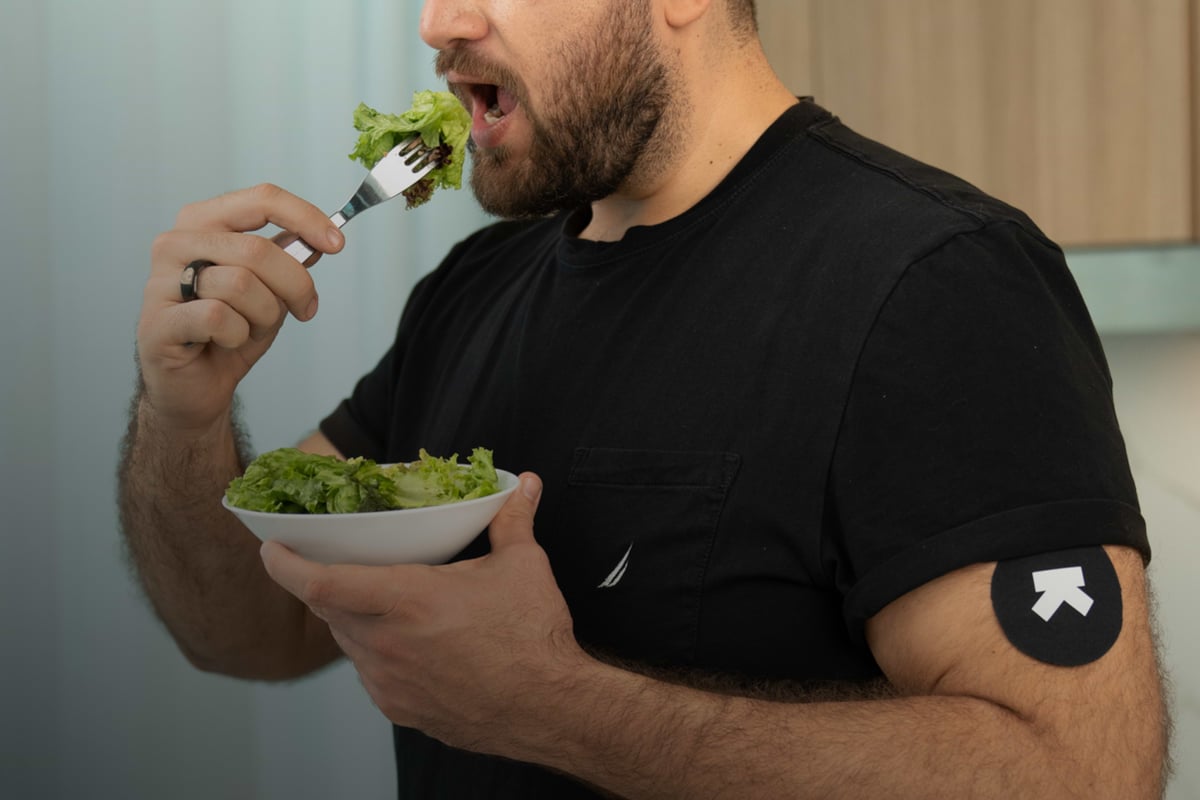
Overnight glucose regulation depends on circadian rhythms and autonomic nervous system activity working in concert. Irregular sleep timing disrupts both. The authors propose sleep-wake regularity as a simple behavioural marker of cardiometabolic stability — one that is already captured passively by most consumer wearables.
The study is a preprint posted on medRxiv on 4 March 2026 and has not yet been peer reviewed. The participant pool was drawn from Ultrahuman device users, who may not be representative of the broader population. The findings establish an association rather than causation.
Source: Dhawale N., Gandhi D., Shanmugam A., et al. Sleep consistency is a low-cost, reliable indicator of nocturnal glycemic control: observations from 227,860 nights of real-world smart-ring and continuous glucose monitoring data. medRxiv preprint, 4 March 2026. DOI: 10.64898/2026.03.04.26347496.
This article is part of the site’s sports science reference for endurance athletes.
Last Updated on 3 June 2026 by the5krunner
My favourite kit and nutrition
- Garmin Fenix 9 Pro — I’ve just bought one.
- Injinji – Runners protect your toes. Avoid discomfort and minor injury. Run more. Run faster. I use them.
- Garmin 90-degree charging adapter — A small keyring adapter you can use anywhere. Essential when away. I use one.
- Garmin charging puck — the fastest and most reliable way to top up your Garmin before a session. I use one.
- Ravemen FR300 — Front light that mounts directly under your Garmin or Wahoo head unit. Keeps your bars clean and your beam pointed where it matters. I use one.
- Body Glide – The blue anti-chafe stick that all swimmers and many runners use. I use it.
- Maurten — The race nutrition trusted by elite athletes. Gels and drink mixes engineered to be easy on the stomach. I use them.
- Garmin Varia RTL515 — A radar rear light that alerts you to vehicles approaching from behind. Pairs with your Edge or Wahoo. I use this model.
- Favero Assioma Pro RS2 — The power-meter pedals most serious cyclists choose. Accurate, easy to move between bikes. I use this model.
- Garmin Forerunner 970 — A serious choice for a pro-grade triathlon watch. I use this.
- Polar H10 — My daily driver for accurate, waking HRV readings.
- Wahoo ELEMNT Roam 3 — The bike computer that has the feature Garmin lacks: usability. I use mine on most rides.
Reader-Powered Content

This content is not sponsored. It’s mostly me behind the labour of love, which is this site, and I appreciate everyone who supports it.
Support the site: Follow (free, fewer ads) · Subscribe (paid, ad-free) · Buy Me A Coffee ❤️
All articles are written by real people, fact-checked, and verified for originality. See the Editorial Policy. FTC: Affiliate Disclosure — some links pay commission. As an Amazon Associate, I earn from qualifying purchases.
tfk is the founder and author of the5krunner, an independent endurance sports technology publication. With 20 years of hands-on testing of GPS watches and wearables, and competing in triathlons at an international age-group level, tfk provides in-depth expert analysis of fitness technology for serious athletes and endurance sport competitors. ID
