The Zero-Latency Stadium: How 5G and Edge Computing are Rewiring Elite Sports
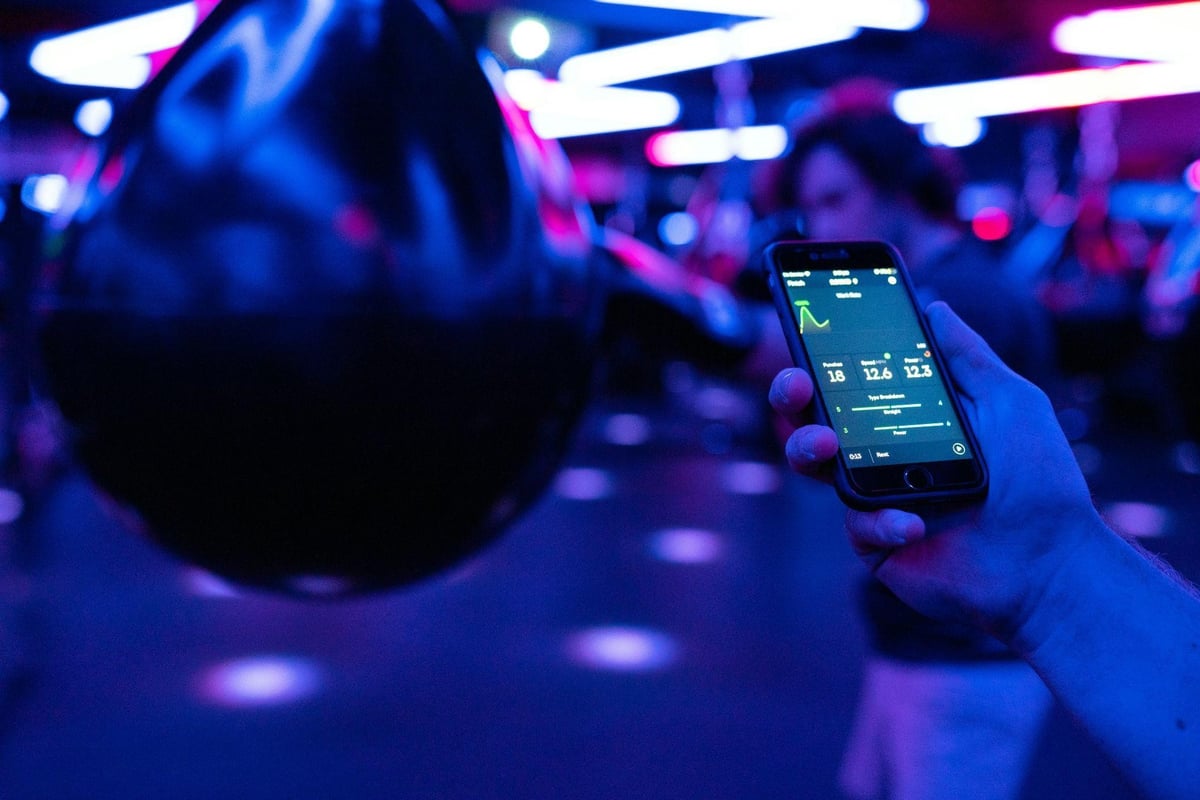
The tech stack behind modern sports is shifting. It’s no longer just about collecting data; it’s about processing it fast enough to matter. 5G and Edge Computing are the two pillars making this happen, turning “near-real-time” into “actually-real-time.” By eliminating the backhaul bottlenecks of traditional cloud architecture, these technologies are transforming stadiums into high-density IoT hubs.
The 5G Pipe: More Than Just Speed
Private 5G networks are becoming the gold standard for smart stadiums. Unlike standard Wi-Fi, which chokes when 60,000 fans try to upload a video, Private 5G (P5G) provides a dedicated “fast lane” for team telemetry. This utilises Network Slicing, a feature that allows venue operators to reserve specific bandwidth for critical coaching data while separating it from public fan traffic.
We are talking about massive device density, known technically as mMTC (Massive Machine-Type Communications). Thousands of wearable sensors and 4K camera arrays can now pulse data simultaneously without a single dropped packet. For coaches, this means ultra-reliable, low-latency communication (URLLC), where tactical overlays hit their tablets before the whistle even stops blowing.
Edge Computing: Processing at the Sideline
Traditional cloud processing is too slow for elite sports. Sending data to a server three states away adds a “ping” that can cost games. Multi-access Edge Computing (MEC) fixes this by keeping the “brains” inside the stadium. By moving compute resources to the “network edge,” teams bypass the latency inherent in long-distance fibre routing.
By using local nodes (such as AWS Panorama), computer vision models can analyse player spacing and ball velocity on-site. This localised loop slashes latency from hundreds of milliseconds down to single digits. If the data doesn’t have to travel to a distant data centre, the insights arrive at the sideline in time to influence the next play.
Fine-Tuning “High Training Quality”
For the elite athlete, 5G isn’t just a gimmick—it’s the engine behind high-quality training. As highlighted in recent best-practice endurance training insights from Olympic coaches, the “unifying principle” of world-class performance is the precise management of the load-recovery balance.
Olympic-level training is often polarised: roughly 80–90% of volume is low-intensity, balanced against 2–3 “key workout” days. 5G enables coaches to monitor these sessions with millimetric precision. By capturing real-time lactate thresholds or oxygen saturation during a “key” session, coaches can ensure the athlete is hitting the exact physiological target intended, preventing the “grey zone” training that leads to stagnation.
The Data Economy: Zero-Lag Engagement
This low-latency architecture isn’t just for the coaching staff; it is the lifeblood of the broader sports ecosystem. Just as high-frequency trading firms require millisecond-level precision in finance, the sports industry now relies on instant data for fan-facing platforms.
Industry leaders like Betway Sports utilise these high-speed, 5G-enabled data streams to provide accurate, real-time betting markets that sync perfectly with the live action. This mirrors the digital transformation in industries like autonomous logistics, where companies like Ocado use similar private wireless networks to coordinate thousands of robots in real time. When the data lag disappears, the gap between the physical event and the digital representation vanishes.
Biometrics: No More Guessing on Subs
Wearables like the Catapult Vector are now part of the uniform. These units track everything from heart rate variability (HRV) to “Mechanical Load”—the specific musculoskeletal stress a player’s joints are absorbing. These sensors utilise tri-axial accelerometers and gyroscopes to capture movement at high frequencies.
Because of the 5G/Edge pipeline, sports scientists get live fatigue alerts. If a star player’s sprint speed drops by 10% or their gait becomes asymmetrical—a common precursor to soft-tissue injury—the bench knows instantly. It’s data-driven injury prevention that replaces the “eye test” with factual, real-time physiological metrics.
Computer Vision: The Tactical “God View”
Systems like Second Spectrum are turning raw video into a video game-style dashboard. Using advanced skeletal tracking and AI algorithms, these systems track X, Y, and Z coordinates for every player on the pitch with incredible spatial accuracy.
Coaches can now see Expected Possession Value (EPV) or defensive gaps as they open up. Meanwhile, broadcasters are using this same tech to feed us live speed-burst graphics and shot-arc visualisations. The technology transforms raw video into a wealth of actionable data, refining strategies against specific opponents in real time. It’s a win for the coaches, the athletes, and the fans.
Last Updated on 26 March 2026 by the5krunner
Reader-Powered Content

This content is not sponsored. It’s mostly me behind the labour of love, which is this site, and I appreciate everyone who supports it.
Support the site: Follow (free, fewer ads) · Subscribe (paid, ad-free) · Buy Me A Coffee ❤️
All articles are written by real people, fact-checked, and verified for originality. See the Editorial Policy. FTC: Affiliate Disclosure — some links pay commission. As an Amazon Associate, I earn from qualifying purchases.

theparkrunner is a contributing writer covering road races, endurance events and the travel side of racing life. Reports focus on upcoming events, race destinations and what athletes need to know before they arrive.
