Fenix 8 Satellite SOS, Hiking Rescues and inReach: What 3,000 Callouts Tell Us About 2025
Garmin has published its annual review of inReach SOS incidents for 2025. The headline writes itself again: injured hikers got themselves airlifted. If that was you last year, you were not alone – far from it.
But genuine changes in the nature of 2025’s callouts are making themselves known, and Garmin has made a significant move in the competitive landscape — more on that below.
The Numbers
For the first time, Garmin has confirmed a hard figure: more than 3,000 SOS incidents were received in 2025. I am genuinely surprised at how low that global figure is.
Whether that represents growth from 2024 is impossible to say — Garmin still publishes activity breakdowns as proportions rather than absolutes — but the direction across multiple categories suggests expansion rather than contraction in callouts.
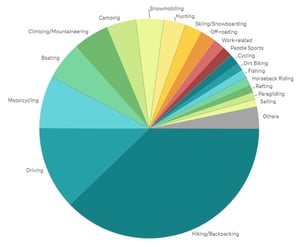
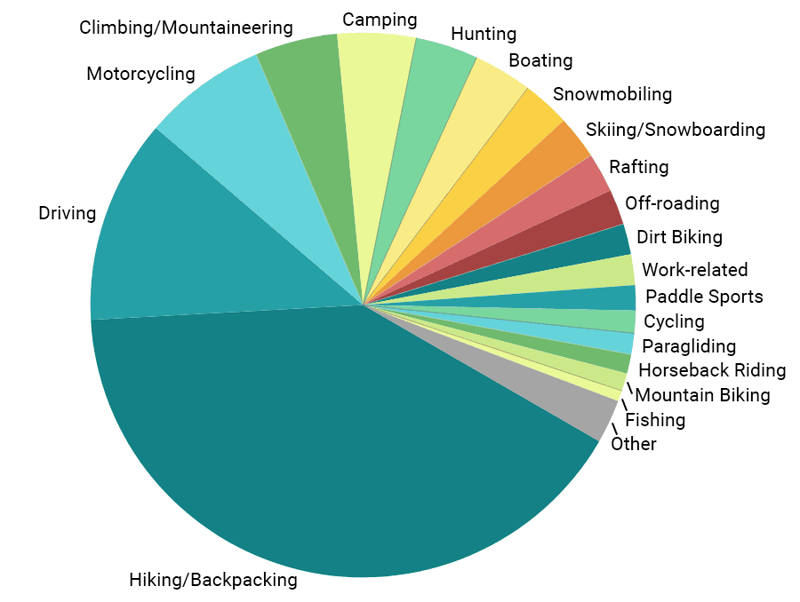
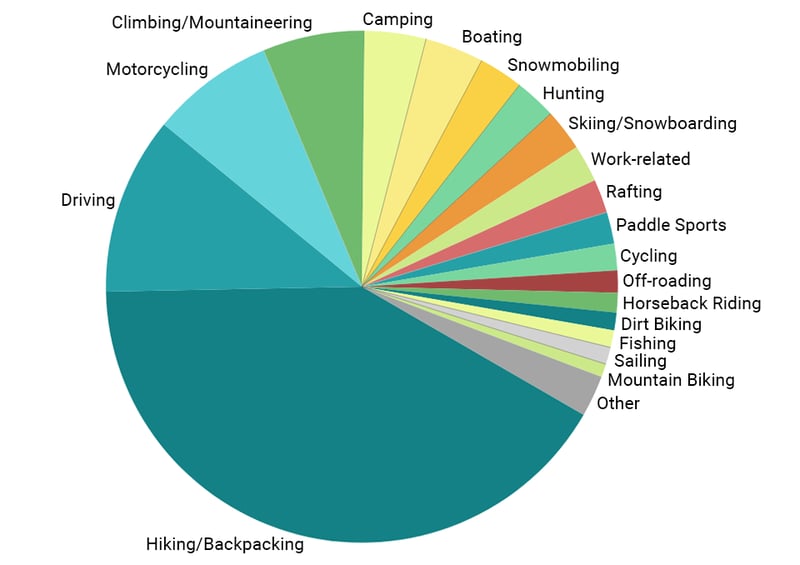
The top five categories were unchanged from 2024: hiking and backpacking remain the dominant source of callouts, followed by driving, motorcycling, and climbing and mountaineering. Within those categories, trail and mountain incidents were notably up. The trend flagged in last year’s review — dirt biking and rafting rising — did not continue. Both appear to have plateaued.
The more telling shift is on the water. Boating has replaced hunting as the sixth-largest category, with sailing incidents trending upward. Marine is a genuine growth area for inReach callouts, reflecting both increased adoption at sea and Garmin’s active push into that market. Cycling, motorcycling and paddle sports also increased.
Why Were People Pressing SOS?
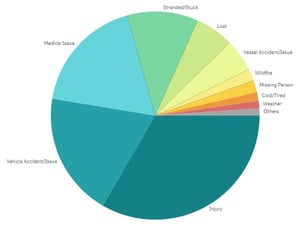
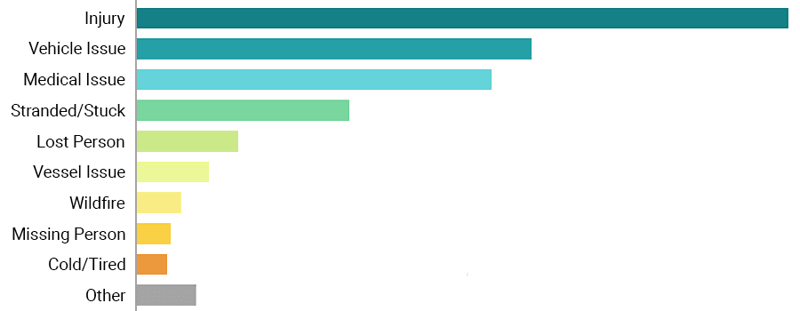
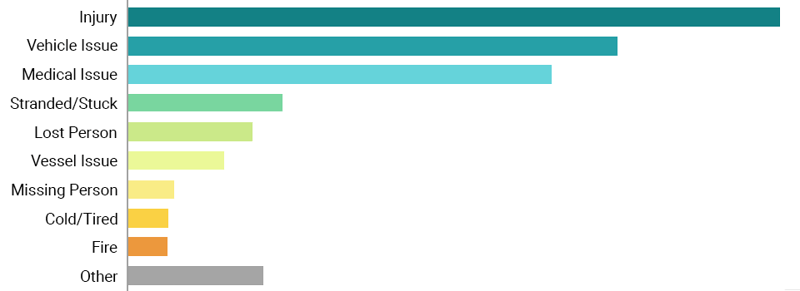
Injuries remain the top cause — no change. Motor vehicle accidents and issues were second. Vessel issues were trending up, consistent with the marine activity story. Medical issues, stranded persons and lost parties completed the top five.
The continued year-on-year rise in medical issues — altitude sickness, heart problems, gastrointestinal conditions — is the one to watch. The most plausible reading is a combination of more people attempting high-altitude objectives and an ageing adventure demographic pushing harder than it perhaps should.
Who Triggered It?
Most activations were still by the device owner, but that proportion fell slightly in 2025. A growing share was triggered on behalf of another party member, a group, or a third-party individual. InReach is functioning less as personal insurance and more as group safety infrastructure. Worth noting the next time a hiking companion argues they don’t need one because you have yours.

What Was Dispatched?
Helicopters, ambulances, police, and search-and-rescue teams were again the most common responses. The standout figure: helicopters were dispatched in roughly one-third of all incidents. These are not calls for help because the path got muddy. Professional organisation responses increased — a direct consequence of the work-related category growing. In over 12 per cent of cases, two-way messaging enabled self-rescue without requiring emergency resources.
What Garmin Changed Mid-Year
Three new products altered what happens after the button is pressed. The Fenix 8 Pro launched as the first Garmin smartwatch with native inReach satellite and cellular SOS — no separate device required. The inReach Mini 3 Plus and GPSMAP H1i Plus added photo and voice messaging via satellite, including during an active SOS event.
That last capability is the significant one. Garmin Response coordinators can now receive images and hear audio from a scene in progress. It is a materially different capability from a traditional one-way beacon, and it will likely improve outcomes in ways that won’t appear in the statistics for another year or two.
Take Out
The quietly important story is enterprise. Work-related incidents entering the top ten reflect commercial adoption — field crews, expeditions, offshore operations — in a segment Apple is not competing for and is unlikely to pursue. That is a more defensible growth vector than the consumer adventure market, where competitive pressure is real.
Three thousand rescues a year and rising. Carry something that works where you are going. What that something looks like is changing faster than it was.
The competitive threats I identified last year have moved on. My prediction that 2025 might bring satellite or cellular connectivity to a Garmin watch was correct — the Fenix 8 Pro delivered it natively with no additional InReach accessory now required.
On the three emerging threats highlighted last year (low Earth orbit satellite constellations, satellite smartphones, satellite smartwatches), Garmin fares well tactically:
- Apple’s satellite coverage remains limited to around 20 countries, with no two-way coordination, no LiveTrack, and no professional response team managing the rescue. For serious objectives in genuinely remote terrain, that gap still matters. The arguments against Pixel Watch and satellite smartphones is similar.
- Starlink and low-earth-orbit networks are expanding, but are not yet a consumer personal safety product in any meaningful sense.
- Garmin has answered the connected watch question directly with the Fenix 8 Pro
For the complete Garmin Fenix series guide, covering all current models, history and buying advice: Garmin Fenix hub.
For model comparisons, upgrade advice and the inReach subscription reality: Garmin Fenix 8 buying guide. For the complete guide to hiking technology, navigation, and off-grid safety, see the .
Last Updated on 3 October 2026 by tfk the5krunner
Small things I always use
- Garmin 90-degree charging adapter: Charges your Garmin from any USB-C cable. Essential when travelling. I use one.
- Body Glide: The blue anti-chafe stick swimmers and runners carry. I use it.
- Speedo earplugs: Fewer ear infections and no cold-water dizziness. I use them.
- Dryrobe Advance: My winter changing robe for open-water swims. I use one. A cheaper option is the AONYIYI changing robe.
- Maurten: Race fuel that stays easy on the stomach. I use them.
- Beet It Sport nitrate shots: Beetroot shots I take in the days before a race. I use them.
- Garmin charging puck: The quickest way to top up before a session. I use one.
- Injinji: Toe socks that stop rubbing, so you run more. I use them.
- Ultimate toe protectors: Stop black toenails on long runs. They work. I use them.
- Compressport R2 v2 calf sleeves: My calf sleeves of choice. I use them.
- Cellucor C4: My pre-workout before hard sessions.
- TPU tubes: Schwalbe Aerothan, Tubolito and Pirelli SmarTube. Light, tiny spares. I use all three.
- G8 insoles: Adjustable insoles that are good. I use them.
- Cycplus Cube: A 97g electric pump that gets a road tyre rideable in two minutes. I carry one. 5% off with code THE5KRUNNER.
Watches and sensors
- Polar H10: My daily driver for waking HRV.
- Polar Verity Sense: My backup arm-worn HR sensor.
- Nomad bedside charger: Charges my iPhone and Apple Watch overnight. I use it, and many of their bands.
- Train.Red: The best muscle oxygen sensor I’ve used.
- Tymewear: Accurate heart rate and reliable ventilatory zones. I use it to pace endurance rides over an hour.
- Garmin Forerunner 970: A pro-grade triathlon watch. I use this.
- Apple Watch Ultra 4: My daily smartwatch. No phone needed on rides.
- Garmin Fenix 9 Pro: I’ve just bought one.
On the bike
- Continental GP5000 for everyday riding, and Aero 111 on the front for special occasions.
- Helmets: Specialized S-Works Evade 3 for road riding, and Rudy Project Wing for TT-style races. I use both.
- Ravemen FR300: A front light that mounts under your Garmin or Wahoo. I use one.
- Wahoo TRACKR Radar: I use it on one bike and Varia on the other. They perform the same.
- Garmin Varia RTL515: Radar that warns you of cars from behind. I use this model.
- Wahoo ELEMNT Roam 3: The bike computer that’s easy to use. I use mine on most rides.
- Favero Assioma Pro RS2: Accurate power pedals that swap easily between bikes. I use this model.
Home and indoor training
- NPE Runn: Makes my basic treadmill smart, sending more accurate speed and distance to my watch and Zwift. I use it.
- Google Wifi: Keeps Zwift connected in my pain cave. I use it.
- Apple TV 4K: Zwift on the big screen. I use two.
- Google Nest Doorbell (wired, 2nd gen): My video doorbell, running in both Google Home and Apple Home. I use it.
Health, recovery and sleep
- FreeStyle Libre 3 Plus: Shows how my blood sugar responds to diet.
- hDrop: Measures my sweat loss in summer and indoors.
- Fourth Frontier Zone: Checks my heart under load in hard sessions.
- Oura Ring 5: My partner’s recovery tracker of choice.
- Eight Sleep: A cooling mattress cover my partner and I use nightly.
Reader-Powered Content

This content is not sponsored. It’s mostly me behind the labour of love, which is this site, and I appreciate everyone who supports it.
Support the site: Follow (free, fewer ads) · Subscribe (paid, ad-free) · Buy Me A Coffee
Written by real people, with AI assistance. Fact-checked and verified for originality. See the Editorial Policy. FTC: Affiliate Disclosure — some links pay commission. As an Amazon Associate, I earn from qualifying purchases.
tfk is the founder and author of the5krunner, an independent endurance sports technology publication. With 20 years of hands-on testing of GPS watches and wearables, and competing in triathlons at an international age-group level, tfk provides in-depth expert analysis of fitness technology for serious athletes and endurance sport competitors. See the gear tfk uses. ID

Btw: Pics via Mini3+/H1+: “Garmin Response coordinators can now receive images…”. People have to keep in mind, that they need their phone (camera)/Messenger app for this, if they use a Mini 3+; only with the H1+ can pics be taken and sent via the internal H1+ camera.