IoW Battery Test – Cheetah 2 Ultra Does Well vs Garmin, Wahoo, Whoop, Polar
Here we look at the accuracy of Cheetah 2 Ultra (trail run). For a comprehensive look at every difference between the Cheetah 2 Ultra and Cheetah 2 Pro, see the full Ultra vs Pro comparison.
The start of the UK’s annual heatwave coincided with our group’s bike trip to the Isle of Wight. A nice hot day offers great conditions to test optical HR and to see whether the sun’s brightness cranks up display brightness, shortening battery life. Even better, the island is a fantastic place to ride — a full loop runs to over 70 miles, though today we kept it to 100km with far too many coffee and cake stops. Outside school holidays, the riding is extraordinarily quiet, the drivers we did encounter were invariably patient and courteous, and the road surface ranks a solid 9/10. There are a few potholes, but also long stretches of French-style smoothness. The terrain is lumpy with some genuinely challenging climbs if you seek them out — the Radio Tower above Ventnor being the obvious one, which we didn’t have time for today.
Devices on Test
Whoop MG (left bicep), Polar Verity SENSE (right bicep), Amazfit Cheetah 2 Ultra (trail running watch, left wrist), Wahoo Roam 3 and Forerunner 970 (right wrist) paired with TymeWear VitalPro.
Battery Life Test
Let’s start with the one to beat: the Forerunner 970, rated at an estimated 31 hours (specified as 26 hours, GPS-only). I had incorrectly set it to GPS-only mode, which could actually save battery, but to counter that the watch is a year old with plenty of use on it, so the battery will have degraded. It was paired to a Assioma PRO RS power meter (Rating: Excellent) and heart rate strap, with brightness set to MAX, AOD on, timeout at 15 seconds, and wake-on-gesture enabled. A new display behaviour introduced a few months ago dims the screen when you try to look at it — which it shouldn’t.
There was some slight oddness here. The chart shows the finishing battery at roughly 80% (recorded precisely as 80.46%), yet the on-screen widget, photographed at exactly the same moment, reads 78%. A 2% discrepancy — odd, but not alarming.
This test forms part of the watch battery life hub.
Cheetah 2 Ultra Battery Performance
I took these starting images before setting off while the overnight red-filter colour was still active — it returned to normal during the ride. Brightness was set at just over 50%, timeout at 15 seconds, and always-on was disabled (unintentional, but that’s what happened). GPS was set to Accurate mode, using all satellites.
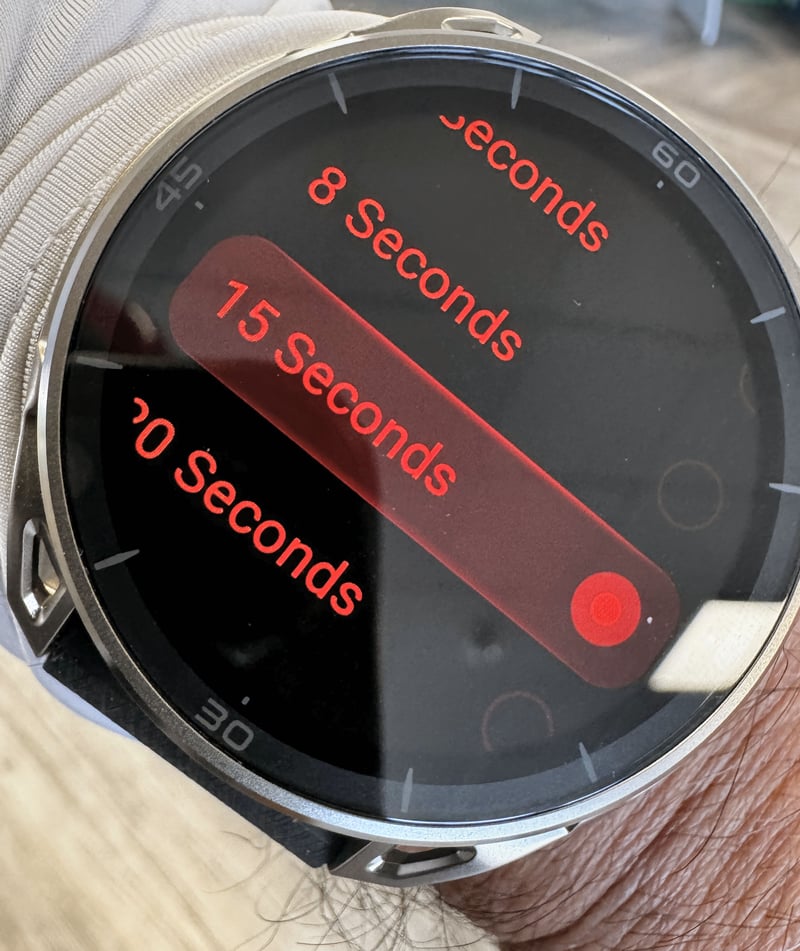
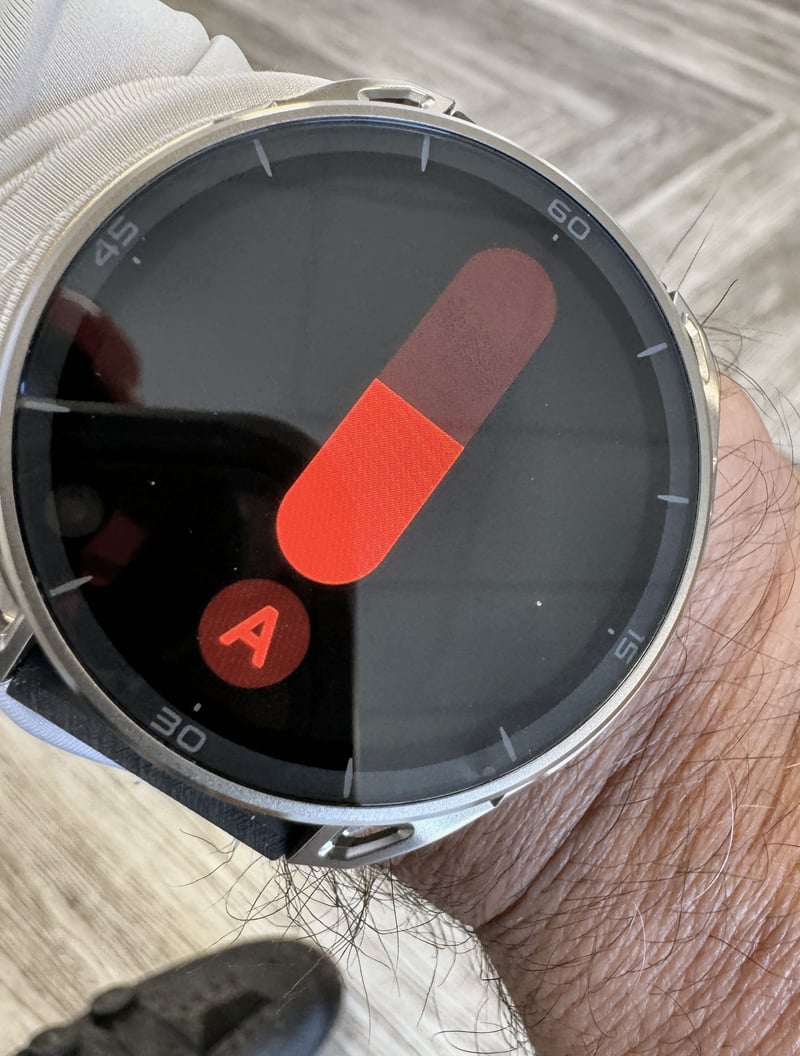
Interestingly, I checked the Cheetah before going to bed and it showed 100% charge. More than eight hours later it was still showing 100%. There are a few plausible explanations: the watch has excellent overnight battery management, the battery gauge isn’t properly calibrated (measuring charge directly isn’t straightforward), or Amazfit intentionally ships new watches with a conservatively calibrated 100% — meaning there is a small reserve built in. Most watch companies do something similar to some degree.
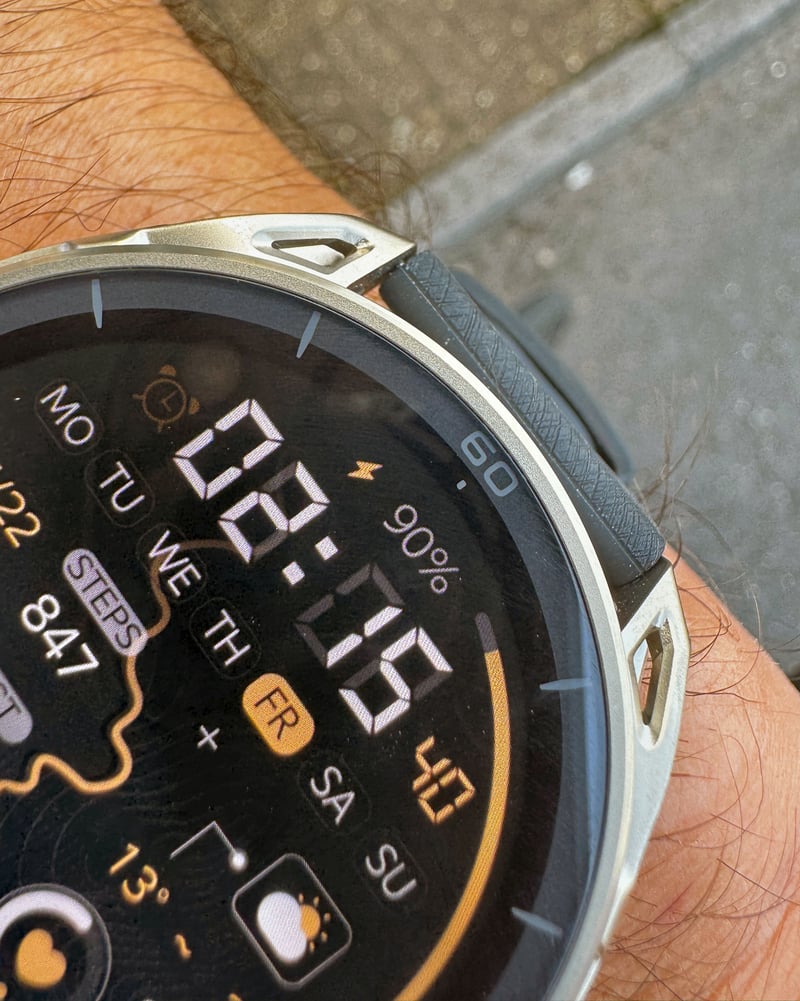
The Cheetah doesn’t log battery state to FIT files, so I had to rely on photographs as evidence.
Starting charge: 100%. Finishing charge: 90%. That is a 10% loss over five and a half hours, which projects to a 55-hour GPS battery life (claimed up to 60) — well ahead of the competition here.
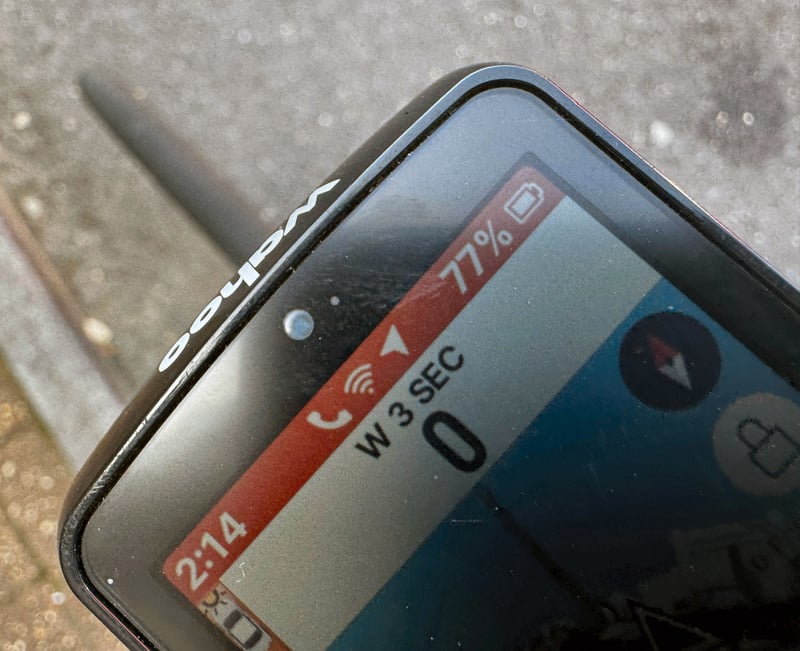
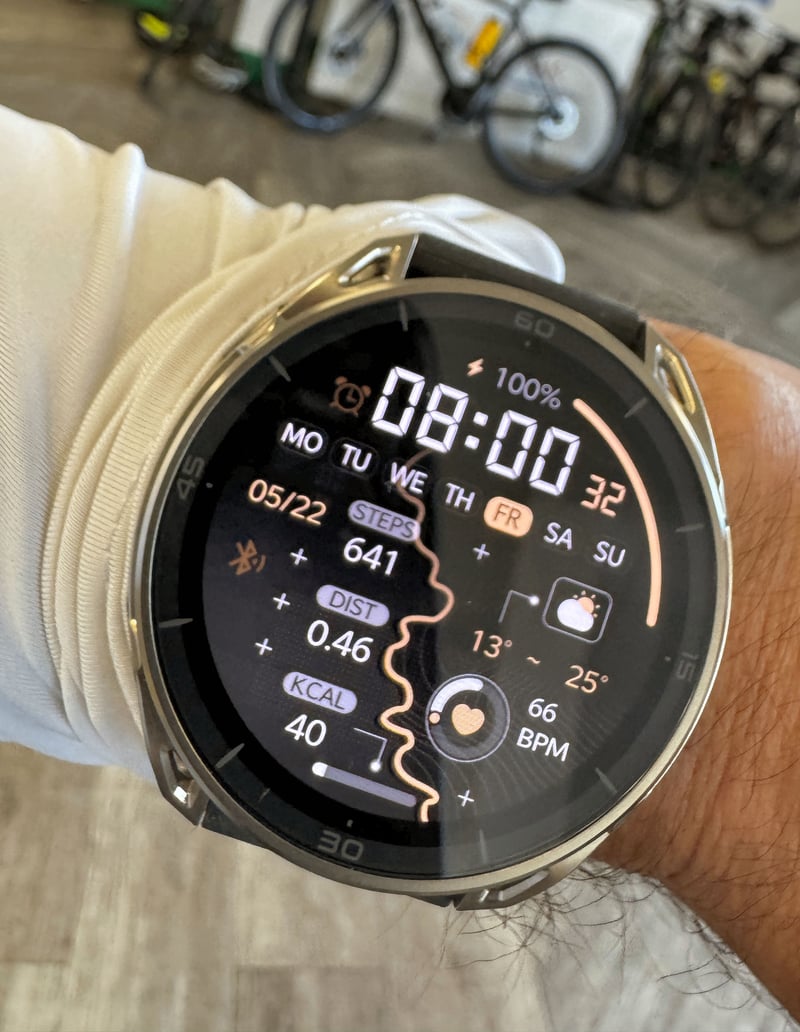
I forgot to note the Roam 3’s starting charge. Assume conservatively it was 100%. It lost 23% in five hours, giving it a GPS battery life of just over 20 hours in use (claimed up to 25 hours). That is consistent with results over the past year. Like the Cheetah, the Roam 3 holds 100% for a while before the figure starts to drop.
Amazfit Cheetah 2 Ultra – Heart Rate Performance
DCRainmaker’s Analyzer tool (beta) rates Amazfit Cheetah 2 Ultra heart rate accuracy as Good to Excellent for this section of the road ride. A separate cafe stop section was excluded as the Cheetah recorded no heart rate during that period which throws out the correlations.
Average: 118.57 bpm (2–3 bpm lower than Whoop MG at 121.49, Polar Verity SENSE at 121.05, and Garmin/ELEMNT at 120.64).
Bias vs reference devices: 0.0 to -2.1 bpm (negligible).
Agreement: mostly Excellent, one Good result vs Polar, which has wider limits of agreement.
Limits of Agreement: tight vs Whoop MG; wider (±26–31 bpm) vs others, indicating occasional deviations but strong overall correlation.
The Cheetah 2 Ultra is reliable for cycling HR with minor underestimation. You don’t need the stats to tell you that — it’s obvious from a graph, as it nearly always is.
Amazfit Cheetah 2 Ultra – GPS Performance
There is nothing significant to report across the full 100km route.
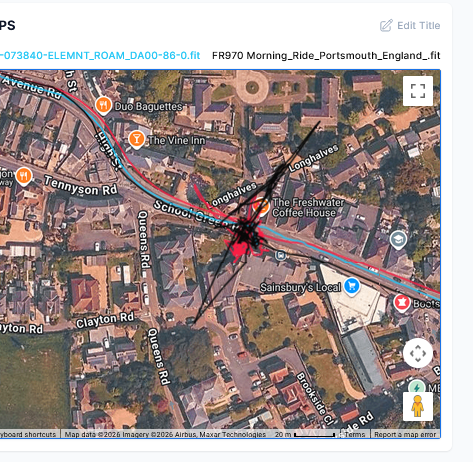
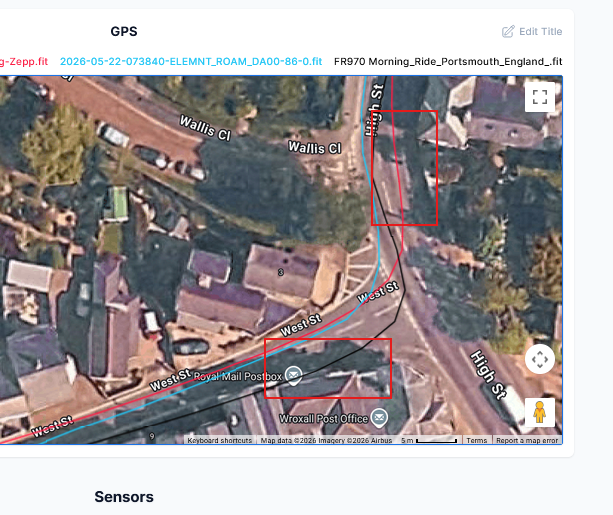
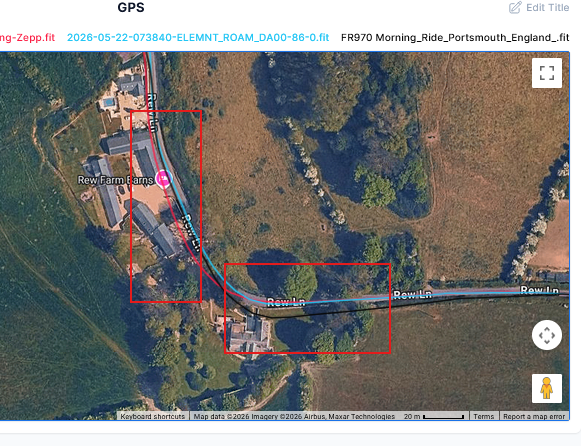
Both the Amazfit and the Garmin drifted slightly off-route on some corners — examples below. Bear in mind the Garmin was running GPS-only here, so the latest top-end Amazfit is performing on a par with a top-end Garmin in its most basic GPS mode. I would score both at least 9/10 in these conditions, though it is worth noting that an easy, open road loop on a clear summer day is about as forgiving an environment as GPS gets. These results do not transfer directly to running, dense woodland or deep urban canyons.
Conclusion
Three clear takeaways from today’s test.
Battery life is the headline. The Cheetah 2 Ultra lost 10% charge over five and a half hours in accurate GPS mode, i.e. estimated 55 hours — comfortably ahead of the Forerunner 970’s 26-hour rating and the Wahoo Roam 3’s 20-plus hours. If battery endurance matters to you, that gap is significant.
Heart rate accuracy on the bike was solid. The Cheetah ran 2–3 bpm low against dedicated chest and arm-worn references, which is a negligible real-world difference for almost every training purpose. The DCRainmaker Analyzer rates it Good to Excellent, and the chart backs that up.
GPS is competitive but not exceptional. Side-by-side with the Forerunner 970 in GPS-only mode, both watches produced near-identical tracks on a straightforward open road. The Cheetah holds its own in easy conditions; harder environments will be a more meaningful test. Results to follow!
Overall, today’s ride gives good reason to take the Cheetah 2 Ultra seriously as an endurance option. A fuller review will follow once I’ve had more time with it across a range of conditions. For a full comparison of the current Forerunner lineup including how the FR970 stacks up against the FR570, FR170 and FR70, see the best Garmin Forerunner guide.
Quick answers
What is the battery life of the Amazfit Cheetah 2 Ultra?
In this test, the Cheetah 2 Ultra lost 10% charge over five and a half hours in Accurate GPS mode, projecting to approximately 55 hours. That comfortably exceeds the Garmin Forerunner 970’s spec’d 26 hours (tested as 31 hours) and the Wahoo Roam 3’s measured 20-plus hours in the same session.
How accurate is the Amazfit Cheetah 2 Ultra heart rate monitor on a bike?
DCRainmaker’s Analyzer tool rated it Good to Excellent in this test. The Cheetah averaged 2–3 bpm below dedicated reference devices, which is negligible for most training purposes.
How does Cheetah 2 Ultra GPS compare to the Garmin Forerunner 970?
On this open road test both watches produced near-identical tracks, with occasional minor drift on corners. The Forerunner 970 was running GPS-only mode, so the Cheetah 2 Ultra matched it in the most favourable conditions possible. Harder environments will be a more meaningful comparison.
Explore the full resource library
This site covers endurance sport technology across a range of dedicated reference sections. Each one collects the most relevant articles, tests, and analysis on its topic in one place.
Buyer guides
- Best sports watch: tested recommendations by sport and athlete type (triathlon, running, marathon, cycling, hiking, and women)
- Best Garmin watch: Forerunner versus Fenix by series, sport, and budget
- Best wearables: recovery trackers, heart rate monitors, running power meters, and female athlete tech
- Best cycling products: computers, smart trainers, power meters, and cycling heart rate monitors
Brand and product guides
- Amazfit: the full Amazfit range from Balance to Cheetah to T-Rex, accuracy tests, HYROX partnership, and Zepp Health analysis
- Apple Watch: athlete-first coverage of Apple Watch across running, cycling, and triathlon
- COROS: watches, features, and firmware across the full COROS range
- Garmin: the company, the platform and the full range, and the starting point for choosing across every Garmin product line
- Garmin Edge: bike computers from entry-level navigation to flagship endurance and mountain biking
- Garmin Fenix: every model, feature, and firmware development for Garmin's flagship outdoor watch
- Garmin Fenix 8 Series: which variant to buy, upgrade advice, accuracy data, and the full Fenix 8 review and firmware coverage
- Garmin Forerunner: the full Forerunner line covered from entry level to triathlon flagship
- Garmin Instinct: rugged GPS watches for endurance and adventure athletes
- Garmin Features Explained: how Garmin's metrics work, from Training Load and Body Battery to Race Predictor and HRV Status
- Google Fitbit: Fitbit Air, Google Health, Pixel Watch and the Wear OS platform
- Polar: watches, sensors, Polar Flow and training science across the full Polar range
- Runna: coach-written running plans that adapt as you train
- Suunto: Race, Vertical, Run and the SuuntoPlus ecosystem
- Strava: features, privacy, segments, and how Strava fits into a serious training setup
- Ride with GPS: route planning, navigation and how it works alongside Strava
- Wahoo: KICKR trainers, ELEMNT bike computers, and the Wahoo ecosystem
- WHOOP: strain, recovery, sleep and the full WHOOP ecosystem
Specifications database
- Full Specifications Database: detailed spec sheets, battery life, sensor lists and generation-on-generation comparisons for current Garmin, COROS, Amazfit, Samsung, Google Fitbit, Huawei, Polar, Suunto, Wahoo and Apple Watch models
Glossary
- Sports Technology Glossary: non-branded terminology across running, cycling, swimming, triathlon, hiking, strength training, HYROX, sensors, ecosystems, and brands
Sport and topic guides
- Running Watches: how to choose by discipline (road racing, trail, track, beginner, and multisport)
- Triathlon and Multisport Technology: watches, sensors, and race-day tools for swimmers, cyclists, and runners
- HYROX: training science, race analysis, and technology for the functional fitness race format
- parkrun: technology, training, and performance for the weekly 5K
- Hiking Technology: navigation, safety, and trail tech for walkers and hikers
- Heart Rate Monitoring: optical sensors, chest straps, accuracy comparisons, and how to set training zones
- Optical Sensors (PPG): the 40 things a wrist optical sensor could measure, from heart rate to glucose, ranked by evidence
- GPS Accuracy: how satellite systems perform across brands, terrains, and conditions
- Sports Watch Battery Life: battery claims, real-world tests, and how to manage battery life across Garmin, Apple, Amazfit and COROS
- Recovery Trackers: WHOOP, Oura, and the science of readiness scoring
- Muscle Oxygen Sensors: SmO2 and NIRS explained, Train Red and Moxy compared, and the category from BSX and Humon to Garmin and WHOOP
- Female Athlete Tech: wearables, physiology, and performance for female endurance athletes, covering cycle-synced training, RED-S, HR accuracy, and VO2max
- Sports Science: peer-reviewed research on HRV, VO2max, lactate threshold, running power, wearable accuracy, and supplementation
- Testing Methodology: how this site tests GPS accuracy, heart rate, battery life, and other performance claims
Content series
- Release Radar: confirmed launches, leaks, and rumours across Garmin, Apple, COROS, Polar, Suunto, and Wahoo
- Deep Dive Feature Files: weekly firmware feature updates across all brands (bug fixes excluded)
- Fix Files: weekly firmware bug fix tracking across all brands
Last Updated on 11 August 2026 by tfk the5krunner
Small things I always use
- Garmin 90-degree charging adapter: Charges your Garmin from any USB-C cable. Essential when travelling. I use one.
- Body Glide: The blue anti-chafe stick swimmers and runners carry. I use it.
- Speedo earplugs: Fewer ear infections and no cold-water dizziness. I use them.
- Dryrobe Advance: My winter changing robe for open-water swims. I use one. A cheaper option is the AONYIYI changing robe.
- Maurten: Race fuel that stays easy on the stomach. I use them.
- Garmin charging puck: The quickest way to top up before a session. I use one.
- Injinji: Toe socks that stop rubbing, so you run more. I use them.
- Ultimate toe protectors: Stop black toenails on long runs. They work. I use them.
- Compressport R2 v2 calf sleeves: My calf sleeves of choice. I use them.
- Cellucor C4: My pre-workout before hard sessions.
- TPU tubes: Schwalbe Aerothan, Tubolito and Pirelli SmarTube. Light, tiny spares. I use all three.
- G8 insoles: Adjustable insoles that are good. I use them.
- Cycplus Cube: A 97g electric pump that gets a road tyre rideable in two minutes. I carry one. 5% off with code THE5KRUNNER.
Watches and sensors
- Polar H10: My daily driver for waking HRV.
- Polar Verity Sense: My backup arm-worn HR sensor.
- Nomad bedside charger: Charges my iPhone and Apple Watch overnight. I use it, and many of their bands.
- Train.Red: The best muscle oxygen sensor I’ve used.
- Tymewear: Accurate heart rate and reliable ventilatory zones. I use it to pace endurance rides over an hour.
- Garmin Forerunner 970: A pro-grade triathlon watch. I use this.
- Apple Watch Ultra 4: My daily smartwatch. No phone needed on rides.
- Garmin Fenix 9 Pro: I’ve just bought one.
On the bike
- Continental GP5000 for everyday riding, and Aero 111 on the front for special occasions.
- Helmets: Specialized S-Works Evade 3 for road riding, and Rudy Project Wing for TT-style races. I use both.
- Ravemen FR300: A front light that mounts under your Garmin or Wahoo. I use one.
- Wahoo TRACKR Radar: I use it on one bike and Varia on the other. They perform the same.
- Garmin Varia RTL515: Radar that warns you of cars from behind. I use this model.
- Wahoo ELEMNT Roam 3: The bike computer that’s easy to use. I use mine on most rides.
- Favero Assioma Pro RS2: Accurate power pedals that swap easily between bikes. I use this model.
Home and indoor training
- NPE Runn: Makes my basic treadmill smart, sending more accurate speed and distance to my watch and Zwift. I use it.
- Google Wifi: Keeps Zwift connected in my pain cave. I use it.
- Apple TV 4K: Zwift on the big screen. I use two.
- Google Nest Doorbell (wired, 2nd gen): My video doorbell, running in both Google Home and Apple Home. I use it.
Health, recovery and sleep
- FreeStyle Libre 3 Plus: Shows how my blood sugar responds to diet.
- hDrop: Measures my sweat loss in summer and indoors.
- Fourth Frontier Zone: Checks my heart under load in hard sessions.
- Oura Ring 5: My partner’s recovery tracker of choice.
- Kineon MOVE+: Red light therapy for niggles. It works.
- Eight Sleep: A cooling mattress cover my partner and I use nightly.
Reader-Powered Content

This content is not sponsored. It’s mostly me behind the labour of love, which is this site, and I appreciate everyone who supports it.
Support the site: Follow (free, fewer ads) · Subscribe (paid, ad-free) · Buy Me A Coffee ❤️
Written by real people, with AI assistance. Fact-checked and verified for originality. See the Editorial Policy. FTC: Affiliate Disclosure — some links pay commission. As an Amazon Associate, I earn from qualifying purchases.

tfk is the founder and author of the5krunner, an independent endurance sports technology publication. With 20 years of hands-on testing of GPS watches and wearables, and competing in triathlons at an international age-group level, tfk provides in-depth expert analysis of fitness technology for serious athletes and endurance sport competitors. ID

Hi, thank you so much for this! I am interested in Cheetah 2 Ultra. The battery life on GPS activities look really promising. Can you test some GPS activity with AOD and maps and navigation screen always active? I would love to know how much battery would drain in 1 hour in these conditions.
Now that sounds promising. I’m really looking forward to seeing your further test results. This watch looks like it’s shaping up to be a serious competitor to Garmin and others. In the (rather sparsely stocked) Zepp App Store, there is a (third-party) battery data page that you can add to your chosen activity: Battery Assistant. BTW: Did you figure out how to take a screenshot on the watch?
Btw: you have said you have set brightness to about 50%. The red colored pics are showing that you have activated the “A” ( I guess it is the ambient light sensor?), which will kick in to reduce or adjust the brightness automatically, correct?
Sorry, another question: is the Helio strap compatible with the Cheetah 2 Ultra? As far as I know, there has to be a companion app on the watch, I think there is no App available for the Cheetah 2 Ultra? Thanks
the zepp ap can have any number of amazift devices linked to it including helio. zepp makes amazfit
Ok, the Amazfit Service team just has told me via email, that the Helio companion app isn’t compatible with the Cheetah 2 ultra and that there isn’t the possibility to take a screenshot yet. The have forwarded this to the product and development team. Strange, possible for older models, but not for the new, more expensive ones. They have to work better on this before release…
I don’t know what this means.
I was talking about this: https://freeimage.host/i/fjAAqJe
But maybe I misunderstood something…
maybe I misunderstood something too!!
the regular zepp app pairs with amazfit help strap. as it does with every other amazfit modern device.
Helio strap broadcasts hr to any other BLE device/app.
I’ve no idea wht that app is in your image!! i’ll look later
Maybe that was necessary for only some (“older”) watches and is now integrated in the watch software?
Btw: a list I have passed to the Amazfit service team: Cheetah 2 Ultra – Bug Fixes/Feature Requests:
– The German translations in the menus require some minor revision.
– Please enable the import of custom waypoints.
– Transferred maps should be nameable and displayed individually within the watch’s map data library. Currently, all maps across the three categories (Basic, Contour, and Ski) are grouped together as a single file within their respective categories; furthermore, they can only be deleted all at once—it is not possible to delete individual maps and you have to remember, which maps you have synced to the device.
– Please make turn-by-turn and other activity-related audio prompts available in additional languages (e.g., German).
– Onboard Route Navigation: Why is this feature available for only a select few apps?
– Maps App: When I tap on the map and select a specific point, the watch automatically generates a route to that location. This functionality is currently limited to the Maps App; please enable it for the other apps as well.
– When setting multiple alarms: Please allow users to mute individual alarms (vibration only) while keeping others set to both vibration and sound.
Don´t get me wrong: the Cheetah 2 Ultra is a great watch, I really like it (I even have put my AWU 3 for sale).