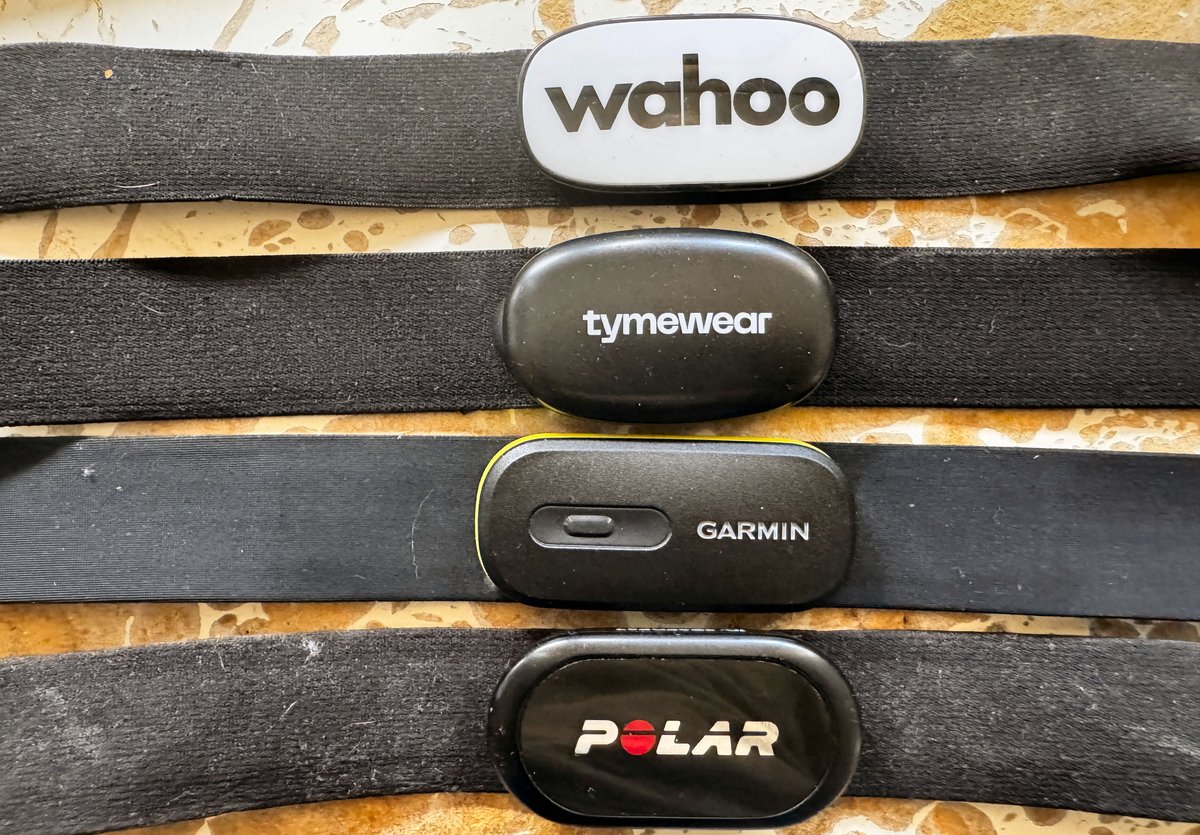
Tymewear VitalPro: Thoughts After 2 Months
The Tymewear VitalPro adds a training metric that heart rate and power alone cannot provide.
For the broader triathlon technology context, see the triathlon and multisport technology hub.
Heart rate and power define endurance training zones across running, cycling and triathlon, and the protocols built on them are what most serious athletes live by. But on a long ride, an ultra, or the bike leg of a long-course triathlon, both signals become less reliable the longer the effort goes on. Heart rate drifts upward. Power has to come down to hold the same zone. Ventilation does neither.
What is the VitalPro sensor?
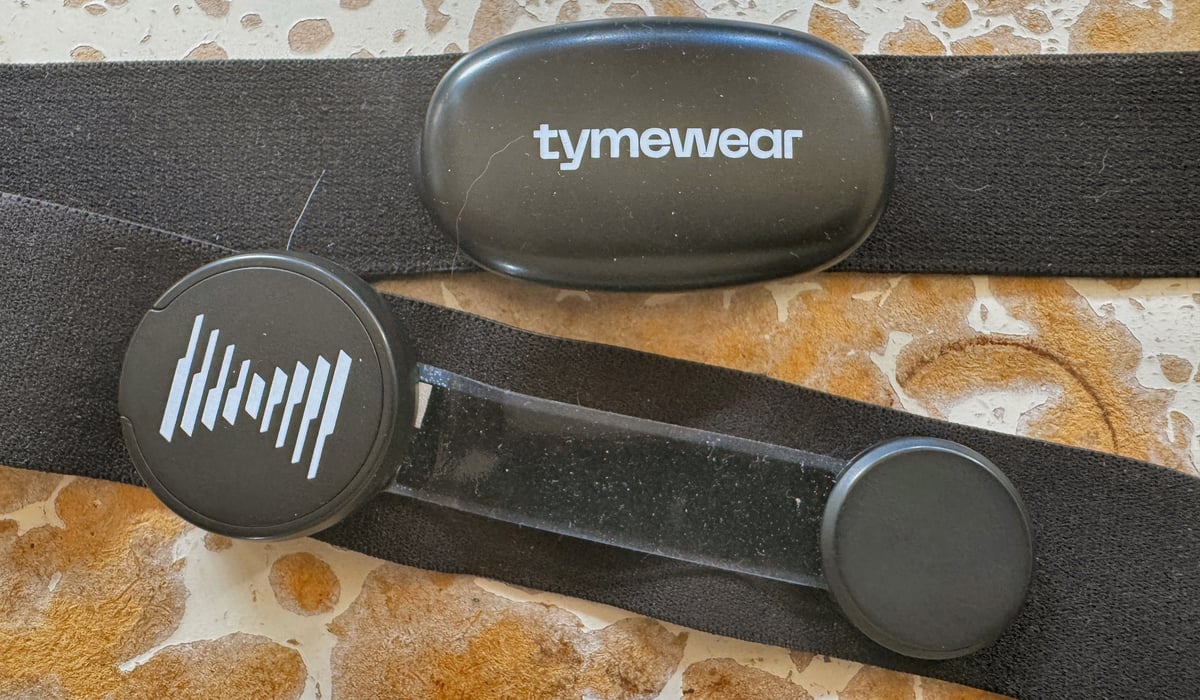
TymeWear’s VitalPro is a chest strap with two sensors: a conventional heart rate monitor at the front, and a unique strain-gauge breathing sensor on the back. That special sensor comprises two pods, one of which contains a battery, and, between them, a free-moving, rubber-like material.
Together they capture breathing rate, minute ventilation, tidal volume and heart rate in real time. At £299, the unit sits at the premium end of the chest-strap market – although it comes with a well-featured app.
As you would expect, heart rate streams over ANT+ or Bluetooth in the usual way, but the uniqueness of the breathing data means it comes via a Garmin Connect IQ app. Hence, it’s then relatively easy to display on Edge bike computers and Garmin watches. Apple Watch is also supported, and other brands will follow in 2026.
Why ventilation?
Minute ventilation, the total air moved per minute, is breathing rate multiplied by tidal volume, which is the volume of air per breath. A fast, shallow breath moves less air than a slow, deep one, so breathing rate alone does not track effort. Several heart rate monitors already report breathing rate. The VitalPro is one of the few consumer devices that also estimates tidal volume, inferring it from the chest expansion (others use inferences from the Kubios algorithm/dfa a1). Tidal volume is what makes ventilatory thresholds detectable.
Dr Jonathan Baker, a data scientist for Alpecin-Deceuninck, told BikeRadar after testing a beta unit that the VitalPro provides accurate readings. That ventilation feels like a true threshold signal. He also said it does not replace the power meter or the heart rate monitor. Adds, not replaces.
Threshold testing without the lab
FTP and threshold heart rate tests can be done at home for free. Precise lactate and ventilatory thresholds have invariably needed a lab. VitalPro puts the threshold test on the strap and in its app, allowing owners to repeat it as often as they want at no extra cost.
Autodetection of thresholds from accumulated activity data is also in development, the brand has told the5krunner, which would remove the need for explicit retests. But not yet.
The evidence base
The 2.4-times-faster headline traces to a single twelve-week study by Wolpern and colleagues, which compared ventilatory-threshold training against heart rate reserve and reported an 11.7 per cent VO2max gain in the threshold group, compared with 4.9 per cent in the comparison group. Clearly, that is one trial, not a body of evidence. Tymewear’s in-house validation of the VitalPro against the Cosmed K5 metabolic cart reports 97 per cent accuracy for minute ventilation.
An earlier peer-reviewed paper by Sieff and colleagues found that Tymewear’s older smart shirt appeared to underestimate ventilatory thresholds against the lab gold standard. The VitalPro is a different sensor, and the brand has since refined the technology. Independent peer review of the VitalPro has not yet appeared, as far as I know.
More: Stephen Seiler, whose polarised-training research at the University of Agder has shaped the modern understanding of endurance intensity distribution, has collaborated with the brand. This site’s earlier coverage of ventilatory thresholds via the Fourth Frontier X2 sets out the underlying physiology in more depth. The newer Fourth Frontier Zone uses the same ECG-derived approach at a lower price point.
Running, cycling and triathlon
Tymewear’s marketing leads with cycling, anchored by the Visma-Lease a Bike partnership, but the strap is built for runners, triathletes, and other kinds of endurance athletes. Running and cycling each require its own threshold test because their movement and intensity profiles differ. Triathletes have to complete both. The brand’s home page does not clearly flag this.
Note: IPX7 (1m waterproofing). It’s not for swimming
Some Thoughts on the Apps and My Usage
I did two tests, one for cycling and one for treadmill running. As you can see from the results below, the VO2max was overestimated by ‘a bit’, probably due to an incorrect treadmill speed calibration.
The iOS app itself is robust and looks nice, and is easy to use. The information is well presented and fairly self-explanatory.
I didn’t test the Apple Watch app, but I have used the Garmin CIQ data field, which is the only way to get your ventilation data into the TymeWear smartphone app unless the smartphone is with you (which mine never is). There is a regular sync from Garmin Connect to the iOS app, even for completed workouts where you didn’t use the strap, meaning that the app has a complete picture of your training.
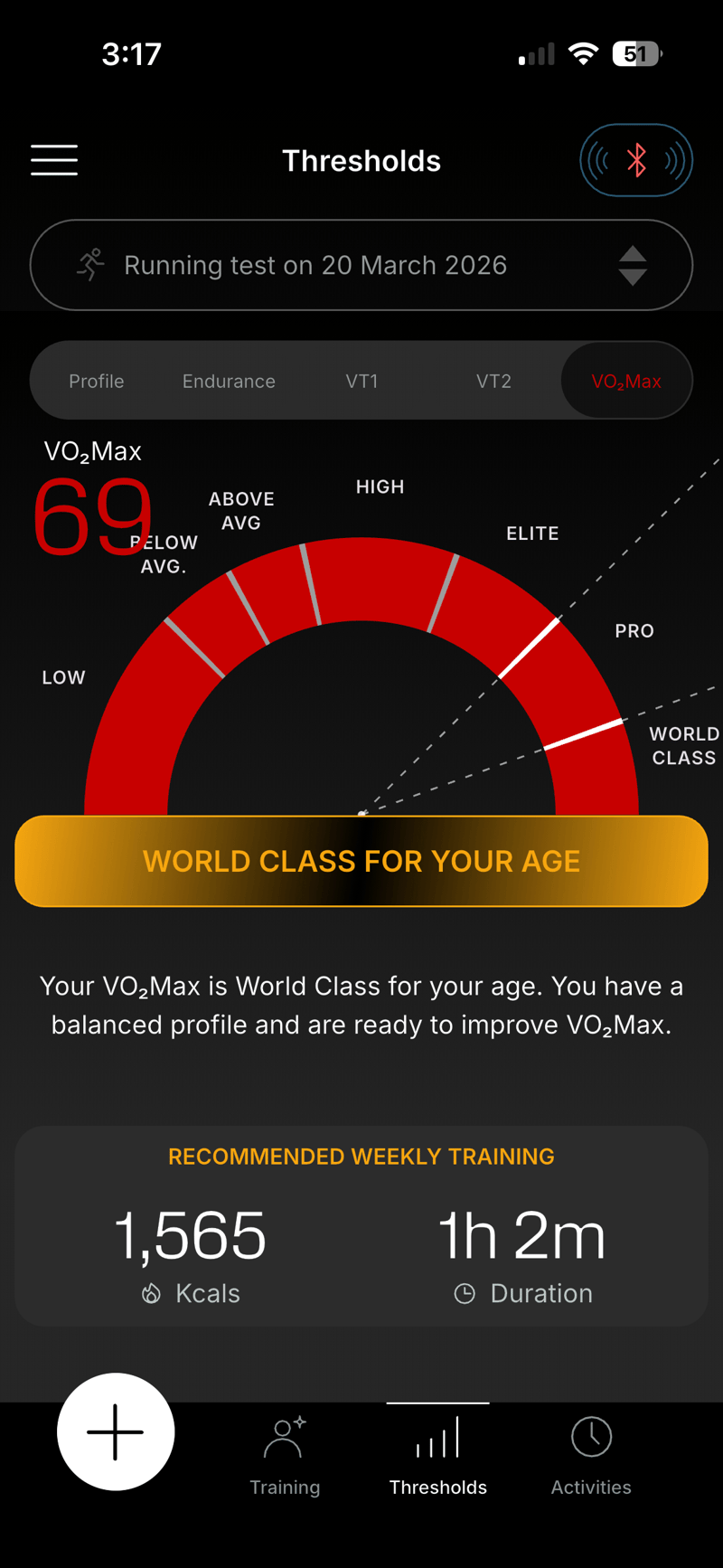
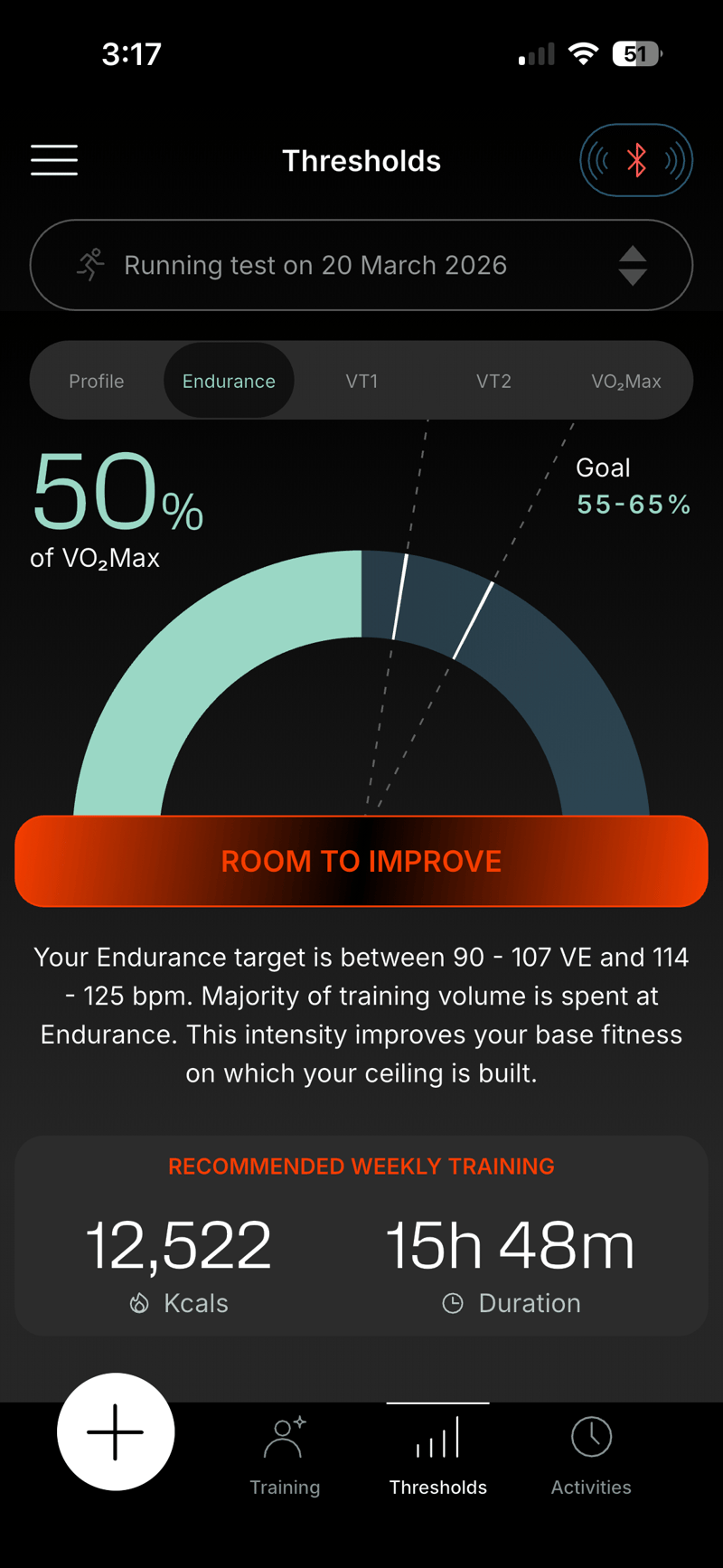
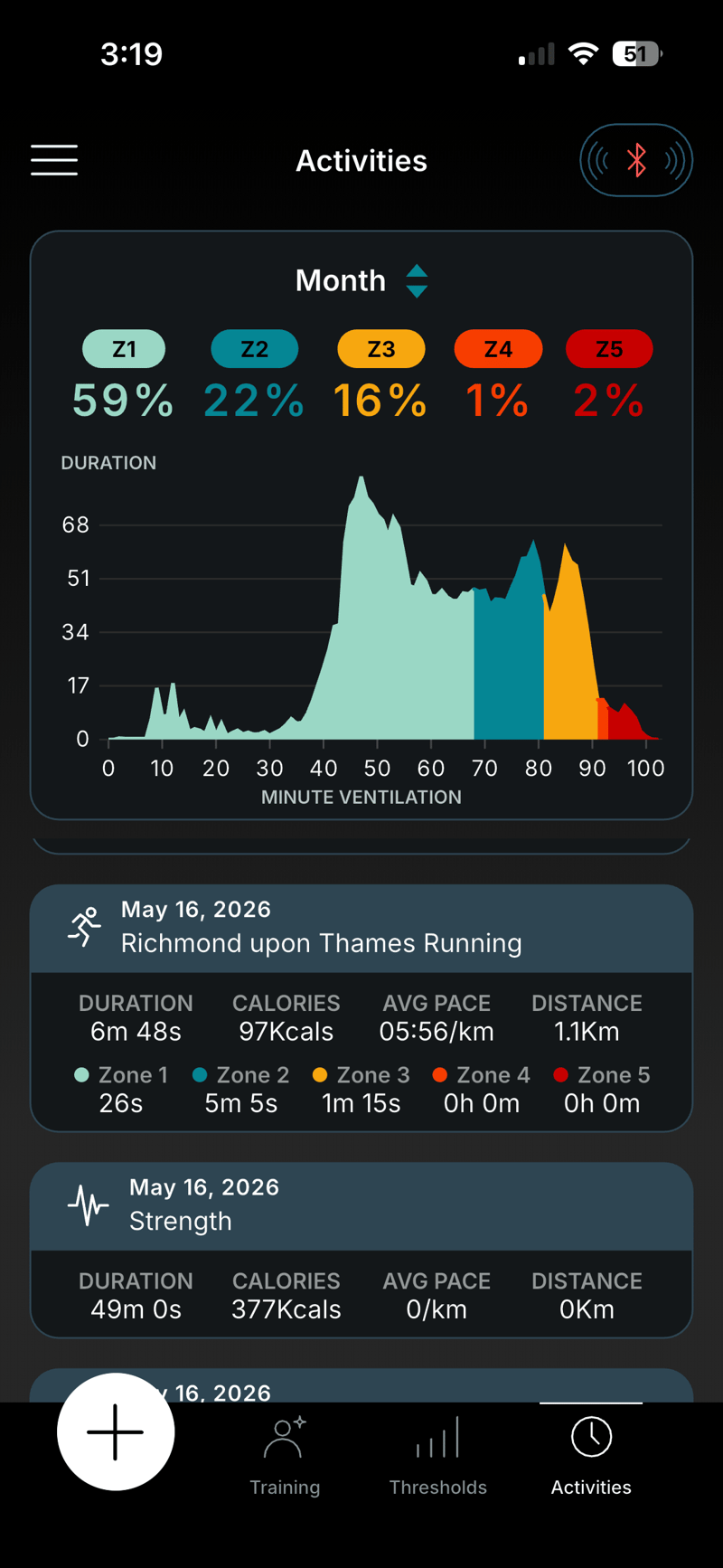
I haven’t precisely noted or quantified how responsive the CIQ data field is to actual changes in effort. I want to say it’s about 10 seconds for the body to respond, and then a few more seconds for that to manifest in the averaged numbers shown. Something like that. i.e., slower than power and faster than HR to respond. If this initial verdict turns into a more detailed review of the TymeWear VitalPro, then I’ll include those kinds of stats.
The subscription problem
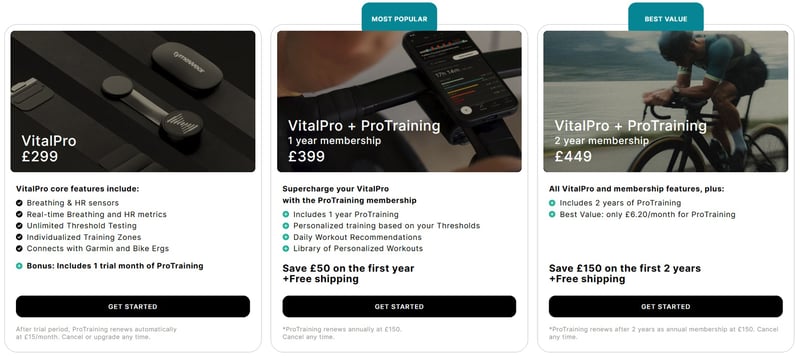
The commercial structure is where the questions multiply. The £299 strap includes a one-month trial of ProTraining, which then auto-renews at £15 per month unless cancelled.
The strap, on its own, delivers data, unlimited threshold tests, Garmin connectivity, and live workout metrics. ProTraining adds daily workout recommendations and a personalised workout library, which is to say it sells coaching. Tymewear’s own positioning is that this layer suits less-experienced athletes who do not yet have a training regime, which I guess is an honest framing.
For the reader who already works with a coach, a power meter, and training ecosystems on Garmin or Intervals.icu, the subscription is the wrong product for them. Whoop justifies its subscription because the Whoop app is the platform that typical members build their training around. Tymewear’s coaching infrastructure is not the platform for serious endurance athletes, whose training data already lives in tools such as TrainingPeaks. The metric is worth paying for. The coaching layer, for this audience, less so.
Usage
The breathing sensor sits on the back of the strap, and the author plus owners on the TrainerRoad and MTBR forums report that readings can spike outdoors during position changes and the strap can shift out of place. Furthermore, cyclists in bib shorts find the straps awkward to wear because they cross the area where the rear sensor is located; importantly, the strain gauge mechanism must sit cleanly above the bib’s rear strap, not below it (your jersey goes over it).
The strain gauge has no long-term durability record yet, as the product is new. It’s easily survived tens of hours for me, but it needs to survive many hundreds of hours.
Thoughts On The Future of VT as a Training Metric
I genuinely believe that training to VT plays a bigger role in the future of endurance training for the masses, alongside the role it already plays with some pro athletes. I’ve said the same thing about Muscle Oxygen metrics for several years. While muscle oxygen might solve some problems with exertion in the gym, it’s a complex metric that’s not as intuitive as the zones we are used to. VT doesn’t have that problem and, to varying degrees, mimics the ones we already know and love.
So VT has a future, but it will need a marketing push to gain wider awareness and understanding of its benefits. I’m surprised that Garmin hasn’t tackled this metric yet. TymeWear’s pricing shows that a high margin is possible, and that’s what Garmin wants. Garmin could also drive the awareness piece far more successfully than TymeWear.
Product Problems
It was a mistake not to make a waterproof strap, as this partially excludes triathletes who want to wear the VitalPro on race day. Fair enough, the strain gauge probably won’t work for swimmers, but triathletes will need to wear it under a tri suit, under a wetsuit, and it will get wet. I’ve worn other 1m IPX 7 straps while swimming, and it always ends badly.
Quick answers
What does the VitalPro measure that a normal heart rate monitor does not?
Tidal volume and minute ventilation. A standard HRM that reports breathing rate does so indirectly via respiratory sinus arrhythmia, which measures breaths per minute. The VitalPro measures the magnitude of each chest expansion via its strain gauge. That is what makes minute ventilation, and the ventilatory thresholds derived from it, possible.
Does the strap work without the ProTraining subscription?
Yes. Real-time breathing rate, minute ventilation, tidal volume, heart rate, the threshold test, individualised zones, Garmin connectivity and ERG mode all run on the strap alone. The subscription adds daily workout recommendations and a personalised workout library. Those are software layers, not core sensor functions.
What happens if I cancel the subscription?
The sensor functions and the Tymewear app continue to work. Threshold tests, real-time data and the Garmin Connect IQ link remain available. Historical activity data stays in the Tymewear account. What disappears is the daily workout recommendation and the personalised workout library that the ProTraining tier provides.
How accurate is the ventilation measurement, and has anyone outside Tymewear verified it?
Tymewear’s in-house validation against the Cosmed K5 metabolic cart reports a pooled correlation of r=0.973 for minute ventilation and a mean absolute error of 1.2 breaths per minute for breathing rate, across 26 cycling incremental tests. That is the brand’s own study, not a third-party, peer-reviewed study. The nearest independent peer-reviewed work is Gouw and colleagues (2022) on Tymewear’s older smart-shirt product, which reported reliable test-retest results but a systematic underestimation of the second ventilatory threshold relative to the lab. No equivalent independent paper on the VitalPro chest strap itself has been published yet.
Should I trust the 2.4-times-faster training claim?
The number traces back to a real 2015 randomised controlled trial by Wolpern and colleagues, in which the ventilatory-threshold group gained 11.7 per cent in VO2max over 12 weeks, compared with 4.9 per cent in the heart-rate-reserve group. The cohort was 36 physically inactive adults with a mean age of 48.6 years. The finding holds for that population. Transferring the same multiplier to already-trained endurance athletes is a stretch that the marketing makes, which the study does not.
Will the readings hold in an aero or time-trial position?
A steady aero or TT position is fine once the strap settles. Short, sharp movements are where the readings get noisy. The breathing sensor sits on the back, under the shoulder blades, and measures the magnitude of chest expansion, so anything that compresses the strap against the lower back or shifts its position introduces signal noise. Users on the TrainerRoad and MTBR forums have reported spikes during sharp position changes.
Does outdoor cycling provide the same data quality as indoor cycling?
Indoors is cleaner. A turbo or smart trainer holds the body stable, which keeps the strain gauge reading the chest cleanly. Outdoor riding introduces bumps, position changes and the upper-body movement involved in handling the bike. Tymewear has improved outdoor stability through software updates, and the partnership with Visma-Lease-a-Bike includes outdoor road riding. The data is usable outside. It is cleaner inside.
Does this replace a power meter, or sit alongside one?
Alongside. Power tells you the mechanical work the legs are producing. Ventilation tells you the physiological cost of producing it. The two signals diverge in useful ways. Power can be held steady while ventilation drifts upward as fatigue accumulates, and that drift is where the metric earns its keep. A serious endurance athlete will run both. The VitalPro is not a power meter substitute.
Is ventilation really more stable than heart rate on long efforts?
Generally, yes, but not absolutely. Heart rate drifts upward during a long, steady-state effort due to cardiovascular strain, dehydration, heat, and substrate depletion. Ventilation also drifts under those same stressors, just to a lesser extent. The honest framing is that ventilation tends to track effort more tightly than heart rate over hours, particularly around the thresholds. Treating it as a drift-proof signal is wrong. Treating it as a more stable one than HR is right.
Will a coach actually use this data?
That depends on the coach. A coach already working in TrainingPeaks or Intervals.icu with HR and power data can read VT1 and VT2 zones in those tools, because Tymewear syncs across to both platforms. The data is portable. What the coach is less likely to adopt is the Tymewear app workflow or the ProTraining workout recommendations. The metric is portable. The coaching layer is not.
How does this compare to Whoop or Oura?
The use cases barely overlap. Whoop and Oura measure 24/7 strain, sleep and recovery via the wrist or finger, and neither measures ventilation. The VitalPro is the opposite: a session-time training tool focused on breathing-based intensity rather than a continuous wellness tracker. Owners of one would not see the other as a substitute.
How does this compare to the Fourth Frontier X2?
Both estimate ventilatory thresholds noninvasively, but from different physiological perspectives. The Frontier X2 is an ECG strap and derives VT1 and VT2 from heart rate, heart rate variability and detrended fluctuation analysis of the HRV signal. The VitalPro measures chest expansion directly with a strain gauge and computes minute ventilation from it. The X2 reads from the heart side. The VitalPro reads from the lung side.
What does Stephen Seiler's involvement actually mean?
Seiler has collaborated with the brand, and his research has informed how the platform frames ventilatory thresholds. His name on the proposition adds credibility to the underlying framework. It does not constitute independent validation of the VitalPro hardware. Seiler’s research on polarised training stands on its own. Whether the VitalPro accurately measures the metric on which polarised training depends is a separate question.
Could a future Garmin update make the £299 obsolete?
Possibly, although not imminently. Garmin already derives breathing rate from chest-strap HRV via respiratory sinus arrhythmia, but it does not estimate tidal volume or minute ventilation, nor does it present ventilatory thresholds. Adding tidal volume estimation to an HRM 600 successor would require additional sensing or substantial algorithm work. If Garmin moves on this, the smaller brands will feel it first. A serious endurance buyer who actually does long efforts now is unlikely to wait.
Who it suits
The audience for the VitalPro is narrower than the marketing implies. At least for now, until the awareness grows.
It suits long-ride cyclists, ultrarunners, and triathletes whose bike leg runs long enough that heart rate and power begin to mislead. Coached athletes whose coach will use the data are natural buyers, as are athletes whose existing zones feel inaccurate on long efforts. It is less obviously useful to short-effort athletes whose heart rate and power zones already track effort honestly, to anyone unwilling to manage the auto-renewing subscription, or to anyone on Wahoo, Suunto or Coros who is not willing to wait for the integrations.
Verdict
Good metric. Wrong bundle. Buy the strap, not the subscription.
Tymewear VitalPro price: where to buy
The Tymewear VitalPro costs £299 / $299, including a one-month trial of ProTraining. ProTraining then renews at £15 per month unless cancelled.
US Pricing:
- VitalPro Sensor + 1 month ProTraining: $299
- VitalPro Sensor + 1 year ProTraining: $399
- VitalPro Sensor + 2 years ProTraining: $449
UK Pricing:
- VitalPro Sensor + 1 month ProTraining: £299, then ProTraining at £15 a month
- VitalPro Sensor + 1 year ProTraining: £399, then ProTraining renews annually at £150
- VitalPro Sensor + 2 years ProTraining: £449
Last Updated on 3 October 2026 by tfk the5krunner
Small things I always use
- Garmin 90-degree charging adapter: Charges your Garmin from any USB-C cable. Essential when travelling. I use one.
- Body Glide: The blue anti-chafe stick swimmers and runners carry. I use it.
- Speedo earplugs: Fewer ear infections and no cold-water dizziness. I use them.
- Dryrobe Advance: My winter changing robe for open-water swims. I use one. A cheaper option is the AONYIYI changing robe.
- Maurten: Race fuel that stays easy on the stomach. I use them.
- Garmin charging puck: The quickest way to top up before a session. I use one.
- Injinji: Toe socks that stop rubbing, so you run more. I use them.
- Ultimate toe protectors: Stop black toenails on long runs. They work. I use them.
- Compressport R2 v2 calf sleeves: My calf sleeves of choice. I use them.
- Cellucor C4: My pre-workout before hard sessions.
- TPU tubes: Schwalbe Aerothan, Tubolito and Pirelli SmarTube. Light, tiny spares. I use all three.
- G8 insoles: Adjustable insoles that are good. I use them.
- Cycplus Cube: A 97g electric pump that gets a road tyre rideable in two minutes. I carry one. 5% off with code THE5KRUNNER.
Watches and sensors
- Polar H10: My daily driver for waking HRV.
- Polar Verity Sense: My backup arm-worn HR sensor.
- Nomad bedside charger: Charges my iPhone and Apple Watch overnight. I use it, and many of their bands.
- Train.Red: The best muscle oxygen sensor I’ve used.
- Tymewear: Accurate heart rate and reliable ventilatory zones. I use it to pace endurance rides over an hour.
- Garmin Forerunner 970: A pro-grade triathlon watch. I use this.
- Apple Watch Ultra 4: My daily smartwatch. No phone needed on rides.
- Garmin Fenix 9 Pro: I’ve just bought one.
On the bike
- Continental GP5000 for everyday riding, and Aero 111 on the front for special occasions.
- Helmets: Specialized S-Works Evade 3 for road riding, and Rudy Project Wing for TT-style races. I use both.
- Ravemen FR300: A front light that mounts under your Garmin or Wahoo. I use one.
- Wahoo TRACKR Radar: I use it on one bike and Varia on the other. They perform the same.
- Garmin Varia RTL515: Radar that warns you of cars from behind. I use this model.
- Wahoo ELEMNT Roam 3: The bike computer that’s easy to use. I use mine on most rides.
- Favero Assioma Pro RS2: Accurate power pedals that swap easily between bikes. I use this model.
Home and indoor training
- NPE Runn: Makes my basic treadmill smart, sending more accurate speed and distance to my watch and Zwift. I use it.
- Google Wifi: Keeps Zwift connected in my pain cave. I use it.
- Apple TV 4K: Zwift on the big screen. I use two.
- Google Nest Doorbell (wired, 2nd gen): My video doorbell, running in both Google Home and Apple Home. I use it.
Health, recovery and sleep
- FreeStyle Libre 3 Plus: Shows how my blood sugar responds to diet.
- hDrop: Measures my sweat loss in summer and indoors.
- Fourth Frontier Zone: Checks my heart under load in hard sessions.
- Oura Ring 5: My partner’s recovery tracker of choice.
- Kineon MOVE+: Red light therapy for niggles. It works.
- Eight Sleep: A cooling mattress cover my partner and I use nightly.
Reader-Powered Content

This content is not sponsored. It’s mostly me behind the labour of love, which is this site, and I appreciate everyone who supports it.
Support the site: Follow (free, fewer ads) · Subscribe (paid, ad-free) · Buy Me A Coffee ❤️
Written by real people, with AI assistance. Fact-checked and verified for originality. See the Editorial Policy. FTC: Affiliate Disclosure — some links pay commission. As an Amazon Associate, I earn from qualifying purchases.
tfk is the founder and author of the5krunner, an independent endurance sports technology publication. With 20 years of hands-on testing of GPS watches and wearables, and competing in triathlons at an international age-group level, tfk provides in-depth expert analysis of fitness technology for serious athletes and endurance sport competitors. ID

Garmin’s breathrate measurements are almost always wrong for me – and when i look at the graph’s it is simply another version of my HR bpm graphs – thus I just ignore that metric for my runs/rides.
This sounds like something different though and I might find use in this – I’m assuming it will do both of the major ventilatory thresholds (VT1 and VT2) – $299 is steep though.
I would be interested definitly but reading the their literature, i would think any sport that has more than a little trunk movement would not work.
Nonetheless, interested!
I have one for over a year already as I bought it in the beta release. My main consideration to try was that this is going to be much easier for establishing zones than doing lactate testing, let alone prohibitively expensive lab testing. I felt Garmin never had been able to provide correct zones across heart rate and power for me.
So I went ahead and ordered the strap. There have been lots of development on the accompanying app since a year ago which make this such an easy thing to use. Threshold testing is easy and gives me the zones across heart rate, power and ventilation that can be put into garmin zones. Training with those zones, looking on my watch to see ventilation to stay in the desired zone has changed my approach to zone 2 training completely. I am much slower now in the zone, but get much better results, as it is supposed to be. I always had trouble with heart rate lagging so much that I was pushing to hard and then could not get back down in zone 2. That is a thing of the past for me.
For me this has been a game changer in being able to stick to plans, not work to hard on easy days and push when I need to.
I am not at the front of triathlon races and that is not my goal, but I feel more confident that I make gains over time with this nifty tool than without it.
Curious if you can tell how do their breathrate numbers compare to Garmin’s?
Brian FYI: the breathrate stats do not matter for interpretaion, there is no interpretation/inference; they only matter when the number is used in a subsequent calculation like tidal volume, when obviosuly an accurate number is best!!
not sure I made that clear in the article!
Got it, thanks. Wasn’t criticizing, not you at least – just trying to confirm my suspicion that Garmin’s “breathrate” numbers are just a factor based on HR bpm, because it sure looks like it by viewing the data.
🙂
I have quickly read the article you mention (https://www.ncbi.nlm.nih.gov/pmc/articles/PMC4491229/) that is supposed to justify the use of this strap. This study is really useless IMHO: they compared people training at maximum 65% of their HR max compared to people training at >VT2 which is usually 82% to 93% of HR max. So the only conclusion is that if you want to improve your VO2max you better train at high intensities. Nothing new… It doesn’t mean that the strap is useless, just that this study does not seem IMHO to be a justification of the strap usefulness.
I wrote, “Clearly, that is one trial, not a body of evidence.”