Intermittent Fasting Strategies: Dieters vs. Athletes
Here’s a comprehensive and short guide to intermittent fasting, where we quickly reach the point. Let’s go.
What Is Intermittent Fasting?
Intermittent fasting (IF) alternates eating and fasting periods to control calories and supports metabolic flexibility. It’s popular and effective for weight loss as it enhances fat burning, insulin sensitivity, and increases energy levels.
IF is simple to understand and implement; even athletes use it for body composition optimisation.
IF changes your normal physiology to a fasted state, or a fat-oxidation state. Sometimes incorrectly referred to as ketosis.
Scientific Basis Explained
Fasting lowers insulin, releasing stored fat for energy. This means the fat: carb ratio is increased for every calorie you use – it’s a fat burner that aids metabolic flexibility. Even if you do not eat carbs for hours, some carbs remain in your muscles and liver, and can be used.
IF also increases norepinephrine and raises Human Growth Hormone (HGH), which preserves muscle to help fat breakdown. Further, IF triggers autophagy, which clears and recycles damaged cell components, perhaps aiding overall cellular repair.
Scientific References
| Claim | Reference |
|---|---|
| Insulin drop enables fat release | de Cabo R, Mattson MP. NEJM 2019;381:2541-51 |
|
HGH can rise up to 5x in prolonged fasting |
Ho KY et al. DOI: 10.1172/JCI113450 |
| Norepinephrine boosts lipolysis | Zauner C et al. Am J Physiol 2000;278:E901-7 |
| Autophagy in fasting | Mizushima N et al. Cell Metab 2008;8:23-8 |
| Metabolic flexibility via IF | Anton SD et al. Obesity 2019;27:192-8 |
| Efficacy of a home-use metabolic device | Seidell JC et al. JBMR Plus 2021 |
Before We Start
Fasting means you eat nothing at all. Nothing. Got that?
Let’s say you eat nothing for 10-12 hours. Even if you then ate half a biscuit (carbs), there would be a high chance that insulin would be raised, and IF would be stopped.
Returning to an early fasted state can take 3-4 hours. Do not eat.
Any caloric intake technically ends a fast. Protein or high-calorie fat consumption will raise insulin and stop the fasted state. Some modified IF approaches allow a very small amount of pure fat (e.g., a teaspoon of olive oil or MCT oil) as it minimally impacts insulin. However, this is a ‘dirty fast’ and still provides calories.
Top IF Methods (16:8, 5:2 & More)
Here are four of the more widely known strategies.
| Method | Schedule | Best For |
|---|---|---|
| 16:8 (hours) | 16h fast, 8h eat
(e.g., noon–8 PM or 7 AM-3 PM) |
Dieters & athletes; easy, sustains energy |
| 5:2 (days) | 5 normal days, 2 at 500–600 cal | Dieters; off-season for athletes |
| Eat-Stop-Eat | 24h fast 1–2x/week | Dieters: recovery days only for athletes |
| OMAD | One Meal A Day, 1 meal in a 1h slot | Extreme dieters; avoid in training |
The 16:8 (hours) protocol is widely recommended for most individuals, and the 7 AM-3 PM variant better aligns with the body’s natural circadian rhythm.
Timeline of a Typical Fast
| Time Since Last Meal | Fuel Source Used | Body’s Priority |
| 0–4 hours | Food Glucose (from your meal) | Digesting and storing energy. |
| 4–12 hours | Stored Glucose (Glycogen) | Using up readily available reserves. |
| 12–16 hours
(18-30 hours unadapted) |
Fatty Acids (stored body fat) | Switching fuel to internal fat stores only if low-carb adapted |
| 24–48+ hours | Ketones and Fat | Sustained fat-burning and cellular repair
(Autophagy may increase, not established in humans). |
Weight Loss Benefits for Dieters
Fact: You can only lose weight (fat) with a calorie deficit. There is no other way to break the laws of physics.
IF can naturally create a calorie deficit without requiring complex calorie tracking.
It also improves cholesterol and blood pressure, often showing better adherence than continuous daily calorie cuts. Monitoring tools can help prevent excessive fasting, which protects muscle mass.
Performance Gains for Athletes
Fact: IF encourages a metabolic shift toward improved fat oxidation, which benefits steady-state endurance athletes.
IF also helps preserve lean mass when protein timing is optimised. High-intensity performance (VO2max) is maintained if both protein and carbohydrates are properly refuelled post-training (muscles are repaired with protein and refuelled with carbs). Certain athletes, like fighters or cyclists, use IF to cut 2–4% body fat pre-competition.
Potential Risks & Side Effects
Initial side effects can include hunger, fatigue, and irritability. There is a risk of nutrient gaps or overeating during the eating window.
Athletes engaging in high-intensity training must watch for glycogen depletion. IF should be avoided during competition.
Women may benefit from shorter fasts (14:10) to help prevent potential hormone disruption.
Avoid IF if pregnant, or if you have a history of eating disorders.
Tech Tools: Apps & Trackers
- Apps: Zero (tracks fasting windows), MyFitnessPal (tracks macros in the eating window).
- Carb/Fat Usage Tools (e.g., Lumen): Devices that measure expired gases (CO2) to quantify fat vs. carbohydrate burning, allowing for personalised fasting window adjustments. (Device Validation: Roberts et al. https://pmc.ncbi.nlm.nih.gov/articles/PMC9987730/)
- Wearables: Oura/Whoop monitor sleep and recovery; Continuous Glucose Monitors (Freestyle Libre CGM, Zoe, Levels) track blood glucose response.
Quick Start Tips
- Start with a 12:12 window, build to 16:8.
- Prioritise hydration and electrolytes during the fasting period.
- Focus on eating protein and fibre first at the start of your eating window.
- Athletes: Fast post-training, but ensure fuelling pre-workout for high-intensity sessions.
Quick answers
Is intermittent fasting safe long-term?
Yes, for healthy adults. Experts often recommend cycling off IF monthly or periodically rather than practising it continuously year-round.
Can I exercise while fasting?
Low-intensity exercise such as walking or easy cardio is generally fine in a fasted state. Fuel up before high-intensity training such as HIIT or heavy lifting, where glycogen availability matters for performance.
What drinks are allowed during a fast?
Water (still or sparkling), black coffee, and plain tea are permitted. Zero-calorie drinks may also be used. No milk and no sugar, as either will raise insulin and end the fasted state.
Can intermittent fasting break a weight-loss plateau?
Yes. IF can improve insulin sensitivity and may be a useful strategy to overcome a plateau, particularly when continuous daily calorie restriction has stopped producing results.
How does intermittent fasting differ from ketosis?
Ketosis is a deeper fasted state, typically reached after 48 to 72 or more hours of fasting or through a sustained low-carbohydrate diet. IF at the 16:8 level shifts fuel toward fat oxidation but generally does not produce significant ketone levels in the way prolonged fasting or a ketogenic diet does.
Is intermittent fasting different for women than men?
Some experts recommend women cap fasts at 14 hours to help avoid potential disruption to the menstrual cycle or hormonal balance. The 16:8 protocol is safe for most women, but a more conservative 14:10 approach is a reasonable starting point.
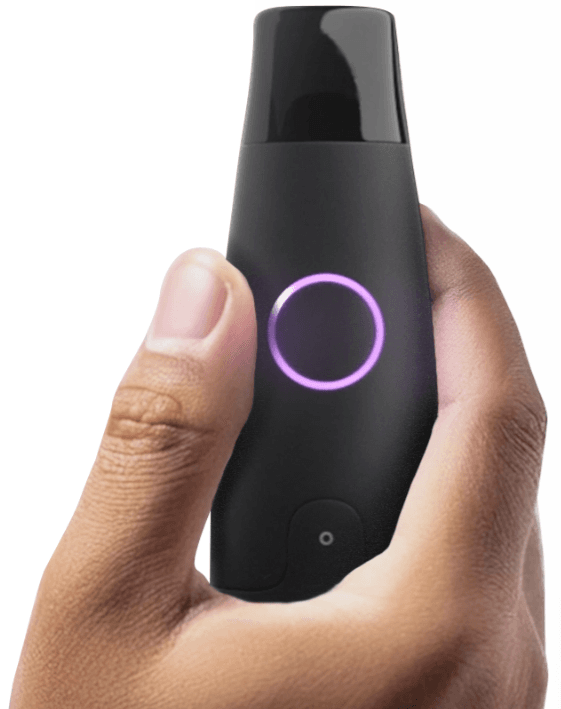
Lumen Metabolism
Track actual carb and fat burn.

This article is part of the site’s sports science reference for endurance athletes.
Last Updated on 3 October 2026 by tfk the5krunner
Small things I always use
- Garmin 90-degree charging adapter: Charges your Garmin from any USB-C cable. Essential when travelling. I use one.
- Body Glide: The blue anti-chafe stick swimmers and runners carry. I use it.
- Speedo earplugs: Fewer ear infections and no cold-water dizziness. I use them.
- Dryrobe Advance: My winter changing robe for open-water swims. I use one. A cheaper option is the AONYIYI changing robe.
- Maurten: Race fuel that stays easy on the stomach. I use them.
- Garmin charging puck: The quickest way to top up before a session. I use one.
- Injinji: Toe socks that stop rubbing, so you run more. I use them.
- Ultimate toe protectors: Stop black toenails on long runs. They work. I use them.
- Compressport R2 v2 calf sleeves: My calf sleeves of choice. I use them.
- Cellucor C4: My pre-workout before hard sessions.
- TPU tubes: Schwalbe Aerothan, Tubolito and Pirelli SmarTube. Light, tiny spares. I use all three.
- G8 insoles: Adjustable insoles that are good. I use them.
- Cycplus Cube: A 97g electric pump that gets a road tyre rideable in two minutes. I carry one. 5% off with code THE5KRUNNER.
Watches and sensors
- Polar H10: My daily driver for waking HRV.
- Polar Verity Sense: My backup arm-worn HR sensor.
- Nomad bedside charger: Charges my iPhone and Apple Watch overnight. I use it, and many of their bands.
- Train.Red: The best muscle oxygen sensor I’ve used.
- Tymewear: Accurate heart rate and reliable ventilatory zones. I use it to pace endurance rides over an hour.
- Garmin Forerunner 970: A pro-grade triathlon watch. I use this.
- Apple Watch Ultra 4: My daily smartwatch. No phone needed on rides.
- Garmin Fenix 9 Pro: I’ve just bought one.
On the bike
- Continental GP5000 for everyday riding, and Aero 111 on the front for special occasions.
- Helmets: Specialized S-Works Evade 3 for road riding, and Rudy Project Wing for TT-style races. I use both.
- Ravemen FR300: A front light that mounts under your Garmin or Wahoo. I use one.
- Wahoo TRACKR Radar: I use it on one bike and Varia on the other. They perform the same.
- Garmin Varia RTL515: Radar that warns you of cars from behind. I use this model.
- Wahoo ELEMNT Roam 3: The bike computer that’s easy to use. I use mine on most rides.
- Favero Assioma Pro RS2: Accurate power pedals that swap easily between bikes. I use this model.
Home and indoor training
- NPE Runn: Makes my basic treadmill smart, sending more accurate speed and distance to my watch and Zwift. I use it.
- Google Wifi: Keeps Zwift connected in my pain cave. I use it.
- Apple TV 4K: Zwift on the big screen. I use two.
- Google Nest Doorbell (wired, 2nd gen): My video doorbell, running in both Google Home and Apple Home. I use it.
Health, recovery and sleep
- FreeStyle Libre 3 Plus: Shows how my blood sugar responds to diet.
- hDrop: Measures my sweat loss in summer and indoors.
- Fourth Frontier Zone: Checks my heart under load in hard sessions.
- Oura Ring 5: My partner’s recovery tracker of choice.
- Kineon MOVE+: Red light therapy for niggles. It works.
- Eight Sleep: A cooling mattress cover my partner and I use nightly.
Reader-Powered Content

This content is not sponsored. It’s mostly me behind the labour of love, which is this site, and I appreciate everyone who supports it.
Support the site: Follow (free, fewer ads) · Subscribe (paid, ad-free) · Buy Me A Coffee ❤️
Written by real people, with AI assistance. Fact-checked and verified for originality. See the Editorial Policy. FTC: Affiliate Disclosure — some links pay commission. As an Amazon Associate, I earn from qualifying purchases.
tfk is the founder and author of the5krunner, an independent endurance sports technology publication. With 20 years of hands-on testing of GPS watches and wearables, and competing in triathlons at an international age-group level, tfk provides in-depth expert analysis of fitness technology for serious athletes and endurance sport competitors. ID

I’m not one for subjecting myself to fasting rules, but I find it surprisingly easy to just not eat anything before lunch. It feels as if I could substitute food with black coffee forever (until it doesn’t). This still rarely gets me to full 16h, but starting with a “natural” window of 12h (I tend to eat late but I’m not sure at all that I’d do less of that with breakfast), it’s really not that hard to achieve more. It does take many stars to align to hold out longer, some non-food appointment around lunchtime, a lunch appointment that just happens to be a bit later, or simply work that begs to be done before the break. Or some dining date that pulls the evening meal earlier.
Yeah, I really do believe that intermittent fasting is good. Don’t even be scared of that bogeyman “catabolic state”: even if some muscle tissue might be broken down, chances are that the body has mechanisms to select cells that should eventually be cleaned out anyways. It’s an amazingly smart “machine”.
This is a good recap of Intermittent Fasting just based on what I have researched myself previously.
One thing I’ve always been curious about – how much flexibility is there when using the methods? For example, if doing 16:8 – are you okay doing 8-4 one day but then 7-3 the next? Does the 1 hour variation actually effect anything provided you average 16:8 over a longer period of days?
Personally I’ve never been able to continuously follow a IF plan – best I’ve been able to manage is to strictly restrict eating after 8pm (which helps sleep) so I’m basically 12:12.
yes i’m sure you can change what you do each day. you can even skip days.
i doubt there is any science looking into that.
I read this with interest. I have been intermittent fasting for about 15 years. In the UK we had a brilliant TV doctor, Dr Michael Mosley, sadly no longer with us, but I watched a documentary with him about the 5/2 diet and the health benefits of intermittent fasting. 15 years later I have never looked back. I always do my 2 days on Monday and Tuesday of each week and used to limit my calories to below 300 per day during those 2 days. About 6 months ago I tried reducing that to zero and was surprised how easy it was. After 15 years I definitely see health benefits and far from people saying about brain fog from not eating, I’m an electrical and software engineer and during my fasting days, my mind is more sharp than the rest of the week.
have you considered things like MCT for the calories on restricted days?
I really like to do IF,,,I tried before but I break it,,,don’t know how to avoid some food that I usually like,
you don’t have to avoid any food per se. just ALL food for a period of time