Afib detection: Apple Watch beats your doctor, study finds
If you’ve got an Apple Watch, it might be reassuring to know that those heart-monitoring features actually work.
Published in JACC Journals, the EQUAL Study from Amsterdam UMC put the watch up against standard medical care for detecting atrial fibrillation—the irregular heartbeat that can cause strokes if left undiagnosed. Researchers followed 437 patients in the Netherlands, all over 65 and at elevated stroke risk, for six months.
Half wore Apple Watches for 12 hours a day. The other half got traditional monitoring via chest electrodes, which only record for a couple of weeks at a time, unlike the Apple Watch, which records multiple times an hour.
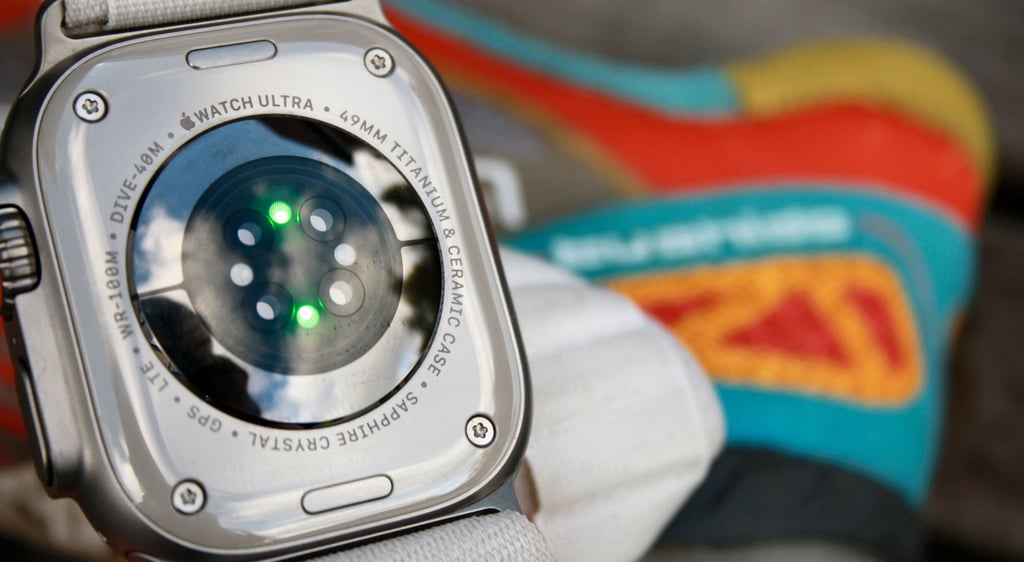
After six months, 21 people in the smartwatch group had their atrial fibrillation detected, compared to just 5 in the standard care group. Roughly 10% versus 2% – a statistically significant difference.
Atrial fibrillation comes and goes. Your heart might behave perfectly during a two-week monitoring window, then misfire a month later. A watch worn daily for months has more opportunities to catch it.
The study used both the watch’s manual ECG function and its PPG sensor, which measures your pulse via light on your skin. Other smartwatches have similar capabilities, so the findings likely extend beyond Apple. That said, companies tend to more readily implement manually taken ECG readings with wearables, these can only detect Afib events while they are happening. It is less common for wearable companies to detect anomalies using a continuous optical PPG sensor like Apple.
Take Out
It’s a modest sample size, but the core finding holds: continuous monitoring catches more cases, particularly the silent ones—and that could mean the difference between prevention and a stroke.
Last Updated on 26 January 2026 by the5krunner
Reader-Powered Content

This content is not sponsored. It’s mostly me behind the labour of love, which is this site, and I appreciate everyone who supports it.
Support the site: Follow (free, fewer ads) · Subscribe (paid, ad-free) · Buy Me A Coffee ❤️
All articles are written by real people, fact-checked, and verified for originality. See the Editorial Policy. FTC: Affiliate Disclosure — some links pay commission. As an Amazon Associate, I earn from qualifying purchases.
tfk is the founder and author of the5krunner, an independent endurance sports technology publication. With 20 years of hands-on testing of GPS watches and wearables, and competing in triathlons at an international age-group level, tfk provides in-depth expert analysis of fitness technology for serious athletes and endurance sport competitors.

Fact note: The cited article was not/will not be published on ScienceDirect, but in the JACC, Journal of the American College of Cardiology. https://doi.org/10.1016/j.jacc.2025.11.032
ty (changed)
it was also variosuly cited as being published by Harvard, so I admit to being confused on this. I did link to the correct paper.
Another fact note: I am not a native English speaker, so I wanted to translate your response using deepl.com. Unfortunately, it is not possible to copy text using Ctrl+C here in the discussion window.
you cannot copy text from this site unless you are logged in as a subscriber.
you can translate easily with other means eg firefox has translation built in to the url bar