Huawei Diabetes Risk Screening Launches—Garmin, Apple, Samsung Next
First credible smartwatch brand launches breakthrough diabetes risk screening in the West.
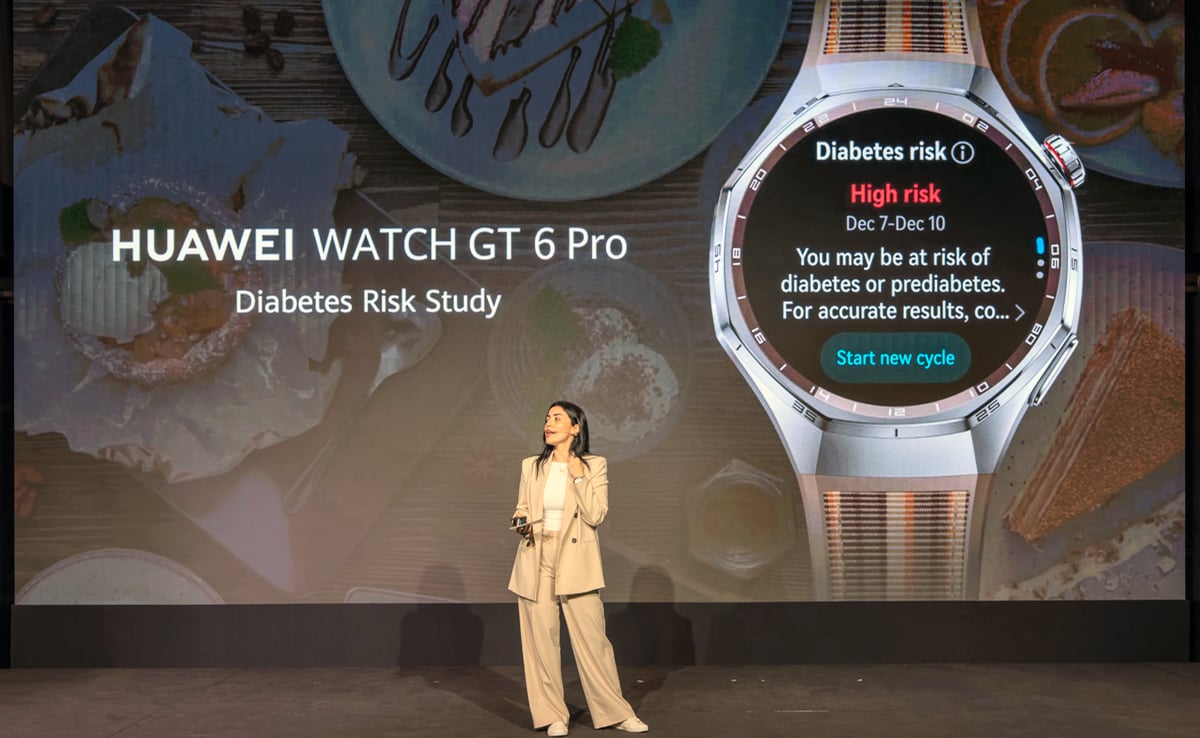
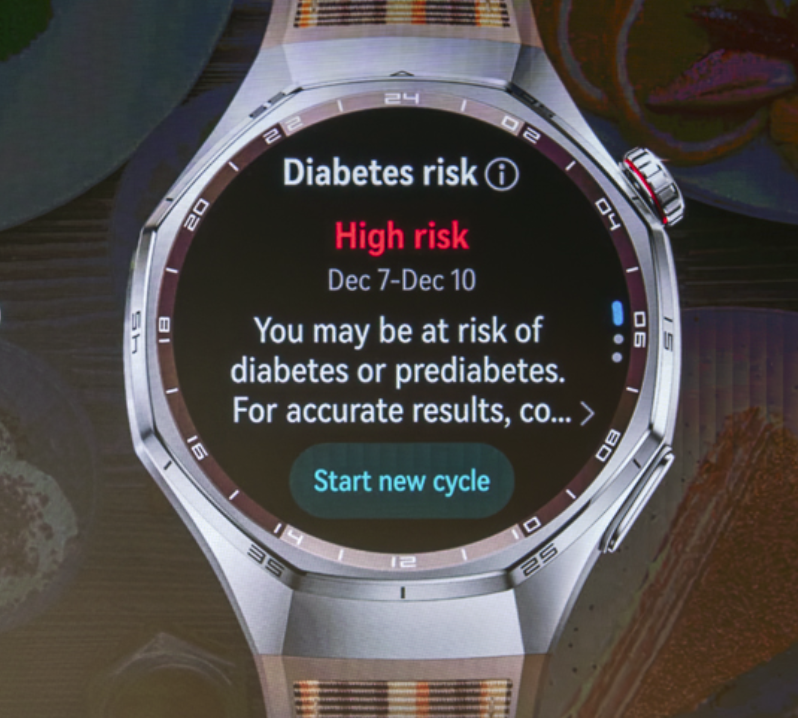
Huawei announced diabetes risk detection on the Watch GT 6 Pro at the World Health Expo in Dubai this week. The company claims the feature is already available via over-the-air update. It analyses PPG (photoplethysmography) signals over 3-14 days to categorise diabetes risk as Low, Medium, or High.
This is the first time a major smartwatch manufacturer has shipped a diabetes risk screening feature to Western consumers. The announcement marks a significant turning point for the industry and consumers alike, signalling that the technology is ready—or close enough for Huawei to deploy it publicly.
Garmin filed two patents for similar functionality in 2025-2026 and could release comparable features this year. Major manufacturers like Apple (Watch Series), Samsung (Galaxy Watch) and Google (Pixel Watch) will have parallel development underway.
Note: I have the February beta versions of Huawei’s app and GT6 Pro watch, but cannot see the feature – I just checked! I’m on a call with Huawei later today, so I will update this article as soon as I have more information.
What Huawei Actually Released
Watch owners wear the watch for 3-14 days, with PPG sensors collecting continuous optical data. The algorithm analyses patterns associated with diabetes-related vascular changes and categorises results as Low, Medium, or High. Users flagged Medium or High are advised to seek medical testing.
Huawei positioned this as wellness screening, not medical diagnostics. It identifies people who should get proper medical testing, not people who have diabetes. The distinction matters for regulatory reasons—risk screening can launch as a wellness feature without FDA approval.
Why This Is the First
Research has shown that diabetes causes detectable changes in vascular health:
- Diabetes-related neuropathy affects peripheral blood flow
- Microvascular arteriosclerosis changes arterial stiffness
- Both modify how light reflects through tissue and blood vessels
- These appear as patterns in PPG data from optical heart rate sensors
What’s new is that Huawei is claiming sufficient accuracy to ship it as a consumer feature rather than keeping it in research labs. More than that, no other major smartwatch manufacturer has released this functionality:
- Apple: Multiple glucose patents filed over the years, nothing shipped
- Garmin: Two patents filed 2025-2026, no product announcement
- Samsung: Research on glucose monitoring, no consumer release
- Fitbit/Google: Continuous (invasive) glucose monitor integration only (requires a separate Dexcom sensor)
Huawei’s willingness to launch suggests they believe accuracy is good enough for real-world use, even if not perfect.
Dubai Health Validation Study
Dr Maryam Saeed of Mohammed Bin Rashid University announced a 150-patient study comparing the Watch GT 6 Pro with traditional finger-prick glucose monitors across Dubai Health facilities. The study includes 50 healthy volunteers, 50 patients with diabetes, and 50 prediabetic patients.
What Garmin Has Filed
Garmin’s most recent patent (US 2026/0033750, published February 5, 2026) details wrist-based estimation of glycated haemoglobin (HbA1c) over extended periods (3 months) using multi-wavelength PPG sensors. This appears to differ from Huawei’s approach, which provides shorter-term risk categorisation based on other PPG pattern analyses.
HbA1c provides more specific information. People with diabetes aim to keep HbA1c below 7 per cent; healthy individuals aim to keep it below 5 per cent. Garmin’s patent describes using multiple wavelengths of light to distinguish signals from oxygenated, deoxygenated, and glycated haemoglobin. This targets the same underlying physiological changes but provides a numeric value rather than a categorical risk assessment.
Timeline for Garmin and Others
Diabetes risk categorisation products have been discussed for about 3 years. Given that one company has brought a product to market, albeit in limited form, a 2026-27 timeframe for similar solutions seems plausible. In most cases, this would likely align with a new generation of optical HR sensors, which, coincidentally, both Garmin and Apple are already overdue to launch.
There is likely a first-mover advantage for Huawei, but it may face fewer regulatory concerns, which may explain why Samsung, Google, and others will follow.
‘Live’, non-invasive blood sugar level detection is likely years away.
The Regulatory and Validation Gap
Huawei doesn’t officially sell watches in the USA, so FDA requirements don’t affect their business. The Watch GT 6 Pro is available in the UAE, Europe, Canada, and other markets, but not through official US channels. This creates both opportunity and a credibility problem for Huawei.
Wellness screening features don’t require FDA approval—they’re not classified as medical devices. But for US sales, manufacturers typically demonstrate to the FDA that internal validation testing has been performed. This isn’t scientific proof of efficacy, but it does require documented testing protocols and accuracy data. Thus, if Garmin ships similar functionality, it won’t need FDA approval But will need to demonstrate validation.
A Note of Extreme Caution
Abbot Libre sell medical grade, invasive blood glucose sensors – a significantly more regulated product and FDA-approved. Even that product had batch issues in 20205 that led to death, inuury and a Class 1 recall.
Abbot’s product is used by people managing a diagnosed condition, whereas Huawei’s new feature is for general screening to prompt a medical diagnosis through a doctor visit.
Industry Impact
Over 500 million people globally have diagnosed with diabetes. It’s a massive health problem, with an estimated 43 per cent of cases remaining undiagnosed. The health impact is massive—seven of the top 10 causes of death in the UAE relate to cardiometabolic disease rooted in insulin resistance and diabetes.
Early detection changes outcomes. But getting people to participate in invasive medical tests in medical settings is challenging. Home-based wrist risk screening removes friction. If watches can flag elevated diabetes risk during normal daily wear, many more people will potentially get tested earlier.
Diabetes screening is a significant market opportunity that will likely drive significant new watch sales for whoever offers a credible solution. Companies that get the messaging or implementation wrong will likely suffer significant negative media coverage – a potentially fatal commercial blow.
The Bottom Line
Huawei’s diabetes risk detection represents the first consumer-facing deployment of this technology by a credible smartwatch manufacturer. Whether it proves clinically useful and boosts the number of people self-referring for screening remains to be seen.
However, Huawei’s public release signals industry readiness. The technology exists. The algorithms are sufficiently robust to deploy. Regulatory pathways can be navigated by positioning features as wellness screening rather than medical diagnosis. Companies know this.
I expect Garmin to follow in 2026-2027 with HbA1c estimation, likely also with trend-based risk categorisation. Samsung, Google and Apple have the research capabilities and patent portfolios to deploy similar features when ready.
For consumers, this means wrist-based diabetes screening will become standard on flagship smartwatches in the near future, but not as a replacement for medical testing.
Smartwatches are fulfilling the promise of becoming early warning systems for chronic conditions, not just fitness trackers.
Sources:
- 2023 Watch 4 launch in China
- Huawei announcement at World Health Expo Dubai 2026
- Dubai Health validation study
- Huawei feature details
Last Updated on 11 February 2026 by the5krunner
Reader-Powered Content

This content is not sponsored. It’s mostly me behind the labour of love, which is this site, and I appreciate everyone who supports it.
Support the site: Follow (free, fewer ads) · Subscribe (paid, ad-free) · Buy Me A Coffee ❤️
All articles are written by real people, fact-checked, and verified for originality. See the Editorial Policy. FTC: Affiliate Disclosure — some links pay commission. As an Amazon Associate, I earn from qualifying purchases.
tfk is the founder and author of the5krunner, an independent endurance sports technology publication. With 20 years of hands-on testing of GPS watches and wearables, and competing in triathlons at an international age-group level, tfk provides in-depth expert analysis of fitness technology for serious athletes and endurance sport competitors.

Only for pro models ? Not for regular GT6 pr GT5?
that is all that is announced so far. it will depend on the optical hr sensor compatability for starters.