Tesla engineers built a Whoop competitor for lifters. Here’s the hard question.
Fort claims to answer the question every serious lifter has asked of their wearable. Can you actually tell how hard I’m lifting? quality counts. It is a question the industry has been trying and failing to answer for well over a decade.
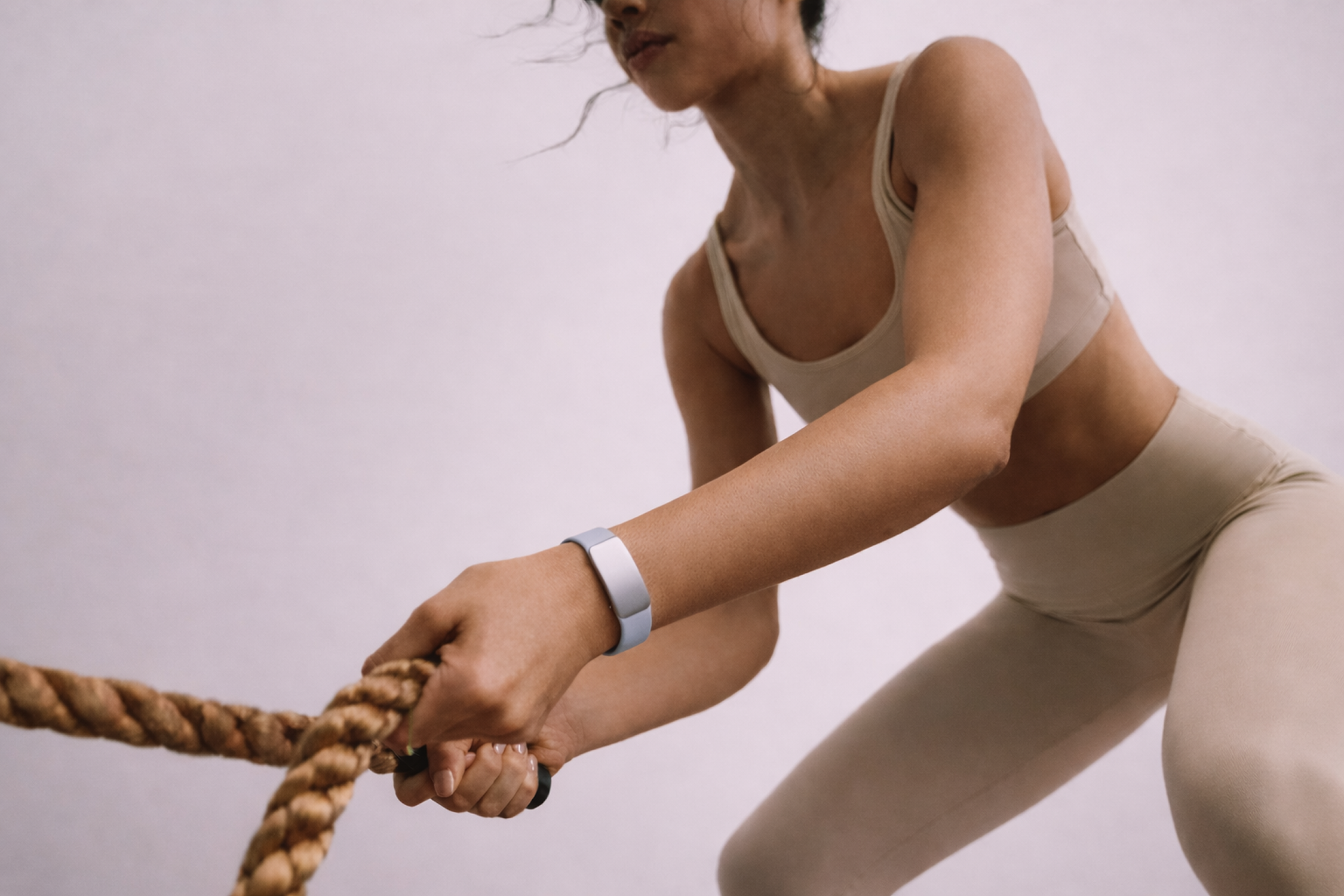
A group of engineers who previously worked at Tesla has launched Fort, a screenless wristband designed to measure strength training in a way that mainstream fitness wearables have never seriously managed, as the startup enters a market dominated by Whoop, Garmin and Apple.
The San Francisco-based company, which has raised early-stage funding from Y Combinator alongside Afore, Weekend Fund, Theory Forge, and angel investors from OpenAI and Tesla, opened pre-orders this week at $289. The device is expected to ship in the third quarter of 2026. The retail price is set at $349.
Fort’s pitch rests on solving a genuine and long-standing frustration for gym-goers. Existing wearables incorrectly measure effort almost entirely through heart rate, which works well for running or cycling, where your heart rate correctly tracks cardio load. In the weight room, that relationship fails. A heavy set of squats or deadlifts is brutally hard on the muscles, adding muscular strain, while barely registering on a heart rate monitor. The result is that Garmin, Apple Watch, and almost every comparable device have spent years telling serious lifters that their two-hour session was less strenuous than a brisk walk. One Fort early adopter (tester), quoted on the company’s website, said their previous wearable placed more strain on climbing stairs than on two hours of lifting – perhaps an overstatement but you get the point?
The claim that matters
The part of Fort’s proposition worth scrutinising is its use of bar speed. The company says its Session Score — its headline measure of how productive a training session was — is calculated in part from rep-by-rep speed data captured at the wrist, alongside heart rate and rest periods.
Bar speed is, by some distance, the most credible way to measure what is actually happening in a strength session. When you are fresh, the bar moves fast. As you fatigue, it slows. The closer you get to failure, the slower each rep becomes. Coaches and competitive lifters have used this relationship for decades to auto-regulate training — knowing that a squat moving at a certain speed indicates a certain proximity to failure, regardless of what the bar actually says. This is velocity-based training, a well-established methodology used across professional sport and elite powerlifting.
The devices that do this properly — made by companies such as GymAware, Vitruve and RepOne — attach directly to the barbell and track the bar itself. They are accurate, independently validated, and cost between $300 and $2,000. They are also single-purpose tools that require setup before each session and remain in the gym permanently.
Fort is attempting to do the same thing from your wrist, all day, automatically. That is a significantly harder problem, and one that a string of well-funded companies before it have attempted and failed to solve.
What wrist sensors have managed — and what they haven’t
It is worth being precise about where the technology currently stands, because not all of the problem is unsolved. Wrist-based accelerometers have become reasonably good at two things: counting reps and identifying which exercise is being performed. Biostrap, which uses an optical sensor on the wrist combined with a foot pod, can auto-detect exercise type and log reps with reasonable accuracy. Atlas Wristband, a now-defunct device that attempted similar things, managed the same before shutting down. These are genuinely useful capabilities — Fort claims to do both, across 50-plus exercises, and there is no obvious reason to be sceptical of that part of its proposition.
What no wrist-worn device has credibly managed is the harder step: translating wrist movement into accurate bar speed, and from that, into meaningful proximity to failure and Reps In Reserve (RIR) data. That requires the sensor to infer what the bar is doing from your wrist’s motion — a reasonable approximation for some lifts, a poor one for others —that can compound small measurement errors into larger ones.
The graveyard
The history of consumer-grade bar speed tracking is not encouraging. Beast Sensor, an Italian company that built a wearable accelerometer for the same purpose, is effectively defunct — its Android app hasn’t been updated since 2018, and its products are sold out. Independent testing found it to be the least accurate of all VBT devices studied. TrueRep, a further attempt at the problem, also shut down. Trackbar, a magnetic sensor that was attached directly to the barbell and was reviewed by this publication in 2021, appears to have gone dormant; its core limitation was never the hardware but the ecosystem — a proprietary app with no Garmin or Apple Watch integration, which restricted it to a narrow slice of the market willing to manage their training through yet another standalone platform.
The most instructive precedent, however, is Push. The Canadian startup was the most serious attempt to bring bar speed tracking to a wearable format. It worked with over 20,000 professional and Olympic-level athletes, was adopted by IMG Academy and Volleyball Canada, and built a genuine following among strength coaches over nearly a decade. In September 2021 — the same week it closed a $200 million funding round at a $3.6 billion valuation — Whoop acquired Push in a cash and stock deal.
Whoop, then shut down the entire Push system. The hardware, the app, the coaching portal — all closed. What emerged in its place was a strength tracking feature in the Whoop app that only functioned when a lifter manually selected and followed a preset workout programme. There was no automatic exercise recognition, no passive bar-speed capture, and no proximity-to-failure data. Whoop, having spent serious money acquiring the category leader in wrist-based bar speed tracking, retreated to a more limited implementation instead.
As recently as 11 February 2026, Whoop updated that position. Muscular load now registers automatically across the platform without manual logging—a meaningful step. The update uses motion patterns and session duration to estimate strain from strength work that was previously invisible to the device. But the underlying gap remains: Whoop’s automatic estimate is based on duration and movement type, not rep-by-rep bar speed. There is still no proximity to failure, no RIR, and no per-muscle breakdown. Whoop has narrowed the problem at the low-effort end; it has not solved it. Fort is claiming to solve it.
The closest existing attempt at wrist-based muscular strain tracking within the Apple ecosystem is Bevel, a well-regarded Apple Watch app that has built a substantial following by combining sleep, HRV, recovery, and strength data into a coherent daily picture. Bevel uses the Apple Watch’s motion sensors to track bar speed during lifting and derives muscular strain from it, producing a per-muscle breakdown that reviewers consistently rate as one of its strongest features. But like Whoop’s Strength Trainer, it only works when you manually select your exercises and weights. Both represent meaningful progress on the heart-rate-only model; neither removes the need for manual input. Fort claims to do both to some degree—no logging and proximity to failure data — on top, which, if it works, would represent a genuine step beyond where even the best current implementations sit.
The competitive backdrop is about to shift further. Garmin, whose Connect ecosystem already powers some of the most respected recovery and training analytics in the wearables industry- as reported extensively on this size with original research, is widely expected to launch a screenless recovery band called Cirqa in the coming months. Product listings appeared on Garmin’s websites in five countries in January before being pulled (one remains)—a reliable signal of an imminent launch, with shipping expected before June 2026. Based on what has leaked, Cirqa will compete directly with Whoop on sleep, HRV, and recovery metrics, leveraging Garmin’s existing data infrastructure and, crucially, likely without a subscription fee. There is no indication it will attempt bar speed tracking or VBT. If that holds, Cirqa would represent the market’s most credible commercial challenge to Whoop on recovery — while leaving the strength training gap that Fort is targeting entirely unaddressed. Fort’s niche, in other words, will remain a niche even after Cirqa lands. The question is whether that niche is large enough to sustain a standalone product, and whether Fort’s hardware can actually deliver what the niche needs.
What Fort tracks
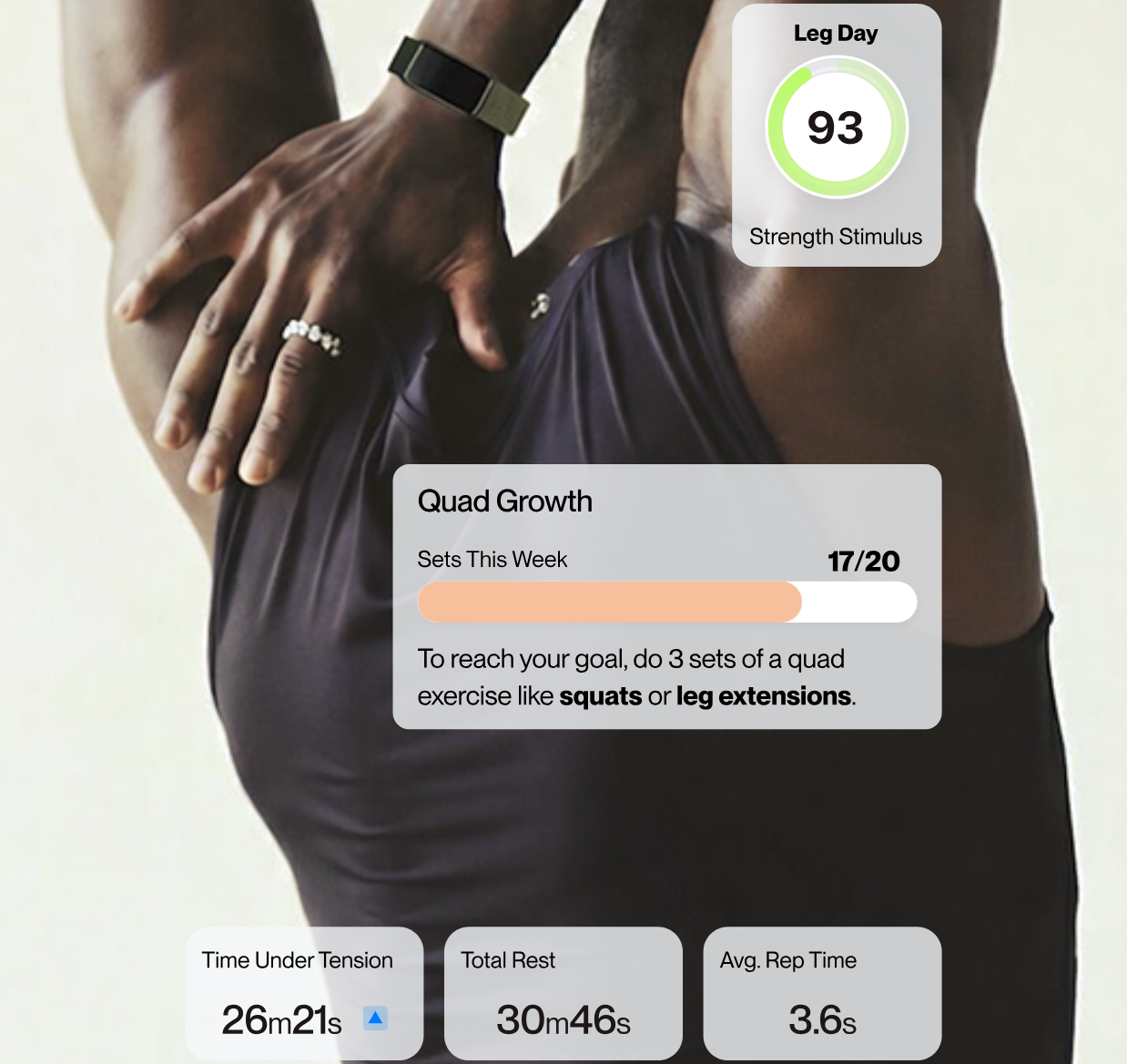
Fort claims to recognise more than 50 exercises automatically, without the lifter needing to log anything. For each set, it produces a per-muscle breakdown—whether each muscle group received a maintenance, growth, or overload stimulus—alongside proximity-to-failure and RIR metrics derived from how bar speed changed across the set. Weekly summaries show whether a lifter is progressing, maintaining, or plateauing.
Beyond the weight room, the device covers similar ground to Whoop: sleep staging, overnight heart rate variability (HRV), recovery scoring, heart rate zones during cardio, VO2max estimation, daily steps and calories, and stress monitoring throughout the day. It weighs under 30 grams, lasts seven days on a charge, and has no screen.
What remains unanswered
The question Fort has not yet answered is the only one that matters for anyone considering a pre-order: is wrist-based bar speed accurate enough to be useful? Beast couldn’t do it. Push couldn’t do it at the consumer scale. Whoop bought Push and still hasn’t completed it.
Fort has published no accuracy data and has not shown how its speed estimates compare against a barbell-mounted reference device. It has not indicated which exercises fall within its 50-plus recognition library, or how the device handles unilateral movements in which wrist motion poorly reflects the bar’s motion. Its proximity to failure and RIR calculations depend entirely on the quality of the speed signal underneath them — if that signal is imprecise, everything derived from it becomes unreliable.
The founding team’s background at Tesla lends credibility on the engineering side. Y Combinator’s backing adds further weight. The pre-order is fully refundable at any time, which reduces the financial risk for early adopters. Whether the device delivers on its central claim will be determined by independent testing after it ships in Q3 2026.
Pre-orders are open at fort.cx. Contact: fo******@**rt.cx
Sources: fort.cx; Athletech News, 18 February 2026; Whoop press release, September 2021; the5krunner Trackbar review, June 2021; VBT Coach Buyers Guide 2025
Last Updated on 19 February 2026 by the5krunner
Reader-Powered Content

This content is not sponsored. It’s mostly me behind the labour of love, which is this site, and I appreciate everyone who supports it.
Support the site: Follow (free, fewer ads) · Subscribe (paid, ad-free) · Buy Me A Coffee ❤️
All articles are written by real people, fact-checked, and verified for originality. See the Editorial Policy. FTC: Affiliate Disclosure — some links pay commission. As an Amazon Associate, I earn from qualifying purchases.
tfk is the founder and author of the5krunner, an independent endurance sports technology publication. With 20 years of hands-on testing of GPS watches and wearables, and competing in triathlons at an international age-group level, tfk provides in-depth expert analysis of fitness technology for serious athletes and endurance sport competitors.
