How to Use an ECG Chest Strap to Reduce Your Cardiac Risk at the London Marathon
Every year, approximately one in every 100,000 marathon finishers has a heart attack during the race. That figure comes from the Race Associated Cardiac Event Registry study (JAMA, 2025) and covers over 29 million race finishers across 13 years. The rates are mostly unchnaged in two decades. whilst survival rates have improved significantly as CPR training and defibrillator coverage have expanded. The cardiac arrest rate has not.
The profile of the runner most at risk is specific and not linked to fitness.
- Men are roughly six times more likely to be impacted than women.
- Cardiac arrest is more common during full marathons than half-marathons.
- Coronary artery disease accounts for 40% of identified cases.
- Most victims had no prior diagnosis and had completed marathons before.
An optical heart rate sensor on your wrist cannot tell you much about this risk. It counts the pulses in blood volume changes not the electrical anomalies that precede a cardiac event. A sports ECG strap can detect those anomolies.
This article explains what to look for in the weeks before the London Marathon, and what to monitor on the day.
Before Race Day: What Your ECG Data May Already Be Telling You
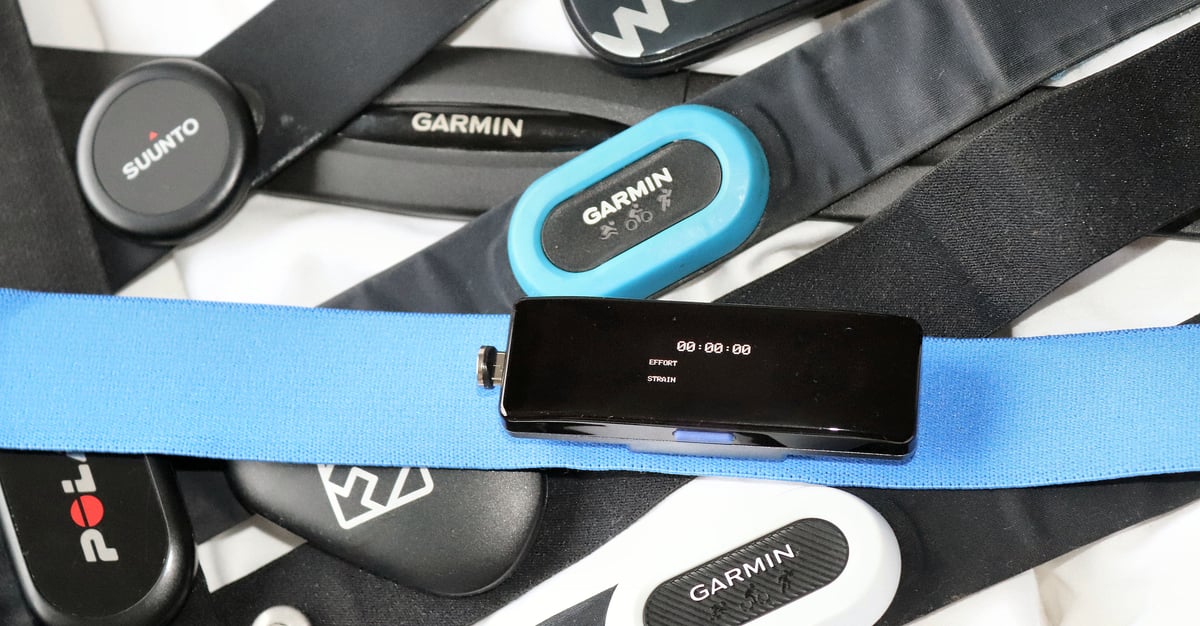
If you wear the Fourth Frontier X2 through your training block, you have many opportunities to grab a full day’s ECG trace covering your heart anomolies during exercise as well as in day-to-day life. Make a point of wearing the strap all day and take a full recording.
Open the app and review the ECG trace from your hardest recent sessions. The X2 marks specific points on the ECG trace when it detects irregularities in the cardiac rhythm. On an easy run, a small proportion of readings being flagged is normal. If that proportion is consistently elevated across hard efforts, or if you notice repeated anomalies clustering at the same point in a workout, those are observations worth taking to a GP or cardiologist before the start line.
The X2 records continuously for over 24 hours and allows you to export that data as PDF chunks of up to three hours from the dashboard. A cardiologist can review a continuous ECG trace from a hard training run in a way that is simply not possible from a post-workout heart rate graph. If you have any family history of cardiac events, have experienced unexplained breathlessness or chest discomfort during training, or are a male over 40 running your first marathon, this export is worth generating and sharing with a doctor before race day.
The X2 also produces a Readiness Score based on nightly HRV deviation from your personal baseline. A large negative deviation in the days before the race is a signal that your cardiovascular system is under accumulated stress – worth knowing about.
The Frontier X Plus, a separate product from Fourth Frontier, has received FDA 510(k) clearance as a medical-grade ECG device for arrhythmia detection. The X2 is classified as a wellness and fitness tracker, not a diagnostic device.
I have to make this point: Pre-race ECG monitoring is not a substitute for a consultation with your GP or a formal cardiac screening, particularly if you have known risk factors.
On Race Day: What the X2 Is Monitoring and What to Do If It Alerts
The London Marathon is 26.2 miles. Your physiological stress accumulates progressively, but the risk concentrates in the final quarter of the race. Glycogen stores are depleted, core temperature is elevated, and the cardiovascular system is under a sustained peak demand. Most marathon cardiac events occur after mile 22. This is when the X2’s real-time monitoring becomes most relevant.
Set three alert thresholds before the start.
- Heart Strain monitors ST segment shifts in your ECG. An ST shift of 0.2 millivolts or above can signal oxygen deprivation to the heart muscle. The X2 will alert at a configurable threshold: set it at 0.3 millivolts to give yourself a margin above background noise while still catching a meaningful signal. If it fires, ease your pace immediately. Do not attempt to run through it.
- Heart Rate alerts are self-explanatory but set them to something realistic for marathon effort, not your maximum. Whilst a marathon will average below a lactate threhsold heart rate level, you may well cross that point naturally as you close in on the finish. If you know your maximum heart rate, you should never be clsoe to exceeding that in a marathon.
- Breathing Rate alerts flag respiratory distress. If your breathing rate spikes out of proportion to your pace, particularly in the later miles, that is a signal the body is under stress it is not managing well.
The X2 delivers alerts as haptic buzzes on the pod which are easily felt on the chest. You do not need any other device to get the alert.
One important limitation: single-lead ECG recorded during sustained running is subject to slight movement errors (motion artefacts). A brief alert may reflect movement rather than a cardiac event. If it persists, or coincides with chest tightness, unusual breathlessness, dizziness, or any sensation of the heart fluttering or skipping, stop running and attract the attention of a race marshal or medical volunteer. Every major marathon deploys medical staff along the course.
You can also use the double-press button to manually log a moment during the race (also when training). If you feel something unusual, press it twice. The X2 marks that point in the ECG trace for review after the race. If you experienced something and are unsure whether it was significant, that marked event allows a doctor to examine exactly what your heart was doing at that moment.
There Are Still Risks
The Fourth Frontier X2 does not prevent cardiac arrest. No consumer device does.
Whether acting on real-time ECG alerts reduces individual risk during a marathon has not been established in clinical trials. What the X2 provides is a continuous view of cardiac activity that no Garmin or Coros optical sensor can match, a set of configurable real-time alerts, and a clinically exportable record that a doctor can review.
The population most likely to benefit from this is the same population most at risk from marathon cardiac events: male runners over 40, fit enough to have trained hard for months, with no prior diagnosis, carrying risk factors they may not know about. If that description fits you, the weeks before the London Marathon are a reasonable time to examine your ECG data carefully. The race itself is a reasonable time to have the alerts switched on and configured correctly. It’s an extra safety check.
The risk of a cardiac event during a marathon remains low in absolute terms. It is not zero, it has not fallen in 23 years, and the majority of those affected had no warning they were at risk. The X2 cannot change the underlying prevalence. It can change what you know before and during the race.
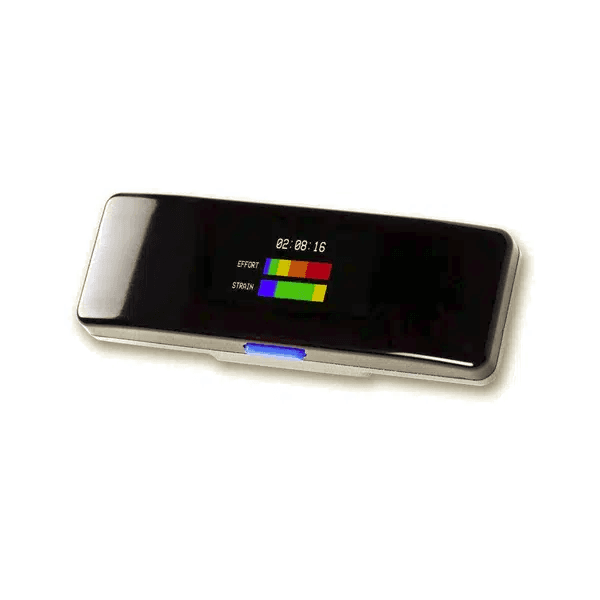
Fourth Frontier X2
24x7 ECG, Real-Time Alerts and Sports Tracking.

FAQ
Does the Fourth Frontier X2 have FDA approval?
No. The Fourth Frontier X2 is classified as a wellness device and fitness tracker. It does not hold FDA approval or 510(k) clearance. It is not intended or certified for the clinical detection of irregular heart rhythms, including atrial fibrillation, tachycardia, or bradycardia. Runners should not treat X2 alerts as a medical diagnosis.
What is the difference between the Frontier X2 and the Frontier X Plus?
The Frontier X Plus is a separate, newer product from Fourth Frontier that has received FDA 510(k) clearance as a medical-grade ECG device, specifically for the detection of cardiac arrhythmias. The X2 does not carry that clearance. The X2 remains a capable sports ECG strap for fitness and wellness monitoring, but its regulatory status and intended use are distinct from the X Plus.
Can an ECG chest strap prevent a cardiac arrest during a marathon?
No consumer device can prevent a cardiac arrest. What an ECG chest strap provides is a continuous electrical view of cardiac activity and a set of configurable alerts that may prompt a runner to reduce effort or stop before symptoms become severe. Whether acting on those alerts reduces individual risk has not been established in clinical trials. The device is a monitoring and awareness tool, not a preventive medical intervention.
Is the ECG data from the X2 accurate enough to share with a doctor?
The X2 captures single-lead ECG data and allows export of up to three hours of continuous trace as a PDF. A cardiologist can review this data in the same way they would review any single-lead ECG recording. The device is not a replacement for a formal cardiac investigation, but the exported trace is a meaningful supplement to a clinical conversation, particularly if it was recorded during a hard training effort where symptoms were present.
Who is most at risk of cardiac arrest during a marathon?
Based on the RACER 2 study published in JAMA in 2025, men face roughly six times the cardiac arrest risk of women during marathons. Risk is higher during full marathons than half-marathons. Coronary artery disease is the most commonly identified cause. The majority of those affected had no prior diagnosis and had completed at least one marathon previously. Age, male sex, and undetected coronary disease are the primary risk factors in the identified cases.
Last Updated on 31 March 2026 by the5krunner
Reader-Powered Content

This content is not sponsored. It’s mostly me behind the labour of love, which is this site, and I appreciate everyone who supports it.
Support the site: Follow (free, fewer ads) · Subscribe (paid, ad-free) · Buy Me A Coffee ❤️
All articles are written by real people, fact-checked, and verified for originality. See the Editorial Policy. FTC: Affiliate Disclosure — some links pay commission. As an Amazon Associate, I earn from qualifying purchases.

tfk is the founder and author of the5krunner, an independent endurance sports technology publication. With 20 years of hands-on testing of GPS watches and wearables, and competing in triathlons at an international age-group level, tfk provides in-depth expert analysis of fitness technology for serious athletes and endurance sport competitors.
