Why Fitbit Air Is Google Photos for Your Health
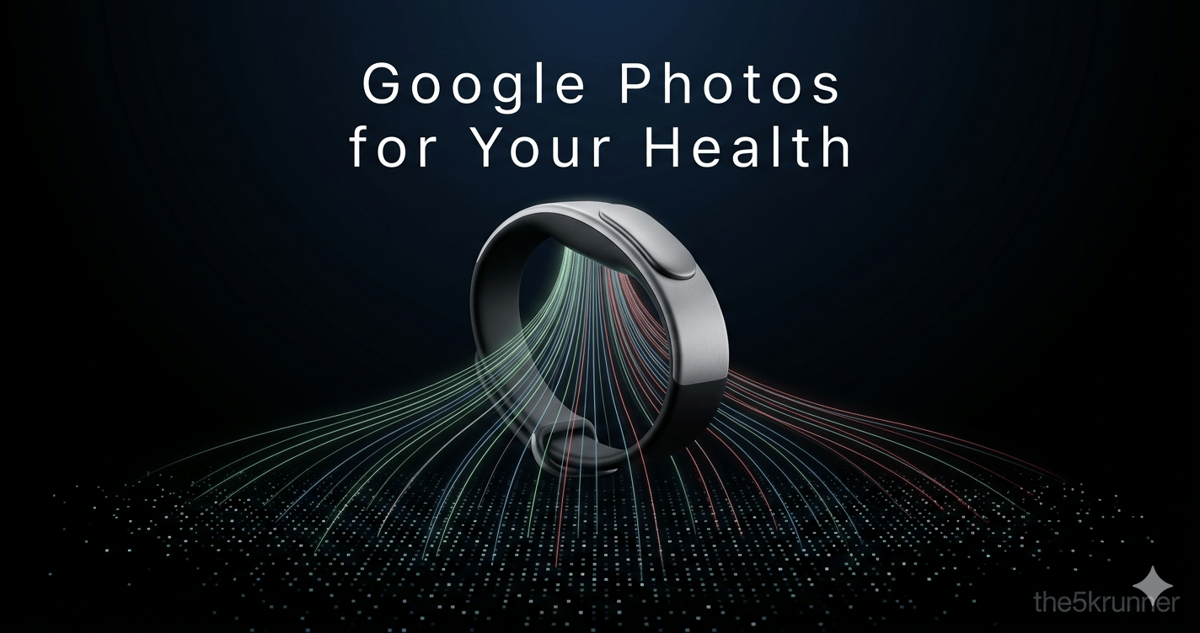
The industry response to the Fitbit Air has been to compare it to Whoop, then debate the price point, and ask whether the AI coach is any good. All of these miss the point. The Fitbit Air is not really a wearable launch.
What the Fitbit Air really is is a loss leader that is Google’s grab for your health data. This grab follows the same playbook we saw for Google Photos, Maps, and Gmail. The hardware is a customer acquisition cost. The product is the data.
Your health data does two things, in two phases, and most of you are not going to be happy about the implications.
The Google Pattern
- Gmail gives free email storage. Email data trains spam filters, then language models, and now Gemini.
- Google Photos gives free image storage. The image data trained Google’s image recognition AI, which now powers Gemini’s vision.
- Google Maps gave free navigation. The location data trains routing models and feeds the localised aspects of its core ads business.
Each product appeared to be a free service. Each was a data acquisition program. Each became dominant. The pattern is a recognised Google playbook and we know what will happen next.
Phase One: What You Get – This is the part you like
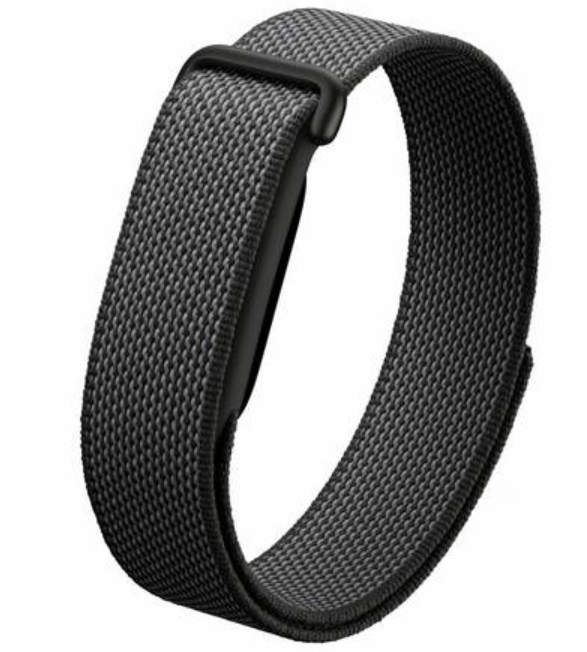
This phase is what Google talks about publicly. You get a $99 band with no subscription required. You get all the base metrics for free: sleep stages, heart rate variability, cardio load, and daily readiness. You get the Gemini Health Coach for three months at no charge, with the option to keep it for $79 per year. You get cross-platform compatibility, dual-pairing with the Pixel Watch on Android, and an open ecosystem that integrates with other apps and devices.
Isn’t Google nice? Very philanthropic.
For most buyers, the personal health story is genuinely good. The hardware works, the app is the best in the category, and the AI layer is ahead of the competition. What’s not to like if you don’t think too much?
Phase Two: What Google Gets – This is the part that gets you worried
The second phase is the part that Google does not lead with. Every Fitbit Air continuously feeds biometric data into Google’s cloud. Heart rate, sleep stages, activity types, stress levels, recovery scores, all timestamped, all of it, all keyed to a Google account. Aggregated across the existing Fitbit base of 30 million-plus active users, plus everyone who buys an Air, this becomes the largest private health dataset in the world. Whoop has 2.5 million users. Apple has more, but does not centrally aggregate the data in a form usable for AI training at scale. Garmin has the data but lacks the AI infrastructure or the bundling rights to use it the way Google can.
Google has the AI, the scale, and now the acquisition vehicle. Soon, it will have your data.
That dataset trains population-level models. The Gemini Health Coach is the visible part, but the real research value lies in the aggregated model. What does recovery look like in a 47-year-old marathon runner with poor sleep efficiency, and how does that compare to ten million similar profiles? Whoop tries to do this with 2.5 million users. Google will do it with thirty million plus. Readers here are interested in sporty examples, but the same kinds of examples apply equally to health and wellness outcomes.
The dataset is also used to train the individual model. Your Gemini Health Coach gets better the more you use it, because Gemini, in general, gets better the more it sees of the population. The two improvements compound. Personal AI improves because population AI improves, and population AI improves because more individuals contribute. This is the same compounding loop that made Google Photos the dominant image recogniser in its category. Every photo you uploaded improved the model, and the improved model made the next user experience better, which brought in more uploads.
The Category Was Not the Category
This is why Whoop’s defensive response and Garmin’s Cirqa likely sport-related push are addressing a different problem. They are competing on hardware specifications and subscription value. Google is not playing that game. Google is making a small margin on the sale that acquires each user who will then go on to produce continuous health data for years. The break-even on that data, in terms of Gemini training value and Pixel ecosystem retention, follows soon after. No subscription required, because the customer is the product.
The Verdict
The Fitbit Air is the most interesting wearable launch since the original Fitbit Charge, but not for the reasons everyone is writing about. The wearable category has, for the first time, been treated as a data play rather than a hardware play. Google Photos took your pictures and trained an AI. Maps took your location and trained an AI. The Fitbit Air takes your heartbeat and will train the next one.
The hardware sits on your wrist. The product sits in Google’s cloud, in a folder you will never open, training the model that will eventually tell your doctor what to prescribe and your insurance company how high to make your premium.
For the full hardware specification and buyer verdict, see the Fitbit Air buyer’s guide. For the full picture of the Google Fitbit ecosystem including Pixel Watch and Google Health: Google Fitbit and Wear OS hub.

Last Updated on 21 July 2026 by the5krunner
My favourite kit and nutrition
- Garmin Fenix 9 Pro — I’ve just bought one.
- Injinji – Runners protect your toes. Avoid discomfort and minor injury. Run more. Run faster. I use them.
- Garmin 90-degree charging adapter — A small keyring adapter you can use anywhere. Essential when away. I use one.
- Garmin charging puck — the fastest and most reliable way to top up your Garmin before a session. I use one.
- Ravemen FR300 — Front light that mounts directly under your Garmin or Wahoo head unit. Keeps your bars clean and your beam pointed where it matters. I use one.
- Body Glide – The blue anti-chafe stick that all swimmers and many runners use. I use it.
- Maurten — The race nutrition trusted by elite athletes. Gels and drink mixes engineered to be easy on the stomach. I use them.
- Garmin Varia RTL515 — A radar rear light that alerts you to vehicles approaching from behind. Pairs with your Edge or Wahoo. I use this model.
- Favero Assioma Pro RS2 — The power-meter pedals most serious cyclists choose. Accurate, easy to move between bikes. I use this model.
- Garmin Forerunner 970 — A serious choice for a pro-grade triathlon watch. I use this.
- Polar H10 — My daily driver for accurate, waking HRV readings.
- Wahoo ELEMNT Roam 3 — The bike computer that has the feature Garmin lacks: usability. I use mine on most rides.
Reader-Powered Content

This content is not sponsored. It’s mostly me behind the labour of love, which is this site, and I appreciate everyone who supports it.
Support the site: Follow (free, fewer ads) · Subscribe (paid, ad-free) · Buy Me A Coffee ❤️
All articles are written by real people, fact-checked, and verified for originality. See the Editorial Policy. FTC: Affiliate Disclosure — some links pay commission. As an Amazon Associate, I earn from qualifying purchases.
tfk is the founder and author of the5krunner, an independent endurance sports technology publication. With 20 years of hands-on testing of GPS watches and wearables, and competing in triathlons at an international age-group level, tfk provides in-depth expert analysis of fitness technology for serious athletes and endurance sport competitors. ID

Every wearable user should read this. Few understand the implications of big data companies and their investment in the devices we buy. Is this a cautionary tale? Perhaps, but we all buy in . Forewarned is forearmed. Thanks, 5krunner.
ty
yes I think everyone knows and understands that these comapnies get our data to some degree.
but this type of data grab for global scale health/wellness AI training is quite different to anything else.