Garmin vs Strava: Leak Shows Connect Targeting Strava
A recent leak indicates Garmin is reshaping Connect into a more Strava-like social platform. You can read the technicalities of that on Garmin Rumors, the real story is Garmin’s strategic ambition.
This article sets out what Garmin has already done and what it needs to do to compete as a sports social platform, why a directly competitive position is surprisingly achievable from where Garmin sits today, and why Strava should treat this as a warning shot ahead of its planned public listing.
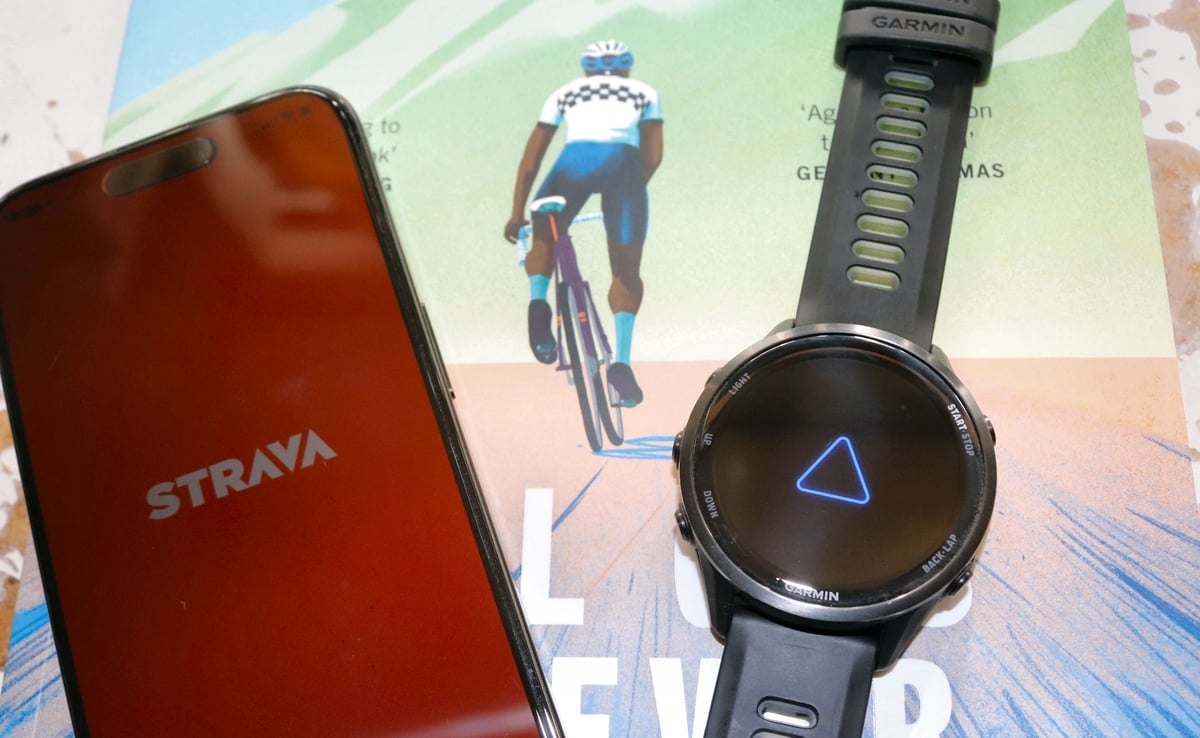
A successful sports social platform requires six things:
- A critical mass of active users
- An open ‘follow system’
- Community infrastructure
- A feed worth opening
- A competitive engagement layer, like segments
- Openness to any workout data
Strava has held all six since the early 2010s, whereas Garmin has the first three but struggles with the last 3. Were Garmin to enter any social platform contest, it would do so with these formidable, structural assets:
- A customer base that grew 42 per cent in fitness revenue in Q1 2026
- An estimated 45 million active Garmin Connect users
- A hardware sensor stack that produces physiological data Strava can only dream of accessing
Test 1. Critical mass of users
Strava reported more than 195 million registered users in April 2026, adding three million per month through 2025. Garmin Connect has approximately 45 million active users per the5krunner’s modelling. Cliff Pemble disclosed strong double-digit growth in new registrations on the Q3 2025 earnings call, and Q1 2026 delivered the second consecutive 42 per cent fitness revenue increase, driven by volume. The Apple Watch and Wahoo Elemnt owners are not in Connect yet. Once (if) they are, the user-count question changes shape entirely.
Test 2. An open ‘follow system’
Strava’s graph has been open from launch. Garmin Connect has run a mutual-connection model where Following requires approval. The leaked app info indicates a rebuild around followers: mutual follows reframed as friends, follow requests and limits introduced, contact-based discovery added, privacy controls rebuilt around the new hierarchy. Garmin has not confirmed any of this, but the direction is consistent with what a social platform requires.
Test 3. Community infrastructure
Strava operates clubs, group challenges, and route sharing as core features, supports more than 50 activity types, and has acquired Runna and Recover Athletics. Garmin’s community infrastructure is deep in training and recovery but thinner on the social side: groups, Connect IQ third-party content, Garmin Coach adaptive plans, expanding strength-training content, and a fully featured recovery stack. The two platforms are converging from opposite directions.
Test 4. A feed worth opening
Strava users are split into browsers, who scroll through the feed to see what others have done, and checkers, who open the app to see their own activity and how their training partners performed on shared rides. Garmin Connect serves personal checking but struggles on the social side, lacking a Strava-style grouped-activity view and a decent social feed. Both are fixable, albeit a non-trivial exercise.
Test 5. A competitive engagement layer, like segments
Strava segments are the platform’s most enduring innovation. Every road, trail, street and loop can become a leaderboard. Garmin has the building blocks in place to compete:
- Garmin Connect Segments, with native leaderboards visible on watches and Edge units
- Strava Live Segments via the long-running Strava partnership
- Badges, including expedition badges
- Time-bound and partner challenges
- Group competitions
The features exist. The cultural centrality does not. Garmin owners who care about segments use Strava. Closing the gap means making Garmin’s Connect Segments a core social product rather than a feature buried in the activity view.
Test 6. Openness to any workout data
Strava seemingly accepts data from every wearable on the market. Apple Watch, Garmin, Coros, Polar, Wahoo, Suunto, Whoop, Oura, Peloton, and Zwift all flow in. Garmin Connect is Garmin-first, Garmin-only, and that’s a huge problem if it ever wants to take on Strava successfully. Here’s one way to do it via a selective openness model:
- Workout-level data (GPS tracks, time, distance, pace, power, heart rate) is accepted from any device for segments, leaderboards, group challenges, and the social feed
- Physiological data (Body Battery, Training Readiness, HRV Status, Race Predictor, sleep score, training load, recovery time) are available only from Garmin sensors
Connect+ is the natural vehicle. The Apple Watch or Wahoo Elemnt owner cancels their Strava subscription and subscribes to access the social and competitive features. The Garmin device owner gets the same access for free, plus the full physiological stack. The segment culture migrates from Strava to Connect. The hardware moat stays intact because the physiological computation requires sensors that only Garmin makes.
Where Strava is failing its own users
Strava is dominant. Strava is also a product sprinkled with sustained quality problems:
- Feed noise. Algorithmic ranking is weak. Activities from accounts the customer barely knows mix with activities from close training partners.
- Paywall hostility. Features that were free for years moved behind the subscription wall, including segment leaderboards, training analysis, and route building.
- Shallow analytics. Pace, distance, elevation, heart rate, and basic time-in-zone. Athlete Intelligence has improved this. The baseline remains thin compared with Garmin’s free tier.
- Slow, crowded mobile app. Multiple tabs compete for attention. Settings are buried. Features have accumulated without redesign.
- Degraded segment quality. User-created segments overlap and duplicate. Leaderboards still include cheats and vehicle-tagged activities despite improvements.
- Partially integrated acquisitions. Runna and Recover Athletics sit alongside the core Strava experience rather than within it.
What was leaked by Garmin
- Followers replace friends as the main way to connect with other users. Mutual follows become friends. (Strava-style follow model)
- New follow requests, approvals, limits, and the ability to find people through your phone contacts
- A suggested users feature
- New privacy settings that let you control who sees your activities, profile, and badges based on whether they follow you
- LiveTrack and GroupTrack location sharing tied to who follows you
- Tighter limits on social features for child accounts
The data moat
Garmin’s first-party physiological stack is its defensive moat. Sleep, HRV, Body Battery, Training Status, Race Predictor, Recovery Time, and the full sensor suite work only with Garmin hardware. Strava can only calculate a limited number of these because Strava does not own the sensors.
The strategic logic extends beyond a race to be the last platform standing. In an AI-driven future where software and app layers are swept away, the hardware data layer must remain. The party that owns the sensor producing the data is structurally shielded to a good degree. The party running the software experience on top is not. Selective openness to competitive hardware preserves the moat. Workout data flowing into segments and the social feed is replaceable. Physiological data flowing into Body Battery and Training Readiness should not be.
The verdict
Garmin is up to something. The leak indicates a follower-based system in flux. Q1 2026 earnings provide evidence of the user base growth required to support a social platform. Connect+ provides the route to expanding reach without breaking the hardware moat.
Garmin has three levers available, none of which require imitating Strava directly:
- Selective Connect+ openness to third parties. Workout data in for segments and social. Physiological computation gated to Garmin hardware. The Apple Watch and Wahoo Elemnt owners become Connect+ subscribers. The segment culture migrates. The watch sale is preserved.
- Product split inside Connect. The analytical and social sides are treated as distinct propositions. Connect Analytics remains the moat. Connect Social becomes the open platform.
- The hardware sensor is the long-term defence. The physiological stack is what Strava cannot match structurally without richer sensor data and what protects Garmin in an AI era where software layers commoditise.
If it’s not on Strava, it didn’t happen. Strava’s tagline built the company. Garmin has earned the right to a different claim: If Garmin hasn’t Connected it, it wasn’t worth doing.
Strava’s preparations for a public listing arrive as the competitive landscape shifts beneath the company, with the recent litigation against Garmin already complicating the narrative.
Source and original research by: the5krunner and Garmin Rumors.
Last Updated on 11 September 2026 by the5krunner
My favourite kit and nutrition
- Garmin Fenix 9 Pro — I’ve just bought one.
- Injinji – Runners protect your toes. Avoid discomfort and minor injury. Run more. Run faster. I use them.
- Garmin 90-degree charging adapter — A small keyring adapter you can use anywhere. Essential when away. I use one.
- Garmin charging puck — the fastest and most reliable way to top up your Garmin before a session. I use one.
- Ravemen FR300 — Front light that mounts directly under your Garmin or Wahoo head unit. Keeps your bars clean and your beam pointed where it matters. I use one.
- Body Glide – The blue anti-chafe stick that all swimmers and many runners use. I use it.
- Maurten — The race nutrition trusted by elite athletes. Gels and drink mixes engineered to be easy on the stomach. I use them.
- Garmin Varia RTL515 — A radar rear light that alerts you to vehicles approaching from behind. Pairs with your Edge or Wahoo. I use this model.
- Favero Assioma Pro RS2 — The power-meter pedals most serious cyclists choose. Accurate, easy to move between bikes. I use this model.
- Garmin Forerunner 970 — A serious choice for a pro-grade triathlon watch. I use this.
- Polar H10 — My daily driver for accurate, waking HRV readings.
- Wahoo ELEMNT Roam 3 — The bike computer that has the feature Garmin lacks: usability. I use mine on most rides.
Reader-Powered Content

This content is not sponsored. It’s mostly me behind the labour of love, which is this site, and I appreciate everyone who supports it.
Support the site: Follow (free, fewer ads) · Subscribe (paid, ad-free) · Buy Me A Coffee ❤️
All articles are written by real people, fact-checked, and verified for originality. See the Editorial Policy. FTC: Affiliate Disclosure — some links pay commission. As an Amazon Associate, I earn from qualifying purchases.
tfk is the founder and author of the5krunner, an independent endurance sports technology publication. With 20 years of hands-on testing of GPS watches and wearables, and competing in triathlons at an international age-group level, tfk provides in-depth expert analysis of fitness technology for serious athletes and endurance sport competitors. ID

the other area garmin struggle in is software quality – both on device and the connect app/webpage have been consistently poor. the connect app refresh a while back improved things but its still not great and given garmins major failings in abilty to deliver even passable software when things get slightly complex even within their core focus of devices, i’m not convinced they will be able to deliver a good user experience. still, maybe with a relatively fresh start in a new context they will actually do better than with their device software
I have sympathy with your view.
Strava’s UI is also a little odd and its core (segments) are a mess.
These are not leaks, I already have that follower system for like 2 weeks and all the rest of those changes.
But Garmin will never work like that, they always start features to be social like Groups, Segments, Feeds but they always kept a close system, and those features always look abandoned after a few months.
Unfortunatly they will never other companies write data to connect and that is why nobody will ever use garmin for social purposes. Hell they do not even let you input body fat % manually so you have to buy a index scale, so I doubt very much they will ever open the platform.
I agreee that Garmin is clearly aware of the need for the data moat/walled garden or whatever we call it that describes some of their metrics. There will definitely always be a moat of some sort going forward.
as per the artciel there are ways they could slightly compromise on that to let non-garmin devices supply workout data to a strava-like sub section of Connect (as per the article)
Garmin’s social element, like many of their UI/UX elements, need more polish. Its practically impossible to figure out how to give someone a link to connect to you, the most basic functionality is hidden. Maybe if they released a few less products, and focused more on polishing their interface, based on actual user research, they might be able to pull ahead on the software side. However, as it is now, Strava and other offerings beat Garmin on the software side, Garmin of course beats Strava and other options on the hardware side (for this particular segment). Merge Strava and Garmin and you would have a strategic powerhouse, but I dont see that happening because of the Strava IPO and Strava’s idiotic subscription in your face system. They smell like someone who cant let go of some of their choices for a broader and better strategy. I for one, would prefer to stay in Garmin, but every piece of their software is weak, its the minimal they can get away with, more like a MVP rather than a polished product that makes people want to use it.
My suggestions:
– Garmin: hire a product team, or restructure your existing one, allocate resources to user research, discovery and UX
– Strava: Back off on the subscription walls, they are too annoying. Seriously consider backing off from the IPO and instead merge with Garmin. If you IPO, you are going to get absolutely fleeced by the execs who are going to gut any life out of the product for their next big paycheck.
ultimately Strava is loss making and we all use it. Something has to give.
that something could be the entirety of the company if the new owners, post-IPO, unreasonably start bumping up the subs.
Or we pay for something that we do value and use – ie Strava. If we value it and use it we should pay something IMO.
They just don’t get it. It’s not about lack of Ui polish or lack of community features. It’s about interacting with the people who in your sports life and if their choice of hardware device brand excludes some of them from a platform, then that platform is simply not fit for that purpose. A hardware locked community might end up having some utility in tightly knit groups like families (in particular when there’s only one “device guy” picking the gear for all the others in the group) but it can never displace something like Strava that is decidedly hardware-neutral.
yes and garmin could do that opened up integration selectively for its existing trava like features and new ones