Google Wear OS 7: what impact does this have on Garmin, Strava and sports usage?
In a poorly presented, often inaudible, yet technically impressive keynote, Google revealed some of its future technologies.
For a consumer cost of $1,000, it showed how Gemini can now create a complete operating system entirely on its own. An impressive feat, and impressive that it managed to run Doom immediately afterwards. That’s a somewhat quirky example, but it goes a long way toward explaining how easy it was for Google to rebuild the watch experience from the ground up using modern AI-enhanced methods. In years gone by, that would have taken years, triggered a feature clawback and introduced many new bugs. For Wear OS 7, it will likely mean a better, more featured operating system that the likes of Garmin and Apple will struggle to keep up with if recent history is anything to go by.
Google announced Wear OS 7 at I/O 2026. The short answers to the questions posed by the title: Garmin is largely insulated; Strava faces a strategic decision about whether to surrender control of its in-activity screen; and sports usage on a Pixel Watch or Galaxy Watch improves on the consumer side.
What’s new
- Battery life improves by up to 10% on the same hardware.
- Gemini, Google’s AI assistant, arrives on selected watches later in 2026 and can act independently on your behalf in the background.
- Swipeable tiles are replaced by widgets that match the phone’s widget system.
- Notifications now update in real time, showing things like a live delivery countdown on the watch face.
- Voice commands to Gemini can trigger actions inside apps, such as ordering food from the wrist.
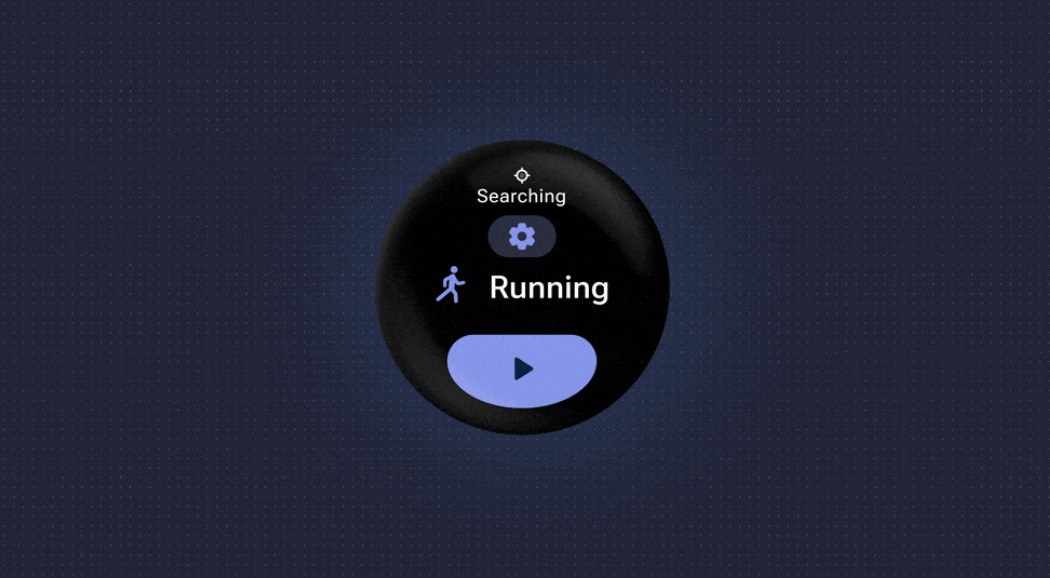
- A single workout-tracking screen is built into the operating system and available for any fitness app to reuse.
- Choose which phone apps automatically show playback controls on the watch.
- Audio playing on the phone can be routed to different speakers or headphones from the watch.
- The visual design moves closer to what Android 17 will bring to phones.
A developer preview is available today; consumer watches will receive the update later in 2026.
Impact on Garmin and Apple
For Garmin, Wear OS 7 changes nothing this year, but the future will tell a different story. Garmin operates on a proprietary OS and is unaffected by anything in this release. The structural concern is that Google moves forward with AI, voice agents, and platform integration, while Garmin shows no public roadmap for any of these. The first-time fitness buyer who would once have considered a Forerunner now has a more credible alternative on the Pixel Watch. This is part of the pincer movement that Garmin appears oblivious to.
For Apple, Wear OS 7 is the more obvious, direct threat. The Gemini integration on the wrist arrives at a time when Apple Intelligence has fallen vastly short of expectations – it’s rubbish in comparison, as is Siri. The Apple Watch has held the smartwatch market on the strength of its ecosystem and hardware. AI has not been its differentiator. Wear OS 7 narrows the software gap and opens a potentially ever-widening AI gap in Google’s favour. Apple now plays catch-up in a category it defined, relying on its digital moats to stop people switching away.
Amazfit and Huawei sit on the edge. Both run their own platforms, Zepp OS and HarmonyOS, so the direct impact from Wear OS 7 is nil. The relevance is competitive intensity. Both push AI features into their own platforms and now have a more aggressive Google to track. Both lag significantly, but Huawei has the capacity to catch up if it chooses.
Impact on Strava and third-party fitness apps
This is where the Wear OS 7 announcement matters most for the wider sports software ecosystem. In a novel and welcome move, Google has built a standardised workout tracking framework into the operating system. Heart-rate display, media controls, and in-activity layouts now sit at the OS level and are available to apps that want to use them. Great for new app developers, but a quandary for existing apps.
Strava, Komoot, MapMyRun, AllTrails, and similar apps now offer two paths.
- Adopt the unified framework and accept Google’s design language inside their app.
- Or keep their existing custom in-activity screens, which could make them feel inconsistent with the rest of the Wear OS 7 experience.
The strategic calculation differs by app. Strava’s in-activity workout view is a core differentiator and a source of brand identity on the wrist. Surrendering it to Google’s framework removes one of the few visible touchpoints Strava has on a watch face. Komoot, by contrast, leans more on navigation and route data, and its in-activity screen is less prominent.
The likely outcome is that some apps adopt, some don’t, and the experience varies. For athletes, this means the in-activity screen on Wear OS 7 will not become uniformly cleaner. The promise of a consistent workout interface will only be made by apps with the least to lose.
Impact on everyday sports usage
Three changes directly affect athletes on a Pixel Watch, Galaxy Watch, or other Wear OS device.
- Battery life. Google claims a 10% improvement over Wear OS 6 from software optimisation alone, on identical hardware. For a Pixel Watch 4 owner running a marathon with GPS and continuous heart rate, the difference could mean finishing with useful battery headroom rather than ending a race close to empty. The claim is unverified until the public release later this year.
- Gemini and voice control. Gemini Intelligence arrives on select watches later in 2026, with an AppFunctions API that lets the assistant trigger actions inside third-party apps. Voice-triggered lap markers, pace queries and food ordering are obvious consumer use cases. Google has shown no specific fitness examples yet.
- Audio and notifications. Live Updates from phone apps now appear on the wrist, which benefits everyday users tracking deliveries and transport more than athletes mid-workout. Audio routing from the watch via the Remote Output Switcher is a small win for runners and cyclists who switch between earbuds, speakers and car audio.
Who does this matter for
Wear OS 7 narrows the gap with Apple Watch on software polish, despite the modest updates to watchOS 27. The gap with Garmin and some other players on battery life, training metrics and expedition-grade reliability remains wide. A Pixel Watch on Wear OS 7 remains a lifestyle smartwatch first and a sports watch second. The serious endurance athlete still buys a dedicated training watch.
FAQ
When does Wear OS 7 release to consumers?
Google has stated “later in 2026” without a specific date. Developers can preview the build today via a Canary emulator.
Which watches will get Wear OS 7?
The Pixel Watch range and Samsung’s Galaxy Watch range have been confirmed by Google, with other third-party manufacturers expected to follow. Google has not published a full compatibility list.
Will older Wear OS 6 watches receive Wear OS 7?
Google has not confirmed which specific older models will receive the update. Historically, Wear OS upgrades have been limited to watches released within the previous two to three years.
Does Wear OS 7 work with iPhone?
No. Wear OS requires an Android phone. iPhone owners who want a smartwatch should look at the Apple Watch or a Garmin device.
What is Gemini Intelligence on a watch?
Gemini Intelligence is Google’s AI assistant adapted for the wrist. It provides voice control, agentic actions inside third-party apps via the AppFunctions API, and proactive personalised suggestions. It arrives on selected watches later in 2026.
What is the AppFunctions API?
AppFunctions is the developer interface that lets Gemini trigger actions inside third-party apps. An example is asking Gemini to place a food order without opening the delivery app.
What are Wear Widgets, and how do they differ from Tiles?
Wear Widgets replace the swipeable Tiles introduced in earlier versions of Wear OS. They use small and large layouts that mirror the widget system on Android phones, and developers can share code between phone and watch widgets. Google has not announced when Tiles will be deprecated.
What are Live Updates on Wear OS 7?
Live Updates are notifications that change in real time, such as a delivery countdown or ride-share status. They are bridged from supported phone apps to the watch, appearing on the watch face and in the notification page.
What is the Remote Output Switcher?
The Remote Output Switcher is a Wear OS 7 feature that lets the watch redirect audio from a paired phone to different speakers or headphones, all controlled from the wrist.
Will Wear OS 7 work with Strava?
Yes. Strava and other third-party fitness apps continue to work on Wear OS 7. Google has introduced an optional, standardised workout-tracking framework that Strava may adopt. Strava is not required to do so.
Can I install Garmin Connect on a Wear OS 7 watch?
Garmin Connect is available on Wear OS as a companion app for viewing data, but it does not provide native training functions on the watch itself. Garmin’s training experience lives on in Garmin watches.
Does Wear OS 7 improve GPS accuracy?
No. GPS accuracy is determined by hardware, not by the operating system. Multi-band GNSS support depends on the watch’s chipset, not the version of Wear OS.
How much does the battery actually improve on Wear OS 7?
Google states that battery life is up to 10% better than Wear OS 6 on identical hardware. The claim is unverified by independent testing, and the real-world figure will depend on workload, watch model and active features.
Will Wear OS 7 replace a dedicated running watch?
No. Wear OS 7 narrows the gap with the Apple Watch on smartwatch features. It does not match dedicated training watches on battery life during multi-hour activities, multi-band GNSS reliability or sport-specific metrics. Endurance athletes should continue to use Garmin, Coros, Polar or Suunto.
Is Wear OS 7 a threat to Garmin?
Not directly. Garmin operates its own platform and is not affected by Wear OS changes. The longer-term consideration is whether voice-driven agentic features on Wear OS shift consumer expectations for what a sports watch should do.
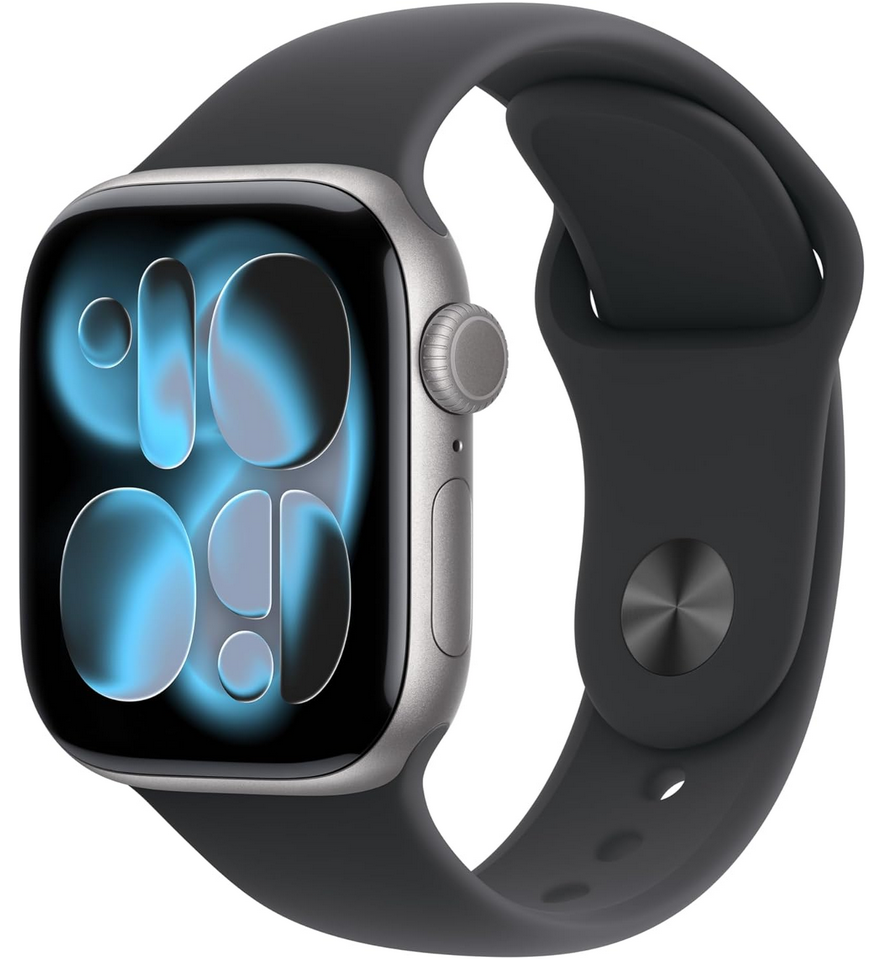

This post is part of the Apple Watch guide for endurance sport on this site, which covers the full lineup, watchOS, accuracy data, the medical roadmap, and the complete set of articles. For a cross-brand view of where Wear OS watches sit in the running watch market, see the running watches hub. For the full picture of the Google Fitbit and Wear OS ecosystem: Google Fitbit and Wear OS hub.
Last Updated on 13 June 2026 by tfk the5krunner
Small things I always use
- Garmin 90-degree charging adapter: Charges your Garmin from any USB-C cable. Essential when travelling. I use one.
- Body Glide: The blue anti-chafe stick swimmers and runners carry. I use it.
- Speedo earplugs: Fewer ear infections and no cold-water dizziness. I use them.
- Dryrobe Advance: My winter changing robe for open-water swims. I use one. A cheaper option is the AONYIYI changing robe.
- Maurten: Race fuel that stays easy on the stomach. I use them.
- Garmin charging puck: The quickest way to top up before a session. I use one.
- Injinji: Toe socks that stop rubbing, so you run more. I use them.
- Ultimate toe protectors: Stop black toenails on long runs. They work. I use them.
- Compressport R2 v2 calf sleeves: My calf sleeves of choice. I use them.
- Cellucor C4: My pre-workout before hard sessions.
- TPU tubes: Schwalbe Aerothan, Tubolito and Pirelli SmarTube. Light, tiny spares. I use all three.
- G8 insoles: Adjustable insoles that are good. I use them.
- Cycplus Cube: A 97g electric pump that gets a road tyre rideable in two minutes. I carry one. 5% off with code THE5KRUNNER.
Watches and sensors
- Polar H10: My daily driver for waking HRV.
- Polar Verity Sense: My backup arm-worn HR sensor.
- Nomad bedside charger: Charges my iPhone and Apple Watch overnight. I use it, and many of their bands.
- Train.Red: The best muscle oxygen sensor I’ve used.
- Tymewear: Accurate heart rate and reliable ventilatory zones. I use it to pace endurance rides over an hour.
- Garmin Forerunner 970: A pro-grade triathlon watch. I use this.
- Apple Watch Ultra 4: My daily smartwatch. No phone needed on rides.
- Garmin Fenix 9 Pro: I’ve just bought one.
On the bike
- Continental GP5000 for everyday riding, and Aero 111 on the front for special occasions.
- Helmets: Specialized S-Works Evade 3 for road riding, and Rudy Project Wing for TT-style races. I use both.
- Ravemen FR300: A front light that mounts under your Garmin or Wahoo. I use one.
- Wahoo TRACKR Radar: I use it on one bike and Varia on the other. They perform the same.
- Garmin Varia RTL515: Radar that warns you of cars from behind. I use this model.
- Wahoo ELEMNT Roam 3: The bike computer that’s easy to use. I use mine on most rides.
- Favero Assioma Pro RS2: Accurate power pedals that swap easily between bikes. I use this model.
Home and indoor training
- NPE Runn: Makes my basic treadmill smart, sending more accurate speed and distance to my watch and Zwift. I use it.
- Google Wifi: Keeps Zwift connected in my pain cave. I use it.
- Apple TV 4K: Zwift on the big screen. I use two.
- Google Nest Doorbell (wired, 2nd gen): My video doorbell, running in both Google Home and Apple Home. I use it.
Health, recovery and sleep
- FreeStyle Libre 3 Plus: Shows how my blood sugar responds to diet.
- hDrop: Measures my sweat loss in summer and indoors.
- Fourth Frontier Zone: Checks my heart under load in hard sessions.
- Oura Ring 5: My partner’s recovery tracker of choice.
- Kineon MOVE+: Red light therapy for niggles. It works.
- Eight Sleep: A cooling mattress cover my partner and I use nightly.
Reader-Powered Content

This content is not sponsored. It’s mostly me behind the labour of love, which is this site, and I appreciate everyone who supports it.
Support the site: Follow (free, fewer ads) · Subscribe (paid, ad-free) · Buy Me A Coffee ❤️
Written by real people, with AI assistance. Fact-checked and verified for originality. See the Editorial Policy. FTC: Affiliate Disclosure — some links pay commission. As an Amazon Associate, I earn from qualifying purchases.
tfk is the founder and author of the5krunner, an independent endurance sports technology publication. With 20 years of hands-on testing of GPS watches and wearables, and competing in triathlons at an international age-group level, tfk provides in-depth expert analysis of fitness technology for serious athletes and endurance sport competitors. ID

You miss the point there will be marginal change across the board, people with an Apple Watch buy Apple phones.
Most people start with using their phone to record fitness, though with decide to do running with get a watch, likely their watch will be from whatever phone os type or what their friends have.
For those using the smart watch they soon realise a lot of training they do means touching the screen become annoying or a nuisance so upgrade to a watch with buttons.
This seems to be the natural path, most with never get to a button watch but with 8 billion people on the planet it’s more than enough for Garmin, Apple, and Google plus smaller brands to play nice.
that’s certainly one path