| General | |
|---|---|
| Manufacturer | Huawei |
| Type | GPS smartwatch |
| Series | Watch GT |
| Released | 5 August 2026 (China) |
| Price at launch | Approx. USD 235 / GBP 175, converted from the CNY price at current exchange rates. Likely to differ from any real international launch price once announced, since Huawei’s China pricing does not typically translate directly abroad |
| Predecessor | Huawei Watch GT 6 |
| Successor | Not yet announced. |
| Sizes | 41.3mm (small), 46mm (medium) |
| Colours | 46mm: Blue, Yellow, Black, Grey. 41mm: Blue, White, Pink, Grey |
Specifications as at launch. China-only launch; no international consumer.huawei.com page exists yet.
Jump to: Expert opinion | What’s new | Specifications | Battery life
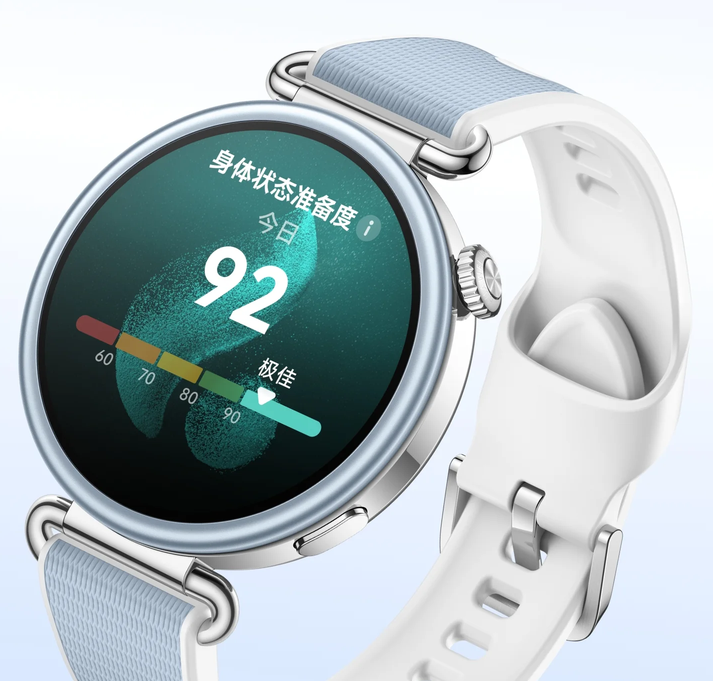
The Huawei Watch GT 7 is an iterative upgrade rather than a ground-up redesign, retaining the GT 6’s stainless steel and fibre-reinforced composite construction while focusing on meaningful software and sports tracking improvements. Highlights include Huawei’s updated Sunflower GNSS positioning system combined with an AI-XDR inertial navigation algorithm for improved route accuracy, new running power and ground-contact balance metrics, expanded indoor and outdoor skiing modes, and a morning readiness score driven by continuous HRV monitoring. Battery life remains a standout, reaching up to 21 days under light use or around 51 hours of continuous trail running on the 46mm model, although it lacks the ECG functionality and diving certification that set the GT 7 Pro apart.
The broader Huawei ecosystem continues to be the watch’s biggest compromise. Android users must install Huawei Health through AppGallery or a standalone APK because it is unavailable on the Google Play Store, while syncing workouts to services such as Strava, TrainingPeaks or Apple Health still relies on third-party tools like Health Sync rather than native integrations. Although functional, this approach can occasionally omit activity data that transfers seamlessly from platforms such as Garmin or Wahoo. Huawei Health also remains heavily geared towards Huawei’s own ecosystem, its watch app catalogue is comparatively limited, and health algorithms for sleep, stress and readiness are generally less mature than the Firstbeat-derived analytics found on many Garmin devices or measurements taken with a dedicated HRV chest strap. On the hardware side, the new 41mm model finally offers a genuinely compact option for smaller wrists, albeit with around one-third less battery life than the 46mm version, while charging still relies on Huawei’s proprietary magnetic wireless puck instead of standard Qi charging. The EasyCross quick-release strap system adds welcome convenience, although the GT 7 series remains unavailable through official retail channels in the United States.

What’s new versus the GT 6
Hardware
- Colour range replaced entirely: 46mm now comes in Blue, Yellow, Black and Grey; 41mm drops from six colourways on the GT 6 to four, in Blue, White, Pink and Grey
- New EasyCross quick-release fluoroelastomer straps
- 41mm wrist fit simplified to a single 120 to 180mm range across all colours, where the GT 6’s Phantom Black colourway previously extended to 190mm
Software and features
- Trail running mode battery life rises to 51 hours on the 46mm and 32 hours on the 41mm, up from 40 hours and 25 hours respectively in the GT 6’s equivalent outdoor sports mode, a consistent 27 to 28 per cent improvement across both sizes
- Huawei states ski-tracking accuracy improves 20 per cent over the GT 6 series, based on its own lab comparison
- New indoor and outdoor skiing modes, recording turn count, frequency and G-force
- New golf mode features: a bezel scorecard for 18 holes, and a green view that auto-rotates with player position
- Cycling gains a climb data overview with AI-assisted ride analysis, and a sharp-turn alert at speed
- Women’s health research added: ovarian function and polycystic ovary syndrome risk assessment, via Huawei’s research app
- Blood glucose, cardiac, respiratory and altitude health research programmes added, run with Chinese hospital partners
- PickleX pickleball integration
Specifications
| Display | |
|---|---|
| Size | 1.47 inch (46mm). 1.32 inch on the 41mm |
| Type | AMOLED touchscreen |
| Resolution | 466 x 466 pixels. 317 PPI on the 46mm, 352 PPI on the 41mm |
| Brightness | Up to 3,000 nits peak |
| Physical | |
| Case size | 46 x 46 x 10.95mm (medium). 41.3 x 41.3 x 9.99mm (small) |
| Weight | Approximately 51.3g without strap on the 46mm. 36.5g to 37.6g without strap on the 41mm, depending on colour |
| Case material | Stainless steel front, high-performance fibre-reinforced composite back |
| Controls | Power button, function button, rotating top button (crown) |
| Strap | Fluoroelastomer with EasyCross quick-release, or a vegan-leather composite. Colour range differs by size |
| Wrist fit | 140 to 210mm (46mm). 120 to 180mm (41mm) |
| Water rating | 5 ATM and IP69. Not rated for free diving or scuba diving, unlike the GT 7 Pro |
| Operating range | -20C to 45C, 5 to 95 per cent humidity, non-condensing |
| Sensors and positioning | |
| Sensors | Accelerometer, gyroscope, geomagnetic, ambient light, optical heart rate, barometer, temperature. No ECG or depth sensor, unlike the GT 7 Pro |
| GNSS | GPS (L1+L5 dual-band), GLONASS, BeiDou (B1I+B1C+B2a), Galileo (E1+E5a), QZSS (L1+L5 dual-band), NavIC |
| Connectivity and storage | |
| Bluetooth | Bluetooth 6.0, BR and BLE, 2.4GHz |
| NFC | Supported, including screen-off Alipay payment |
| Speaker | Yes |
| Microphone | Yes, supports Bluetooth calling and voice memos |
| Compatible systems | HarmonyOS 2.0 and above, Android 9.0 and above, iOS 13.0 and above |
| Charging | Wireless only, 5V to 10V DC, 2A maximum |
| Box contents | Watch, charging dock with cable, quick start guide, safety guide, warranty card |
Battery life
Huawei publishes the exact test protocol behind each figure below, varying notification counts, screen wake frequency, Bluetooth call and music playback minutes per week, and average weekly exercise time between modes. The 41mm returns lower figures across every mode, owing to its smaller battery.
| Mode | 46mm | 41mm |
|---|---|---|
| Light use | Up to 21 days | Up to 14 days |
| Typical use | Up to 12 days | Up to 7 days |
| Typical use, always-on display | Up to 7 days | Up to 5 days |
| Trail running mode, continuous GPS | Up to 51 hours | Up to 32 hours |
Charging time is not separately disclosed on the official specification page.
