The Edge is Garmin’s bar-mounted GPS cycling computer. The product line has run continuously since 2007 and played a major part in defining the category. It survives weather and crashes, on a screen sized for the rider’s posture, and supports the full cycling stack: ClimbPro pacing, GroupRide alerts, multi-band GNSS, and direct pairing with power-meter pedals and other Garmin cycling hardware. Garmin watch owners are more inclined to buy within the Garmin ecosystem and get an Edge once their interest broadens beyond one sport, or when miles travelled, and metres gained become significant, or when navigation matters.
The current Edge range – Choosing Which Garmin
The Edge 1060 (from $799.99 / £699.99 / €799.99) is the flagship, announced on 20 October 2026 with orders opening on 23 October. It is the first Edge with a microphone, so routing, ride data and hazard reports are handled by voice with both hands on the bars, and messages go out through the Garmin Messenger app. The case drops to 142g on the same 3.5-inch 480 x 800 touchscreen, and reverse charging will top up a phone or a Varia light. Battery life is unchanged from the 1050 at 20 hours of demanding use and 60 hours in battery-saver mode. The 1060 vs 1050 comparison sets out what the extra money buys, and the Garmin Edge upgrade guide shows whether owners of older Edge models should move up now or wait.
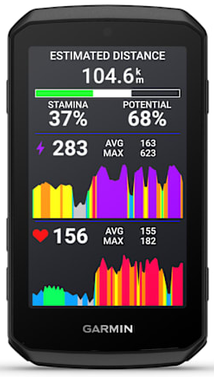
Garmin Edge 1060
Garmin's flagship bike computer. Change route, check your heart rate or report a pothole by voice, with both hands on the bars.
 +other retailers
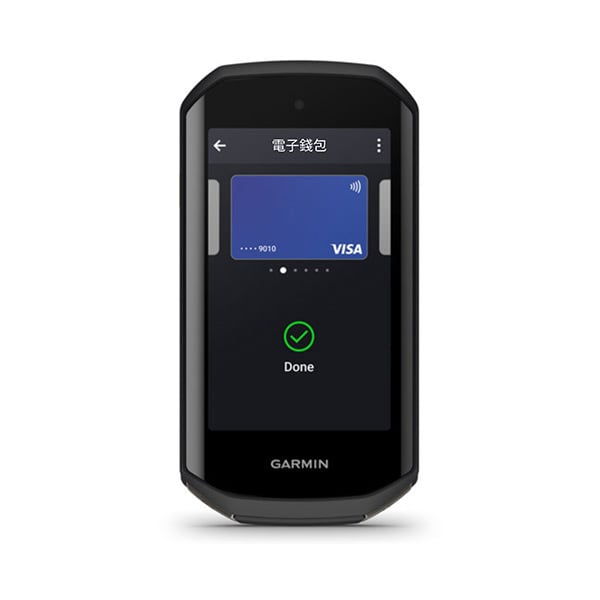
The Edge 1050 (from $699.99 / £649.99 / €699.99) is the outgoing flagship, and worth watching for a discount now the 1060 has landed. 3.5-inch bright transmissive colour LCD with touchscreen and metal buttons, built-in speaker and electronic bell, Garmin Pay contactless payments. Battery lasts up to 20 hours under demanding use and up to 60 hours in battery-saver mode. No solar variant.
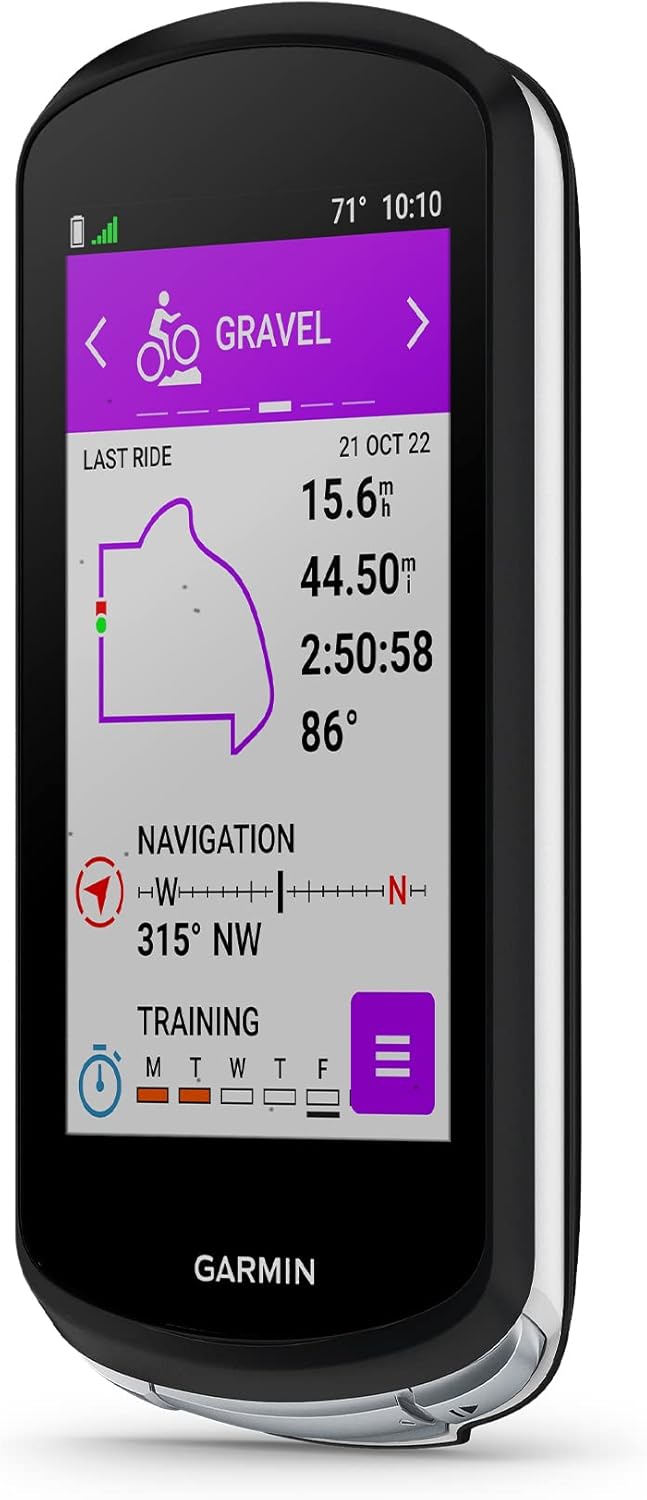
The Edge 1040 Solar ($749.99 / around £600) is the MIP-display option, effectively positioned for endurance riders and kept on sale after the non-Solar 1040 was discontinued. Power Glass solar adds around 20 minutes of riding per hour in strong sunlight, on top of the 45-hour base. 3.5-inch transflective touchscreen, multi-band GNSS.
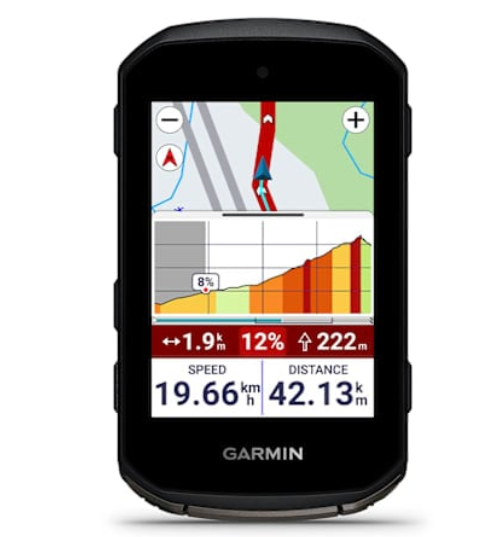
The Edge 850 ($599.99 / £469.99 / €549.99) launched in September 2025 as the new-generation mid-format. 2.7-inch bright display with touchscreen, speaker, Garmin Pay, on-device course creator and the full physiology stack. Battery lasts up to 12 hours under demanding use and up to 36 hours in battery-saver mode.
The Edge 550 ($499.99 / £379.99 / €449.99) is the 850 in button-only form. Same display, same battery, same training stack. No touchscreen, no speaker, no Garmin Pay.
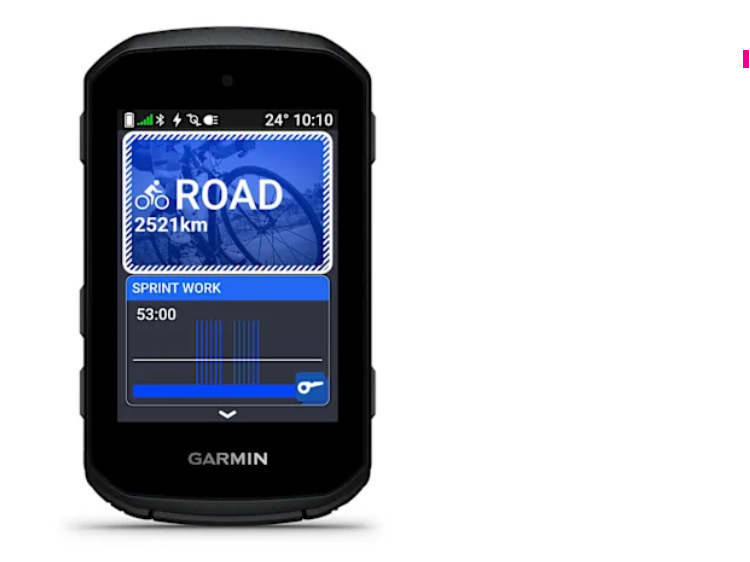
The Edge MTB ($399 / £339 / €399) is Garmin’s first dedicated off-road bike computer, launched in June 2025. 2.13-inch colour MIP, button-only, Gorilla Glass, rubberised case, 14-hour battery. Enduro and Downhill profiles, 5Hz position recording on descents, Timing Gates, MTB Dynamics, Trailforks via ForkSight. Drops ClimbPro Explore, Power Guide, Load Focus and WiFi.
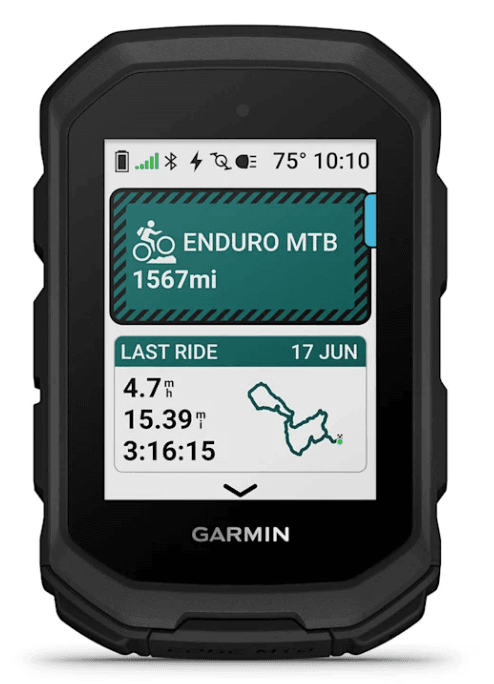
The Edge Explore 3 ($399.99 / £349.99 / €399.99) and Edge Explore 3 Plus ($499.99 / £429.99 / €499.99) replaced the Explore 2 on 20 October 2026, with orders opening on 23 October. Both run a 3-inch 360 x 640 touchscreen with 32GB of storage, and both reach 48 hours in battery-saver mode, against 16 hours of demanding use on the base model and 14 on the Plus. Free flow routing and pin drop navigation are the navigation additions. The Plus adds a microphone, a speaker that doubles as a bike bell, and Wi-Fi, so it manages map regions on the device itself. Neither model carries the analysis layer or multi-band GNSS. See the Garmin Edge Explore 3 specifications for both variants side by side.
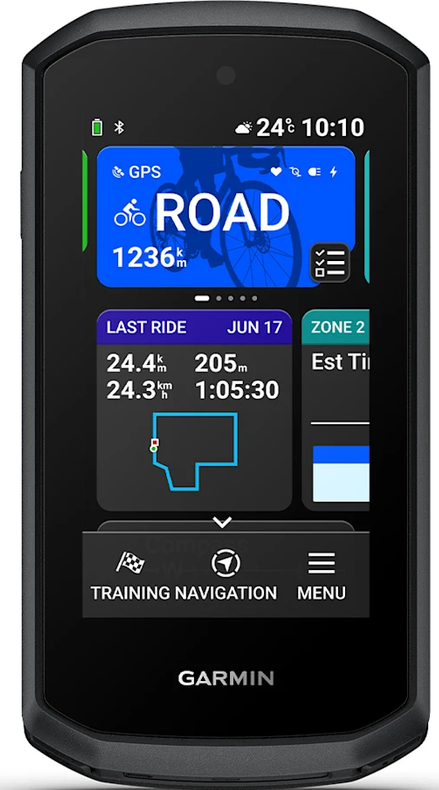
Garmin Edge Explore 3
Garmin's navigation-led bike computer. Bike maps, free flow routing and pin drop navigation on a 3-inch touchscreen, with 48 hours in battery saver mode. The Plus adds voice control and Wi-Fi maps.
+other retailersThe Edge Explore 2 (£229.99 at Garmin) is the outgoing navigation-led Edge. Garmin still sells it new, but Amazon UK has run down to used stock only, so check the condition before buying there. 3-inch bright touchscreen, eBike integration, 16-hour demanding battery, no advanced training stack. The Explore 2 is primarily focused on eBike integration, with built-in battery, assist level, and range data.
Buy: On Amazon
The Edge 130 Plus is discontinued. It launched in mid-2020 as the small-format entry, with a 1.8-inch monochrome MIP screen, button-only control, a 12-hour battery, ClimbPro and breadcrumb navigation. Garmin no longer lists it, and as of October 2026 there is no new stock on Amazon in the UK or the United States. The Edge MTB has taken its ground at the small end of the range.
How Garmin differentiates the Edge range
Garmin segments the Edge along six axes.
- Screen size. 3.5-inch on the 1060, 1050 and 1040 Solar; 3-inch on the Explore 3 and Explore 2; 2.7-inch on the 850 and 550; 2.13-inch on the MTB; 1.8-inch on the 130 Plus.
- Input. Touchscreen with buttons on the 1060, 1050 and 850; touchscreen on the 1040 Solar, Explore 3 and Explore 2; buttons only on the 550, MTB and 130 Plus. Garmin’s menus were designed for touch, which makes button-only models harder to navigate than they should be.
- Battery life. The 1040 Solar’s 45-hour base, with class-leading endurance and substantial solar-assisted runtime in sustained sunlight, is untouched in the current range. Across the rest of the range, a demanding-use battery sits between 12 and 20 hours.
- Training depth. ClimbPro, Power Guide, Course Demands, Cycling Coach, Smart Fueling and GroupRide run on the 1060, 1050, 1040 Solar, 850 and 550. The MTB drops most physiology for off-road specifics. The Explore 3 adds Garmin Coach plans, VO2 max and structured workouts but omits the analysis layer, and the Explore 2 and 130 Plus omit most of it.
- NFC and speaker. On the 1060, 1050 and 850, with the 1060 adding a microphone alongside the speaker. The Edge line gained NFC support late, plausibly reflecting the security implications of contactless payment hardware on a device routinely left unattended on café bar tops and bike racks.
- Display technology. Bright transmissive LCD on the current generation (1060, 1050, 850, 550); MIP transflective on the legacy and small-format models (1040 Solar, MTB, 130 Plus, and the older 540 Solar and 840 Solar). Bright and solar are mutually exclusive in production today.
The display fork: MIP and solar versus bright screens
Transflective MIP displays form their image by reflecting daylight, which requires very low battery power. LCD and AMOLED use more battery to produce the same display brightness. Separately, only a transflective MIP display can host a solar layer in front, because light has to pass through both ways. Combined Solar-AMOLED tech does not exist, but Garmin has patents.
The Edge 1040 Solar (June 2022) delivered the architecture at its best: a 45-hour base battery, multi-band GNSS, and a ride gain of around 20 minutes per hour in direct sunlight. The 540 Solar and 840 Solar applied the same approach in smaller form factors.
The Edge 1050 (June 2024) broke from that architecture for a brighter screen, possibly mimicking the popularity of AMOLED displays on watches. The 850 and 550 (September 2025) followed suit. The result? The brightest Edge screens to date, but with a battery roughly half that of the prior generation. A problem.
The Coros Dura is the only major solar-equipped alternative, though its execution as a bike computer remains questionable. For battery independence first, the 1040 Solar remains the mainstream bike computer that delivers it.
The Edge for road, gravel and mountain biking
Garmin Edge devices map nicely onto the main types of real-world cycling
- Road and sportive: 550, 850 or 1050 covers the full training and navigation experience. The 850 and 1050 add a touchscreen and a speaker, the latter is the largest.
- Multi-day, ultra-distance and bikepacking: 1040 Solar. Nothing in the current range matches it for battery life.
- Mountain biking: the ruggedised Edge MTB has dedicated descent profiles, 5Hz position recording and Trailforks integration all of which are absent elsewhere in the range.
- Touring, commuting and e-bike: Explore 3, or Explore 2 while stock lasts. Navigation and eBike integration without the training overhead sought by performance cyclists.
The Edge line, two decades on
The Edge has been in continuous production since the Edge 205 and 305 in 2007. The Edge 800 added a colour touchscreen in 2010. The current four-digit lineage runs Edge 1000 (2014), 1030 (2017), 1030 Plus (2020), 1040 (2022), 1050 (2024) and 1060 (2026).
Suffixes carry specific meaning. Solar marks Power Glass charging on an MIP variant. Plus marks a mid-cycle refresh. Explore marks the navigation-focused simplified line. MTB marks the off-road specialist. An Edge 150 reportedly leaked in mid-2025 as a possible successor to the 130 Plus, but has not surfaced since.
The Edge as Garmin’s cycling anchor
Garmin Cycling has no competitive equivalent with quality at scale. Wahoo is the only direct competitor with comparable depth; the ELEMNT Ace, Bolt 3 and Roam 3 are excellent bike computers, and Wahoo’s button-first interface is more usable than Garmin’s. Wahoo’s strengths sit indoors, where the KICKR family is the ecosystem to beat.
Both companies extend beyond the head unit. Yes, Wahoo has SPEEDPLAY POWER pedals, the TRACKR RADAR rear light, and TRACKR cadence, speed and heart-rate sensors. But Garmin matches and widens that on Rally power-meter pedals and Varia rear radar ranges. It also adds what Wahoo does not: the Varia Vue front camera, inReach satellite communication, and direct integration with the full Garmin watch lineup via extended display and ecosystem integration with Physio TrueUp.
SRAM’s Hammerhead Karoo 3 is strong on its own. The brand’s Karoo Extensions SDK, launched in late 2024, adds 3rd-party features, including resolving a problematic Di2 spat with Shimano, resolved by Ki2.
Coros has produced the Dura, which is capable of solar but is poorly executed. Coospo, Bryton and Magene compete at the budget end; Magene is the one to watch, already with a significant cycling profile beyond the humble bike computer.
The Edge’s commercial moat lies in the scale of its ecosystem.
What the accuracy data shows
Multi-band GNSS, standard on every current Edge from the 550 up, has dramatically improved horizontal GPS accuracy under tree cover and in urban environments. The gap between the 1040 Solar and the 1050 is too small to be a useful basis for choosing between them.
Elevation matters as much to some cyclists as horizontal accuracy. Garmin’s grade-response algorithm has improved over the generations but remains imperfect; the 1040 review documented several-second lags on steep climbs. ClimbPro focuses the cyclist’s mind on the current climb and is available on every current Edge except the Explore 2 and 130 Plus. Here, Garmin created a ‘must-have’ feature that the competition has only recently matched, and its usefulness extends far beyond a simple live grade metric, with novel feedback such as average grade-to-go and colour-segmented climb profiles.
Map rendering while navigating is a key variable that accuracy and usability tests often miss. On the x40 generation, sluggish redraws were a common complaint for a device selling at premium prices. The new-generation Edges — 1050, 850 and 550 — are upgraded and materially faster. For navigation-heavy rides, that improvement is more impactful than any marginal gain from improved GNSS accuracy.
Software, UI and Connect+
The Edge’s menu interface was designed for touchscreens, and button-only models inherit a UI that works poorly. The Edge 540 was the clearest case: a capable computer made awkward through the menus. The Edge 550 inherits the same constraint. Wahoo’s ELEMNT range shows what a button-first cycling interface looks like, and the usability gap is the single strongest argument for spending the extra £90 on the Edge 850 over the 550.
Major cycling features are added at least biannually, but Garmin struggles to lose its reputation for being buggy. The 2025-2026 cycle added Smart Fueling, Real-Time Weather, Course Planner, Garmin Share for routes and Cycling Coach plans. The same period saw the 2026.10 TopoActive map pack cause Edge devices to crash mid-ride, and the November 2024 x40 beta firmware remove USB file transfer.
Garmin Connect+, the optional subscription tier introduced in 2025, has not been used to paywall any Edge feature. Whether that holds is an open question; the CIRQA pricing leaks and the broader subscription drift across Garmin make a paywalled Edge feature plausible but unlikely.
Edge coverage on this site
Edge specifications
- Garmin Edge 1060 specifications
- Garmin Edge 1050 specifications
- Garmin Edge 1040 Solar specifications
- Garmin Edge 850 specifications
- Garmin Edge 550 specifications
- Garmin Edge MTB specifications
- Garmin Edge Explore 3 and 3 Plus specifications
- Garmin Edge Explore 2 specifications
Edge reviews and first looks
- Garmin Edge Explore 3 Plus adds voice control
- Garmin Edge Explore 3 vs Explore 2 – what the extra buys
- Garmin Edge 1060 adds voice control for $100 more
- Edge 1060 vs 850 vs 550: which Edge to buy now
- Garmin Edge 1060 vs 1050 – what the extra money buys
- Garmin Edge 1040 Review
- Garmin Edge 1050 Review
- Garmin Edge 850 and 550 — Battery Life Decimated
- Garmin Edge MTB — First Thoughts
- Garmin Edge 1050 — Should You Buy?
- Garmin Edge 1050 — What We Know So Far
- Garmin Edge 1050 — First Photo
- Garmin Edge 1050 Confirmed
Firmware, features and updates
- Garmin 2026.10 Map Update Crashes Edge Devices
- Garmin Q1 2026 Feature Update: All Watches and Edge
- Garmin Edge to Add New Features to 540, 840, 1040 and 1050
- New Features Added for Edge 540, 840, 1040 and 1050
- Garmin Edge x40 — Beta Update Removes Features
- Garmin Big Feature Bump for Edge 540, 840 and 1040
- New Garmin Features: Cycling Ability, Course Demands, Power Guide
- Garmin Edge 850 and 550 Solar — What to Expect
Display, battery and solar technology
- Garmin Solar Technology: Power Glass, MIP and the Forever Battery
- Garmin Battery Life: Seeking Infinity
Competitors
- Wahoo Bolt 3 Review
- Wahoo Roam 3 Review
- Wahoo ACE Review
- Wahoo ACE vs Roam 3 vs Bolt 3
- Hammerhead Karoo 3 Review
- Coros Dura Review
- COOSPO CS600 Review
The Edge in the Garmin cycling ecosystem
- Garmin Varia RearVue 820
- Garmin Varia Vue Headlight (4K Camera and Smart Light)
- Garmin Rally 210/110 Power-Meter Pedals Buyer’s Guide
- Top 100 Garmin Connect IQ Apps
- Komoot Live Sync Arrives on Wahoo (Edge had it first)
What’s next
- Edge 150 Reportedly Leaked
- Garmin Edge 1060 – launched 20 October 2026, full specifications
- Garmin Rumours and the 2027 Lineup
Explore the full resource library
This site covers endurance sport technology across a range of dedicated reference sections. Each one collects the most relevant articles, tests, and analysis on its topic in one place.
Buyer guides
- Best sports watch: tested recommendations by sport and athlete type (triathlon, running, marathon, cycling, hiking, and women)
- Best Garmin watch: Forerunner versus Fenix by series, sport, and budget
- Best wearables: fitness trackers, recovery trackers, heart rate monitors, running power meters, and female athlete tech
- Best cycling products: computers, smart trainers, power meters, and cycling heart rate monitors
- Buying guides: every upgrade guide and product comparison in one place, by brand, for owners deciding whether to move to the newest model
- Gear I use: the watches, bikes, sensors, fuel and sleep kit tfk actually trains and races with, and what his partner uses
Brand and product guides
- Amazfit: the full Amazfit range from Balance to Cheetah to T-Rex, accuracy tests, HYROX partnership, and Zepp Health analysis
- Apple Watch: athlete-first coverage of Apple Watch across running, cycling, and triathlon
- COROS: watches, features, and firmware across the full COROS range
- Garmin: the company, the platform and the full range, and the starting point for choosing across every Garmin product line
- Garmin Edge: bike computers from entry-level navigation to flagship endurance and mountain biking
- Garmin Fenix: every model, feature, and firmware development for Garmin's flagship outdoor watch
- Garmin Fenix 8 Series: which variant to buy, upgrade advice, accuracy data, and the full Fenix 8 review and firmware coverage
- Garmin Forerunner: the full Forerunner line covered from entry level to triathlon flagship
- Garmin Instinct: rugged GPS watches for endurance and adventure athletes
- Garmin Features Explained: how Garmin's metrics work, from Training Load and Body Battery to Race Predictor and HRV Status
- Google Fitbit: Fitbit Edge, Fitbit Air, Google Health, Pixel Watch and the Wear OS platform
- Polar: watches, sensors, Polar Flow and training science across the full Polar range
- Runna: coach-written running plans that adapt as you train
- Suunto: Race, Vertical, Run and the SuuntoPlus ecosystem
- Strava: features, privacy, segments, and how Strava fits into a serious training setup
- Ride with GPS: route planning, navigation and how it works alongside Strava
- Wahoo: KICKR trainers, ELEMNT bike computers, and the Wahoo ecosystem
- WHOOP: strain, recovery, sleep and the full WHOOP ecosystem
Specifications database
- Full Specifications Database: detailed spec sheets, battery life, sensor lists and generation-on-generation comparisons for current Garmin, COROS, Amazfit, Samsung, Google Fitbit, Huawei, Polar, Suunto, Wahoo and Apple Watch models
Glossary
- Sports Technology Glossary: non-branded terminology across running, cycling, swimming, triathlon, hiking, strength training, HYROX, sensors, ecosystems, and brands
Sport and topic guides
- Running Watches: how to choose by discipline (road racing, trail, track, beginner, and multisport)
- Triathlon and Multisport Technology: watches, sensors, and race-day tools for swimmers, cyclists, and runners
- HYROX: training science, race analysis, and technology for the functional fitness race format
- parkrun: technology, training, and performance for the weekly 5K
- Hiking Technology: navigation, safety, and trail tech for walkers and hikers
- Heart Rate Monitoring: optical sensors, chest straps, accuracy comparisons, and how to set training zones
- Optical Sensors (PPG): the 40 things a wrist optical sensor could measure, from heart rate to glucose, ranked by evidence
- GPS Accuracy: how satellite systems perform across brands, terrains, and conditions
- Sports Watch Battery Life: battery claims, real-world tests, and how to manage battery life across Garmin, Apple, Amazfit and COROS
- Recovery Trackers: WHOOP, Oura, and the science of readiness scoring
- Muscle Oxygen Sensors: SmO2 and NIRS explained, Train Red and Moxy compared, and the category from BSX and Humon to Garmin and WHOOP
- Female Athlete Tech: wearables, physiology, and performance for female endurance athletes, covering cycle-synced training, RED-S, HR accuracy, and VO2max
- Sports Science: peer-reviewed research on HRV, VO2max, lactate threshold, running power, wearable accuracy, and supplementation
- Testing Methodology: how this site tests GPS accuracy, heart rate, battery life, and other performance claims
Content series
- Release Radar: confirmed launches, leaks, and rumours across Garmin, Apple, COROS, Polar, Suunto, and Wahoo
- Deep Dive Feature Files: weekly firmware feature updates across all brands (bug fixes excluded)
- Fix Files: weekly firmware bug fix tracking across all brands
Small things I always use
- Garmin 90-degree charging adapter: Charges your Garmin from any USB-C cable. Essential when travelling. I use one.
- Body Glide: The blue anti-chafe stick swimmers and runners carry. I use it.
- Speedo earplugs: Fewer ear infections and no cold-water dizziness. I use them.
- Dryrobe Advance: My winter changing robe for open-water swims. I use one. A cheaper option is the AONYIYI changing robe.
- Maurten: Race fuel that stays easy on the stomach. I use them.
- Beet It Sport nitrate shots: Beetroot shots I take in the days before a race. I use them.
- Garmin charging puck: The quickest way to top up before a session. I use one.
- Injinji: Toe socks that stop rubbing, so you run more. I use them.
- Ultimate toe protectors: Stop black toenails on long runs. They work. I use them.
- Compressport R2 v2 calf sleeves: My calf sleeves of choice. I use them.
- Cellucor C4: My pre-workout before hard sessions.
- TPU tubes: Schwalbe Aerothan, Tubolito and Pirelli SmarTube. Light, tiny spares. I use all three.
- G8 insoles: Adjustable insoles that are good. I use them.
- Cycplus Cube: A 97g electric pump that gets a road tyre rideable in two minutes. I carry one. 5% off with code THE5KRUNNER.
Watches and sensors
- Polar H10: My daily driver for waking HRV.
- Polar Verity Sense: My backup arm-worn HR sensor.
- Nomad bedside charger: Charges my iPhone and Apple Watch overnight. I use it, and many of their bands.
- Train.Red: The best muscle oxygen sensor I’ve used.
- Tymewear: Accurate heart rate and reliable ventilatory zones. I use it to pace endurance rides over an hour.
- Garmin Forerunner 970: A pro-grade triathlon watch. I use this.
- Apple Watch Ultra 4: My daily smartwatch. No phone needed on rides.
- Garmin Fenix 9 Pro: I’ve just bought one.
On the bike
- Continental GP5000 for everyday riding, and Aero 111 on the front for special occasions.
- Helmets: Specialized S-Works Evade 3 for road riding, and Rudy Project Wing for TT-style races. I use both.
- Ravemen FR300: A front light that mounts under your Garmin or Wahoo. I use one.
- Wahoo TRACKR Radar: I use it on one bike and Varia on the other. They perform the same.
- Garmin Varia RTL515: Radar that warns you of cars from behind. I use this model.
- Wahoo ELEMNT Roam 3: The bike computer that’s easy to use. I use mine on most rides.
- Favero Assioma Pro RS2: Accurate power pedals that swap easily between bikes. I use this model.
Home and indoor training
- NPE Runn: Makes my basic treadmill smart, sending more accurate speed and distance to my watch and Zwift. I use it.
- Google Wifi: Keeps Zwift connected in my pain cave. I use it.
- Apple TV 4K: Zwift on the big screen. I use two.
- Google Nest Doorbell (wired, 2nd gen): My video doorbell, running in both Google Home and Apple Home. I use it.
Health, recovery and sleep
- FreeStyle Libre 3 Plus: Shows how my blood sugar responds to diet.
- hDrop: Measures my sweat loss in summer and indoors.
- Fourth Frontier Zone: Checks my heart under load in hard sessions.
- Oura Ring 5: My partner’s recovery tracker of choice.
- Eight Sleep: A cooling mattress cover my partner and I use nightly.
Reader-Powered Content

This content is not sponsored. It’s mostly me behind the labour of love, which is this site, and I appreciate everyone who supports it.
Support the site: Follow (free, fewer ads) · Subscribe (paid, ad-free) · Buy Me A Coffee
Written by real people, with AI assistance. Fact-checked and verified for originality. See the Editorial Policy. FTC: Affiliate Disclosure — some links pay commission. As an Amazon Associate, I earn from qualifying purchases.
