Suunto watches: GPS, wearables, and the SuuntoPlus ecosystem.
Suunto pros and cons
Suunto returned to profit in 2025, and it gives every owner a 2-year warranty and no subscriptions are required. It cut research spending by 31% and staff by 22% to get there, and it offers no phone support.
Pros
- 2-year warranty everywhere, a battery replacement service and no subscription.
- Back in profit in 2025, with revenue up 27% to €106.5m.
- Its parent converted a $13.9m loan into equity on 18 March 2026.
- Handled the Movescount shutdown with years of notice.
- Two-way TrainingPeaks sync on most models, and offline maps.
- A third-party SuuntoPlus app store for sports apps, with the editor open to all developers since March 2026.
Cons
- Research spending cut by 31% and headcount by 22% in the recovery year.
- No phone support, and live chat runs on weekdays only.
- No payments or streaming music support.
- The entry-level Run misses the TrainingPeaks push feature.
See how Suunto compares with other brands on the brand comparison page. Last updated 16 October 2026.
Suunto competes in a crowded endurance sports watch market dominated by Garmin, Apple, and, to a much lesser extent, Coros. Its structural advantages are design quality, battery life, and the SuuntoPlus app ecosystem, which are real but not universally valued. The brand has recovered from years of ownership turbulence and now sells serious multisport watches at competitive prices. SuuntoPlus, open to all developers in March 2026, is the differentiation engine driving purchase decisions among engaged athletes.
For most buyers, the choice is binary: Suunto or Garmin. Fenix (Enduro) and Forerunner dominate the alternatives, but Suunto’s smaller form factors and superior design appeal to athletes with smaller wrists or those unwilling to tolerate Garmin’s aesthetic compromises. Vertical competes directly with Fenix on battery life; Race competes in the AMOLED performance watch segment, where Apple and Coros have made serious inroads; the smaller Run model targets buyers who rejected the Forerunner 170’s price.
The SuuntoPlus advantage
SuuntoPlus is a third-party app store for sport apps and watchfaces that add to the out-of-the-box experience. Don’t confuse this with Apple Watch apps, which take over the entire watch experience. This is a strategically important part of the ecosystem, effectively making Suunto the only company that can compete with Garmin Connect IQ’s sports apps. After 4 years of development and expansion, Suunto opened SuuntoPlus to all developers in March 2026.
- Pre-March 2022: Third-party data screens available with approval required
- March 29, 2022: SuuntoPlus Guides announced (still approval-based, curated)
- March 2026: SuuntoPlus Editor opened to all developers; store publishing still goes through partner-programme review
While a competitive necessity, many athletes never venture beyond the watch’s native features. Any perceived advantage immediately fades for them. But for power users seeking specific sports functionality, SuuntoPlus is not a marketing gimmick. It is a functional upgrade that competes directly with Garmin’s most expensive watches.
Product range
Suunto has typically competed at or near the high end, with quality hardware. The Race and Run models, starting in 2023, marked a stark change in Suunto’s strategy. These were highly competent watches, made superbly and sold at significantly lower prices.
Race and Race 2. The Race is the AMOLED flagship, launched in October 2023. It set the template: touchscreen, dual-frequency GPS, on-watch maps, and 50 hours of battery life in training mode. The Race 2 (August 2025) iterates on the design with a brighter LTPO AMOLED display, a faster processor, and longer battery life. For pure performance, the Race family competes with the Fenix 8 and Epix at a lower price point. The main weak point is the large form factor, which is why Race S (smaller bezel, smaller battery, same processor) exists. Race S dropped in June 2024 and still delivers excellent battery life, with a better-proportioned appearance on smaller wrists.
Race 3S replaced Race S on 15 October 2026, with 38 hours of dual-band GPS, sapphire and titanium as standard, and three months of Suunto AI Coach. The Race 3S launch report has the details, and Race 3S vs Race 2 vs Run 2 sets out which to buy.
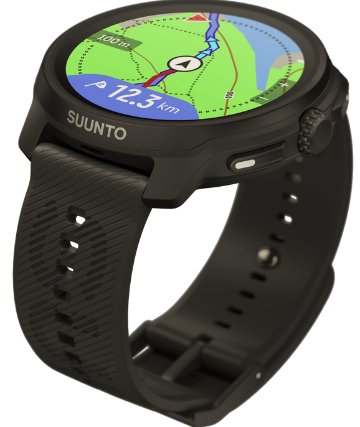
Suunto Race 2
GPS running watch
Vertical and Vertical 2. Adventure watch focused on hiking, trail running, and expedition use. Vertical (May 2023) was Suunto’s first serious contender in the solar-charged landscape market. It trades AMOLED for a MIP (reflective) display and gains excellent battery life: 60+ hours with GPS on and up to 30 days in smartwatch mode (60 days with solar). Vertical 2 (September 2025) adds an AMOLED display while matching the original solar model’s 65-hour GPS battery life, with up to 20 days in smartwatch mode. Buy Vertical for maps and minimalism; buy Vertical 2 for screen quality without the size penalty.
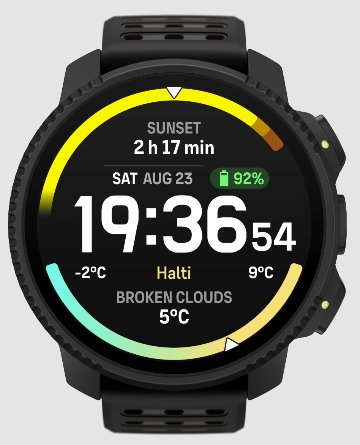
Suunto Vertical 2
GPS adventure watch
Run. Entry-level running watch launched in June 2025. Targets Forerunner 170 and Apple Watch SE buyers. The feature set is respectable, including wrist HR, adaptive training, and automatic recognition of running dynamics. Battery life is robust (up to 12 days). The watch is small, light, and unobtrusive. Trade-off: no onboard maps. For urban and road runners who upload to Strava and Garmin Connect, Run is sufficient. For athletes who need offline navigation, Vertical 2 or Race are the floor.
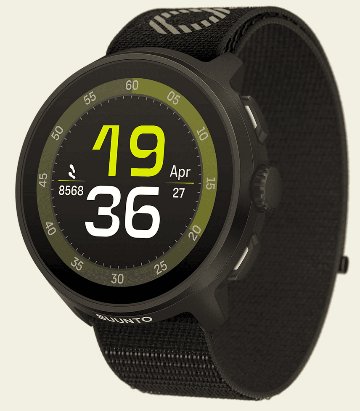
Suunto Run
GPS running watch
Run 2. Launched in September 2026, the Run 2 adds a redesigned 12-channel heart rate sensor, a display three times brighter than the original Run, and offline maps on the 64GB model (the cheaper 4GB model has none). Testing found heart rate accuracy within 1 bpm across eight sessions, a clear improvement over the Run’s inconsistent sensor. It’s priced at roughly £66–1above the Run, 00 depending on SKU. For buyers who specifically want maps at this size and price, the Run 2 is the pick; those who don’t can save money on the original Run.
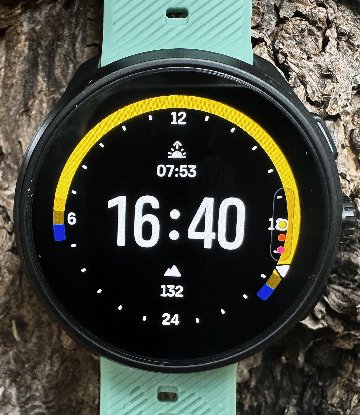
Suunto Run 2
Stainless steel bezel, 1.32" AMOLED (2,000 nits), dual-band GPS, 10-day battery.
9 Peak and 5 Peak. The Race and Vertical lineups now marginalise Suunto’s older product tier. 9 Peak (launched in May 2021) was the ultra-premium watch before Race existed. It is no longer actively sold; Suunto has moved 9 Peak customers to the 9 Peak Pro, which features improved battery life (40 hours of best-GPS battery vs 25 hours for the original) and a revised UI. The 5 Peak is a compact multisport watch for athletes who reject large-format watches. Battery life is good (up to 20 days), and the form factor is excellent, but the product is ageing.
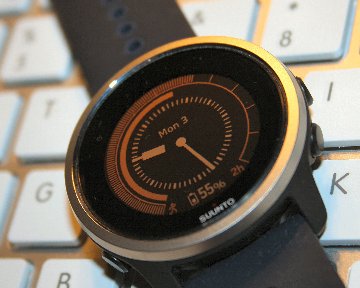
Suunto 5 Peak
GPS watch
Wing/Wing 2. Bone-conduction headphones for sport, integrated into the SuuntoPlus app ecosystem. The Wing sits on the skull and transmits vibrations directly to the inner ear, leaving the ear canals open for ambient awareness. For trail running and cycling in urban environments, this is a genuine safety advantage. Battery life is 10 hours; an optional power bank extends playback to 30 hours.
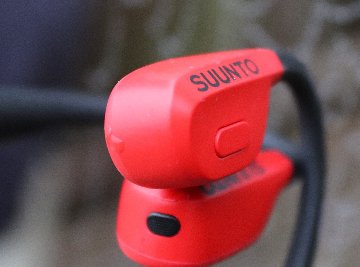
Suunto Wing 2
Bluetooth bone conduction headphones
Core differentiators
- Battery life. Suunto’s oldest and most consistent differentiator. Vertical 2 achieves 65 hours of GPS runtime at a 1-second sample rate without solar assist. Race delivers 50 hours. These figures are honest: Suunto’s power management is efficient, and the company doesn’t abuse marketing terminology to inflate battery specs. For expedition athletes and ultrarunners, the Vertical 2 is a good choice over the Fenix 8 unless you need specialist maps and navigation (the Fenix still has the edge here) or a larger screen.
- Design and build. Finnish heritage, titanium case options, and a thinner profile than Garmin equivalents. This is subjective but consequential: athletes spend money on watches that they will wear daily for four years. Design premium justifies price premium more reliably than feature delta.
- Price positioning. Race and Vertical 2 undercut Fenix and Epix by roughly £150–200 GBP. Run undercuts Forerunner 170 by roughly £60. This is sustainable only if supply chain costs remain low and if Suunto avoids margin erosion through discount pressure. Current ownership (Dongguan Liesheng, a Chinese industrial conglomerate) suggests manufacturing leverage on the cost of goods, but brand prestige is softer than Garmin’s.
Comparison to competitors
Suunto watches are not better than Garmin across the board, and vice versa. Fenix has superior map functionality, and Forerunner has a better running ecosystem. In 2026, those gaps have narrowed significantly compared with the chasm that existed years ago. Suunto wins on battery life, design, price, and SuuntoPlus customisation for power users. Coros sits between Suunto and Garmin on price but lacks the looks and ecosystem of the latter. Apple Watch Ultra remains a credible option for off-grid weekend warriors embedded in the Apple ecosystem, but it does not compete on battery life or navigation robustness. For serious endurance athletes choosing between Garmin and Suunto, the decision usually comes down to form factor and aesthetics rather than feature gaps.
Key posts in this cluster
- Suunto Race review — design, AMOLED, dual-frequency GPS, 3,357 words
- Suunto Race 2 review — iteration, LTPO AMOLED, performance benchmarks
- Suunto Race S review — compact form factor, same processor, smaller battery
- Suunto Race 3S launch report: price, battery and what is new over Race S
- Suunto Run review — entry-level positioning, wrist HR, adaptive training
- Suunto Run 2 review — redesigned HR sensor, offline maps on 64GB, eight-session accuracy testing
- Suunto Vertical 2 buyer’s guide — AMOLED hiking watch, 65-hour battery, in-depth comparison
- Suunto Vertical review — MIP display, solar option, expedition design
- Suunto 9 Peak review — historical interest, titanium build, now superseded by Pro variant
- Suunto 5 Peak review — compact multisport, good battery, established product
- Suunto Wing review — bone-conduction headphones, open-ear design, SuuntoPlus integration
- Suunto Ocean review — dive computer built on the Race platform, Bühlmann 16 algorithm, wireless tank pressure
- Suunto Race 2 Triathlon: H1 2026 Features Tested — auto-transition tested in practice, what works and what still doesn’t
- SuuntoPlus opens to all developers — the open developer platform explained, compared to Garmin Connect IQ
Related comparisons
- Polar V3 vs Suunto Race vs Garmin 965 — three-way performance watch shootout
- Best triathlon watch — Suunto Race, Vertical 2, and Run in context of Garmin, Coros, and Apple alternatives
Broader context
For readers exploring Suunto in the wider endurance sports watch market, see the Garmin Forerunner hub, Coros watches hub, and Apple Watch hub. Suunto’s competitive position is strongest against Garmin in the mid-price range and against Coros when considering premium materials and design over processing power or feature density.
Dongguan Liesheng (China) has owned Suunto since May 2022. Amer Sports previously owned the brand. See who owns whom in sports tech for context, or how Suunto’s 2025 finances compare to Polar and Amazfit.
Quick answers
Who owns Suunto?
Dongguan Liesheng, a Chinese company, owns Suunto. Amer Sports owned the brand before it. Source: Suunto returns to profit in 2025.
Is Suunto financially secure?
It is in better shape than it was. Suunto returned to profit in 2025, with revenue up 27% to 106.5m euros. It cut research spending by 31% to get there, and its equity stayed negative until its parent converted a $13.9m loan into equity on 18 March 2026. Source: Suunto returns to profit in 2025.
Does Suunto have an app store?
Yes. SuuntoPlus is a third-party store for sports apps and watchfaces. The editor opened to all developers in March 2026, though publishing to the store still goes through partner-programme review. Source: SuuntoPlus opens to all developers.
Does Suunto charge a subscription?
No. Suunto charges no subscription and gives a 2-year warranty everywhere. Source: Sports watch brands compared.
Does the Suunto Run 2 have maps?
Only the 64GB model has offline maps. The cheaper 4GB model has none. Source: Suunto Run 2 review.
Sources and further reading
- Suunto returns to profit in 2025
- Polar vs Suunto vs Amazfit: 2025 finances compared
- SuuntoPlus opens to all developers
- Suunto Run 2 review
- Sports watch brands compared
Explore the full resource library
This site covers endurance sport technology across a range of dedicated reference sections. Each one collects the most relevant articles, tests, and analysis on its topic in one place.
Buyer guides
- Best sports watch: tested recommendations by sport and athlete type (triathlon, running, marathon, cycling, hiking, and women)
- Best Garmin watch: Forerunner versus Fenix by series, sport, and budget
- Best wearables: fitness trackers, recovery trackers, heart rate monitors, running power meters, and female athlete tech
- Best cycling products: computers, smart trainers, power meters, and cycling heart rate monitors
- Buying guides: every upgrade guide and product comparison in one place, by brand, for owners deciding whether to move to the newest model
- Gear I use: the watches, bikes, sensors, fuel and sleep kit tfk actually trains and races with, and what his partner uses
Brand and product guides
- Amazfit: the full Amazfit range from Balance to Cheetah to T-Rex, accuracy tests, HYROX partnership, and Zepp Health analysis
- Apple Watch: athlete-first coverage of Apple Watch across running, cycling, and triathlon
- COROS: watches, features, and firmware across the full COROS range
- Garmin: the company, the platform and the full range, and the starting point for choosing across every Garmin product line
- Garmin Edge: bike computers from entry-level navigation to flagship endurance and mountain biking
- Garmin Fenix: every model, feature, and firmware development for Garmin's flagship outdoor watch
- Garmin Fenix 8 Series: which variant to buy, upgrade advice, accuracy data, and the full Fenix 8 review and firmware coverage
- Garmin Forerunner: the full Forerunner line covered from entry level to triathlon flagship
- Garmin Instinct: rugged GPS watches for endurance and adventure athletes
- Garmin Features Explained: how Garmin's metrics work, from Training Load and Body Battery to Race Predictor and HRV Status
- Google Fitbit: Fitbit Edge, Fitbit Air, Google Health, Pixel Watch and the Wear OS platform
- Polar: watches, sensors, Polar Flow and training science across the full Polar range
- Runna: coach-written running plans that adapt as you train
- Suunto: Race, Vertical, Run and the SuuntoPlus ecosystem
- Strava: features, privacy, segments, and how Strava fits into a serious training setup
- Ride with GPS: route planning, navigation and how it works alongside Strava
- Wahoo: KICKR trainers, ELEMNT bike computers, and the Wahoo ecosystem
- WHOOP: strain, recovery, sleep and the full WHOOP ecosystem
Specifications database
- Full Specifications Database: detailed spec sheets, battery life, sensor lists and generation-on-generation comparisons for current Garmin, COROS, Amazfit, Samsung, Google Fitbit, Huawei, Polar, Suunto, Wahoo and Apple Watch models
Glossary
- Sports Technology Glossary: non-branded terminology across running, cycling, swimming, triathlon, hiking, strength training, HYROX, sensors, ecosystems, and brands
Sport and topic guides
- Running Watches: how to choose by discipline (road racing, trail, track, beginner, and multisport)
- Triathlon and Multisport Technology: watches, sensors, and race-day tools for swimmers, cyclists, and runners
- HYROX: training science, race analysis, and technology for the functional fitness race format
- parkrun: technology, training, and performance for the weekly 5K
- Hiking Technology: navigation, safety, and trail tech for walkers and hikers
- Heart Rate Monitoring: optical sensors, chest straps, accuracy comparisons, and how to set training zones
- Optical Sensors (PPG): the 40 things a wrist optical sensor could measure, from heart rate to glucose, ranked by evidence
- GPS Accuracy: how satellite systems perform across brands, terrains, and conditions
- Sports Watch Battery Life: battery claims, real-world tests, and how to manage battery life across Garmin, Apple, Amazfit and COROS
- Recovery Trackers: WHOOP, Oura, and the science of readiness scoring
- Muscle Oxygen Sensors: SmO2 and NIRS explained, Train Red and Moxy compared, and the category from BSX and Humon to Garmin and WHOOP
- Female Athlete Tech: wearables, physiology, and performance for female endurance athletes, covering cycle-synced training, RED-S, HR accuracy, and VO2max
- Sports Science: peer-reviewed research on HRV, VO2max, lactate threshold, running power, wearable accuracy, and supplementation
- Testing Methodology: how this site tests GPS accuracy, heart rate, battery life, and other performance claims
Content series
- Release Radar: confirmed launches, leaks, and rumours across Garmin, Apple, COROS, Polar, Suunto, and Wahoo
- Deep Dive Feature Files: weekly firmware feature updates across all brands (bug fixes excluded)
- Fix Files: weekly firmware bug fix tracking across all brands
Small things I always use
- Garmin 90-degree charging adapter: Charges your Garmin from any USB-C cable. Essential when travelling. I use one.
- Body Glide: The blue anti-chafe stick swimmers and runners carry. I use it.
- Speedo earplugs: Fewer ear infections and no cold-water dizziness. I use them.
- Dryrobe Advance: My winter changing robe for open-water swims. I use one. A cheaper option is the AONYIYI changing robe.
- Maurten: Race fuel that stays easy on the stomach. I use them.
- Beet It Sport nitrate shots: Beetroot shots I take in the days before a race. I use them.
- Garmin charging puck: The quickest way to top up before a session. I use one.
- Injinji: Toe socks that stop rubbing, so you run more. I use them.
- Ultimate toe protectors: Stop black toenails on long runs. They work. I use them.
- Compressport R2 v2 calf sleeves: My calf sleeves of choice. I use them.
- Cellucor C4: My pre-workout before hard sessions.
- TPU tubes: Schwalbe Aerothan, Tubolito and Pirelli SmarTube. Light, tiny spares. I use all three.
- G8 insoles: Adjustable insoles that are good. I use them.
- Cycplus Cube: A 97g electric pump that gets a road tyre rideable in two minutes. I carry one. 5% off with code THE5KRUNNER.
Watches and sensors
- Polar H10: My daily driver for waking HRV.
- Polar Verity Sense: My backup arm-worn HR sensor.
- Nomad bedside charger: Charges my iPhone and Apple Watch overnight. I use it, and many of their bands.
- Train.Red: The best muscle oxygen sensor I’ve used.
- Tymewear: Accurate heart rate and reliable ventilatory zones. I use it to pace endurance rides over an hour.
- Garmin Forerunner 970: A pro-grade triathlon watch. I use this.
- Apple Watch Ultra 4: My daily smartwatch. No phone needed on rides.
- Garmin Fenix 9 Pro: I’ve just bought one.
On the bike
- Continental GP5000 for everyday riding, and Aero 111 on the front for special occasions.
- Helmets: Specialized S-Works Evade 3 for road riding, and Rudy Project Wing for TT-style races. I use both.
- Ravemen FR300: A front light that mounts under your Garmin or Wahoo. I use one.
- Wahoo TRACKR Radar: I use it on one bike and Varia on the other. They perform the same.
- Garmin Varia RTL515: Radar that warns you of cars from behind. I use this model.
- Wahoo ELEMNT Roam 3: The bike computer that’s easy to use. I use mine on most rides.
- Favero Assioma Pro RS2: Accurate power pedals that swap easily between bikes. I use this model.
Home and indoor training
- NPE Runn: Makes my basic treadmill smart, sending more accurate speed and distance to my watch and Zwift. I use it.
- Google Wifi: Keeps Zwift connected in my pain cave. I use it.
- Apple TV 4K: Zwift on the big screen. I use two.
- Google Nest Doorbell (wired, 2nd gen): My video doorbell, running in both Google Home and Apple Home. I use it.
Health, recovery and sleep
- FreeStyle Libre 3 Plus: Shows how my blood sugar responds to diet.
- hDrop: Measures my sweat loss in summer and indoors.
- Fourth Frontier Zone: Checks my heart under load in hard sessions.
- Oura Ring 5: My partner’s recovery tracker of choice.
- Eight Sleep: A cooling mattress cover my partner and I use nightly.
Reader-Powered Content
This content is not sponsored. It’s mostly me behind the labour of love, which is this site, and I appreciate everyone who supports it.
Support the site: Follow (free, fewer ads) · Subscribe (paid, ad-free) · Buy Me A Coffee
Written by real people, with AI assistance. Fact-checked and verified for originality. See the Editorial Policy. FTC: Affiliate Disclosure — some links pay commission. As an Amazon Associate, I earn from qualifying purchases.
