| Manufacturer | Samsung |
|---|---|
| Type | Rugged GPS smartwatch, Wear OS |
| Series | Galaxy Watch Ultra |
| Released | 7 August 2026 (announced 22 July 2026, Galaxy Unpacked, London) |
| Price at launch | £649 UK, $699.99 US, €749 Europe |
| Predecessor | Galaxy Watch Ultra (2024, refreshed 2025) |
| Successor | None announced. See Release Radar |
| Sizes | 47mm (large) |
| Variants | LTE only |
| Colours | Titanium Silver, Titanium Gray |
Specifications and features as at launch.
Expert opinion | What’s new | Specifications | Battery life | Features | Activity profiles | Further reading
Expert opinion
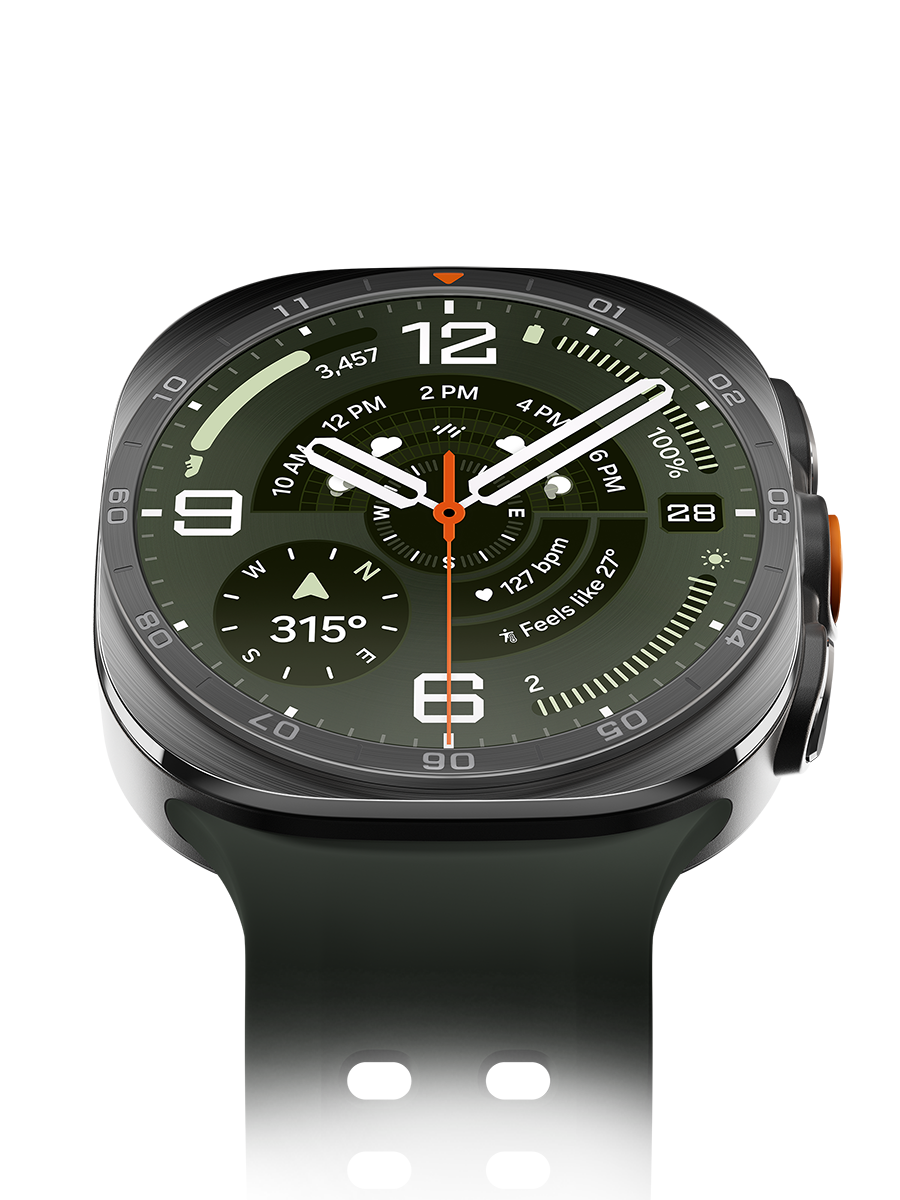
Samsung Galaxy Watch Ultra 2 positions it as a refined, high-end Android smartwatch that meaningfully improves on the original with a slimmer titanium build, a significantly larger 800mAh battery delivering strong multi-day endurance, a brighter 5,000-nit display, and the efficient Snapdragon Wear Elite chip powering smoother performance and AI features like raise-to-talk Gemini.
It excels for Samsung ecosystem users seeking a versatile rugged wearable with excellent health and fitness tracking, new trail-running tools, and now proper diving certification, making it the top Android adventure-smartwatch option, though it is still bulky, pricey at $699, and best suited for those who truly need the premium durability rather than opting for the more affordable Galaxy Watch 9.
The endurance change that matters least in Samsung’s own marketing is the one that matters most to cyclists. The Ultra 2 pairs directly with power meters, speed sensors and cadence sensors without the phone acting as intermediary, and it calculates FTP from a connected power meter on the wrist. Samsung restricts that capability to this model.

What’s new versus the Galaxy Watch Ultra
Hardware
- 800mAh battery, up from 590mAh, which Samsung states as a 35 per cent increase in typical capacity
- Fast charging, the first on a Galaxy Watch, reaching around 40 per cent in about 30 minutes using the EP-OL715 wireless charger and a 5V/2A adapter
- Case depth of 10.7mm, down from 12.1mm
- Weight of 61.5g, up from 60.5g
- Snapdragon Wear Elite, 3nm and five cores at 2.1GHz and 1.95GHz, replacing the Exynos W1000 at 1.6GHz and 1.5GHz
- 1.52in display, up from 1.47in, with peak brightness up to 5,000 nits against 3,000 nits
- IP69K dust and jet rating, replacing IP68, alongside the retained 10 ATM rating
- EN13319 dive instrument certification, to 40m, which no previous Galaxy Watch carried
- Bluetooth 6.0, replacing Bluetooth 5.3
- Marine Band with a contoured Air Pocket inner surface for water drainage
- Two colours at launch against four on the outgoing model
- Storage remains 64GB, memory remains 2GB, and positioning remains L1 and L5 dual-frequency GPS
Software
- Depth app reporting current depth, water temperature and elapsed dive time to 40m. Samsung states that no-decompression-limit tracking is not supported out of the box and that full dive computer capability may require a separate app, with no release date given
- Direct connection to cycling power meters, speed sensors and cadence sensors without a phone, supported in Outdoor Bike, Indoor Bike and Mountain Biking, and exclusive to this model
- FTP calculated on the watch from a connected power meter
- Trail run mode, exclusive to this model, adding Climb Guidance for average gradient and elevation gain ahead of each segment, and a Water Intake Alarm
- Running Coach, building a three to five week program
- Daily Cardio Load and Fitness Index
- Heart Health Score and Vascular Load
- Raise to Talk for Google Gemini, disabled by default
- Wear OS 7 with One UI Watch
Specifications
| Display | |
|---|---|
| Type | Super AMOLED, always-on |
| Size | 1.52in (38.5mm) |
| Brightness | Up to 5,000 nits localised peak |
| Cover | Sapphire crystal |
| Physical | |
| Case size | 47mm (large) |
| Dimensions | 47.4 x 47.1 x 10.7mm |
| Weight | 61.5g |
| Case material | Titanium, applied to the front and back cover areas of the frame, with the remainder a mix of plastic and other materials |
| Water resistance | 10 ATM, 100m to ISO 22810 |
| Dust and jets | IP69K |
| Durability | MIL-STD-810H |
| Dive certification | EN13319, to 40m |
| Operating temperature | -20C to 55C |
| Sensors and positioning | |
| Heart rate | Optical heart rate sensor, electrical heart sensor for ECG |
| Body composition | Bioelectrical impedance analysis |
| Other sensors | Accelerometer, barometer, gyroscope, geomagnetic, light, temperature |
| GNSS | Dual-frequency GPS, L1 and L5 |
| Connectivity and storage | |
| Processor | Qualcomm Snapdragon Wear Elite, 3nm, five cores at 2.1GHz and 1.95GHz |
| Memory and storage | 2GB and 64GB |
| Bluetooth | 6.0 |
| Wi-Fi | 2.4GHz and 5GHz |
| Cellular | LTE, eSIM, availability varies by country and carrier |
| NFC | Yes |
| Operating system | Wear OS 7 with One UI Watch |
Battery life
Samsung quoted the same 60 hours with the always-on display enabled for the 590mAh Galaxy Watch Ultra. The 35 per cent larger cell therefore buys nothing in the headline figure, and the gain appears in the GPS and navigation figures and in charging speed. Samsung has published no power-saving or exercise power-saving figures for the Ultra 2, where the original claimed up to 100 hours and up to 48 hours respectively.
| Capacity | 800mAh typical, tested to IEC 61960 |
|---|---|
| Normal use, always-on display enabled | Up to 60 hours |
| Normal use, always-on display disabled | Up to 80 hours |
| GPS | Up to 20 hours |
| GPX route navigation | Up to 16 hours, with power saving set to Standard during exercise |
| Charging | Wireless, around 40 per cent in about 30 minutes |
Features
Feature availability depends on the Samsung Health app version and on pairing with an Android phone. Samsung lists Android 13 or above and Samsung Health v7.0 or above for the trail running, cycling sensor, cardio load and fitness index features.
Training and outdoor
- Trail run with Climb Guidance and Water Intake Alarm
- Route navigation from an imported GPX file, with turn-by-turn guidance and Track Back
- Race against a stored record on the same course, for outdoor running and outdoor cycling, using records up to 14 days old
- Personalised heart rate zones, set after ten minutes of consistent outdoor running at 4km/h or faster
- Direct pairing with power meters, speed sensors and cadence sensors, with on-watch FTP
- Running Coach with a three to five week guided program
- Multisport, with transitions from the Quick Button
- Safety siren at up to 86 decibels, audible up to 180m, held on the Quick Button for five seconds
- Fall detection and Emergency SOS from five presses of the home button
Diving
- Depth app showing current depth, water temperature and elapsed dive time to 40m
- EN13319 certification, the first on a Galaxy Watch
- No-decompression-limit tracking is not included at launch
Health and recovery
- Energy Score, a daily readiness rating from recent activity, sleep and overnight heart signals
- Sleep tracking with stages, sleep score and Sleep Coaching over a three to four week program
- Sleep apnea risk detection, which Samsung describes as FDA-approved and which is limited to selected countries and to users aged 22 and over
- Blood pressure, requiring calibration against a cuff every four weeks, with availability limited by country
- ECG through the Samsung Health Monitor app
- Heart Health Score, drawing on sleep duration, BMI, vigorous activity and vascular load
- Vascular Load, tracked overnight, currently a Labs feature
- Body composition through bioelectrical impedance analysis
- Daily Cardio Load and Fitness Index
Smartwatch and platform
- Wear OS 7 with One UI Watch and the Google Play Store
- Google Gemini with Raise to Talk, which is off by default and increases battery consumption when enabled
- Strava with automatic upload, and iFIT trainer-led sessions
- NFC payments
- Compass watch face with waypoint marking and track back
Activity profiles
The following are the exercise types predefined in Samsung Health, the platform both the Galaxy Watch Ultra 2 and the Galaxy Watch 9 run on. The selectable set on any given watch depends on the model, the region and the software version.
Walking and running
- Walking
- Running
Ball and team sports
- Baseball
- Softball
- Cricket
- Hockey
- Rugby
- Basketball
- Football (soccer)
- Handball
- American football
- Volleyball
- Beach volleyball
Golf and bowling
- Golf
- Bowling
Racket sports
- Squash
- Tennis
- Badminton
- Table tennis
- Racquetball
Combat sports
- Boxing
- Martial arts
Dance
- Ballet
- Dancing
- Ballroom dancing
Mind and body
- Pilates
- Yoga
- Stretching
Strength and conditioning
- Jump rope
- Hula-hooping
- Push-ups
- Pull-ups
- Sit-ups
- Circuit training
- Mountain climbers
- Jumping jacks
- Burpee
- Bench press
- Squats
- Lunges
- Leg presses
- Leg extensions
- Leg curls
- Back extensions
- Lat pull-downs
- Deadlifts
- Shoulder presses
- Front raises
- Lateral raises
- Crunches
- Leg raises
- Plank
- Arm curls
- Arm extensions
Outdoor and adventure
- Cycling
- Mountain biking
- Hiking
- Backpacking
- Rock climbing
- Orienteering
- Horseback riding
- Archery
- Hang gliding
- Flying disc
- Inline skating
- Roller skating
- Aerobics
Water sports
- Swimming
- Aquarobics
- Canoeing
- Kayaking
- Rafting
- Sailing
- Yachting
- Windsurfing
- Kitesurfing
- Water skiing
- Scuba diving
- Snorkeling
Gym machines
- Treadmill
- Exercise bike
- Elliptical trainer
- Rowing machine
- Step machine
- Weight machine
Winter sports
- Alpine skiing
- Skiing (downhill)
- Cross-country skiing
- Snowboarding
- Snowshoeing
- Ice skating
- Ice dancing
- Ice hockey
Further reading
Related watches
The outgoing Galaxy Watch Ultra remains on sale at £599 in the UK, with four colours and the same 64GB of storage.
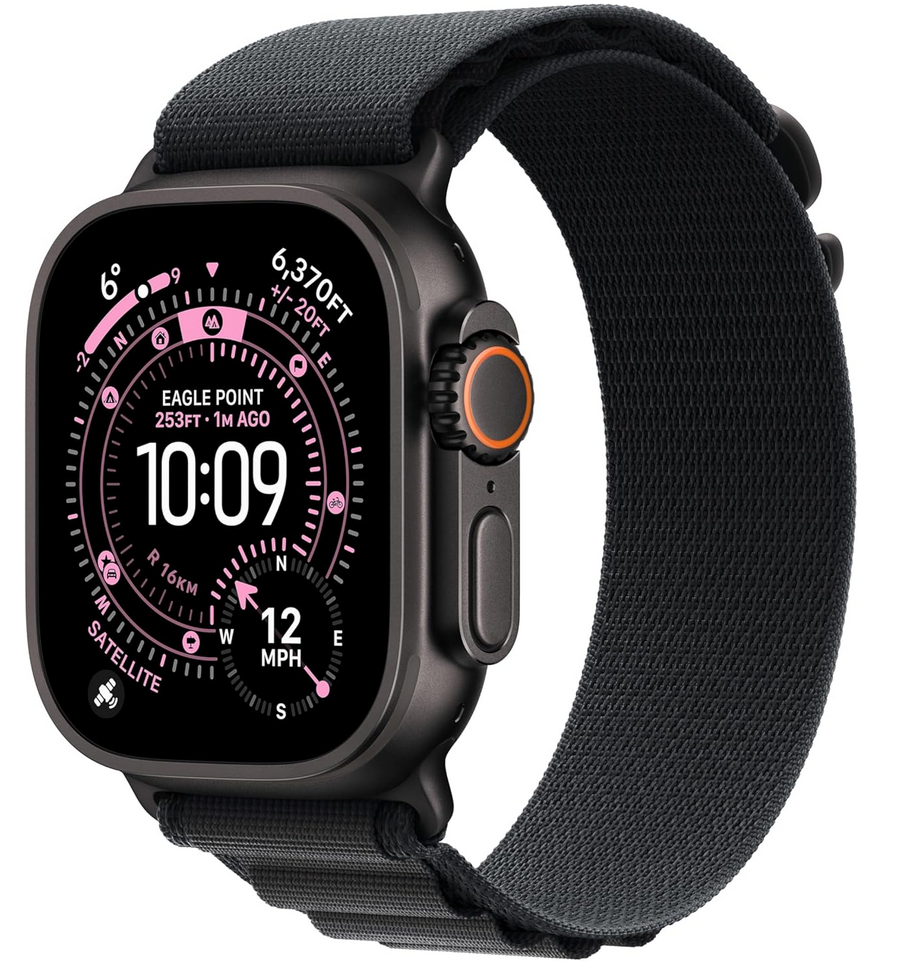
Also consider the Apple Watch Ultra 3, which is the closest rugged flagship for iPhone owners.
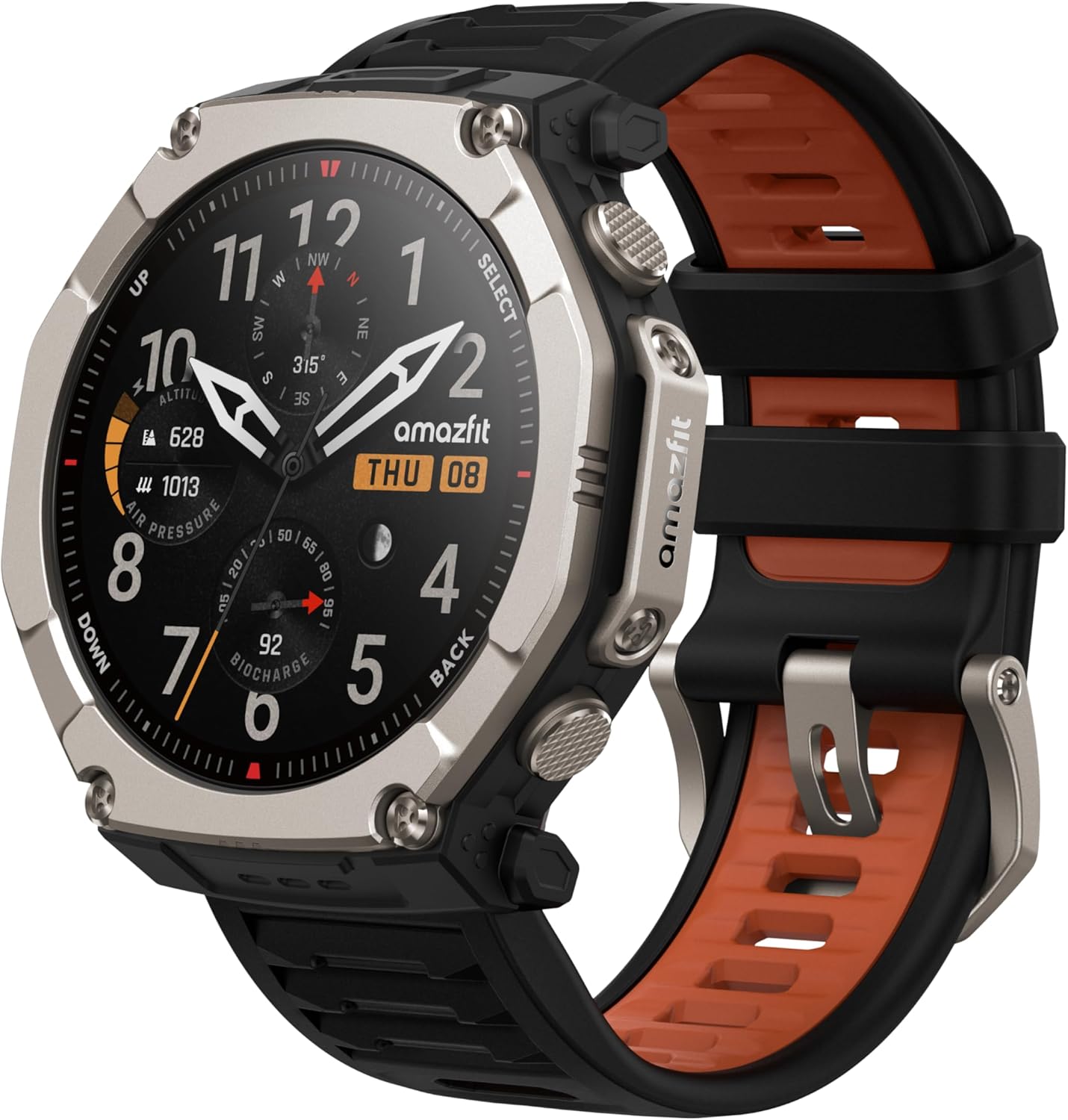
Also consider the Amazfit T-Rex Ultra 2, which undercuts the Galaxy Watch Ultra 2 substantially and carries full offline maps.