
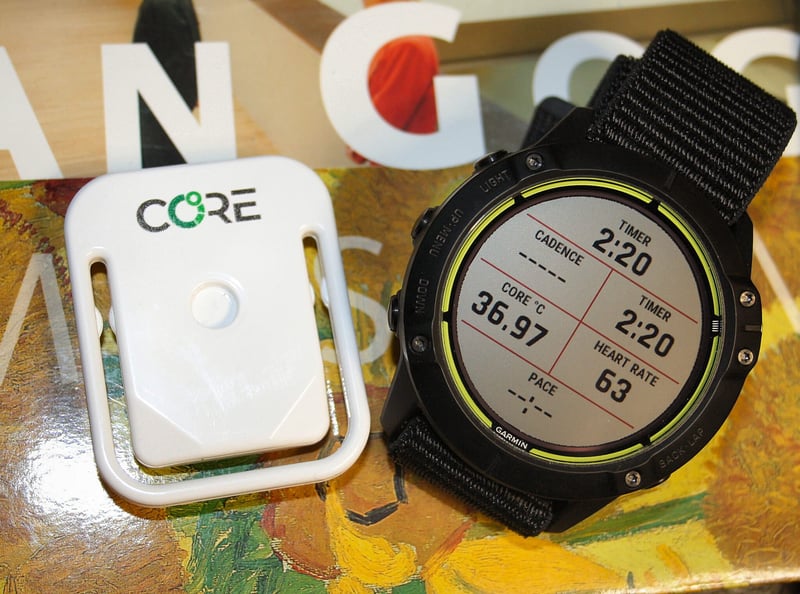
CORE Body Temp adds dynamic temperature training zones
Update: New Core 2 Review, a detailed look is now live
CORE’s Heat Zones are an essential tool for understanding the impact of heat stress on an athlete’s body and optimising performance in various temperature conditions. These zones are based on CORE’s Heat Strain index (above) a scale that ranges from 0 (no heat strain) to 10 (extremely high heat strain), indicating the intensity of the body’s efforts to maintain a healthy core temperature.
The Heat Strain Index indicates how hard an athlete’s body is working to stay cool and prevent performance losses during training and competition. By understanding the Heat Strain Index, athletes and coaches can make informed decisions regarding training and racing in different heat environments.
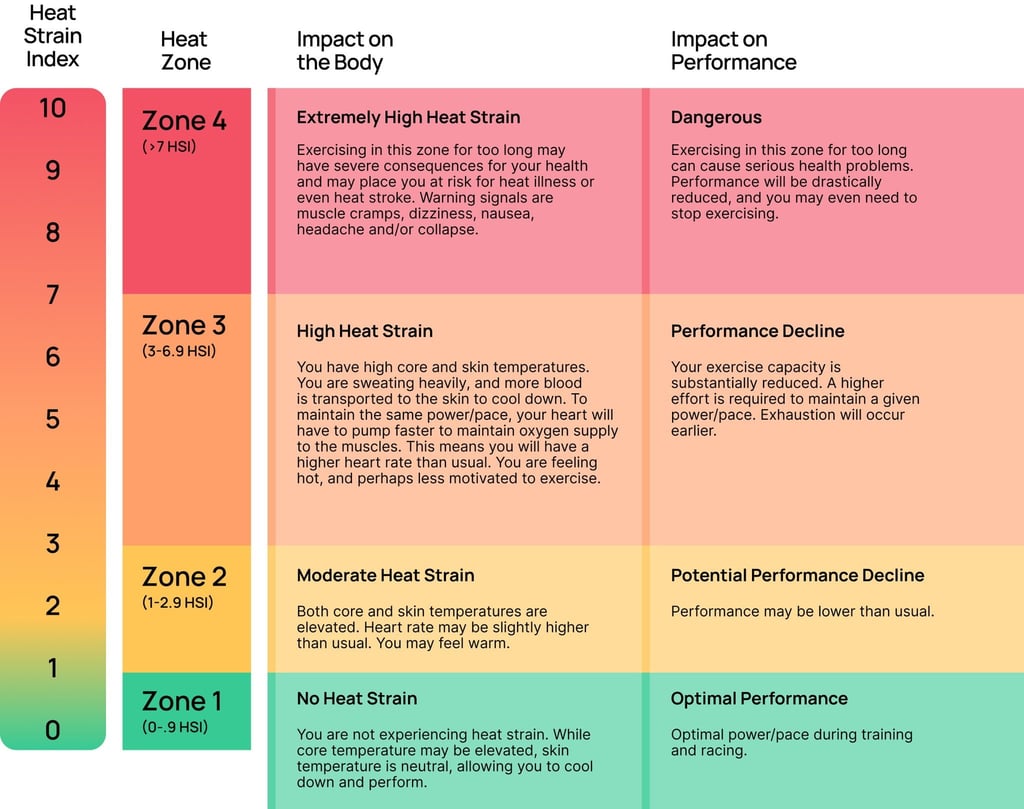
GreenTEG CORE‘s 4 Heat Zones offer guidance for training and racing based on the Heat Strain Index. These zones help athletes adapt to heat stress and prevent performance losses in various heat conditions.
More: Core Review
Heat Zone 3 presents a unique challenge for athletes with high heart rates and discomfort. However, despite its drawbacks, Heat Zone 3 is an ideal environment for heat training. Training in this zone leads to quicker and more effective adaptation than Zone 2, allowing athletes better to withstand the rigours of competition in hot environments.
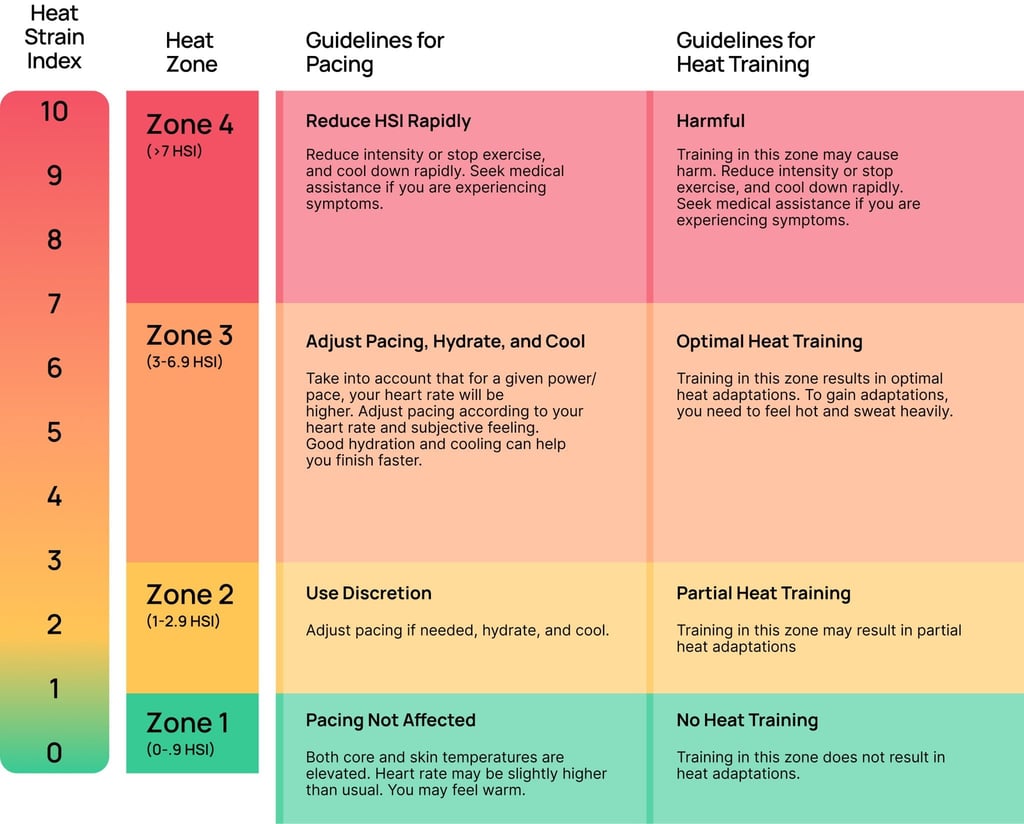
Despite this there are individual differences in thermoregulation and performance losses can significantly impact an athlete’s experience in each Heat Zone. Factors such as heat adaptation status, fitness level, height, weight, body composition, sex, and age all contribute to variations in Heat Strain Index values across individuals. These personal traits influence an athlete’s ability to adapt to heat stress and may require adjustments to training and racing strategies to ensure optimal performance.
Take Out
CORE’s Heat Zones are an interesting resource for athletes and coaches seeking to optimize performance in various heat conditions. By understanding the Heat Strain Index and the unique challenges and benefits of each Heat Zone, athletes can make informed decisions regarding training and competition.
References
- Alkemade P. Mitigation of heat strain during exercise in hot-humid conditions: One size does not fit all. 2023. 236 p. https://doi.org/10.5463/thesis.263
- Casa DJ, DeMartini JK, Bergeron MF, et al. National Athletic Trainers’ Association position statement: exertional heat illnesses. J Athl Train. 2015;50(9):986–1000. https://doi.org/10.4085/1062-6050-50.9.07.
- Foster J, Hodder SG, Lloyd AB, Havenith G. Individual responses to heat stress: Implications for hyperthermia and physical work capacity. Front Physiol. 2020; 11:541483. https://doi.org/10.3389/fphys.2020.541483.
- Nybo L, Rasmussen P, Sawka MN. Performance in the heat – physiological factors of importance for hyperthermia-induced fatigue. Compr Physiol. 2014;4(2):657–89. https://doi.org/10.1002/cphy.c130012.
- Périard JD, Racinais S, Sawka MN. Adaptations and mechanisms of human heat acclimation: Applications for competitive athletes and sports. Scand J Med Sci Sports. 2015;25(1):20–38. https://doi.org/10.1111/sms.12408.
- Périard JD, Eijsvogels TMH, Daanen HAM. Exercise under heat stress: thermoregulation, hydration, performance implications, and mitigation strategies. Physiol Rev. 2021;101(4):1873–979. https://doi.org/10.1152/physrev.00038.2020.
Last Updated on 28 January 2026 by the5krunner
Reader-Powered Content

This content is not sponsored. It’s mostly me behind the labour of love, which is this site, and I appreciate everyone who supports it.
Support the site: Follow (free, fewer ads) · Subscribe (paid, ad-free) · Buy Me A Coffee ❤️
All articles are written by real people, fact-checked, and verified for originality. See the Editorial Policy. FTC: Affiliate Disclosure — some links pay commission. As an Amazon Associate, I earn from qualifying purchases.
tfk is the founder and author of the5krunner, an independent endurance sports technology publication. With 20 years of hands-on testing of GPS watches and wearables, and competing in triathlons at an international age-group level, tfk provides in-depth expert analysis of fitness technology for serious athletes and endurance sport competitors.
