Apple AirTag 2 – All You Need to Know
It’s a range and usability upgrade.
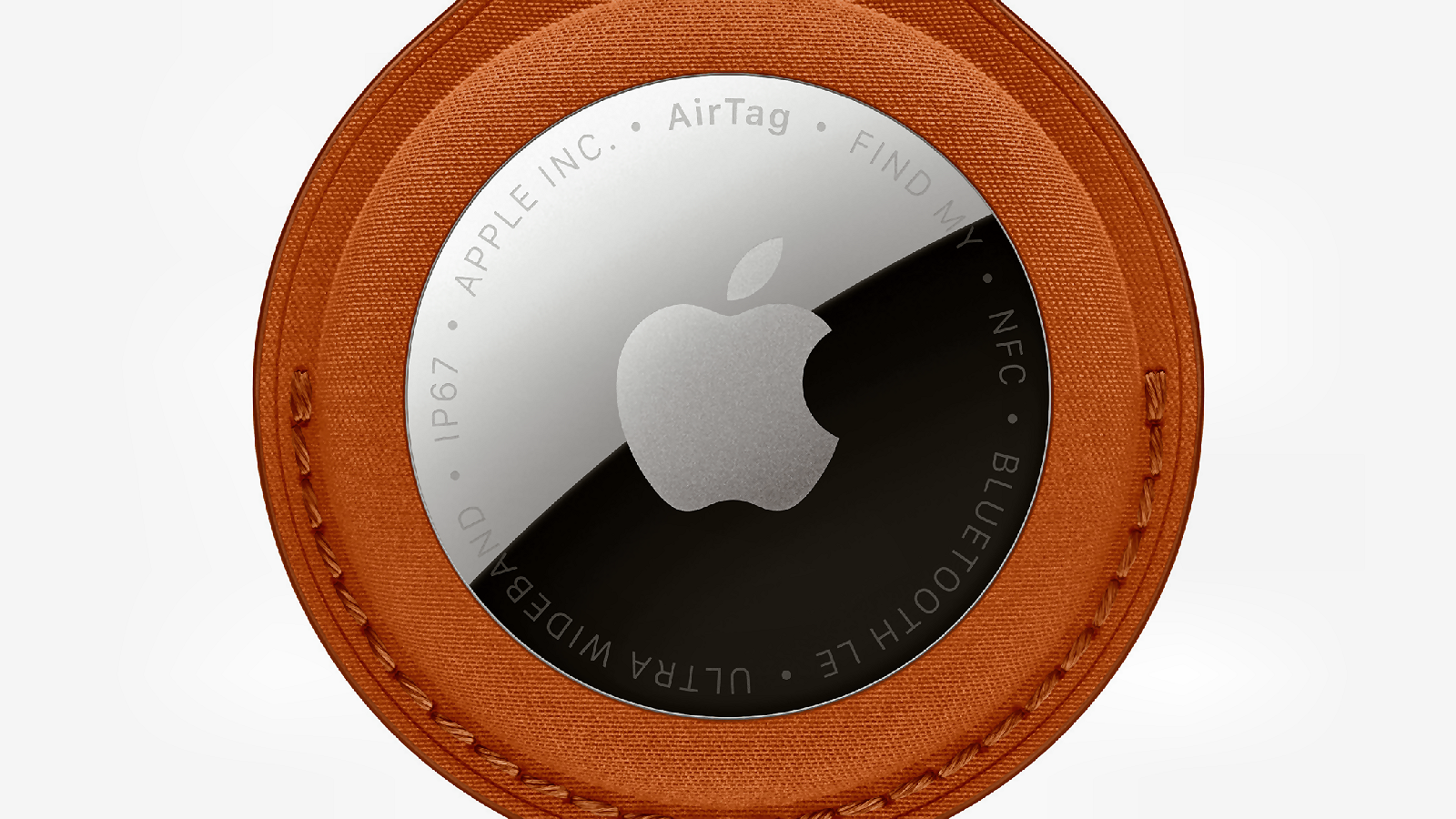
Apple has officially announced AirTag (2nd generation) on 26 January 2026, which focuses on longer-range Precision Finding, improved audibility, and deeper Apple Watch integration. Everything else remains the same – physical design, accessories, and price.
This article covers everything that’s new about the new AirTag (it’s not officially called AirTag 2), what hasn’t changed, the real-world implications, compatibility, airline support, and how it compares to the original. Let’s dive in…
What’s New
There are three headline improvements:
Expanded Precision Finding – A new second-generation UWB chip improves ranging and angle measurements, extending usable Precision Finding from around 15 m (50 ft) to up to roughly 60 m (200 ft).
Enhanced Audio Performance – A new internal speaker increases output by around 50%, effectively doubling the audible distance.
Improved Connectivity & Apple Watch Support – New Bluetooth hardware improves long-range Find My detection, while the new UWB chip enables Precision Finding on Apple Watch for the first time.
Real-World Use
The upgraded Ultra Wideband chip claims to give faster signal lock-on across large indoor spaces like airports and offices, maintaining better connectivity through walls and floors. Outdoors, the directional guidance will work much better over big areas like car parks, where the first generation often struggled. Vertical tracking (floor-to-floor) should also be noticeably improved.
Apple hasn’t disclosed technical details, such as reporting intervals, but the new AirTag should switch modes more quickly between general and precise tracking.
New Precision Finding on Apple Watch
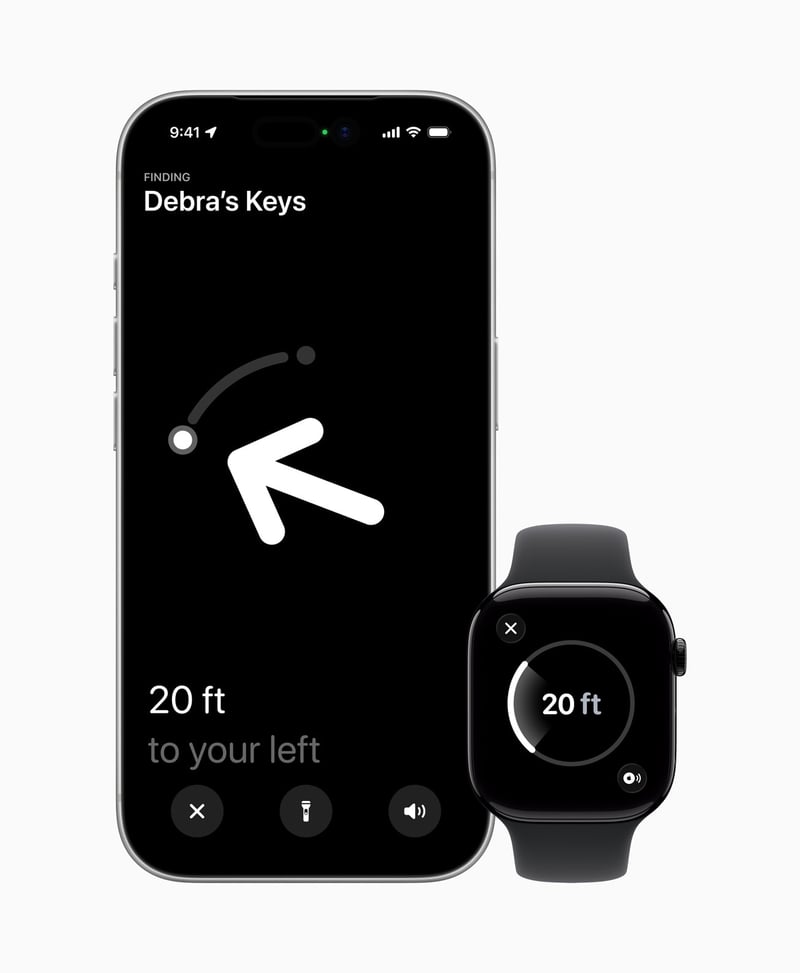
AirTag 2 introduces native Precision Finding on Apple Watch Series 9, Watch Ultra 2, and newer models running watchOS 12. This works independently of your iPhone to find devices or items. If you’ve used Precision Finding before on an iPhone, you’ll be familiar with the directional arrows, distance readouts, and haptic feedback on the Watch.
You’ll experience some limitations with the smaller form factor in practical use:
- A smaller screen means less visual context than the iPhone
- Slightly reduced usable range compared to the iPhone
- Increased battery usage during active tracking sessions
![Apple-AirTag-Find-My-Precision-Finding-02_inline.jpg.large_2x[1]](https://imagedelivery.net/_jGo7Cp8DLHLbI9FzBn6-Q/the5krunner.com/2026/01/Apple-AirTag-Find-My-Precision-Finding-02_inline.jpg.large_2x1.jpg/w=800,h=974)
The Find My Network & Connectivity
AirTag 2 continues to rely on Apple’s crowd-sourced Find My network, using encrypted Bluetooth signals (not GPS, cellular, or radio) detected by nearby Apple devices.
Network performance improvements include more reliable Bluetooth detection and faster handoffs to the next device. Together ,these will improve performance in dense urban environments with many candidate devices to link with.
Security & Anti-Stalking Protections
The previous generation had several software improvements for anti-stalking measures, but there were hardware workarounds involving tampering. These have now become more difficult – for example, you can’t disable the speaker anymore.
The following are also improved:
- More frequent rotation of Bluetooth identifiers, which stops independent tracking of a specific device once known (as the device ID changes)
- Faster alerts for unknown AirTags travelling with you

Airline Support
The existing Share Item Location feature continues and is supported by over 50 airlines once you share your time-limited link: Aer Lingus, Air Canada, Air France, Air India, Air New Zealand, American Airlines, Austrian Airlines, British Airways, Brussels Airlines, Cathay Pacific, China Airlines, Delta, Eurowings, Finnair, Iberia, KLM, Lufthansa, Qantas, Qatar Airways, Singapore Airlines, Swiss, Turkish Airlines, United, Virgin Atlantic, and others.
Sustainability
- Enclosure made from 85% recycled plastic
- Internal components use 100% recycled gold plating and rare-earth elements
- Packaging remains fibre-based and plastic-free
Specifications Comparison
| Feature | AirTag (1st Gen, 2021) | AirTag (2nd Gen, 2026) |
|---|---|---|
| Wireless Chip | Apple U1 (UWB) | 2nd-gen UWB |
| Precision Finding | ~15 m / 50 ft | ~60 m / 200 ft |
| Speaker Volume | Standard | 50% louder |
| Audio Range | Standard | Up to 2× farther |
| Battery | CR2032 | CR2032 |
| Battery Life | ~1 year | ~1 year |
| Durability | IP67 | IP67 |
| Dimensions | 31.9 × 8.0 mm | 31.9 × 8.0 mm |
| Weight | 11 g | 11 g |
| OS Requirement | iOS 14.5+ | iOS 26+ |
| Price (US) | $29 / $99 | $29 / $99 |
The Competition
- Tile Pro: Longer Bluetooth range, but smaller network
- Samsung SmartTag2: UWB-enabled but Galaxy-only
- Chipolo ONE Point: Cheaper, but weaker anti-stalking features
AirTags are simply the best choice due to network size, privacy safeguards, and UWB precision. Of course, you’ll need an Apple iPhone (and Watch for the new features).
Bottom Line
This is a modest but meaningful upgrade that uses capabilities introduced in more recent Apple products. Specifically, it’s a range and usability upgrade.
The extended Precision Finding distance, louder speaker, and Apple Watch support make it an even more practical tool for Apple owners. Apple’s attention to privacy and the size of its ecosystem are significant bonuses.
Last Updated on 31 January 2026 by the5krunner
Reader-Powered Content

This content is not sponsored. It’s mostly me behind the labour of love, which is this site, and I appreciate everyone who supports it.
Support the site: Follow (free, fewer ads) · Subscribe (paid, ad-free) · Buy Me A Coffee ❤️
All articles are written by real people, fact-checked, and verified for originality. See the Editorial Policy. FTC: Affiliate Disclosure — some links pay commission. As an Amazon Associate, I earn from qualifying purchases.
tfk is the founder and author of the5krunner, an independent endurance sports technology publication. With 20 years of hands-on testing of GPS watches and wearables, and competing in triathlons at an international age-group level, tfk provides in-depth expert analysis of fitness technology for serious athletes and endurance sport competitors.
