Garmin Non-Invasive Blood Glucose Tracking Patent Revealed (2026)
Garmin just dropped another big hint that non-invasive glucose tracking is coming to its wearables, possibly in its next-generation Elevate 6 sensor. The catch is that any new non-invasive blood sugar metric like this will focus on long-term blood sugar trends not real-time spikes.
The patent, filed this week, describes a non-invasive method for estimating glycated hemoglobin (HbA1c) — the same long-term blood sugar metric your doctor uses — using only the optical sensors already built into Garmin watches.
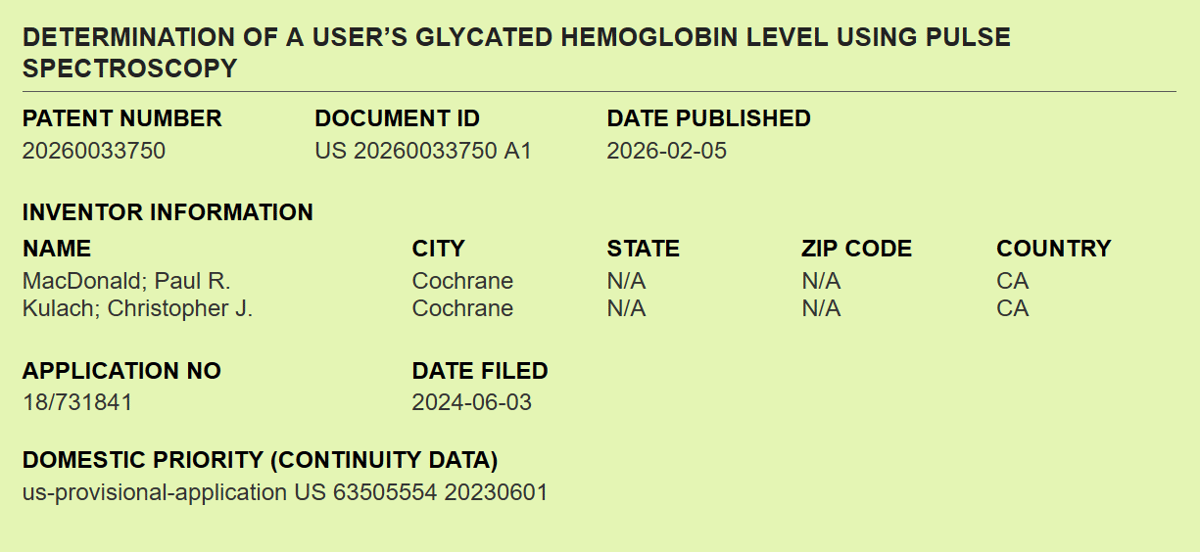
Patent: US 20260033750 A1 — “Determination of a User’s Glycated Hemoglobin Level Using Pulse Spectroscopy”
Published: February 5, 2026
Inventors: Paul R. MacDonald & Christopher J. Kulach (Garmin Canada)
This is genuinely a wellness feature for people managing diabetes, prediabetes, or anyone wanting to track long-term metabolic health — not a real-time glucose monitor for athletes tracking workout fuelling.
How This Differs from Last Year’s Patent
You might remember I covered Garmin’s first glucose-related patent last year, which focused on pressure compensation for pulse spectrometry. This new patent is different and covers the measurement method for HbA1c using pulse spectroscopy, not just the sensor compensation.
What AC/DC Measurements Actually Are (Quick Recap)
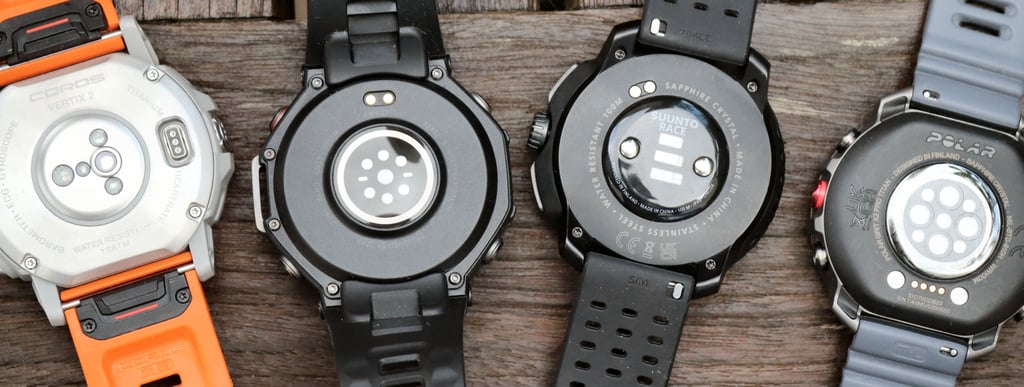
In every Garmin optical HR sensor using PPG (photoplethysmography) whether it measures heart rate, SpO2, or now potentially HbA1c — the light signal has two confusingly-named components:
- AC (Alternating Current) – the small, pulsing part that changes with every heartbeat as blood volume surges through your arteries
- DC (Direct Current) – the large, steady baseline from everything else: skin thickness, tissue density, and average blood volume
The watch calculates the AC/DC ratio for each wavelength to cancel out individual differences like skin tone, wrist size, and how snugly you’re wearing the watch. It’s the same fundamental approach Garmin has used for years in heart rate and SpO2 monitoring — just applied to glycated hemoglobin rather than normal hemoglobin.
How the Patent Works
The watch shines light at three different wavelengths into your wrist. It measures the reflected PPG signals, calculates the AC/DC ratio for each wavelength, then uses stored absorption constants for deoxyhemoglobin, oxyhemoglobin, and glycated hemoglobin to solve a set of simultaneous equations.
The result: an estimate of HbA1c (%) = volume of glycated hemoglobin ÷ total hemoglobin.
As a bonus, you also get more accurate SpO₂ measurements from the same sensor readings.
The patent specifically notes that HbA1c changes slowly over time, so the watch would update it weekly or monthly as a trend rather than constantly — which makes perfect sense for trend tracking metabolic health.
Why This Matters — Especially for Diabetes & Prediabetes
HbA1c is the gold-standard number doctors use to assess your average blood glucose over the previous 2–3 months. Until now, the only way to get it has been invasively – i.e. with a lab blood test or home finger-prick device.
If Garmin can make this work accurately, you could see your HbA1c trend directly in Garmin Connect. This would be perfect for:
- People managing type 2 diabetes or prediabetes who want regular feedback on how diet, exercise, sleep, and stress are affecting their long-term glucose control
- Anyone trying to stay below 5.7% (the prediabetes threshold) or keep it under 7% (a common diabetes management target)
- Early warning if your metabolic health is drifting before it shows up in your next lab test
This is not designed for seeing what your blood sugar did after a meal or during a workout — that’s still continuous glucose monitor (CGM) territory.
Technical Details from the Patent
- Optimal wavelength combinations: roughly 620–650 nm (red), 650–700 nm (deep red), and 760–1000 nm (near-infrared)
- Best measurement conditions: during sleep or low-motion periods when signal quality is highest
- Future expandability: can be extended to measure other abnormal hemoglobins (carboxyhemoglobin, methemoglobin) with additional wavelengths
Timeline & Reality Check
This is Garmin’s second major glucose-related patent in under two years (following last year’s pressure compensation patent). Garmin has a solid track record of turning patent ideas into shipped features — think Elevate sensor generations 4 and 5, ECG, and other health metrics.
However, there’s a crucial caveat the patent itself acknowledges: this would need FDA approval for any health claims. The processing element determines HbA1c levels that could help diagnose or monitor diabetes, which puts it squarely in medical device territory unless Garmin can finesse how the metrics are described and displayed.
If the measurements can be validated, non-invasive HbA1c tracking could realistically appear in a Fenix 9 or Venu 5 within a year— assuming an approach was found that avoided FDA clearance. For Clearance for a medical-grade product would take longer.
Sources:
US 20260033750 A1 – USPTO PDF Download
Last Updated on 16 March 2026 by the5krunner
Reader-Powered Content

This content is not sponsored. It’s mostly me behind the labour of love, which is this site, and I appreciate everyone who supports it.
Support the site: Follow (free, fewer ads) · Subscribe (paid, ad-free) · Buy Me A Coffee ❤️
All articles are written by real people, fact-checked, and verified for originality. See the Editorial Policy. FTC: Affiliate Disclosure — some links pay commission. As an Amazon Associate, I earn from qualifying purchases.

tfk is the founder and author of the5krunner, an independent endurance sports technology publication. With 20 years of hands-on testing of GPS watches and wearables, and competing in triathlons at an international age-group level, tfk provides in-depth expert analysis of fitness technology for serious athletes and endurance sport competitors.
