Why your dual-band GPS watch is about to be outperformed by quad-band GNSS
I have a tri-band (tri-frequency) GPS sports watch on my wrist now. Quad-band is on the way, too.
For most of the past decade, strapping a GPS watch to your wrist meant accepting a familiar trade-off: good positional accuracy in open terrain, unreliable readings beneath tree canopy or between tall buildings, and a battery that drained faster whenever the satellite fix was poor. Dual-band watches — devices that receive signals on two radio frequencies simultaneously — improved on that picture. Sub-metre precision in a wearable is now moving from laboratory specification to commercial reality.
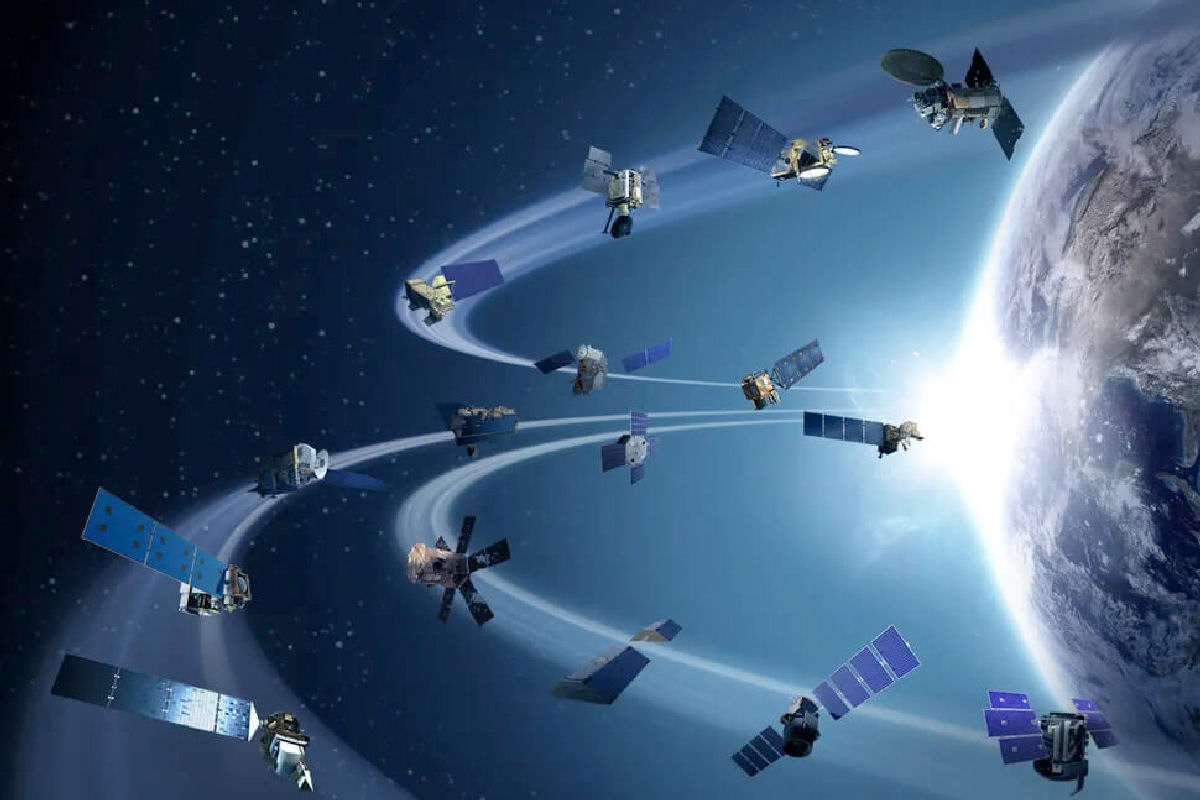
The shift is being driven by a new generation of ultra-low-power tech capable of processing three or four GNSS frequency bands simultaneously. For runners, cyclists, hikers, and anyone whose health data depends on precise distance and pace, the implications are substantial.
A note on terminology
Satellite navigation systems broadcast on multiple radio frequencies. A single-band receiver captures only one frequency — typically L1 or E1, the legacy civilian signal — from whichever constellation it supports. A dual-band receiver adds a second frequency, usually L5 or E5a, which travels through the ionosphere differently, allowing the chip to model and largely cancel the atmospheric distortion that is the dominant source of positioning error.
Tri-band extends that principle to three frequencies. Quad-band adds a fourth: most consequentially, the Galileo E6 signal, which carries the High Accuracy Service (HAS): free correction data broadcast directly from the satellite constellation, eliminating the need for a ground-based correction network. The practical result is real-time, centimetre-level positioning without a data connection.
How the technology evolved
Wrist-based positioning technology has radically improved in two decades – smaller, more power-efficient and more accurate.
- Early 2000s: First consumer GPS watches — single-band, single-constellation (GPS L1 only). Accuracy: 4–8 m ideal; much worse in urban canyons or forests.
- 2010s: Added GLONASS, then Galileo and BeiDou. More satellites improved availability and DOP, but the single-frequency ionospheric delay remains unsolved.
- 2020–2025: Dual-frequency (L1+L5 / E1+E5a) chipsets became low-power enough for wearables. Errors dropped from 3–5 m to 1–2 m. Garmin introduced SatIQ (dual-frequency only when needed).
- 2026: Huawei Watch GT Runner 2 launched — first production smartwatch with tri-frequency GNSS (BeiDou B1I+B1C+B2a, where available, dual-band fallback). First to ship true three-frequency positioning.
- 2027–2028: Tri-band expected to become standard in premium watches as costs fall. Quad-band (adding E6 for Galileo HAS) projected for 2028, limited mainly by power budget.
Fun Fact: The NovAtel CPT7 — a professional survey receiver drawing up to 18 watts — already tracks eight distinct GNSS frequency bands (L1/E1/B1, L2/B2, L5/E5a/B2a, E5b/B2b, E5 AltBOC, plus GLONASS L1/L2/L3 and NavIC L5) across seven constellations without E6. Huawei used a backpack-mounted CPT7 as its gold-standard reference during in-house testing of the Watch GT Runner 2.
The chipmakers are driving the transition.
Four semiconductor companies are bringing multi-band GNSS to wearables at acceptable power and size levels.
- Synaptics produces the SYN4778, a dual-band L1/L5 chip designed specifically for wearables (Garmin) and hearables. The company claims a 50 per cent improvement in positioning accuracy over single-band predecessors. It highlights its multipath mitigation architecture, which identifies and discards reflected signals — the principal cause of error in urban environments — before they corrupt the position fix. Author note: Over the last 1-2 years, my extensive testing of dual-frequency chips for smartwatches has shown this to be untrue. Accuracy is certainly improved, but reflected signals are not eliminated.
- Sony Semiconductor supplies the CXD5610 series, which has established itself in the IoT and wearable segment, partly on the strength of its power consumption figure: 9 milliwatts in continuous tracking mode. At that level, a modest battery can sustain GPS recording for a full ultramarathon. The CXD5610 supports dual-band L1/L5 across multiple constellations simultaneously.
- Airoha Technology, a subsidiary of MediaTek, offers the AG3335 and AG3365 series. These chips target fitness wearables with sub-1.5-metre accuracy specifications and dual-band L1/L5 support, while remaining competitive on die size — a critical constraint in thin-profile watch designs.
- u-blox addresses two distinct markets. The UBX-M10150-CC, introduced in 2024, is the company’s smallest and most power-efficient wearable chip, aimed at mainstream fitness devices. At the professional end, the ZED-X20P platform supports all GNSS bands, including E6, delivering centimetre-level accuracy. The ZED-X20P targets automotive and survey applications today; its significance for wearables lies in the technology roadmap it represents. When that silicon shrinks to wearable form factors — and the trajectory suggests it will within three to four years — consumer devices will inherit professional-grade accuracy.
Qualcomm and Broadcom are also active in the space. Qualcomm’s Snapdragon Wear platform incorporates advanced GNSS processing and is present in a broad range of Android-based smartwatches. Broadcom supplies low-power L1/L5 chips to several watch manufacturers. Neither company has publicly detailed a tri-band wearable roadmap, but the segment’s competitive dynamics make their engagement with the next frequency tier inevitable.
Why do more bands produce better results?
Satellite signals that bounce off buildings or bend through the atmosphere travel a longer path than a direct signal and arrive later. On a single frequency, the chip cannot tell the difference. Across two or more frequencies, the delay is identifiable — the chip discards the corrupted signal and computes position from others.
Tri-band provides the chip with more cross-checks per satellite, enabling it to identify and discard corrupted signals with greater confidence. Quad-band adds the Galileo E6 frequency, which carries the Galileo High Accuracy Service — precise corrections broadcast directly from the satellites, achieving real-time accuracy below 20 centimetres without a data connection.
The claimed accuracy improvements across generations are substantial. Single-band receivers in challenging conditions regularly produce errors of five to fifteen metres. Dual-band reduces that to one to three metres. Tri-band has demonstrated sub-50-centimetre performance in testing environments. Quad-band with HAS corrections pushes below 20 centimetres.
Where the market stands today
Dual-band is now the established standard at the premium end of the fitness watch market. Garmin, Polar, Apple, and Coros have all shipped L1/L5 devices in the £400-and-above segment. The technology is mature and proven.
Tri-band remains confined to a single commercial product — the Huawei Watch GT Runner 2 — though the availability of capable silicon from multiple vendors suggests this will change within 12 to 18 months. The power and size requirements for tri-band are similar to those for dual-band; the barriers are the product development cycle time and the commercial risk of being early to market.
Quad-band faces a more significant constraint: processing the E6 signal is power-hungry. Nevertheless, the ZED-X20P demonstrates that the engineering capability exists; the remaining challenge is fitting it within acceptable power constraints on the wrist. That engineering problem will occupy the latter half of this decade.
The outlook for athletes and adventurers
The transition from dual-band to tri-band will likely follow the same pattern as the earlier shift from single-constellation to multi-constellation: a 12-to-18-month period of premium exclusivity, followed by rapid adoption across mid-range and mainstream devices as chipset prices fall with volume.
Tri-band devices should be available from multiple manufacturers by late 2027 at the latest. Quad-band — with full Galileo HAS support and sub-20-centimetre accuracy — is a more distant prospect, most probably arriving in premium products in 2028 and reaching wider availability thereafter.
What this means for anyone considering a watch purchase today is straightforward. A dual-frequency (dual-band) device bought now will deliver genuinely good positional performance. It will not, however, produce gold-standard results. Watches arriving within two to three years will outperform today’s GPS tech in every demanding scenario — urban runs, trail navigation, multipath-heavy training environments — there will be a visible improvement. And yes, we heard the same claim for dual-frequency two years ago, but this time the improvements will deliver the accuracy any runner or cyclist ever needs.
The satellite navigation infrastructure that enables this precision already exists. The signals are in the sky. The bottleneck is the receiver on your wrist. The market has to catch up.
Last Updated on 6 March 2026 by the5krunner
Reader-Powered Content

This content is not sponsored. It’s mostly me behind the labour of love, which is this site, and I appreciate everyone who supports it.
Support the site: Follow (free, fewer ads) · Subscribe (paid, ad-free) · Buy Me A Coffee ❤️
All articles are written by real people, fact-checked, and verified for originality. See the Editorial Policy. FTC: Affiliate Disclosure — some links pay commission. As an Amazon Associate, I earn from qualifying purchases.
tfk is the founder and author of the5krunner, an independent endurance sports technology publication. With 20 years of hands-on testing of GPS watches and wearables, and competing in triathlons at an international age-group level, tfk provides in-depth expert analysis of fitness technology for serious athletes and endurance sport competitors.

Will be great for sprinting!
yep, keep looking at your watch in that dash!! 😉
maybe that is more what 5hz recording should be for but even then , 5hz doesn’t address accuracy/precision