Hiring a bike for the Mallorca 312 was a false economy.
A week in Alcúdia at the back end of April. Perfect weather, dry roads, the beauty of Sa Calobra's switchbacks, Cap Formentor out to the lighthouse, and the Mallorca 312 itself as the weekend centrepiece. The riding was everything Mallorca promises in late spring.
On test across the four days: the Garmin Forerunner 970, the Apple Watch Ultra 3, the Wahoo Elemnt Roam v3, the Garmin HRM 600, and a Huawei Watch Fit 5 Pro that was pre-release at the time and has since launched. The pedals were my own Favero Assioma RS, taken in the hold.
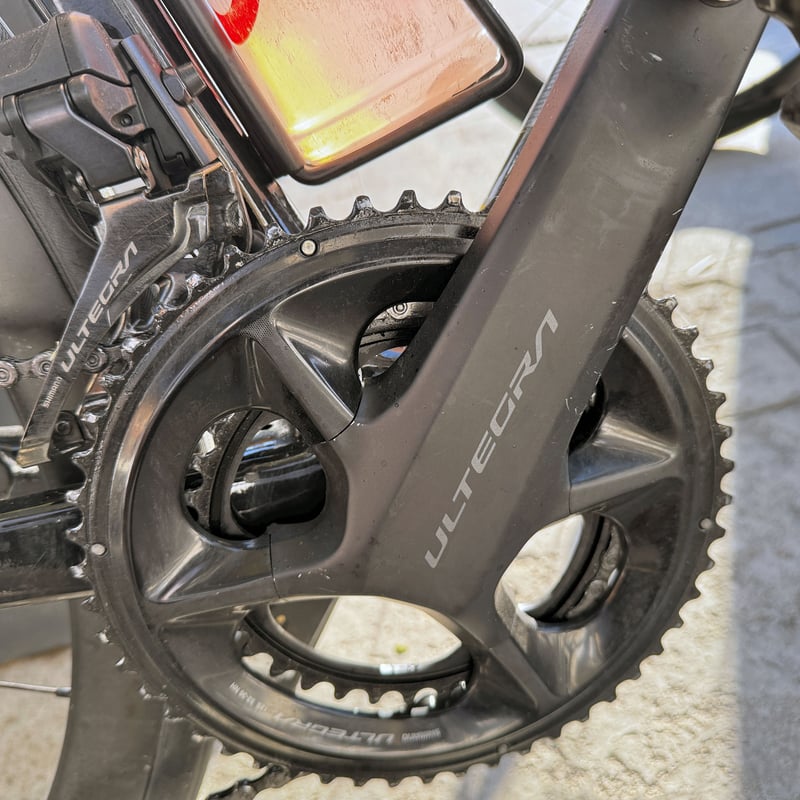
After a bike re-assembly nightmare in the South of France in late 2025, I went for a bike hire from Arrivo Cycling: a Giant TCR Advanced with Ultegra Di2 12-speed, Giant 36mm hookless wheels and Cadex Race 25 tubeless tyres. Not a perfect spec or as good as my home bike, but good enough.
More: Event organiser site
About the Mallorca 312
The Mallorca 312 is the island's headline gran fondo, run on the last weekend of April from a base in Alcúdia. There are three distance options on the day: a 312 km long route with roughly 4,600 m of climbing, a 225 km mid-distance, and a 167 km short route. The full 312 takes in the major climbs of the Serra de Tramuntana on the way out, with a flatter inland run skimming the mountain ridge's edge and back to Alcúdia in the easier final third.
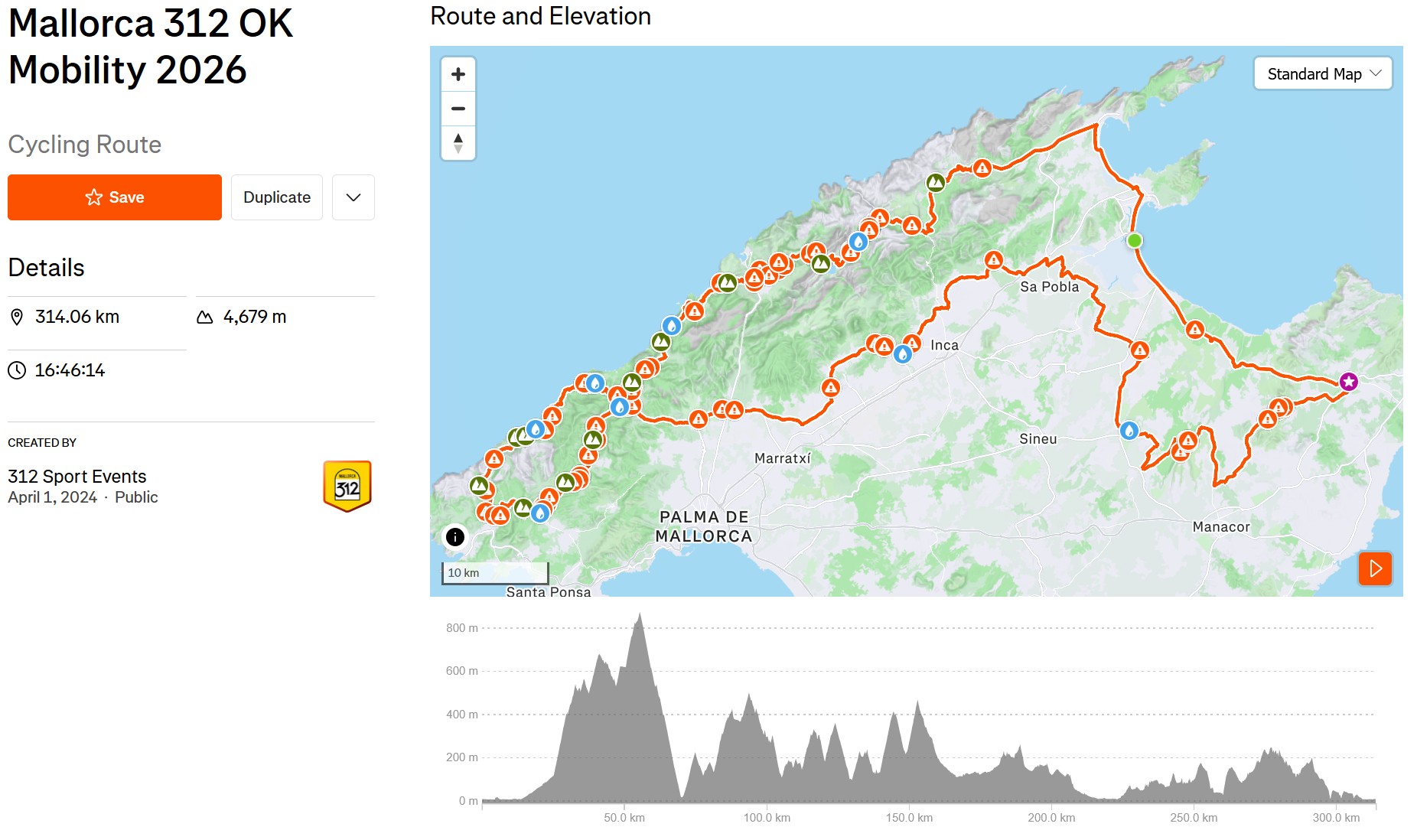
Entry is competitive; it's a massive event with thousands of riders. The practical route for most non-resident riders is a package deal with an operator that holds reserved entries, which also tends to include a place in the pens that start first. The pen position matters more than most first-timers expect: a back-of-pack start adds 10-20 minutes of close-packed slow rolling before the bunch breaks up on the early climbs. There are non-trivial cut-off times to work with.
Takeaway: book through a package operator with reserved entries to secure both the place and a useful start pen. Get to the pen earlier than you think.
Sa Calobra and Cap Formentor
These rides were awesome. Both delivered the version of Mallorca that pulls cyclists here in the first place. Don't just come for the 312. Do these too.
Cap Formentor on Monday 27 April to the far North-East of the island, was 63 km from Alcúdia out to the lighthouse and back, with 922 m of climbing, in sunny weather that heated up through the morning.
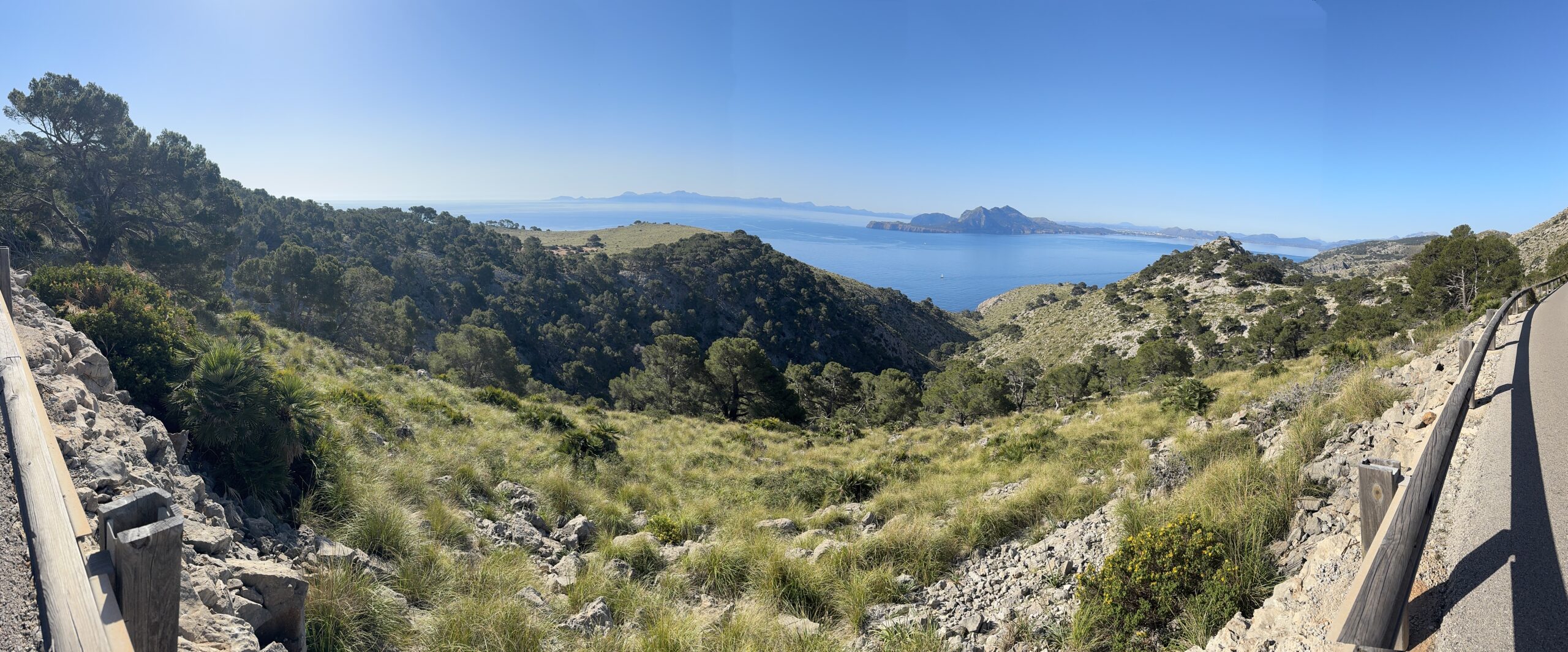
Coll de sa Creueta and the final ramp up to the lighthouse are the named climbs. The road was open, cyclists abounded, the tourists were thin at the early hour, and the descent back to Port de Pollença was great until we hit, not literally, a gaggle of buses struggling to take each bend in one go. Get there early. Get back early.
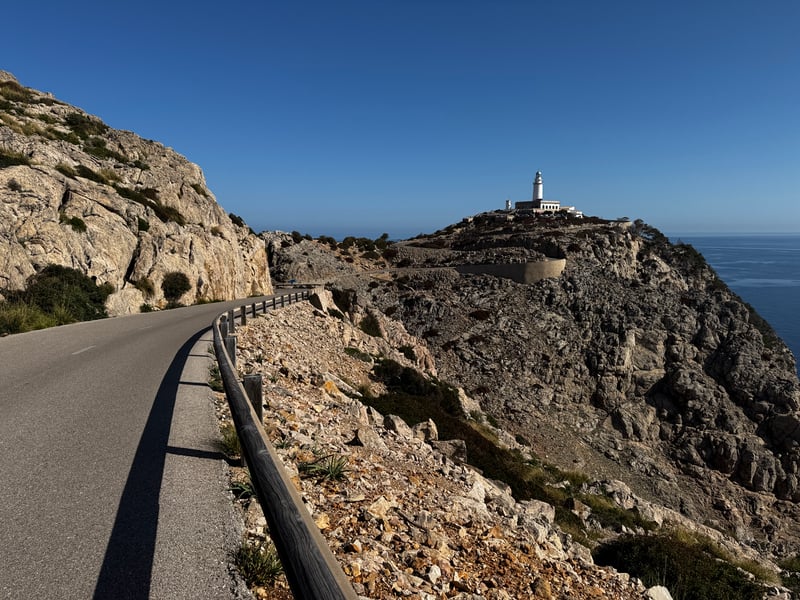
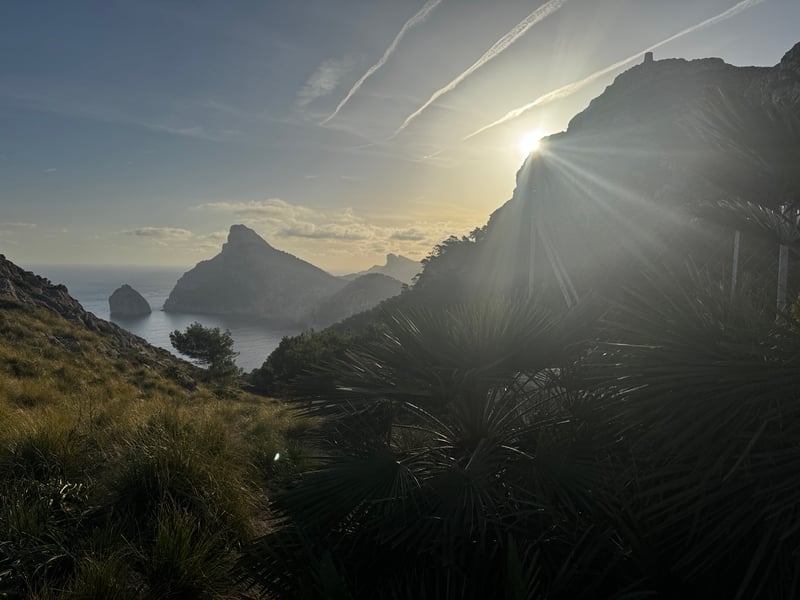
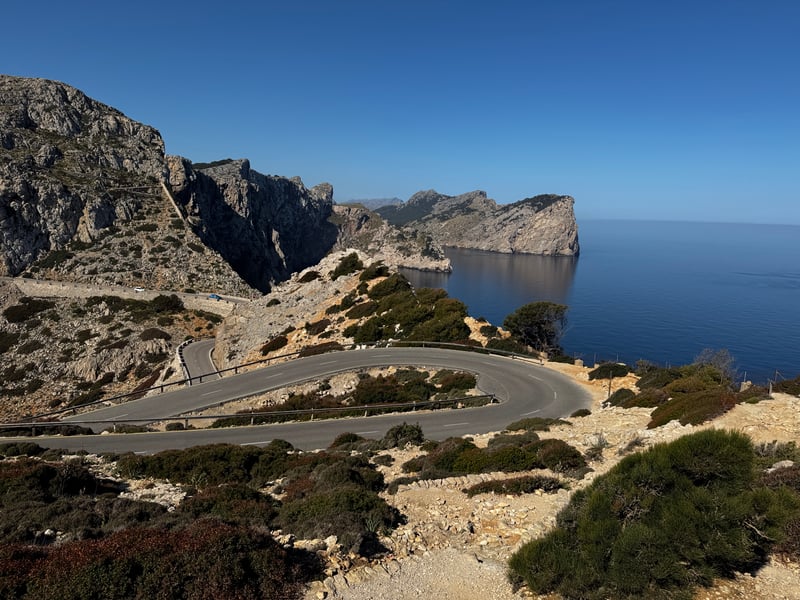
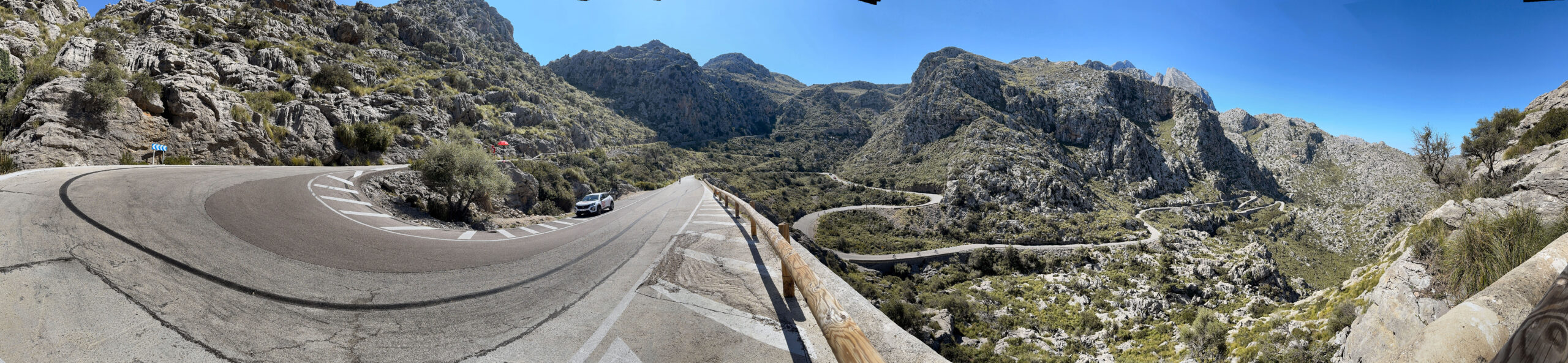
Sa Calobra on Tuesday, 28 April, was a 117 km round-trip ride from Alcúdia with 2,145 m of climbing, taking in the descent down to the port and the climb back up to Coll de sa Batalla. The climb from Sa Calobra back to Coll de sa Batalla is the famous one: ten kilometres at roughly seven per cent, with multiple switchbacks above the road. It is worth the trip by itself. Spectacular. One of my all-time cycling highlights, and the best part of this trip.
Tip: UK cyclists who have never been to Europe will likely be daunted by the distance of these types of climbs, including those in the Alps. Generally, the good roads and consistently moderate inclines make them far more doable than you might think. Sa Calobra is not easy, but you can do it.
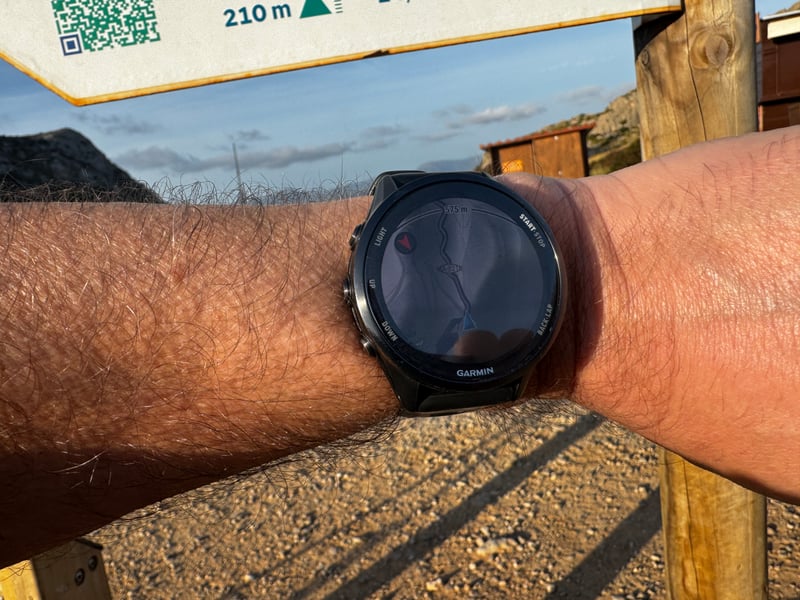
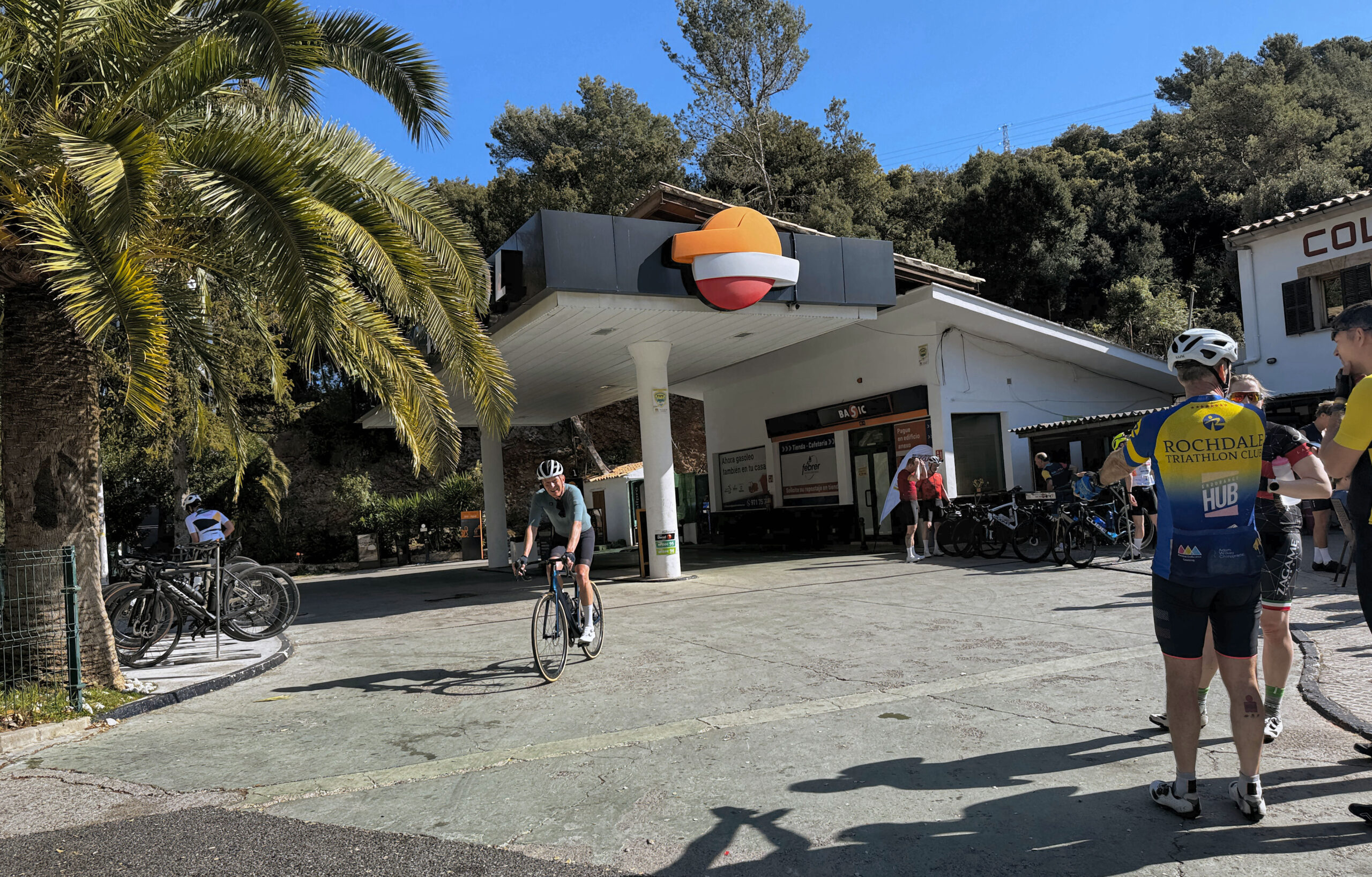
The Cap Formentor day delivered an enjoyable distraction for this article. The Garmin Forerunner 970 on the wrist and the Wahoo Elemnt Roam v3 on the bars recorded the same ride and produced different headline numbers. Garmin: 63.06 km, 922 m climbed, 81.1 km/h max speed. Wahoo: 61.38 km, 911 m climbed, 52.5 km/h max speed. The 1.68 km distance gap is non-trivial. There was also a 27-minute moving-time gap, which suggests I may have paused the Wahoo at the famous Repsol garage - possibly the poshest garage in the world and a great cycling hub serving several excellent cycling routes.
The max-speed gap of 28.6 km/h on the descent is most likely a GPS artefact on the Garmin; I wasn't going fast on this ride.
Takeaway: ride both climbs early, before the coaches arrive. The Garmin-Wahoo data gap on the same ride is the kind of thing to factor in when choosing a recording device; a dedicated bike computer is simply better all around. Good numbers. Always visible.
The hire bike
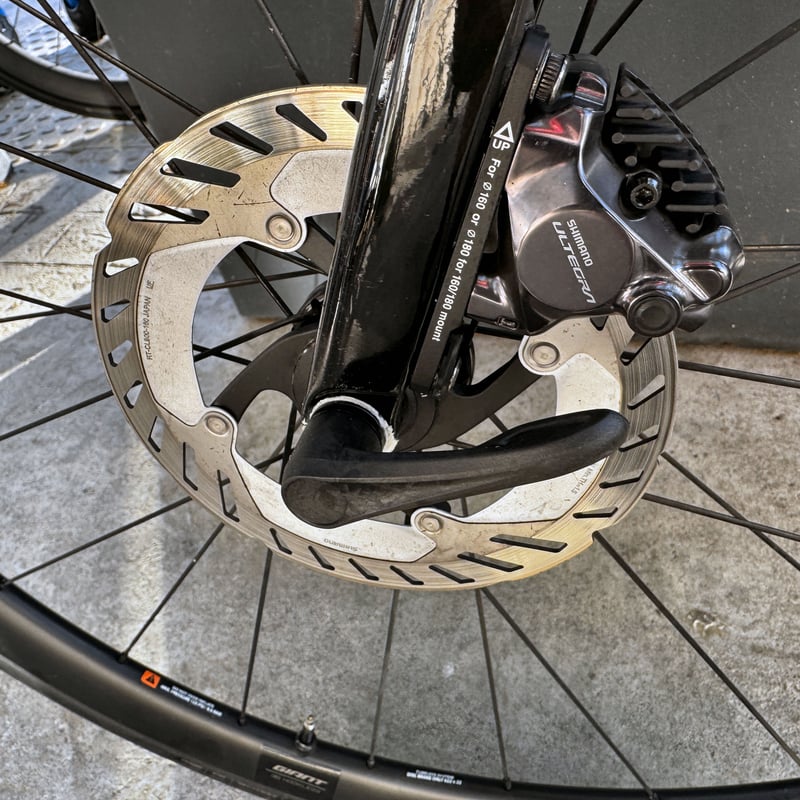
Arrivo Cycling in Alcúdia supplied a Giant TCR Advanced with Ultegra Di2 12-speed, Giant 36mm hookless wheels, and Cadex Race 25 tubeless tyres at roughly 80 psi. I had sent my fit dimensions ahead, and the shop transferred them (ish). The handlebars sat slightly higher than my home position, which suited a long, relaxed-pace series of rides, and I wasn't concerned about it.
Tip: Order your own hire bike directly. You will likely be charged twice the price through your tour operator if you go down that route. That means you could get a Dura-Ace kitted bike rather than Ultegra for the same price as an Ultegra one via the operator.
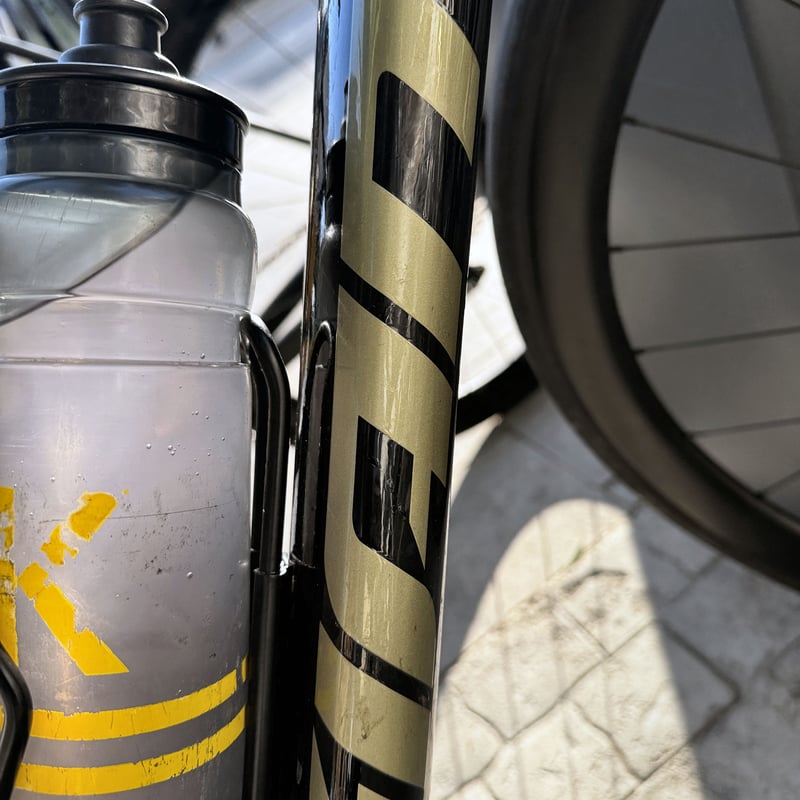
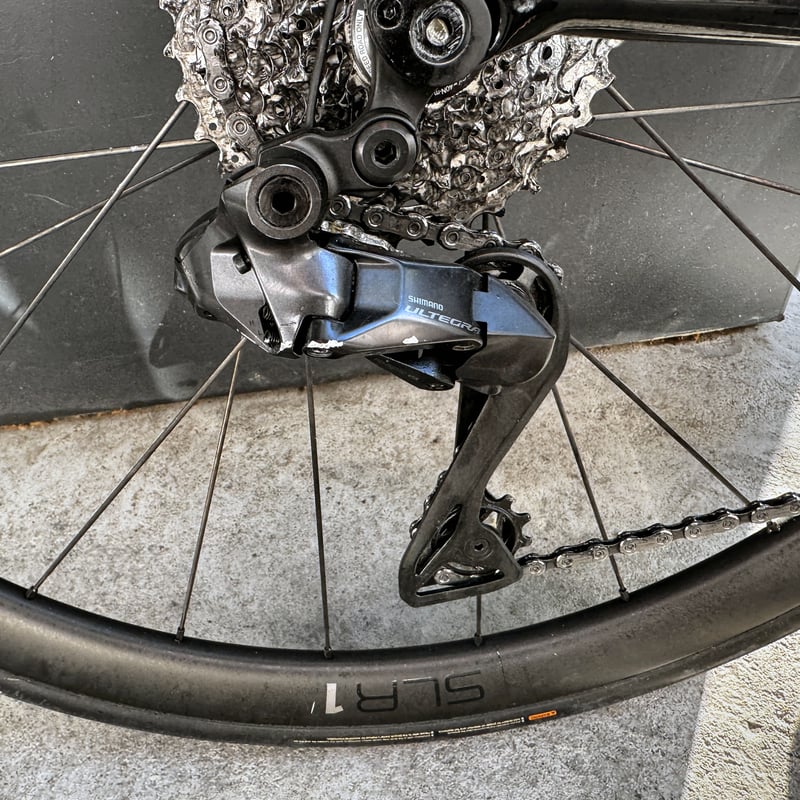
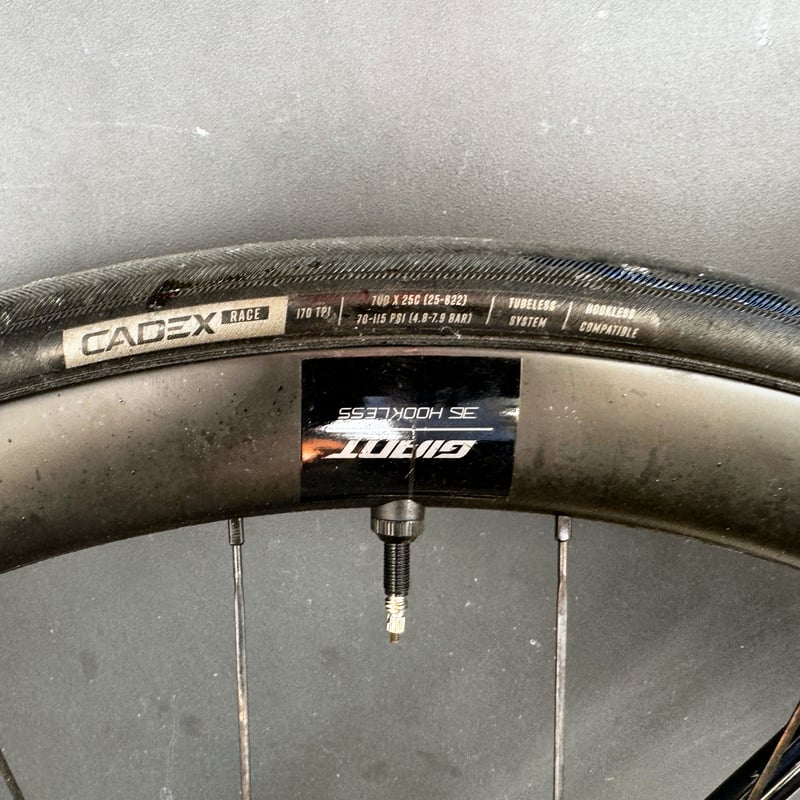
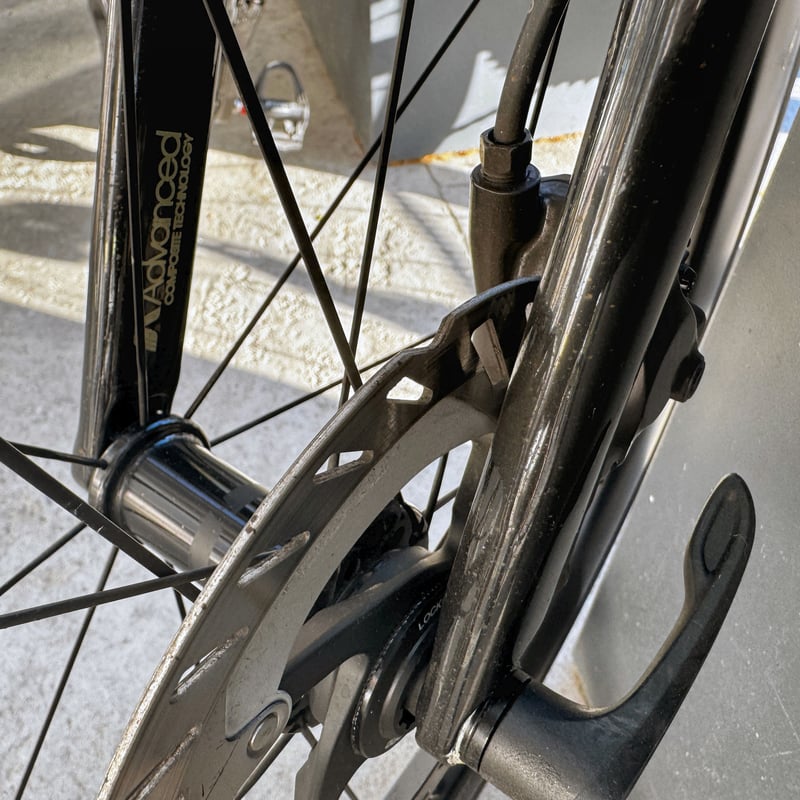
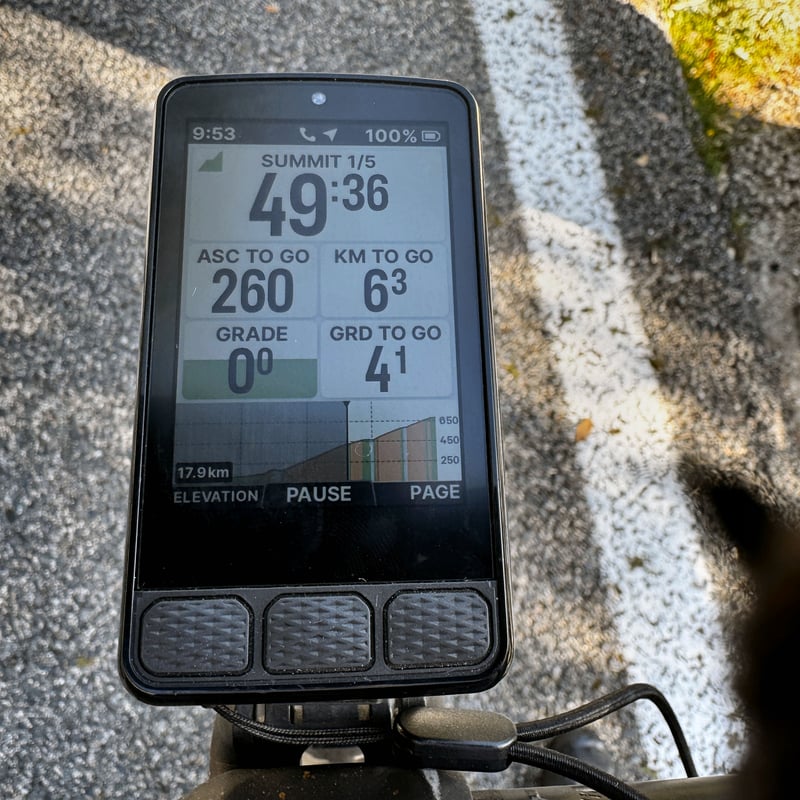
I expected a perfect bike for the money I paid. It wasn't perfect, but it seemed Ok at first.
- Crank length. The bike came with standard 172.5mm cranks for a medium frame size - there was no crank option. I ride 165mm at home and have done so for years. The 7.5mm delta is bigger than it reads on paper, creating a 15mm larger pedalling circle, and the consequences came later. (Richard Melik, Freespeed Richmond bike fitter, advised against this)
- Wheel balance. The rear wheel had a significant imbalance at speed. The front was less obvious but also off. I did not report it. Most riders do not notice wheel imbalance because most wheels carry some. My home wheels are perfectly balanced with Legend XR-One (Recommended), so the contrast was sharp and obvious to me. On a long ride, fighting a mini surge every rotation becomes annoying and mildly taxing, probably costing a watt or so and affecting high-speed handling - probably Ok for this trip, I thought.
- Seat post. A creak developed on the first day. Annoying, but I couldn't spare the time to go to the shop.
- Front brake calliper. A silent rub from a misaligned calliper was there for most of the trip, and I didn't notice it until late in the week. A freely spinning wheel stopped much sooner than it should have - that must have cost a few watts, I reckon. Reported, then fixed by me. Collectively, these issues amount to a bike that is not quite the one I would have liked to have ridden.
- Tubeless pressures. I don't ride tubeless, so the Cadex Race 25 at 80 psi was lower than my home setup, which runs TPU or latex inner tubes at higher pressures. The tubeless rode very comfortably though on Mallorcan tarmac, and I was impressed with the ride feel.
Q: Would you recommend Arrivo Cycling? Are they any good?
A: I wouldn't recommend them. They're Ok.
The hire bike spec sheet flatters the experience. Ultegra Di2 sounds great and is usually the key bit of info you need to be sure you'll get a good bike. The bike that arrives is the one that has done 100's of unloved miles in the rental fleet, with whatever wheel balance, brake alignment, and component state it carries.
Takeaway: specify crank length in writing when booking, and reject the bike if the shop cannot match it (none will match shorter cranks, so you have an unsolvable problem). The other issues are smaller but add up to a reason to take your own bike, despite the hassles it brings and the worry about not arriving at the airport on race day. I assumed there would be no hire bikes available if that happened to me, but there are a huge number of bike rental places in Mallorca.
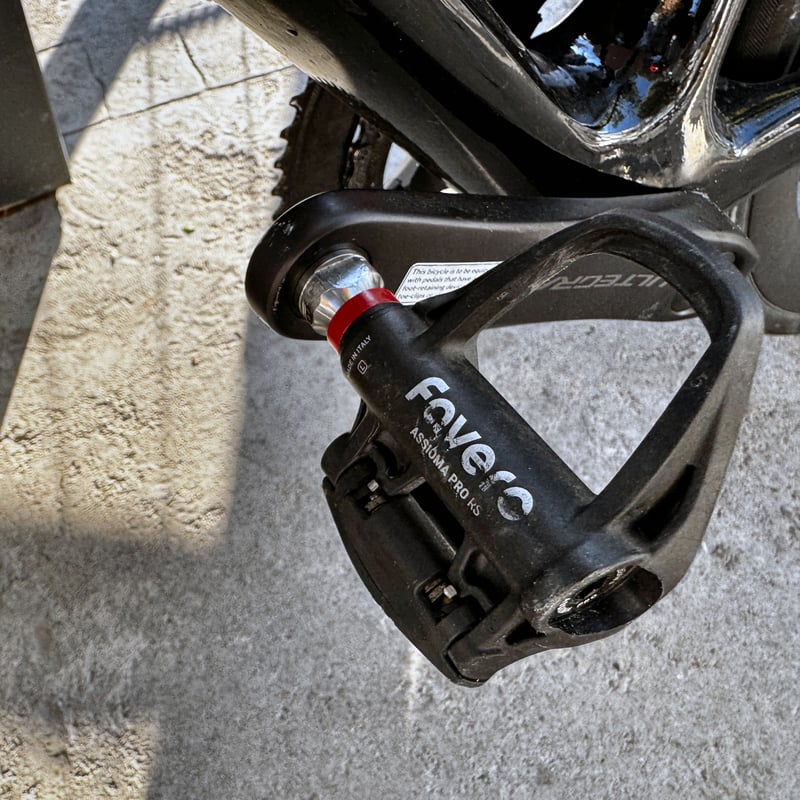
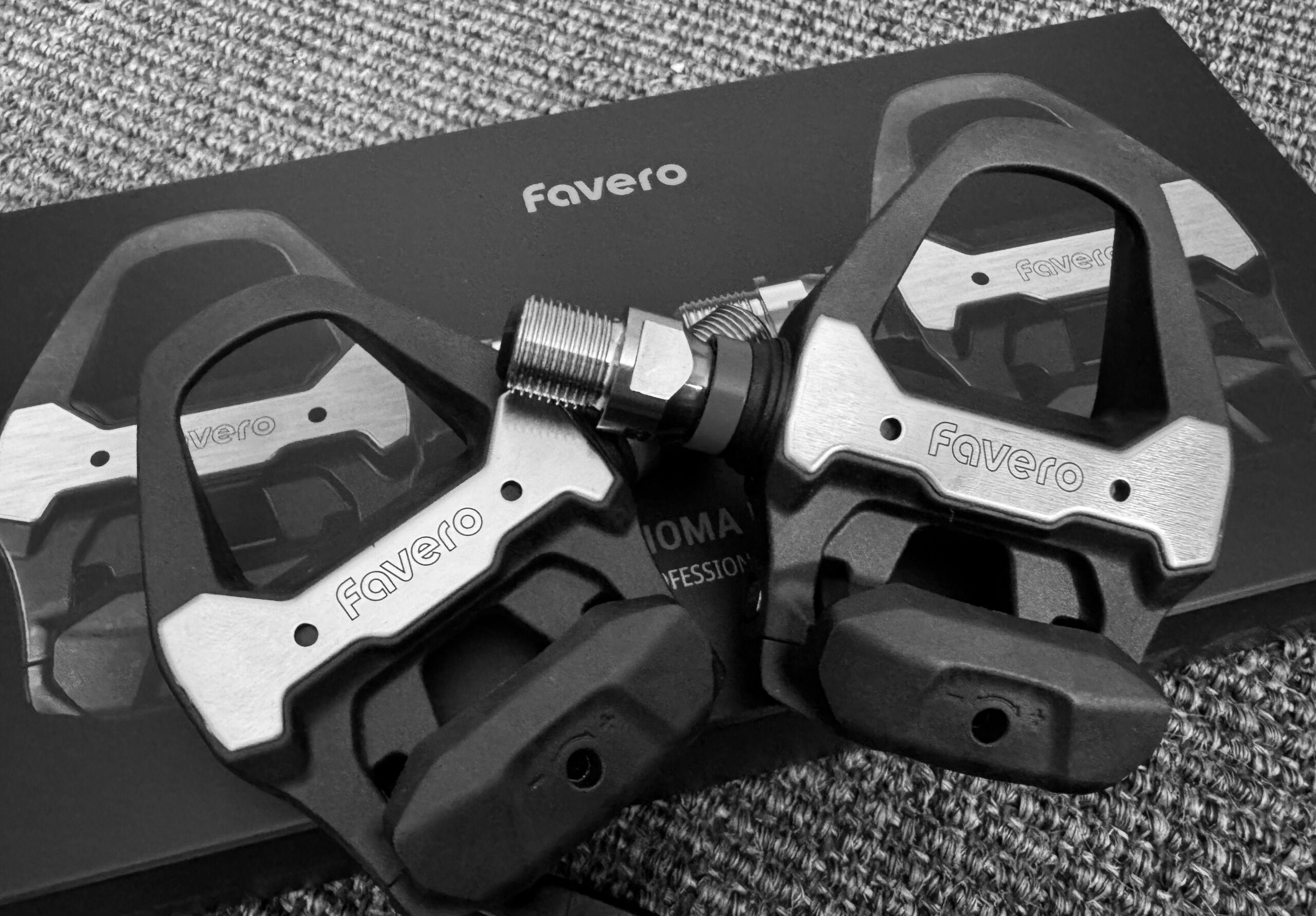
Favero Assioma RS pedals on a hire bike.
The Favero Assioma PRO RS pedals travelled in the hold and went onto the Giant in five minutes. Luckily, I remembered to bring the charging adapter to take them out of transport/sleep mode. Battery state checked; crank length set in the app to 172.5mm; zero offset applied on the bike before each ride. No issues. I assume it calibrated correctly to temperature changes throughout the rides, who knows? It seemed fine.
The interesting data point came from the left-right balance, which was 50:50 across the 312. My everyday riding is imbalanced in favour of the left. But at threshold and above, the balance often evens out. The 312 numbers are consistent with a sustained day at often moderate intensity rather than a steady-state long ride.
Takeaway: A power-meter pedal that travels with you removes the question of whether the hire bike's data is comparable to your own. Take your own pedals. Don't forget to bring them back.
Devices on test, in brief
Full reviews of each device are on the site, but these are devices I use myself... so they are all recommended in that sense. The notes below cover behaviour across the trip rather than performance verdicts.
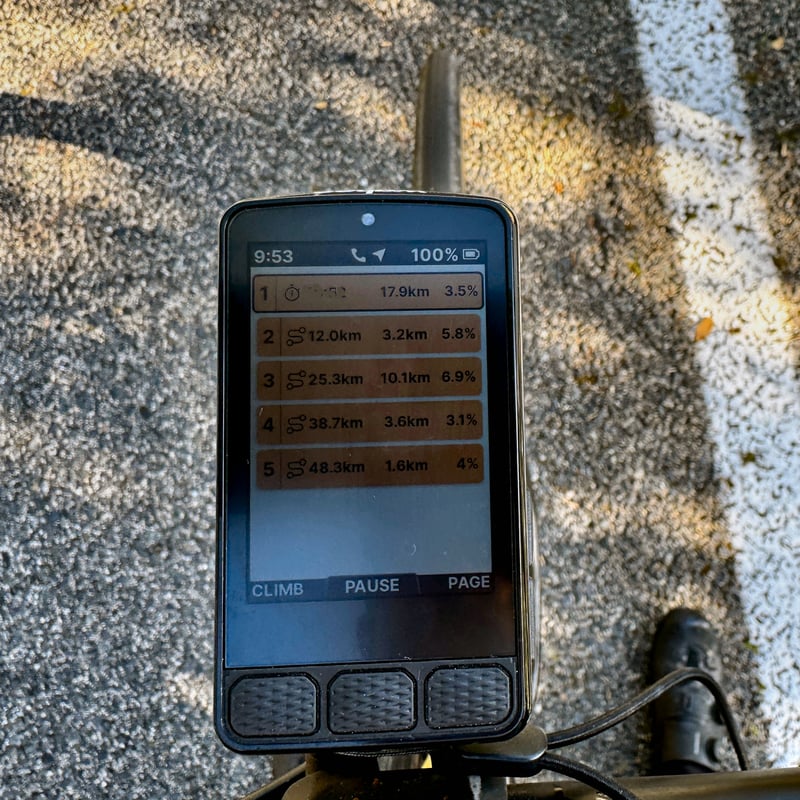
- Wahoo Elemnt Roam v3. Bar-mounted for every ride and the most crucial device, with the Assiomas coming in second most useful. Battery state was a non-issue throughout the week with the occasional safety top-up. Distance and elevation readings were lower than those of the Garmin Forerunner 970 on the Cap Formentor day.
- Garmin Forerunner 970. Worn on the wrist for every ride, mostly as a logger and backup to keep my Garmin data up to date. This is really my swim-and-run watch. Battery state was never an issue. Recorded all activities cleanly. The GPS spike on the Cap Formentor descent noted above is the only dodgy data point. The heart rate on here turned out to be the master copy on some rides.
- Apple Watch Ultra 3. Ran in low-power mode for the long ride and made it through all rides, which is the test the device was set up to pass. Worn on the wrist on multiple rides, alongside one of the other watches. I have 5G/LTE enabled, so this Watch normally doubles as my phone and in-ride voice-text messager, but in Mallorca, I rode with my iPhone to take the photos. I brought the Watch out of habit and as another data point.
- Huawei Watch Fit 5 Pro. Pre-release during the test, released since. It looks like a small-format Watch Ultra 3 but much cheaper and with a much longer battery life. Worn on the wrist alongside one of the other watches on multiple rides. The unit ran out of battery at one point during the trip, and I'm unsure why; possibly a slightly low starting charge and lots of exposure to the sun, cranking up the brightness to max for readability, plus me having the default brightness maxxed out. The remaining time produced reasonable data and no other anomalies. The main use here was to grab some comparative sleep data.
- Garmin HRM 600. Recorded heart rate cleanly to the Forerunner 970 across every ride. Less so to other devices because of the stupid secure data mode. Please, Garmin, just give me the option to permanently disable it.
Takeaway: No deal-breakers from any of them across the four days. Battery anomaly on the Huawei to investigate.
Garmin HRM 600 pairing fix: the encrypted-mode issue
This really hacks me off. So much so, I've since binned the bloomin thing except for swimming and will use the Tyme Wear Strap (Ventilatory threshold Zones...interesting and accurate)
The HRM 600 will not pair with a Wahoo head unit when the head unit is in encrypted mode - that's almost certainly the same across many other brands. This is easy to trigger by accident, and the fix is not documented in places anyone encountering it can find quickly, i.e. mid-ride.
- The behaviour: HRM 600 paired cleanly with the Forerunner 970 but refused to pair with the Wahoo Elemnt Roam v3; no obvious error from either device.
- The cause: the strap was in encrypted mode. The Wahoo cannot decrypt the stream.
- The fix: press the HRM 600 button twice. The LED then flashes green three times every 5 seconds, indicating non-secure mode. Pair again, and the connection works.
- That's the theory. Or just buy a properly designed and tested strap. Your choice.
The fact that this is a button-press configuration is poor design. Yes, the light pattern indicates the mode, but you have to remember it. Even knowing that it doesn't always seem to reestablish a pairing in open mode. Anyone encountering the issue without a Garmin head unit nearby will assume the strap is broken, or perhaps that other devices are tying up its available BLE channels.
Takeaway: two button presses, three green flashes every five seconds, all should be good unless it isn't.
Nutrition, hydration and the Maurten dosing principle
I had one of my duathlon glories recently, which I hadn't written about in detail. #ProperMedal. For that race, I invested a small fortune in the Maurten Bicarb system and was extremely impressed with the excellent results in a short race (article). The brand saw the article, liked it, and sent me about 10 years' worth of their various products (OK, not that much, but quite a lot). They haven't paid me anything to write this or sponsored me in any way, but their everyday bars and gels are awesome. The bicarb system isn't awesome for its texture or price, but it makes you go faster, and a win's a win. Literally.
My 2x100-mile back-to-back test rides for the 312 went well, but I didn't follow Maurten's dilution recommendations for their powders, adding too much water each day. The result? Weeing but no dehydration.
So my compensation and fear of not fueling sufficiently meant I doubled up on the powder on the 312. Thus, one of my 312 issues may have been that I went too far in the opposite direction and put in too much powder for the water involved without testing. Doh. Possibly, this might have led to dehydration.
Takeaway: If you are peeing often on long rides, it's probably the water you've drunk. Come back if you need any more deep insights. 😉
To the start line
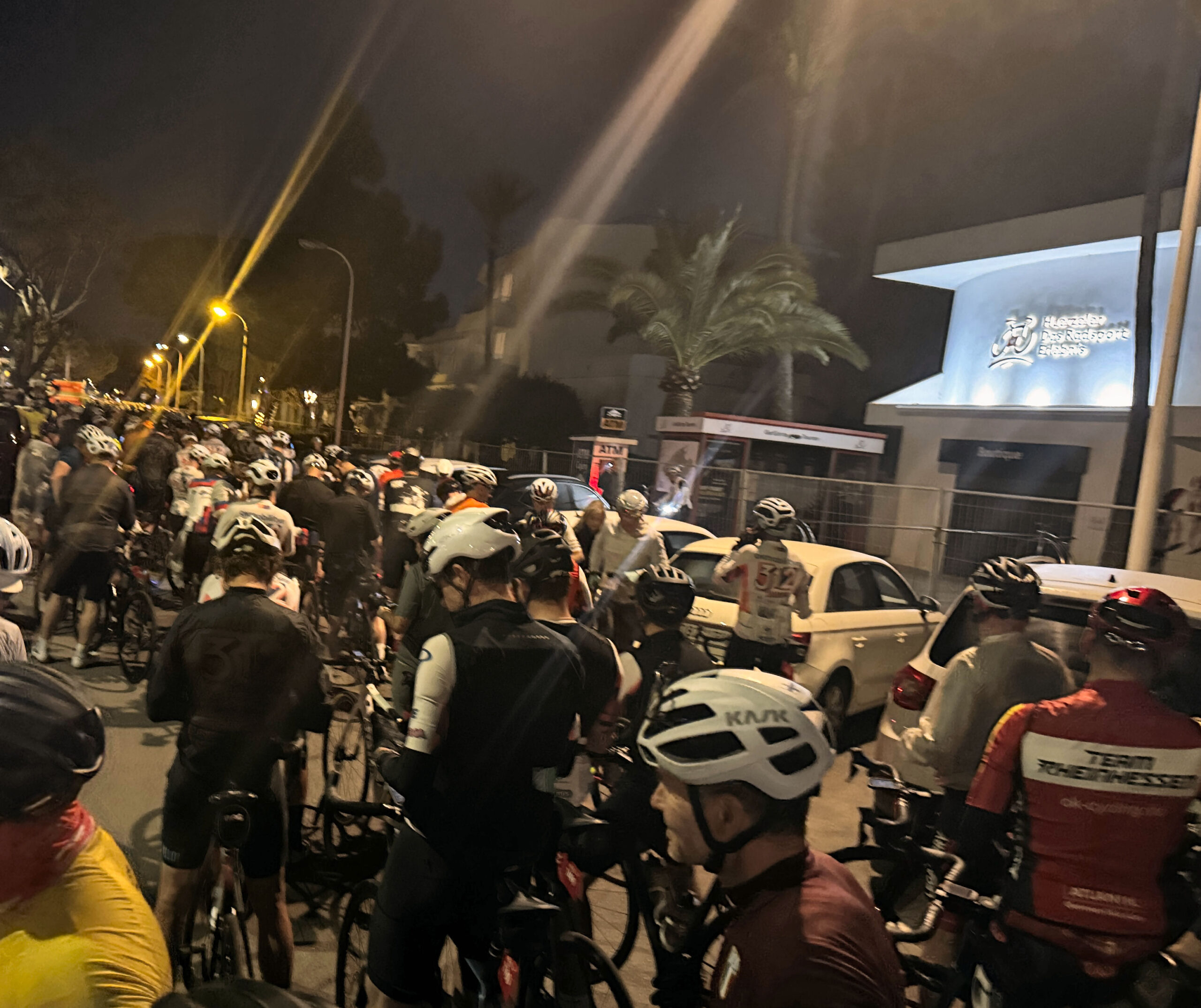
Conditions on Saturday, 25 April, were as good as the Mallorca 312 ever gets. Mostly sunny at 16 degrees on the line in Alcúdia, with a light easterly breeze and dry roads. Our small group got to the second pen late and we were close to the back of it, behind thousands of people. We rolled out from the back at 05:18.
The 312 ride itself
The first 100 km played out roughly to plan. There were large numbers of people going up the hills, and anyone who stopped created a concertina effect, stopping those behind. Luckily, I missed all that nonsense and avoided stopping at the feed stops, relying on my onboard nutrition. That saved a bit of time.
Log in to read the rest
For reviews, the summary verdict and key findings appear near the top of every post and remain free for everyone. The takeaways below the paywall are personal thoughts, opinions, and forward-looking views. They are protected against AI scraping and content theft.
Genuine readers can create a WordPress account and log in for free as a FOLLOWER to read the full text on some subscriber posts, plus get a reduced-ads experience.
If you use this site for your job, please use the correct tier and subscribe as a COMMERCIAL supporter. Industry professionals expect to be paid for their work. So do I.
This content will become fully available to everyone at some point in the future.


Why do you take the peddles in the hold? I‘ve been travelling back and forth between Switzerland and Spain for several years with my Assiomas in my hand baggage. I take them out like you would a laptop etc. I‘ve had a few quizzical looks and have said they are bike pedals, but not other issues. I‘m I missing something?
last time i took a pedal wrench through the xray machine as hand luggage, they told me it could be a weapon. (fair point)
i thought batteries had to be checked in not taken as hand luggage. (although thinking i did take my laptop on board)
idk. its all very complicated.
Is taking your own cranks an option?
yes…but
…but it’s a pain in the a?
Is shipping the full bike in advance an option? Probably expensive but then you wouldn’t have to rent a bike so it would offset.
yes i have shipped bikes on several occasions. it has to be partially unassembled and packed into a hard case, then reassembled at the other end. my cycling buddy on the 312 did this but his derailleur was broken in transit. you have to reassemble, last time i did that i sheared the steering post bolt assembly but had enought time to get it fixed.
Makes sense on the wrench I guess. I have a set of tools at either end. On the batteries, I think they have to be in hand luggage, as if they blow up in the hold, the fire can spread quickly before anyone realises. I did notice that EasyJet now tell you not to charge using a powerbank during the flight.
Huerzeler in Alcúdia actually offers 165 mm cranks. They changed the stock 175 mm cranks on the size 62 bike (Cube Attain) I hired from them for 20 €.
good for next time!
I knew some must do them on my frame size but didnt look for long enough I guess