The phone as a wallet: from phone cards to tap-to-pay watches
Plenty of runners now leave the house with a watch and nothing else, and tap it for a coffee on the way home. That habit rests on 45 years of small steps that turned the telephone, and then the things we wear, into a way to pay. Here are ten of them, with the dates checked.
Phone boxes and premium lines
1. 1981: the BT phonecard. BT introduced the phonecard in 1981, alongside cardphones that took a plastic card instead of coins. The early cards were optical cards made by Landis & Gyr, bought in advance and sold in units of call time, and the phone marked off the units as you talked. Chip cards replaced them in the mid-1990s, and the insertable cards came off sale in 2002.
2. 1986: premium-rate lines get a watchdog. The next step was the number that cost more to call. The premium-rate industry set up ICSTIS in 1986 to police those services, and by 2003 it was receiving 27,501 complaints a year, two-thirds of them about dodgy text messages and rogue internet diallers. It was renamed PhonepayPlus in 2007 and the Phone-paid Services Authority in 2016.
Paying by text
3. 2002: reverse-billed texts. With reverse-billed SMS you paid to receive a message rather than to send one, at anything from 10p to £1.50 a time, and ICSTIS published its first guidelines on the practice in May 2002. In 2005 a ringtone advertised at £3 turned out to be a £3-a-week subscription and drew more than 100 complaints. The five networks responded with a reminder text every month or once a subscriber had spent £20, and a STOP command that applied to every marketing message.
4. 2007: Payforit and the phone bill as a checkout. In 2007 Vodafone, Orange, 3, O2 and T-Mobile backed Payforit, a cross-network scheme for buying mobile content with the charge placed on your phone bill. It was an early form of what is now called carrier billing: the network takes the payment and settles with the seller.
Tap to pay arrives
5. 2007: the first contactless card. In September 2007 Barclaycard launched OnePulse, the UK’s first contactless payment card, with a limit of £10 a tap. The limit rose to £15 in 2010, £20 in 2012 and £30 in 2015. London’s buses began taking contactless cards on 13 December 2012, and the Tube, DLR and Overground followed on 16 September 2014.
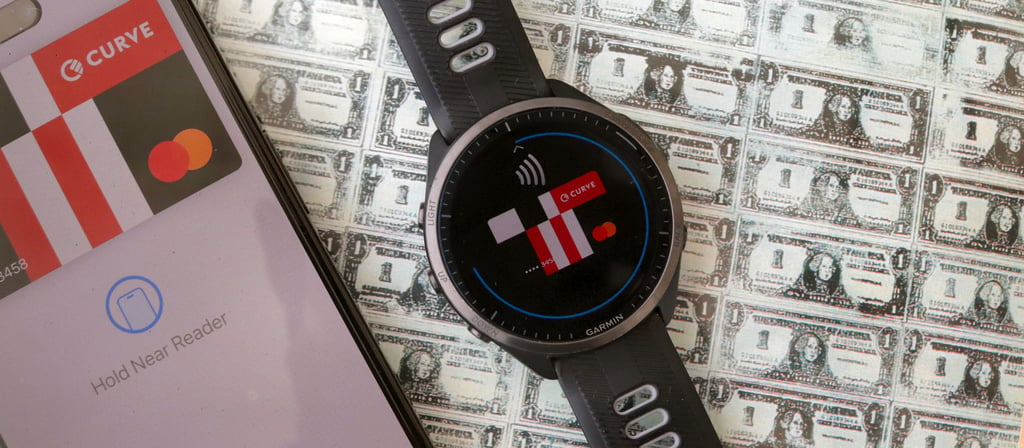
6. 2015: the phone, the watch and the wristband. Apple Pay reached the UK on 14 July 2015 on the iPhone 6 and the Apple Watch, accepted at more than 250,000 locations including TfL. A fortnight earlier Barclaycard had relaunched bPay as a £24.99 wristband, a £19.99 key fob and a £14.99 sticker, open to anyone with a UK Visa or Mastercard and topped up from a digital wallet. Runners Need and CycleSurgery were lined up to stock them from that August.
Rings and running watches
7. 2015–2016: a ring that pays, then Android Pay. Kerv, a London start-up, put what it called the world’s first contactless payment ring on Kickstarter on 25 September 2015 and reached its £77,000 goal in 17 days, at a planned £49.99. Android Pay then launched in the UK on 18 May 2016 with banks including HSBC, Lloyds, Halifax and Nationwide, and worked on the Tube and buses from the start. It became Google Pay in 2018, and the app is now Google Wallet.
8. 2017: the running watch pays. Samsung Pay landed in the UK on 16 May 2017, but for sports-watch owners the bigger dates came that autumn. Fitbit Pay arrived in the UK on 24 October 2017 on the Fitbit Ionic, with Starling the only bank on board at first, and Garmin Pay went live on the Vivoactive 3 in November 2017, in the US, Australia and a few other countries first, with Starling adding it for UK customers in May 2018. Fitbit Pay itself was switched off on 29 July 2024 and replaced by Google Wallet.
Higher limits, and a new regulator
9. 2021: £100 a tap. On 15 October 2021 the contactless limit rose from £45 to £100 on a decision by HM Treasury and the Financial Conduct Authority, and the running total before a PIN is asked for went from £130 to £300. Fourteen years after the £10 cap, a full basket of shopping could go through on a watch.
10. 2025: Ofcom takes over phone-paid services. From 1 February 2025 Ofcom took day-to-day regulation of phone-paid services from the Phone-paid Services Authority, replacing the PSA’s code with an order of its own. The phone bill still carries charity text donations and app-store purchases, and EE, Vodafone and Three all publish the same limit on such charges, £40 a transaction and £240 a month, which Three says is set by payment regulations. Some UK online casinos take deposits the same way. The page at fortunegames.com, one UK online casino’s explainer, sets out that the charge goes on your bill or comes off pay-as-you-go credit, that the phone account must be in your own name, and that withdrawals cannot go back by the same route.
What’s next
UK Finance’s latest report, published in August 2026, counts 19.2 billion contactless payments in 2025, 39% of all UK payments, and says 65% of adults were registered for a mobile payment service, up from 57% in 2024. It expects digital payments to keep growing to 2035, with cash left in a residual role, and says mobile contactless is increasingly replacing the physical card.
If you run or ride with a watch, the practical question has not changed since 2017: whether your bank supports your device. Whatever you tap with, decide what you will spend before you leave the house. If you ever use carrier billing for games of chance, set a budget before you start, and stop when it’s gone. Over-18s only; free support on 0808 8020 133.
Last Updated on 28 October 2026 by tfk the5krunner
Small things I always use
- Garmin 90-degree charging adapter: Charges your Garmin from any USB-C cable. Essential when travelling. I use one.
- Body Glide: The blue anti-chafe stick swimmers and runners carry. I use it.
- Speedo earplugs: Fewer ear infections and no cold-water dizziness. I use them.
- Dryrobe Advance: My winter changing robe for open-water swims. I use one. A cheaper option is the AONYIYI changing robe.
- Maurten: Race fuel that stays easy on the stomach. I use them.
- Beet It Sport nitrate shots: Beetroot shots I take in the days before a race. I use them.
- Garmin charging puck: The quickest way to top up before a session. I use one.
- Injinji: Toe socks that stop rubbing, so you run more. I use them.
- Ultimate toe protectors: Stop black toenails on long runs. They work. I use them.
- Compressport R2 v2 calf sleeves: My calf sleeves of choice. I use them.
- Cellucor C4: My pre-workout before hard sessions.
- TPU tubes: Schwalbe Aerothan, Tubolito and Pirelli SmarTube. Light, tiny spares. I use all three.
- G8 insoles: Adjustable insoles that are good. I use them.
- Cycplus Cube: A 97g electric pump that gets a road tyre rideable in two minutes. I carry one. 5% off with code THE5KRUNNER.
Watches and sensors
- Polar H10: My daily driver for waking HRV.
- Polar Verity Sense: My backup arm-worn HR sensor.
- Nomad bedside charger: Charges my iPhone and Apple Watch overnight. I use it, and many of their bands.
- Train.Red: The best muscle oxygen sensor I’ve used.
- Tymewear: Accurate heart rate and reliable ventilatory zones. I use it to pace endurance rides over an hour.
- Garmin Forerunner 970: A pro-grade triathlon watch. I use this.
- Apple Watch Ultra 4: My daily smartwatch. No phone needed on rides.
- Garmin Fenix 9 Pro: I’ve just bought one.
On the bike
- Continental GP5000 for everyday riding, and Aero 111 on the front for special occasions.
- Helmets: Specialized S-Works Evade 3 for road riding, and Rudy Project Wing for TT-style races. I use both.
- Ravemen FR300: A front light that mounts under your Garmin or Wahoo. I use one.
- Wahoo TRACKR Radar: I use it on one bike and Varia on the other. They perform the same.
- Garmin Varia RTL515: Radar that warns you of cars from behind. I use this model.
- Wahoo ELEMNT Roam 3: The bike computer that’s easy to use. I use mine on most rides.
- Favero Assioma Pro RS2: Accurate power pedals that swap easily between bikes. I use this model.
Home and indoor training
- NPE Runn: Makes my basic treadmill smart, sending more accurate speed and distance to my watch and Zwift. I use it.
- Google Wifi: Keeps Zwift connected in my pain cave. I use it.
- Apple TV 4K: Zwift on the big screen. I use two.
- Google Nest Doorbell (wired, 2nd gen): My video doorbell, running in both Google Home and Apple Home. I use it.
Health, recovery and sleep
- FreeStyle Libre 3 Plus: Shows how my blood sugar responds to diet.
- hDrop: Measures my sweat loss in summer and indoors.
- Fourth Frontier Zone: Checks my heart under load in hard sessions.
- Oura Ring 5: My partner’s recovery tracker of choice.
- Eight Sleep: A cooling mattress cover my partner and I use nightly.
Reader-Powered Content
This content is not sponsored. It’s mostly me behind the labour of love, which is this site, and I appreciate everyone who supports it.
Support the site: Follow (free, fewer ads) · Subscribe (paid, ad-free) · Buy Me A Coffee
Written by real people, with AI assistance. Fact-checked and verified for originality. See the Editorial Policy. FTC: Affiliate Disclosure — some links pay commission. As an Amazon Associate, I earn from qualifying purchases.

theparkrunner is a contributing writer covering road races, endurance events and the travel side of racing life. Reports focus on upcoming events, race destinations and what athletes need to know before they arrive.
