The Oura Ring 5 is the better ring to wear; the Ultrahuman Ring Pro is the better ring to own.
Oura’s is smaller and lighter, with the most published science and the widest app connections. Ultrahuman’s battery lasts more than twice as long between charges and costs nothing after you buy it, whereas Oura charges £5.99 or $5.99 a month for its subscription.
Buy the Oura if comfort and the platform matter most; buy the Ultrahuman if you resent the fee or hate charging, and check US availability first.
Comfort and size: Oura wins
For a device worn day and night, size is the feature you notice most. The Ring 5 is 2.28mm thick and weighs 2g. The Ring Pro is 2.65mm thick and weighs 3.3 to 4.8g, with a noticeable sensor housing on the inside. Neither is large, but the Oura is the one you forget you are wearing, and the one that sits more easily under a barbell or bike grip.
Sizes differ too. The Ring 5 runs from 6 to 13; the Ring Pro from 5 to 14. If you are at either end of the scale, Ultrahuman is more likely to fit.
Winner: Oura Ring 5, unless you need a size outside 6 to 13.
Battery: Ultrahuman wins easily
Oura rates the Ring 5 at 6 to 9 days. Ultrahuman rates the Ring Pro at more than 15 days in its Chill mode and about 12 in Turbo mode, and its charging case holds enough for up to 45 days between wall charges. The Ring Pro also stores up to 250 days of data on the ring, so you can go a long time without syncing. Oura sells an optional £99 charging case that holds up to five charges.
Winner: Ultrahuman Ring Pro.
Cost of ownership: Ultrahuman wins
The Ring 5 launched at £399 or $399, rising to £499 or $499 for some finishes. The Ring Pro launched at £429 or $479. The membership changes the cost: Oura needs £5.99 or $5.99 a month, or $69.99 a year, which adds about $210 over three years, and without it, most of your data is hidden. Ultrahuman charges nothing for its core features, although optional PowerPlugs cost extra, such as cycle tracking at $3.99 a month and Cardio Adaptability at $2.90 a month.
Winner: Ultrahuman Ring Pro, by about $200 over three years for most owners.
Sleep and recovery: close, with Oura ahead on evidence
Both rings score your sleep, track overnight heart rate, HRV, skin temperature and blood oxygen, and give you a daily readiness or recovery score. Ultrahuman’s Dynamic Recovery recalculates throughout the day as you follow its advice. Oura adds Health Radar, Blood Pressure Signals and a 30-day view of night-time breathing.
The difference is evidence. Oura cites more than 130 peer-reviewed publications, and in the independent studies gathered in Garmin, Apple Watch or Oura? the Oura Ring 4 came within 6% of an ECG strap for overnight HRV. Ultrahuman claims 8 peer-reviewed publications, and its AFib and VO2 max work is its own. I have not yet tested either current ring for accuracy myself.
Winner: Oura Ring 5, on the strength of the evidence.
Workouts: Ultrahuman slightly ahead
Neither ring replaces a watch or chest strap for hard training. Oura’s Live Activity Tracking shows pace, distance and heart rate, with pace and distance coming from your phone, and it pairs with a chest strap. Ultrahuman shows live heart rate, zones and a running map, and can take heart rate from an Apple Watch, chest strap or earbuds. Ultrahuman advises taking the ring off for weight training.
Winner: Ultrahuman Ring Pro, narrowly, for its wider choice of heart rate sources.
Apps and your data: Oura wins
Oura shares data with Apple Health, Health Connect, Strava, MyFitnessPal, and many more; it has a public API and lets you export your full account with or without a membership. Ultrahuman shares with Apple Health and with Abbott and Dexcom glucose monitors, and exports daily summaries as CSV files from its web dashboard. Ultrahuman’s ecosystem is broader in a different direction, including its M1 glucose monitor, Blood Vision blood tests, and Ultrahuman Home.
Winner: Oura Ring 5.
Where you can buy: a US warning
Oura won a US patent case against Ultrahuman, and the older Ring AIR has been barred from US import since October 2025. US Customs cleared the redesigned Ring Pro in March 2026, but Oura has sued again over it, and Ultrahuman is appealing and countersuing. Outside the US, both rings are on sale. American buyers should check before ordering an Ultrahuman ring.
The companies behind the rings
Oura is the strongest company in smart rings: profitable, with 5 million paying members and about $1.2bn of revenue in the nine months to 30 June 2026. Its key pro is the science and app connections; its key con is the membership, without which most of your data is hidden. It also uses its patents as a weapon against rivals.
Ultrahuman is a profitable Indian company that raised $70m in September 2026. Its key pro is no subscription for the core features; its key con is the patent fight that has disrupted its US business. Both offer a one-year warranty in the US, and longer where local law requires. The full picture is on the smart ring brands compared page.
The differences in one table
| Oura Ring 5 | Ultrahuman Ring Pro | |
|---|---|---|
| Thickness | 2.28mm | 2.65mm |
| Weight | From 2g | 3.3 to 4.8g |
| Sizes | 6 to 13 | 5 to 14 |
| Rated battery | 6 to 9 days | More than 15 days |
| Launch price | £399 / $399 | £429 / $479 |
| Subscription | Required, £5.99 / $5.99 a month | None for core features |
Full specifications are on the Oura Ring 5 and Ultrahuman Ring Pro spec pages.
Prices and where to buy
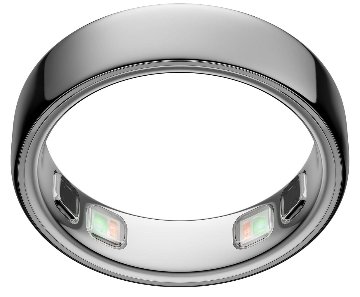
Oura Ring 5
Smart ring
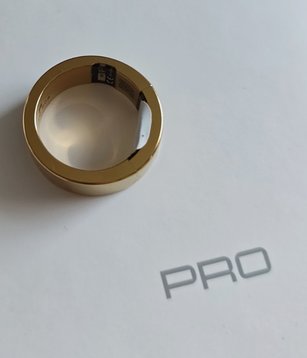
Ultrahuman Ring PRO
Longer battery. No subscription.
Current offers are on the Oura deals and Ultrahuman deals pages.
Which should you buy?
- You want the most comfortable ring and the best app: Oura Ring 5.
- You want your data in Strava or Health Connect: Oura Ring 5.
- You do not want a monthly fee: Ultrahuman Ring Pro.
- You hate charging, or travel a lot: Ultrahuman Ring Pro.
- You live in the US and want no fee: consider the RingConn Gen 3, which is not caught up in the patent fight.
For the other rings, see the smart rings guide.
Quick answers
Is Oura Ring 5 better than Ultrahuman Ring Pro?
Oura is smaller, has more published science and connects with more apps. Ultrahuman has more than twice the battery life and no subscription. Oura suits people who value comfort and the platform; Ultrahuman suits people who want to avoid the fee.
Which has longer battery life, Oura or Ultrahuman?
The Ultrahuman Ring Pro is rated at more than 15 days, compared with 6 to 9 days for the Oura Ring 5. Ultrahuman’s case extends that to 45 days between wall charges.
Does Ultrahuman need a subscription?
No, not for sleep, recovery, stress and activity tracking. Some optional add-ons, such as cycle tracking, are paid.
Can I buy the Ultrahuman Ring Pro in the US?
US Customs cleared the redesigned Ring Pro in March 2026, but Oura has sued again, so check availability before you order. The older Ring AIR is barred from US import.
Last Updated on 21 November 2026 by tfk the5krunner
Small things I always use
- Garmin 90-degree charging adapter: Charges your Garmin with any USB-C cable. Essential when travelling. I use one.
- Body Glide: The blue anti-chafing stick swimmers and runners carry. I use it.
- Speedo earplugs: Fewer ear infections and no cold-water dizziness. I use them.
- Dryrobe Advance: My winter changing robe for open-water swims. I use one. A cheaper option is the AONYIYI changing robe.
- Maurten: Race fuel that stays easy on the stomach. I use them.
- Beet It Sport nitrate shots: Beetroot shots I take in the days before a race. I use them.
- Garmin charging puck: The quickest way to top up before a session. I use one.
- Injinji: Toe socks that stop rubbing, so you run more. I use them.
- Ultimate toe protectors: Stop black toenails on long runs. They work. I use them.
- Compressport R2 v2 calf sleeves: My calf sleeves of choice. I use them.
- Cellucor C4: My pre-workout before hard sessions.
- TPU tubes: Schwalbe Aerothan, Tubolito and Pirelli SmarTube. Light, tiny spares. I use all three.
- G8 insoles: Adjustable arches, perfect position. I use them.
- Cycplus Cube: A 97g electric pump that gets a road tyre rideable in two minutes. I carry one. 5% off with code THE5KRUNNER.
Health, recovery and sleep
- Kineon MOVE+: Red and infrared light for sore knees, Achilles and other joints after hard training. I use it.
- FreeStyle Libre 3 Plus: Shows how my blood sugar responds to diet. Occasional use.
- hDrop: Measures my sweat loss in summer and indoors. I use it.
- Fourth Frontier Zone: Checks my heart under load in hard sessions.
- Oura Ring 5: My partner’s recovery tracker of choice.
- Eight Sleep: A cooling mattress cover my partner and I use nightly.
Watches and sensors
- Polar H10: My daily driver for waking HRV.
- Polar Verity Sense: My backup arm-worn HR sensor.
- Nomad bedside charger: Charges my iPhone and Apple Watch overnight. I use it, and many of their bands.
- Train.Red: The best muscle oxygen sensor I’ve used. Occasional use.
- Tymewear: Accurate heart rate and reliable ventilatory zones. I use it to pace endurance rides over an hour.
- Garmin Forerunner 970: A pro-grade triathlon watch. I use this.
- Apple Watch Ultra 4: My daily smartwatch. No phone needed on rides.
On the bike
- Continental GP5000 for everyday riding, and Aero 111 on the front for special occasions. I use both.
- Helmets: Specialized S-Works Evade 3 for road riding, and Rudy Project Wing for TT-style races. I use both.
- Ravemen FR300: A front light that mounts under your Garmin or Wahoo. I use one.
- Ravemen FR1000: The light and the computer mount in one unit, so nothing else goes on the bars. Better than mine.
- Ravemen FR1500SE: 1,500 lumens hanging under your Garmin, for proper night rides.
- Ravemen FR1100SE: 1,100 lumens under your Garmin, and up to 46 hours on slow flash.
- Ravemen FR500: A brighter FR300 with the same mount.
- Wahoo TRACKR Radar: I use it on one bike and Varia on the other. They perform the same.
- Garmin Varia RTL515: Radar that warns you of cars from behind. I use this model.
- Wahoo ELEMNT Roam 3: The bike computer that’s easy to use. I use mine on most rides.
- Favero Assioma Pro RS2: Accurate power pedals that swap easily between bikes. I use this model.
Home and indoor training
- NPE Runn: Makes my basic treadmill smart, sending more accurate speed and distance to my watch and Zwift. I use it.
- Google Wifi: Keeps Zwift connected in my pain cave. I use it.
- Apple TV 4K: Zwift on the big screen. I use two.
- Google Nest Doorbell (wired, 2nd gen): My video doorbell, running in both Google Home and Apple Home via Starling. I use it.
Reader-Powered Content

This content is not sponsored. It’s mostly me behind the labour of love, which is this site, and I appreciate everyone who supports it.
Support the site: Follow (free, fewer ads) · Subscribe (paid, ad-free) · Buy Me A Coffee
Written by real people, with AI assistance. Fact-checked and verified for originality. See the Editorial Policy. FTC: Affiliate Disclosure — some links pay commission. As an Amazon Associate, I earn from qualifying purchases.
tfk is the founder and author of the5krunner, an independent endurance sports technology publication. With 20 years of hands-on testing of GPS watches and wearables, and competing in triathlons at an international age-group level, tfk provides in-depth expert analysis of fitness technology for serious athletes and endurance sport competitors. See the gear tfk uses. ID
