High Stakes: WHOOP’s Screenless Tracker Design Lands in Federal Court in Global IP Test
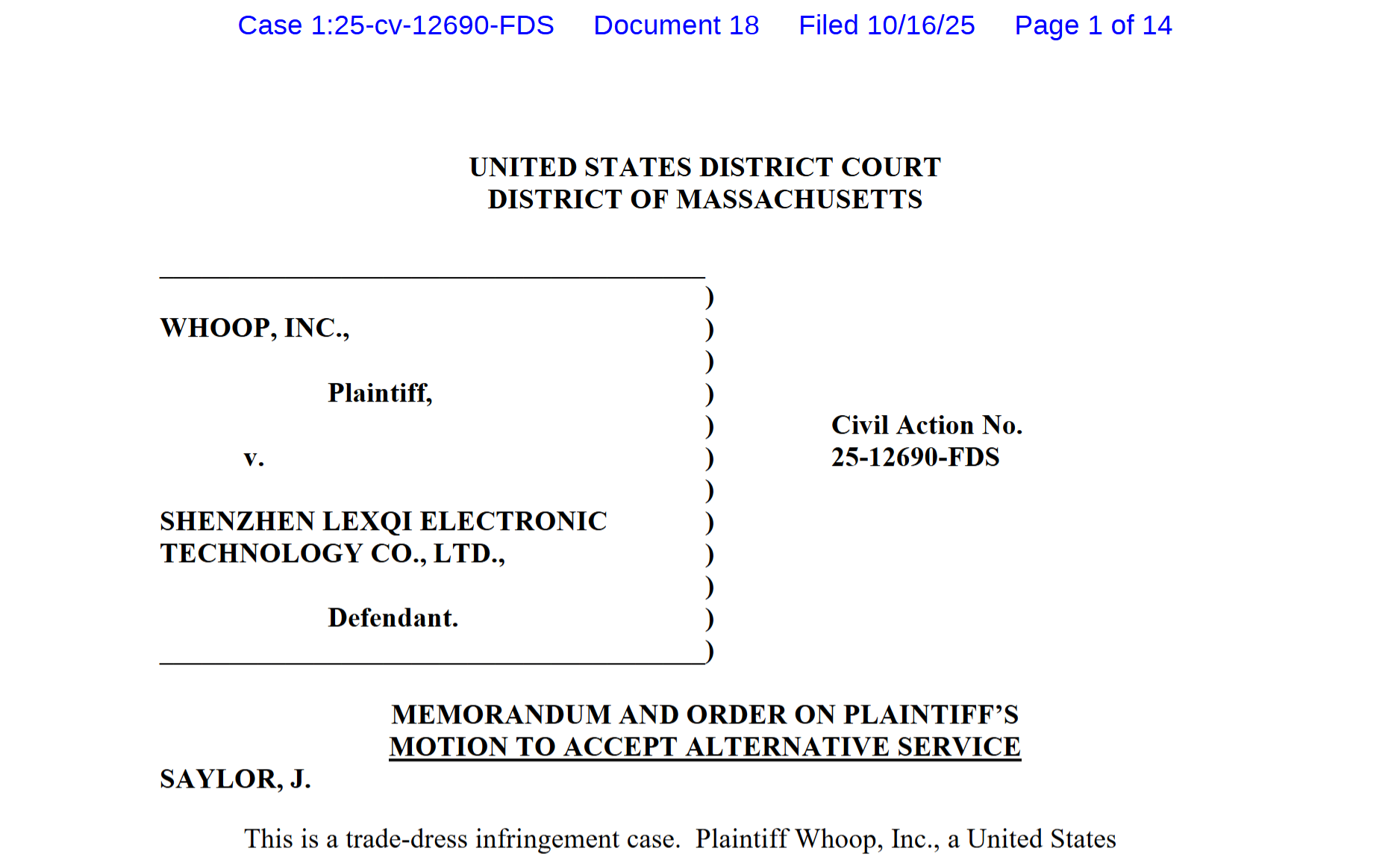
The battle for wearable technology design is escalating. Boston-based WHOOP recently initiated legal action against a Chinese competitor, Shenzhen Lexqi Electronic Technology (LEXQI), claiming the firm has created a wholesale imitation of its minimalist, screenless tracker. This key case, filed in September 2025, tests the limits of protecting aesthetic design as trade dress in the functional world of fitness tech.
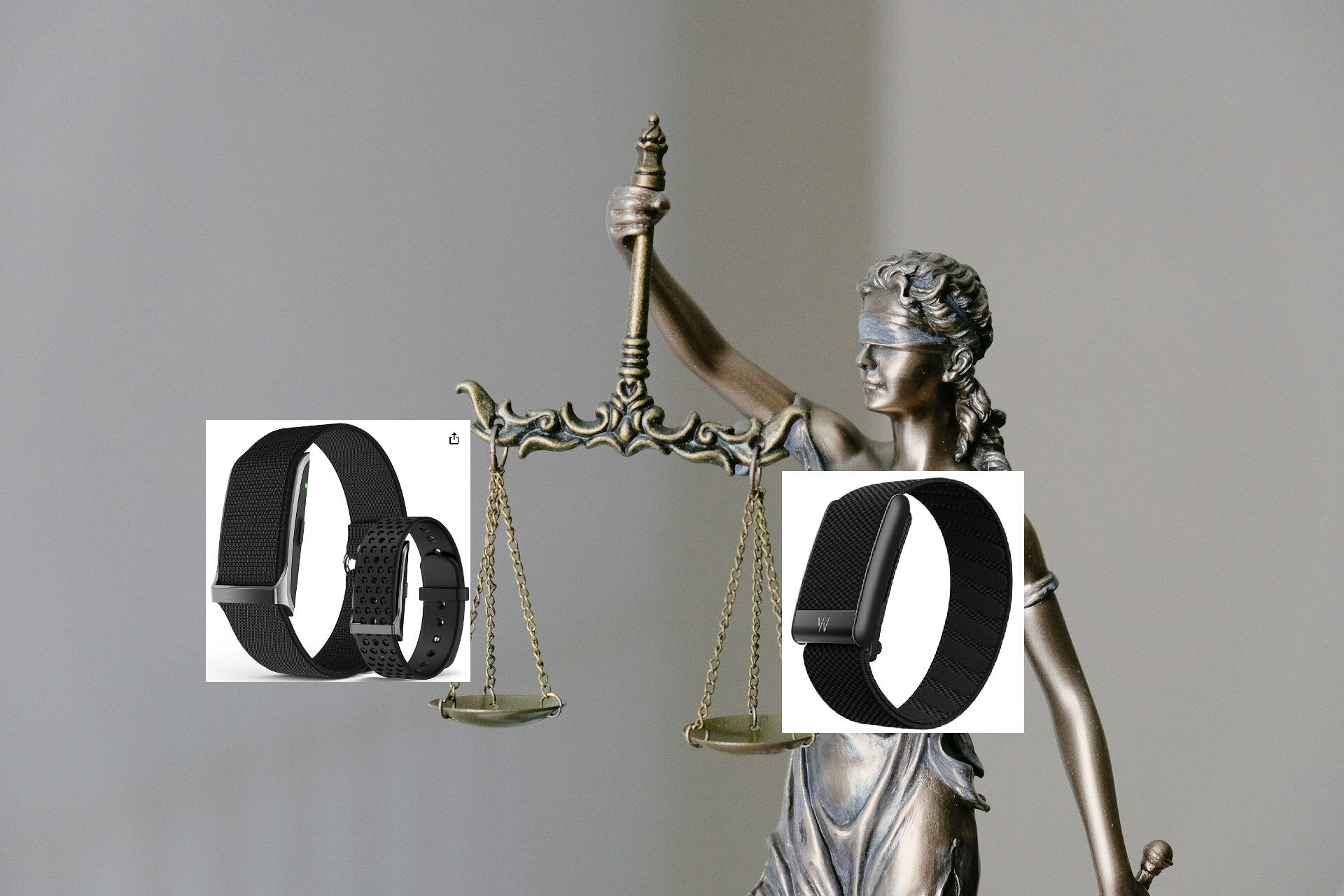
The minimalist design of the WHOOP strap is at the heart of the trade dress lawsuit.
The Design Identity in Dispute
WHOOP’s lawsuit has three aspects trade dress infringement, unfair competition, and false designation of origin. At the core of the complaint is the distinctive look and feel of the device, which WHOOP insists acts as a source identifier for its brand, owing to extensive marketing and public visibility, often cited in campaigns like “WHOOP in the Wild.”
The company is seeking to protect specific elements of its design, which it claims are non-functional and unique:
- The characteristic U-shaped hook and clasp mechanism
- The distinctive hinged sides.
- The rectangular sensor module.
- The unique strap and sensor configuration.
A Dual Challenge for WHOOP
According to court filings seen by the author, Lexqi has been selling its strikingly similar devices through various Amazon storefronts (such as EGQINR and SGJIK), seemingly undeterred by WHOOP’s prior cease-and-desist letters. More notably, Lexqi has taken steps to secure U.S. market legitimacy by filing a U.S. design patent in 2024 and obtaining necessary FCC authorisations.
Proving ‘Secondary Meaning’: A Legal Hurdle
For WHOOP to succeed, it must convince the court that its design has acquired secondary meaning—that consumers immediately associate the design with the WHOOP brand, regardless of the logo. Evidence submitted to support this claim includes clear instances of consumer confusion:
- Amazon customer reviews referring to Lexqi’s copycat products as a “WHOOP band.”
- The strap’s high-profile, non-advertising recognition, such as when Prince William was photographed wearing one, establishes its distinctiveness in the public consciousness.
Other tech review sites have repeatedly used the phrase “Whoop Killer”, implying similarities. This site has used the phrase ‘Not a Whoop competitor’ and another playful title, ‘Whoop tickler’. The other sites probably help Whoop more in this instance.
Yet, proving distinctiveness in this context is notoriously difficult. Trade dress protection is often challenging where design elements are deemed functional. Furthermore, lacking crucial quantitative data—like formal consumer surveys or detailed advertising spend figures—may weaken WHOOP’s ability to prove the extensive public recognition courts typically require.
The Wider IP Tension
As mentioned, the case underscores the increasing tension between established U.S. brands and foreign manufacturers, where the latter leverage U.S. intellectual property and regulatory systems.
WHOOP is seeking financial damages, disgorgement of Lexqi’s profits, and robust injunctive relief to prevent future sales. The outcome of this dispute will clarify how far trade dress law can protect aesthetic choices in a technological product category where function and form are so closely intertwined.
More Legal Battles
We will cover this story as it evolves.
A striking aspect of the current climate is that several wearable companies are pursuing separate legal actions. Whoop has a similar trade dress infringement case against Polar, although it is not as clear-cut as the Lexqi case. Strava is suing Garmin for breach of contract and patent infringement relating to segments and heatmaps. Not to be outdone, Suunto is also suing Garmin for patent infringement linked to core hardware components.
- Whoop vs Polar, court filing.
- Amazfit Helio review – ‘A $99 whoop tickler’
- Polar Loop Review – ‘A quick look at why it’s not a Whoop competitor‘
- Whoop 5.0 Review
- thefashionlaw
- Whoop vs. Shenzhen Lexqi Electronic Technology, court filing
Last Updated on 27 January 2026 by the5krunner
Reader-Powered Content

This content is not sponsored. It’s mostly me behind the labour of love, which is this site, and I appreciate everyone who supports it.
Support the site: Follow (free, fewer ads) · Subscribe (paid, ad-free) · Buy Me A Coffee ❤️
All articles are written by real people, fact-checked, and verified for originality. See the Editorial Policy. FTC: Affiliate Disclosure — some links pay commission. As an Amazon Associate, I earn from qualifying purchases.
tfk is the founder and author of the5krunner, an independent endurance sports technology publication. With 20 years of hands-on testing of GPS watches and wearables, and competing in triathlons at an international age-group level, tfk provides in-depth expert analysis of fitness technology for serious athletes and endurance sport competitors.

Example images of Lexqi’s Amazon listings
EXPERT ANALYST VIEW
At a tactical level, Lexqi’s patent filing will present a few problems to Whoop, who will eventually reject it and also, later, win the case for trade dress infringement (UK: Passing Off).
Strategically, it is a different matter. Global manufacturers seeking U.S. market entry are increasingly using the US legal system to legitimise their claims in the eyes of the consumer and delay the incumbents trying to stop them.
Companies similar to Whoop should note this worrying trend in all legal jurisdictions.