
Fitness Feud: Whoop Sues Polar Over ‘Wholesale Copy’ of Wearable Design
Updated: 18 October 2025
Wearable wars explode as Whoop accuses Polar of copying its original, iconic design.
What’s Just Happened to Polar?
Wearable technology is becoming a legal minefield, as yet another major challenge is filed between key industry players. On October 14, 2025, Whoop filed a lawsuit against Finnish fitness tracker maker Polar, accusing the legacy wearable company of creating a “wholesale copy” of its signature device design.
The case will be heard in New York and centres on claims of trade dress infringement under the Lanham Act, a key US federal law governing trademarks and unfair competition.
What Is Trade Dress Infringement?
Trade Dress Infringement is a form of intellectual property protection that covers the overall look and feel of a product. The look and feel play a significant role in identifying the product to consumers. Essentially, we are talking about important visual similarities between a new product and an established incumbent that confuse the public.
Real World Examples
A related case is Coca-Cola Co. v. Koke Co. of America (1920), where the US Supreme Court famously ruled that the trademarked name “Coca-Cola” deserved legal protection because it had acquired “secondary significance” in the mind of the public, distinguishing the product from imitators.
For comparison, in the UK, similar laws are referred to as ‘passing off.’ A famous recent case was with Colin the Caterpillar – a cake in the form of a children’s caterpillar toy sold by M&S. Aldi was widely believed by the public to have made a copycat product, but reached an out-of-court settlement.
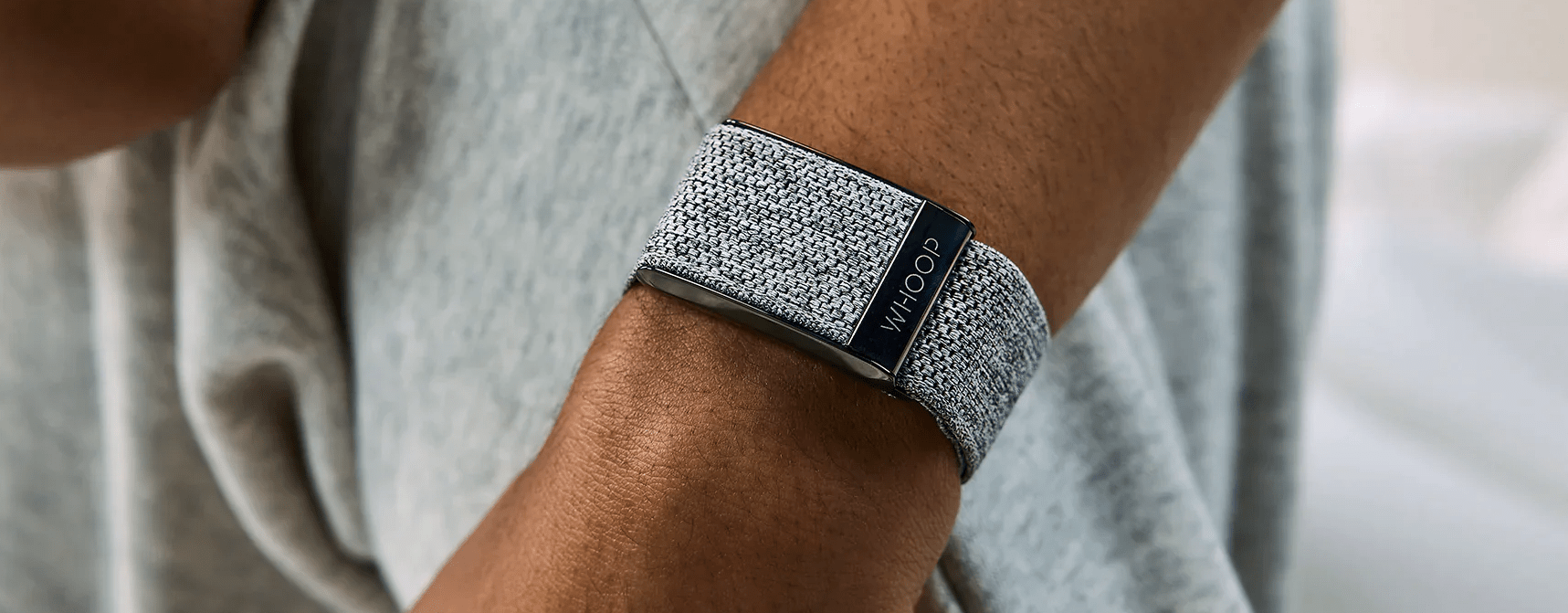
Whoop vs Polar – A Timeline
This timeline will be updated as events unfold, including events from a related case.
- Whoop originally launched in 2o15
- Amazfit Helio launch on June 24, 2024.
- Polar launches 360, an earlier, visually identical version of Polar Loop for the B2B market, on December 11, 2024
- Shenzhen Lexqi Electronic Technology launches its products around April 2025 (estimated from FCC filing date).
- Whoop 5.0 and MG models updated on May 8, 2025.
- Whoop sends a cease and desist letter to Yuzhou Du at Shenzhen Lexqi Electronic Technology, July 2025
- Polar LOOP launched on September 3, 2025
- Whoops starts a separate and similar copycat case against Shenzhen Lexqi Electronic Technology and the products it sells on Amazon (e.g. Hadrono), September 22, 2025.
- Whoop Inc. files the case against Polar Electro Oy in the U.S. District Court for the Eastern District of New York, alleging 15 U.S.C. § 1125 Trademark Infringement (Lanham Act). Damages are demanded and a cessation of sales of Polar LOOP in the USA, with a trial by jury. October 14, 2025,
- Polar rebuts the allegations. October 20, 2025.
The Core of the Dispute: Design Similarity
Polar’s new LOOP screenless tracker band is at the heart of the wearable lawsuit. It launched on September 3rd, 2025, and was marketed by the company as a cheaper competitor to Whoop, although Polar never mentioned it by name.
Whoop argues that the visual appearance of the Polar Loop is visually indistinguishable from its own device, citing a specific set of design details it claims are strongly associated with the Whoop brand:
- Continuous Fabric Band over Sensor: The design features a textile strap that wraps continuously over the main sensor module.
- Faceless Front: A minimalist front with no screen.
- Metallic Accents: Metallic details on the clasp and sensor housing.
Whoop claims that these features are not necessary to be functional. And that their look and feel identifies the product as Whoop. They state that Polar’s alleged copying will cause confusion in customers’ eyes.
Polar LOOP: is it a copycat design?
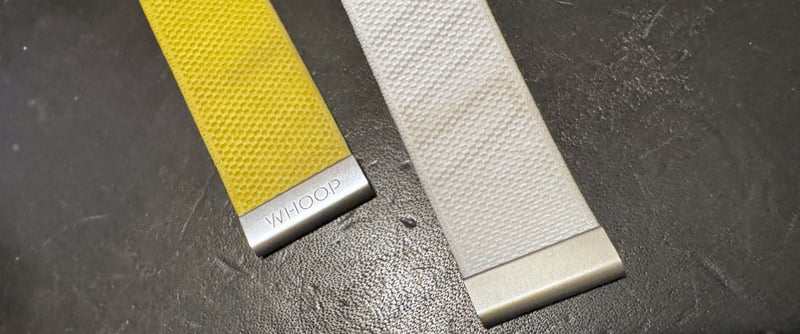
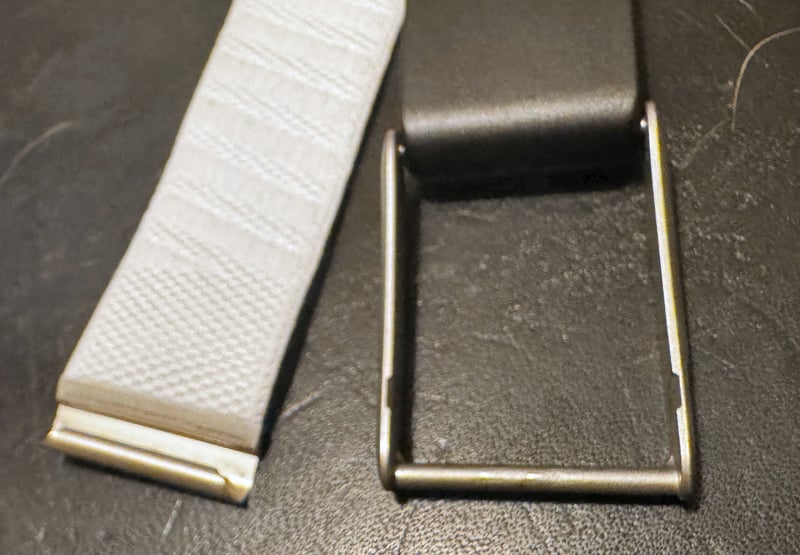
Here is a recent image of my Polar LOOP and a stock image from Whoop with it oriented in a similar way.
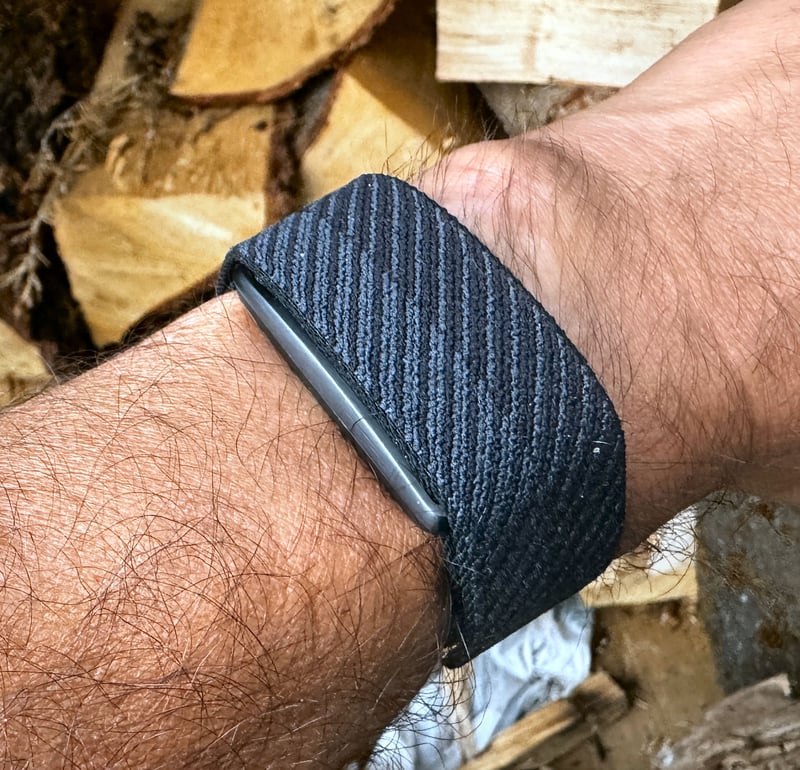
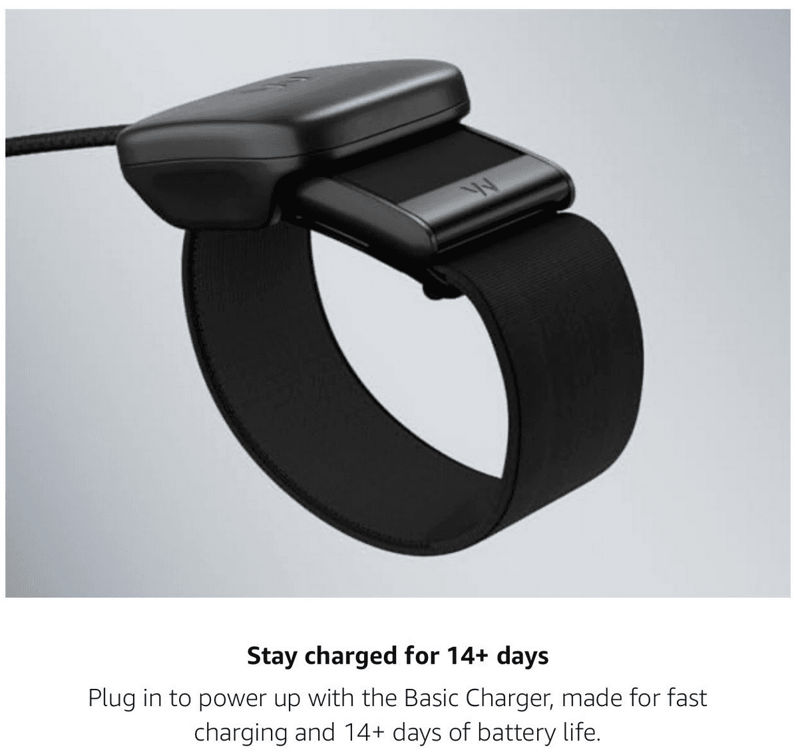
Here are some points I would make
- Whoop’s design is more refined, polished and elegant.
- Both do have a strap-over design; however, the attachment mechanisms are entirely different.
- Whilst Whoop does have a strap-over design, the strap is covered by the ‘W’ branded hook end to its band.
- The look from the side is similar, but not often seen
- Whoop markets numerous replacement straps and apparel, where the product can be worn differently. There is not one unique Whoop look.
- Amatfit Helio is very similar in appearance to Polar and hence to Whoop
- Other brands like Coros and Wahoo have made similar straps, but none have a directly competitive ecosystem of features.
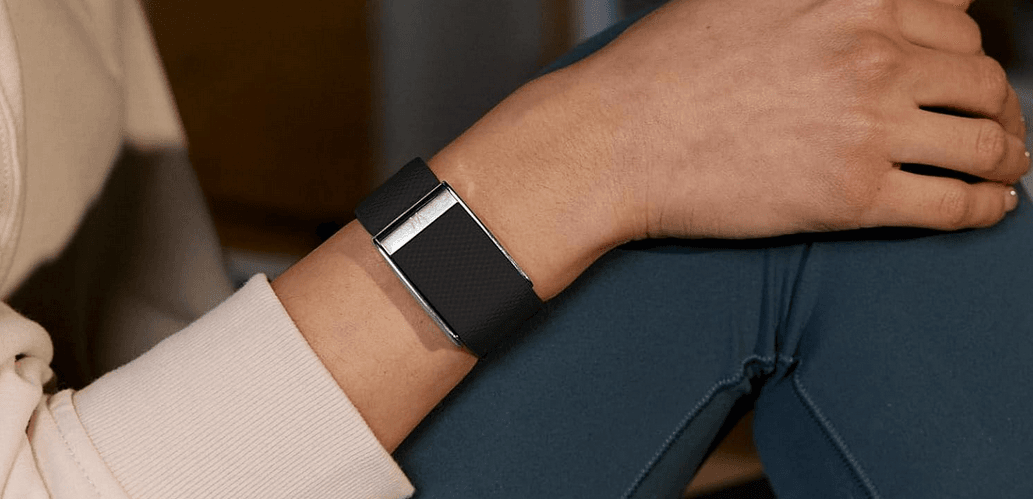
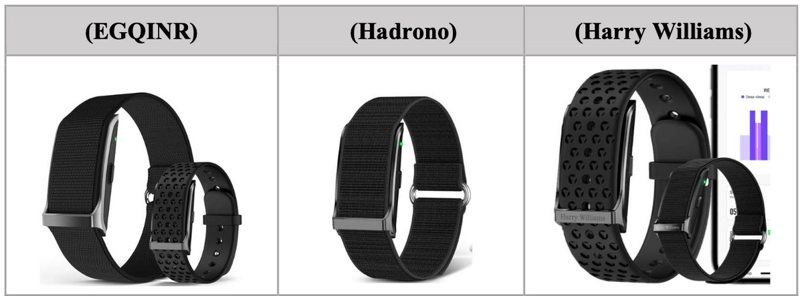
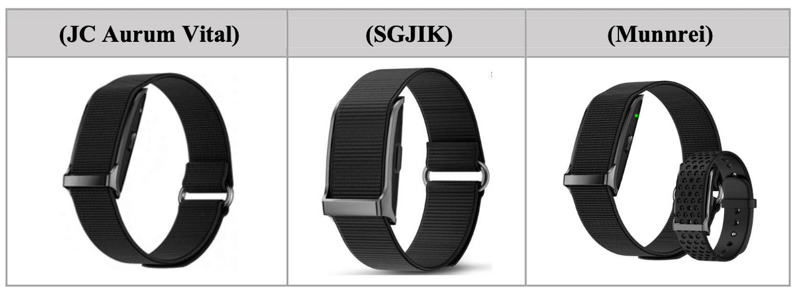
Contrast to the Clear Copycat produced by Shenzhen Lexqi Electronic Technology
Whoop’s other case against Shenzhen Lexqi Electronic Technology is interesting in that it highlights nearly identical products. But consider how they appear identical.
What makes them appear identical, in my opinion, is the single metal ‘band’ going over the strap. Polar LOOP has two bands that are thinner and subtly differently placed.
The Context: Subscription Model vs. One-Time Purchase
The legal clash arrives with an interesting commercial backdrop. While both companies have now introduced similar-looking screenless devices that track health and recovery metrics, their business models are fundamentally different:
- Whoop: Operates primarily on a subscription model, where owners pay a monthly or annual fee to access data and insights.
- Polar Loop is differently positioned as a one-time purchase for the band, with free lifetime access to all its features.
This clear pricing difference means that potential buyers may see Polar’s product as a more affordable, long-term option, potentially drawing customers away from Whoop. The absence of any other dispute between the companies suggests this claim is a swift response to a direct challenge. Whoop is worried.
The Stakes
Whoop is seeking material actions from the court, namely:
- Damages: Monetary compensation for the harm to its brand allegedly caused by Polar’s infringement.
- Injunction: A court order to immediately halt Polar’s sales and distribution of the current Polar Loop design in the US.
The key aspects determining the outcome will be whether Whoop can convince the court that its minimalist design elements are sufficiently non-functional to have a “secondary meaning”.
Bad News for Polar?
If successful, the lawsuit would probably force Polar to redesign a new device before restarting sales in the USA, which would probably take two years. It would be a significant legal victory for Whoop in protecting its distinctive aesthetic in the non-watch part of the wearable market.
Polar seeks to increase its presence in the US market after previously underperforming there. Shutting one of its products from the US market would be more inconvenient than fatal.
A victory would enable Whoop to take action against other competitors like Amazfit.
Whoop vs. Polar – An Expert Analysis
Despite the different pricing models, Whoop and Polar LOOP have broadly similar features and form factors. It will be easy to establish that they are direct competitors. Other than establishing the products as direct competitors, the products’ competencies are not relevant in this case. What matters are the physical similarities between the products and how customers and other members of the public might perceive that.
Here is my take on the chances of Whoop proving similarity in the three key areas of the case
- Continuous Fabric Band over Sensor: Whoop does not have a continuous fabric over the sensor. When worn on the wrist with standard bands, its band covers most of the sensor. In the related case, contrast the images of Polar LOOP with those from Shenzhen Lexqi Electronic Technology. The latter are virtually identical, while Polar’s are similar.
- Faceless Front: This class of products inherently has a faceless front. This criterion cannot be a necessary and sufficient characteristic for the case without giving Whoop de facto ownership rights of the product format (similar in some ways to how Oura seems to aim its legal efforts toward saying it invented the smartring, 2022)
- Metallic Accents: Metallic details on the clasp and sensor housing. Both designs have interchangeable bands, which are irrelevant to the look; what is relevant are the permanent, metallic aspects of the design. For Whoop, this is the branded outer face of the HOOK, which is the most visible metal part. Polar LOOP has two much thinner metal pieces visible from the top, which are part of an entirely different strap attachment mechanism. There is some visual similarity. From the sides, the two metal sensor pods look similar.
Polar’s job will be to negate each point.
In my opinion, the similarities of each of the three individual design aspects are not enough to classify the products as similar. In the round, these three factors together contribute to the similarity between the two products. Dismiss one or two of the design points, and Whoop’s case falls apart.
My Take
It seems that Whoop has a case here, but it appears less clear-cut than its case against Shenzhen Lexqi Electronic Technology, whose products are nearly identical.
Remember this differs from some recent cases, which boiled down to ‘who invented what’. This time, it is whether or not Polar has copied Whoop – the copying doesn’t have to be intentional, and Whoop doesn’t have to prove that it invented the ‘strap over the sensor’ look. Nor does Whoop have to prove that a customer might buy Polar Loop by mistake instead of Whoop.
Whoop has to show there are a blend of aesthetic elements that define its product and that someone might visually mistake one for the other.
Might your sports friends see your Polar LOOP on your wrist and think it could be a Whoop? The answer is probably yes, and thus, I would say that Whoop’s brand has been diminished in some way by a cheaper rival.
Like it or not, I suspect Whoop has a fair chance of winning.
For the complete guide to Polar watches, sensors and training science, see the Polar hub on this site.
Further Sources
- Whoop vs. Shenzhen Lexqi Electronic Technology, court filing
- Whoop vs Polar, court filing.
- Amazfit Helio review – ‘A $99 whoop tickler’
- Polar Loop Review – ‘A quick look at why it’s not a Whoop competitor‘
- Whoop sues Bevel (similar app) – April 2026.
- Whoop 5.0 Review
For full context on WHOOP hardware, accuracy, and competitive position, see the WHOOP hub.
Last Updated on 3 October 2026 by tfk the5krunner
Small things I always use
- Garmin 90-degree charging adapter: Charges your Garmin from any USB-C cable. Essential when travelling. I use one.
- Body Glide: The blue anti-chafe stick swimmers and runners carry. I use it.
- Speedo earplugs: Fewer ear infections and no cold-water dizziness. I use them.
- Dryrobe Advance: My winter changing robe for open-water swims. I use one. A cheaper option is the AONYIYI changing robe.
- Maurten: Race fuel that stays easy on the stomach. I use them.
- Garmin charging puck: The quickest way to top up before a session. I use one.
- Injinji: Toe socks that stop rubbing, so you run more. I use them.
- Ultimate toe protectors: Stop black toenails on long runs. They work. I use them.
- Compressport R2 v2 calf sleeves: My calf sleeves of choice. I use them.
- Cellucor C4: My pre-workout before hard sessions.
- TPU tubes: Schwalbe Aerothan, Tubolito and Pirelli SmarTube. Light, tiny spares. I use all three.
- G8 insoles: Adjustable insoles that are good. I use them.
- Cycplus Cube: A 97g electric pump that gets a road tyre rideable in two minutes. I carry one. 5% off with code THE5KRUNNER.
Watches and sensors
- Polar H10: My daily driver for waking HRV.
- Polar Verity Sense: My backup arm-worn HR sensor.
- Nomad bedside charger: Charges my iPhone and Apple Watch overnight. I use it, and many of their bands.
- Train.Red: The best muscle oxygen sensor I’ve used.
- Tymewear: Accurate heart rate and reliable ventilatory zones. I use it to pace endurance rides over an hour.
- Garmin Forerunner 970: A pro-grade triathlon watch. I use this.
- Apple Watch Ultra 4: My daily smartwatch. No phone needed on rides.
- Garmin Fenix 9 Pro: I’ve just bought one.
On the bike
- Continental GP5000 for everyday riding, and Aero 111 on the front for special occasions.
- Helmets: Specialized S-Works Evade 3 for road riding, and Rudy Project Wing for TT-style races. I use both.
- Ravemen FR300: A front light that mounts under your Garmin or Wahoo. I use one.
- Wahoo TRACKR Radar: I use it on one bike and Varia on the other. They perform the same.
- Garmin Varia RTL515: Radar that warns you of cars from behind. I use this model.
- Wahoo ELEMNT Roam 3: The bike computer that’s easy to use. I use mine on most rides.
- Favero Assioma Pro RS2: Accurate power pedals that swap easily between bikes. I use this model.
Home and indoor training
- NPE Runn: Makes my basic treadmill smart, sending more accurate speed and distance to my watch and Zwift. I use it.
- Google Wifi: Keeps Zwift connected in my pain cave. I use it.
- Apple TV 4K: Zwift on the big screen. I use two.
- Google Nest Doorbell (wired, 2nd gen): My video doorbell, running in both Google Home and Apple Home. I use it.
Health, recovery and sleep
- FreeStyle Libre 3 Plus: Shows how my blood sugar responds to diet.
- hDrop: Measures my sweat loss in summer and indoors.
- Fourth Frontier Zone: Checks my heart under load in hard sessions.
- Oura Ring 5: My partner’s recovery tracker of choice.
- Kineon MOVE+: Red light therapy for niggles. It works.
- Eight Sleep: A cooling mattress cover my partner and I use nightly.
Reader-Powered Content

This content is not sponsored. It’s mostly me behind the labour of love, which is this site, and I appreciate everyone who supports it.
Support the site: Follow (free, fewer ads) · Subscribe (paid, ad-free) · Buy Me A Coffee ❤️
Written by real people, with AI assistance. Fact-checked and verified for originality. See the Editorial Policy. FTC: Affiliate Disclosure — some links pay commission. As an Amazon Associate, I earn from qualifying purchases.
tfk is the founder and author of the5krunner, an independent endurance sports technology publication. With 20 years of hands-on testing of GPS watches and wearables, and competing in triathlons at an international age-group level, tfk provides in-depth expert analysis of fitness technology for serious athletes and endurance sport competitors. ID

I’m glad then at a glance I could wear a gear forerunner 35 and everyone thinks it’s a marquee athletic because it’s a round watch
ha!
you’ve got me there (well, whoop)
Polar does not have a clasp with logo over the pod.
IMO this is a nonsense suit. Whoop should not be allowed to own the design of a fabric cuff with a faceless sensor. Fabric cuffs for fashion pre-existed before Whoop. Given the state of technology the sensor will be roughly the size it is.
I personally think the whole Whoop concept is goofy. They should be suing Oura for making more sense and putting the sensor in a ring which inherently doesn’t have a display. Whoop just de-contented a sports watch / smart watch even more than Fitbit did by removing the on-device display entirely and only using the smartphone app. The innovation is the business model that is a pure subscription — which again is more like an Oura ring.
Turn it around, to a related context of wrist watch design. One cannot claim trade dress on something as generic as a wrist watch with a face. The trade dress design has to be very specific combination of case, dial, and hands designs that makes an Omega Seamaster or Rolex Submariner or Rolex Explorer II.
This is among the reasons that, although it would be easy, Apple and Garmin don’t have faces that look exactly like an Omega Speedmaster “moon watch” for example. In fact Apple famously ripped off the Swiss Federal Railway service clock design licenses to Mondaine in the iOS 6 clock app. I think that’s why Apple now uses those unique lozenge-shaped hands.
“Nobody can claim something as generic as device attached to wrist using fabric, leather, or silicone straps that displays time and other information and has metal accents.”
if you look at the chinese ripoff company then i reckon whoop took umbridge against them (fair enough) then thought they’d have a crack at polar while they still had the same lawyers prepped on the generalities of the case and ready to go.
i think you’re over simplifying what constitutes novelty with these new product formats.
“Nobody can claim something as generic as device attached to wrist using fabric, leather, or silicone straps that displays time and other information and has metal accents.” and yet you would have thought the same argument applied to smartrings but, hey, Oura.
“nobody could claim that something as general as interlocking rings…” try telling that to the IOC.
the law is what it is. I suspect we all miss the subtlties of what will actually be in the case. I’ve gone from armchair general last week thinking about Ukraine and now I’m an armchair judge. Luckily I’m only let loose on my keyboard every now and then
I think the only major issue we have in the US and UK is that we have adversarial legal systems where each side tries to win. the aim is not to find the right answer. the aim is to win. (France is different, i beleive). so with our system it is always going to be skewed towards those with the most resources (money) and best lawyers who are most skilled and most able to play the system to its fullest. doens’t always work, but often does. we simlpy beleive (en masse) what we are told about freedom, equality under the law, constituional rights and all that stuff.
I’m saying Trade Dress is a weak IP claim to begin with. It isn’t like Trademark or Copyright infringement which is literal copying of something. Or patent infringement which is a government granted monopoly on a technology for a fixed period in exchange for disclosure in the form of the public patent. Trade Dress claims are that your product looks too much like my product.
When the product category is super-generic and obvious the claim is hard to win. I’m saying that wrist bands and bangles are generic since antiquity. The whoop band is super generic-looking there are no frills like the Whoop logo that is being copied. It’s like Rebok suing because someone made an identical white leather sneaker with a Union Jack and stitched ReboR on the side.
I’m personally not impressed with Whoop’s trade dress claims because they deliberately designed these things to be generic-looking grey bands not fashion bands like Swatch would have done. The claim that they own fabric loop with a faceless sensor and a metal accent is to me a nonsense. But maybe they will succeed. I don’t know.
agreed, i belive the plaintiffs only win in 30% of the cases.
my understanding is that trade dress also excludes the logo component.
the case is about smart bands, not bands, i beleive. so it is a fairly small market.
I’m not a lawyer so I have little background to dispute that you feel Whoop has a strong case here. But I strongly disagree. If you look at the at the devices side by side, both on and off the wrist, they are strikingly different, in my opinion. Despite Whoop’s claim of them having a ‘continuous cloth strap’, they absolutely don’t have that. Their device has a very clear metal logo across the top of the device on one side and the strap simply sits across the top of the device on the other side.
Polar on the other hand has a strap that is clear fed through the sensor, NATO-style with a metal buckle elsewhere on the strap with an obvious velcro closure. If I knew NOTHING about these devices then I might think they were the same thing in the same way that someone who knew nothing about watches wouldn’t be able to tell you from a glance that a Timex & Rolex were different things. But if you look at it for more than a moment it will quickly become obvious that they are not the same.
hi
thank you for your opinion! i love opinions here.
I hope i have not said that i think whoop has a strong case (actually i said GOOD but on reflection i revised that to FAIR). point being t’s not pie in the sky , there is a case here. most of these types of suits fail.
1. the logo/branding is not relavent, tho i dont think you say it is but you mention it
2. i agree with what you say about the strap: but whoop is specifically not saying that. It is saying “Continuous Fabric Band OVER Sensor:” there is a subtle difference to your interpretation compared to theirs.
3. if you glanced at a timex and a rolex i reckon anyone would know the difference. but between a Rolex and another high quality simialrly sized timepice i probably couldn’t tell from a glance either jsut as i could tell a distinguish a KIA form a HYUNDAI
my interpretation is that they have to have a decent shot at each of the 3 points they make then added together its enough. IDK if the case is that strong. reading the words carefully i think they make a case for sure.
let’s try another way. look at the Lenqi strap and the whoop strap. surely you would agree they ARE very similar and that Lenqi is passing off its product. Polar is clealy not as similar. but where do you draw the line? that’s what courts do.
i haven’t brought up all the other material that is in the filing (link above in the article) but there are also various other comments about the way the product is marketed, the imagery and even that some of the comments made about the product demonstrate whoop’s argument as true ie peopel are confused.
I agree that the logo itself isn’t relevant, but the metal piece holding the strap in place is a very obvious difference visually to me. The design makes it stand out because it’s large and asymmetrical. Meanwhile the Polar design is much thinner and symmetrical.
While there both have cloth over the sensor, I really think they have very different appearances. My first reaction when I saw it was how much more I liked it than the whoop, style wise.
Who knows what the court will say though.
This case will be very important for the health and competitiveness of the wearables space.
There are only so many ways you can make a screenless wearable band for fitness metrics.
Given that such a device is by its nature intended to be minimalist and as dissimilar to a watch as possible, this limits the range of aesthetic choices further still.
If whoop win this case, they prima facie own the very concept of a screenless sensor wristband. That would prove to be very anticompetitive.