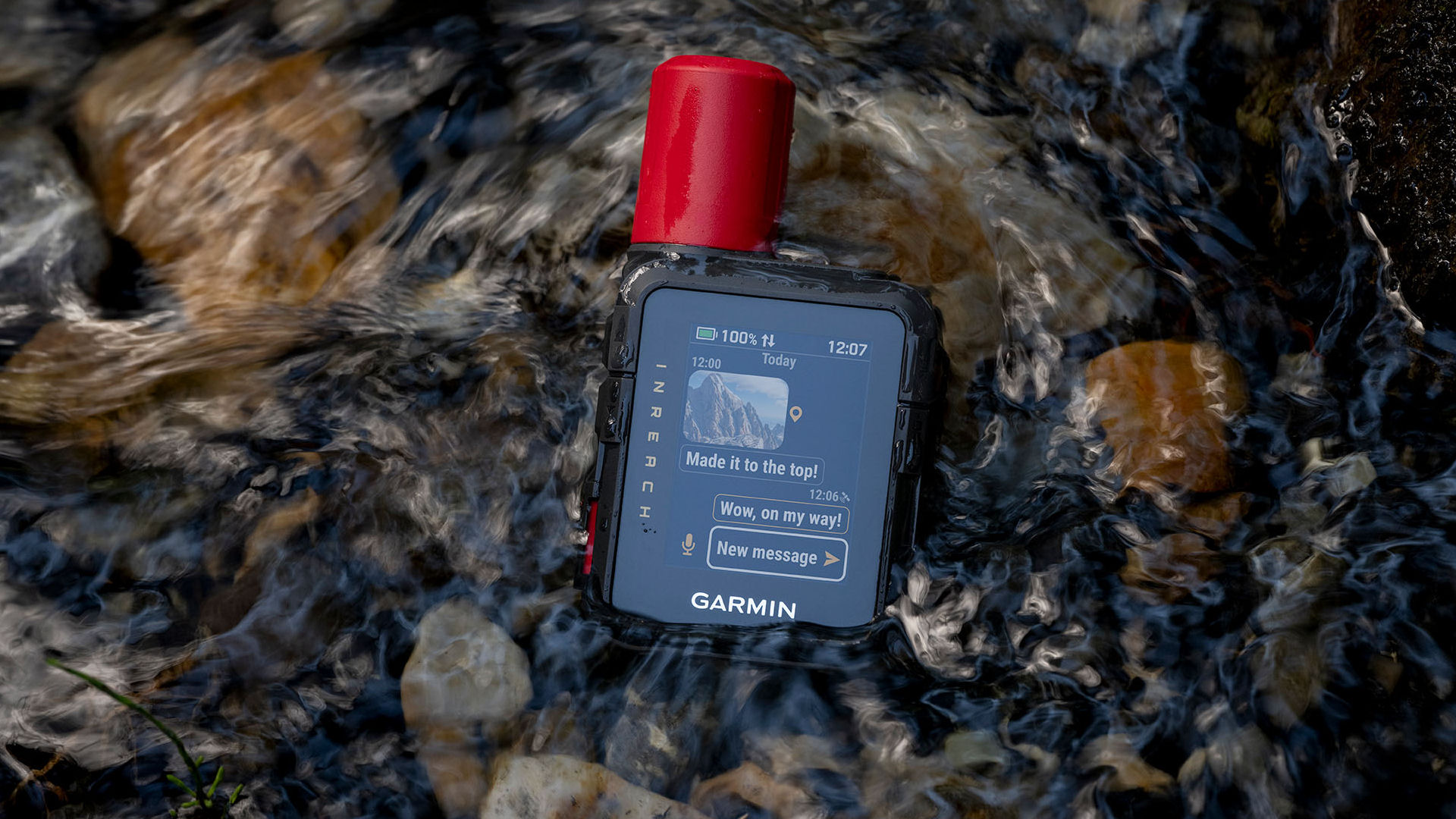
Garmin inReach Mini 3 – Buyer’s Guide ✔️ All You Need To Know
Adventurers beware: Garmin’s new generation of compact SOS satellite communicators poses a significant threat to your bank balance. The InReach Mini 3 and InReach Mini 3 Plus are Garmin’s two new models that mark a significant leap forward from the old Mini lineup. Here’s everything you need to know if you plan to buy one.
inReach Mini 3 doesn’t need a smartphone – it helps though. But it does need a subscription.
For those unfamiliar with off-grid safety, Garmin’s secret sauce is its market-leading SOS and assistance capabilities from its Response Centre over the Iridium satellite network.
Listen to the discussion
A significant evolution in compact satellite communication, blending off-grid safety with a modern user experience.
Summary
Key takeaway: the inReach Mini series remains Garmin’s go-to safety tool for serious adventurers who venture beyond mobile coverage, offering reliable, two-way SOS communication over the Iridium satellite network. A competent all-round service.
The core point of difference between the two models in the series—and the central buying decision—is the premium price attached to the new ‘rich messaging’ features.
- Mini 3 – base option for those who only want the updated colour touchscreen, the new form factor, and are satisfied with basic text messaging.
- Mini 3 Plus – premium choice if you want voice transcription and photo messaging when you communicate with friends/family, or to provide more detail to the Garmin Response Centre during an SOS.
While inReach Mini 3 is a solid piece of hardware, offering high-quality Multi-band GNSS/GPS and rugged, military-grade durability (MIL-STD-810/IP67), the central limitation is that it is a communicator first, not an advanced navigator. You will probably also need the Garmin Explore App (smartphone) for detailed mapping and route planning. Most critically, the device is useless for backcountry SOS communication without a satellite subscription and the cost that comes with it.
It’s a hefty price bump over the Mini 2, but one that seems justified when you compare it within Garmin’s product range.
The spanner in the works is that Apple (iPhone, Watch), Google (Pixel, Pixel Watch) and others offer similar satellite services for free. Instead, why not buy a new phone and battery pack?
Pros
- Non-geostationary satellite network
- Better global coverage, good for marine
- Exchange photos and 30-second transcribed voice messages anywhere (3 Plus)
- 1.9″ colour display
- Touchscreen & button interaction
- Compact, competent format (MIL-STD-810, IP67).
- Battery life up to 14 days with 10-minute readings.
- Multi-band GNSS for good location accuracy.
- Remotely controlled by many other Garmin devices.
Cons
- Requires satellite subscription.
- Fairly expensive initial cost for the Mini 3 Plus ($499.99/£439.99).
- Base Mini 3 model (£389.99) lacks photo/voice messaging.
- Not a true navigator – needs 3rd party help for this, e.g. with the Garmin Explore App for detailed topo maps and advanced routing.
- Satellite communication devices are illegal in some countries.

Design and Hardware: The Aesthetics and Durability Test with MIL-STD-810 Rating
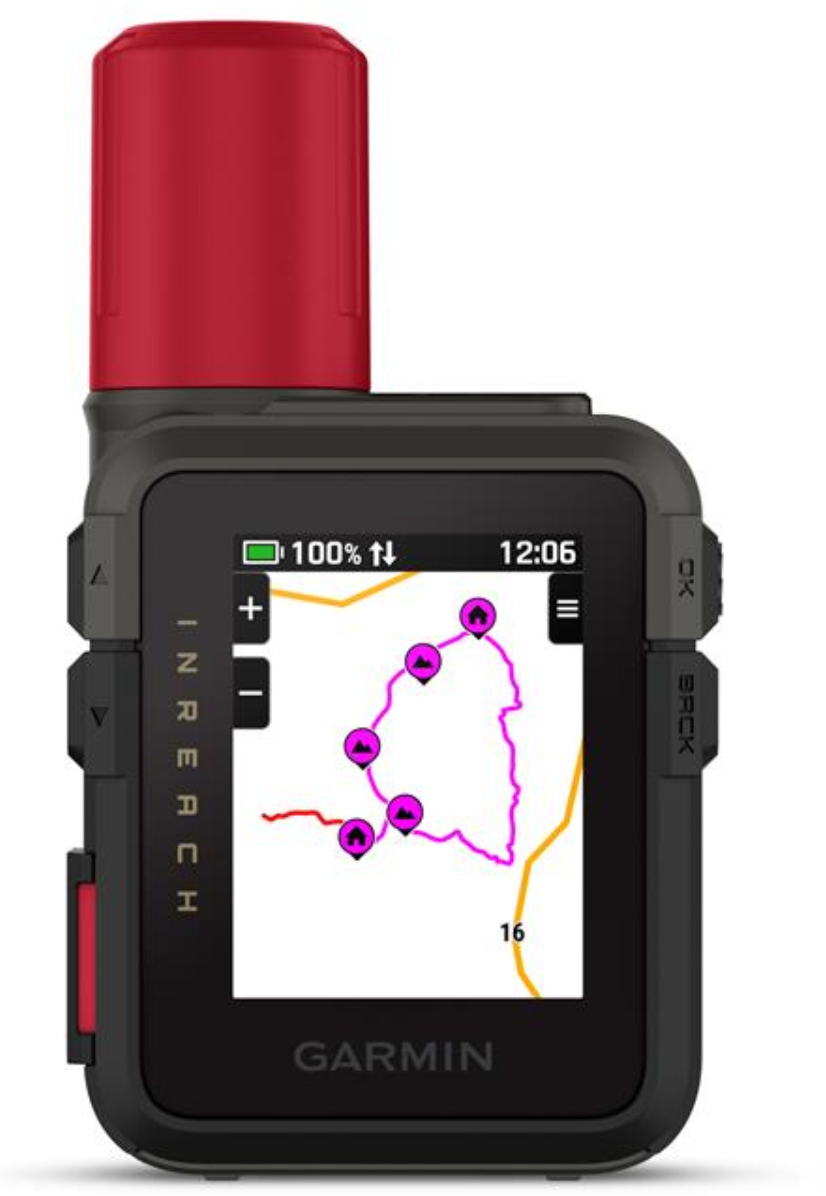
inReach communicators are built for the backcountry, and Mini 3 is no exception. It’s tough, durable and impact-resistant. The main body of the device is rated MIL-STD-810 compliant, making it highly resistant to thermal, shock, and water ingress. Indeed, the water resistance has been improved over the previous version, with an IP67 rating (was IPX7).
On the downside, the lens is chemically strengthened glass, which will scratch at some point, but inReach was never intended to go on a beauty parade. A few knocks might even boost your hiking cred.
It’s a stubby-looking thing, and it won’t look out of place strapped to your belt or backpack. There are various tethers, lanyards and cases to help with that.
It’s light and small. Perfect. The specs come in at 125.2 g/4.42 oz (base: 122.2 4.31 oz) and measure 5.5 x 9.80 x 2.67 cm.
Mini 3 Plus also comes with a microphone, speaker, webbing loop and carabiner
Advanced Media: Photo and Voice Messaging (Mini 3 Plus Only)
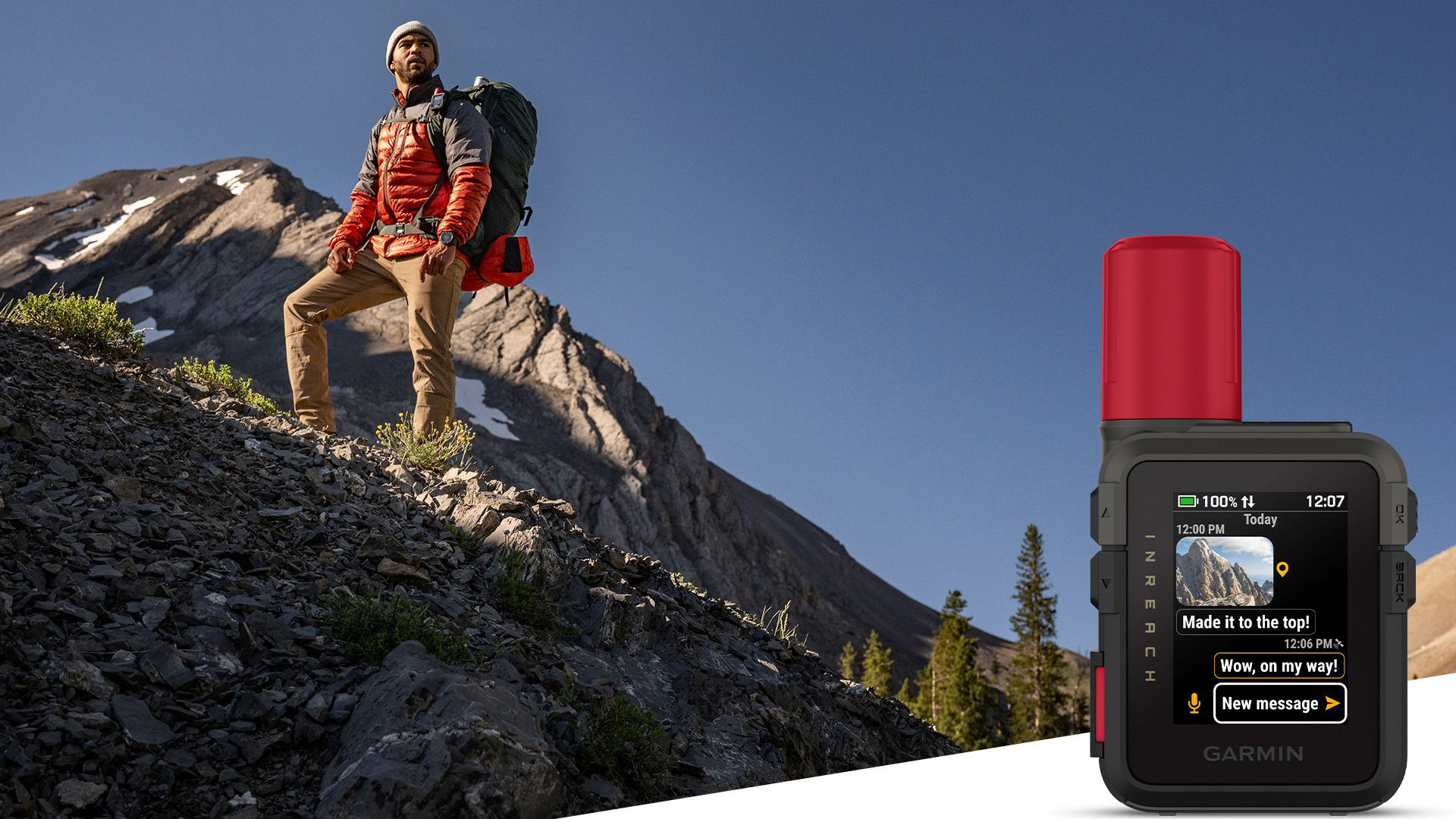
Messaging capabilities take a big leap forward. The obvious leap is the higher-resolution colour capability.
Text messaging capabilities are also enhanced, allowing messages up to 1,600 characters. You can either tap the virtual keyboard or use the Garmin Messenger app to create a message.
You might doubt that you’ll ever type 1,600-character messages; however, inReach also transcribes audio. So you can dictate longer messages to your loved ones as you summit or discover the source of the Amazon. Well, the message can’t be too long and is limited to 30 seconds of audio. Conversely, you can silently read transcribed messages or have them read aloud.
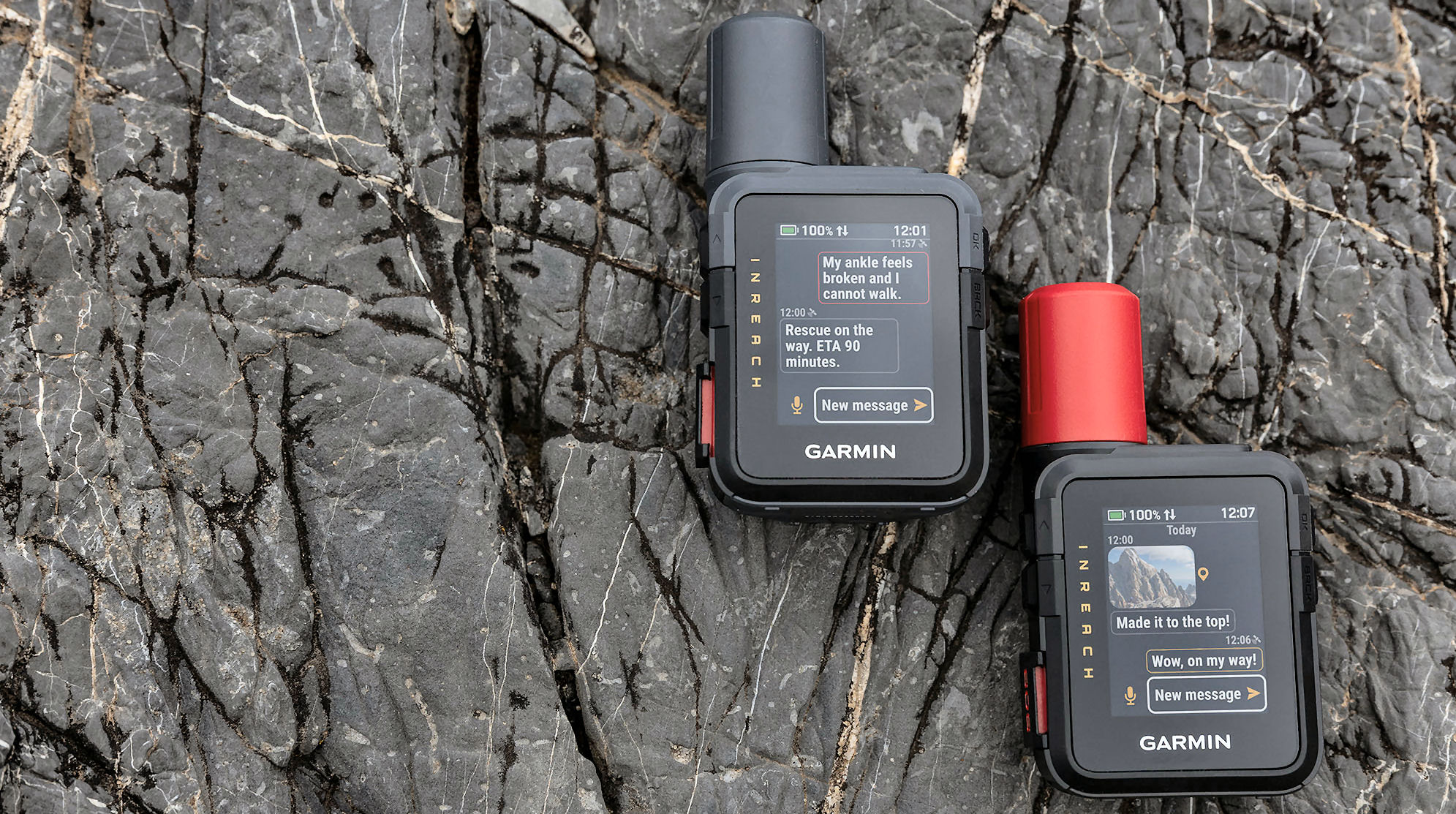
Finally, there are the new colour photo messages (image below), which are pretty cool.
The catch: There’s always a catch and this time it’s that the messages must be sent and received within the Garmin Messenger app ecosystem ie your friends or partner also need to install that.
Interactive SOS & Garmin Response with Media Sharing
Your primary justification for buying your first inReach was probably safety. If there’s an emergency, you can trigger an interactive SOS message by automatically sending your GPS coordinates and other details to the 24/7 staffed international Garmin Response Centre.
This detailed guide to the inReach SOS process explains what happens in emergencies. In particular, you might want to consider getting insurance to cover the call-out and rescue costs.
Garmin inReach SOS: The Complete Guide to Activation, Rescue Coordination, and Costs
The inReach service worked well before the colour screen and transcribed messages were ever dreamt of. However, the existing processes will only be enhanced by the ability to share photos and voice messages during any callout.
The Mini 3 Plus uses a new Iridium Certis IMT protocol for sending photos and voice messages. This is quick and performs similarly to GPS Map H1. Whereas the base Mini 3 uses Iridium short burst (like Mini 2).
All emergency communications can use the global Iridium satellite network, independent of mobile phone coverage.
Iridium satellites are not in geosynchronous orbit. If you are stuck with no signal, the satellites move and will give you coverage.
Smart Switching: Wi-Fi, Cellular, and Iridium Satellite Network
The Garmin Messenger app manages the communication channel and automatically switches to the most appropriate one. Generally, they are used in this order of priority: Wi-Fi> Cellular > Satellite. The latter is slower and less reliable.
Tech Deep Dive: Multi-band GPS & Colour Touchscreen Interface
The new Colour Touchscreen Interface has a 1.9″ (48.26 mm) diagonal display with a decent resolution of 306 x 230 pixels. It’s not the brightest of displays as it uses the more energy-efficient Transflective colour MIP (Memory-in-Pixel) tech, which allows a touchscreen layer to be included. Garmin’s touchscreen is technically mature and generally works well in most conditions, and is usually easier to use than buttons!
Swiping through menus is easier, dictating a message is easier. Using gloves isn’t, that’s where the buttons come in.
This is the first Mini unit with a touchscreen, which works similarly to the one on the GPSMAP H1/ETrex Touch, i.e., easier to use and more intuitive than the old button-only setup. A solid update. You can disable the touchscreen and use the full-screen keyboard instead, but the characters are tiny.
Garmin does not specify the GNSS chipset model it uses in the inReach 3 Mini. It almost certainly does not use the same super-accurate Synaptics model as its high-end outdoor watches, like the Fenix 8. That said, it probably uses one from the same Synaptics family that omits dual-frequency reception (L1+L5) but still supports all the major satellite constellations, including GPS, Galileo, QZSS, and BeiDou. They will usually give you accuracy to within 5m, although deep canyons, cliff faces and dense tree cover might introduce some additional inaccuracy depending on the conditions.
Map Omissions: satellite imagery, detailed marine hydrography, and searchable POIs (available via free Garmin Explore app).
Using GPS for navigation
Pre-loaded maps include a Garmin worldwide base map, which lacks trail details and contour lines. It also seems impossible to load other maps.
Mini 3 and 3 Plus are primarily communicators but do offer some navigational capabilities, namely
- Track Back Routing – retrace your steps
- Digital Compass – navigate by straight-line compass bearing
- Point navigation – to 1,000 waypoints, favourites, locations (includes a POI list for cities)
- 100 Courses – The device architecture includes sections for Waypoints and Courses
- Off-trail alerts – Course loaded from the Explore app gives off-trail alerts (requires navigating on the Explore app, not Mini 3).
Navigation Omissions: No smart rerouting. TBT or on-device route creation – use an app or 3rd party device for that.
The Competitive Edge: Mini 3 vs Mini 2 and GPSMAP
Compared to the previous Mini 2, Garmin has hiked the price to match the boost in features. Either device is equally capable of saving your life, so you’re paying the extra for substantially more modern, capable hardware.
Mini 3 easily outperforms Mini 2 for general usability and experience – for a price
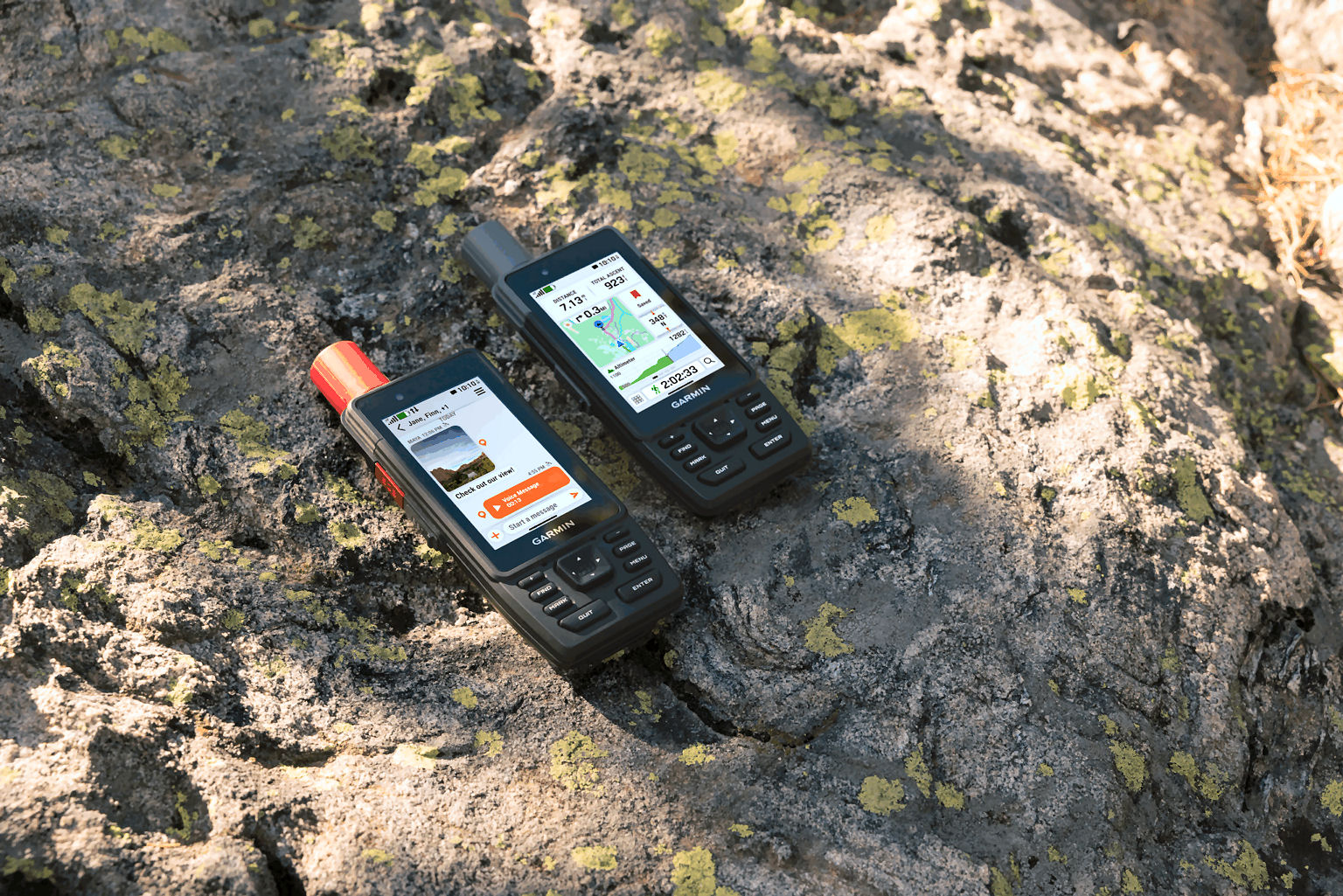
Mini 3 and 3 Plus can also be contrasted to Garmin’s GPSMAP range, such as the H1i Plus ($1,000, 2025). These are communicators and navigators. So they fill the mapping and navigation omissions of the inReach Mini. Do you want to pay twice the price for that when you might be able to make do with connected features from a smartphone app?
GPSMAP devices navigate and map to a high level, whereas the inReach Mini 3 falls short. Again, there’s a price premium up to the GPSMAP.
A significant evolution in compact satellite communication, blending off-grid safety with a modern user experience.
Summary
Key takeaway: the inReach Mini series remains Garmin’s go-to safety tool for serious adventurers who venture beyond mobile coverage, offering reliable, two-way SOS communication over the Iridium satellite network. A competent all-round service.
The core point of difference between the two models in the series—and the central buying decision—is the premium price attached to the new ‘rich messaging’ features.
- Mini 3 – base option for those who only want the updated colour touchscreen, the new form factor, and are satisfied with basic text messaging.
- Mini 3 Plus – premium choice if you want voice transcription and photo messaging when you communicate with friends/family, or to provide more detail to the Garmin Response Centre during an SOS.
While inReach Mini 3 is a solid piece of hardware, offering high-quality Multi-band GNSS/GPS and rugged, military-grade durability (MIL-STD-810/IP67), the central limitation is that it is a communicator first, not an advanced navigator. You will probably also need the Garmin Explore App (smartphone) for detailed mapping and route planning. Most critically, the device is useless for backcountry SOS communication without a satellite subscription and the cost that comes with it.
It’s a hefty price bump over the Mini 2, but one that seems justified when you compare it within Garmin’s product range.
The spanner in the works is that Apple (iPhone, Watch), Google (Pixel, Pixel Watch) and others offer similar satellite services for free. Instead, why not buy a new phone and battery pack?
Pros
- Non-geostationary satellite network
- Better global coverage, good for marine
- Exchange photos and 30-second transcribed voice messages anywhere (3 Plus)
- 1.9″ colour display
- Touchscreen & button interaction
- Compact, competent format (MIL-STD-810, IP67).
- Battery life up to 14 days with 10-minute readings.
- Multi-band GNSS for good location accuracy.
- Remotely controlled by many other Garmin devices.
Cons
- Requires satellite subscription.
- Fairly expensive initial cost for the Mini 3 Plus ($499.99/£439.99).
- Base Mini 3 model (£389.99) lacks photo/voice messaging.
- Not a true navigator – needs 3rd party help for this, e.g. with the Garmin Explore App for detailed topo maps and advanced routing.
- Satellite communication devices are illegal in some countries.
Battery Life Claims: Real-World Expectations and Data
Despite the significant changes to Mini 3’s hardware, Garmin has maintained the same claimed battery performance levels as Mini 2.
| Battery Mode | inReach Mini 2 | inReach Mini 3 / 3 Plus | GPSMAP 67i |
|---|---|---|---|
| 10-min Tracking (standard) | 14 days | 14 days (350/330 h) | 165 h |
| 10-min (tree cover) | 4 days | 4 days | — |
| 10-min (high detail) | 5 days | 5 days | — |
| Performance Messaging | — | 95 h (4 days, Plus only) | — |
| Multi-band / SatIQ | — | — | 180 h |
| Expedition Mode | 30 days | 30 days | 840 h |
| Powered Off | 1 year | 1 year | 1 year |
Garmin tends to understate battery life to account for some degradation over the device’s life and the vagaries of real-world conditions. The core factors affecting performance are the polling frequency, which Garmin accounts for in the different battery modes, and the reception conditions.
Key Takeaways: There’s a mode for your safety for weeklong or monthlong adventures, and for weekends.
Who Should Buy the inReach Mini 3 and Mini 3 Plus?
The major consideration is the need and cost of an active satellite subscription to access the Iridium network.
The core buyer needs backcountry SOS features from a lightweight device that lasts up to a month. Either Mini 3 model is fine for that.
You won’t be looking for a complete mapping and navigation solution from a single device, as you will need additional features from a 3rd-party source, such as the Garmin Explore App on your smartphone.
Thus, the key differentiator is for those who want rich, modern communication (voice, photos, long-form text) – only the Plus model offers that.
Software and Ecosystem Compatibility
The features of the inReach Mini 3 series rely heavily on four other parts of the broader Garmin ecosystem. Hopefully, this table helps clarify where each piece of software fits.
| Garmin Component | Purpose | Works With |
|---|---|---|
| Messenger App | Essential for all messaging – simple, rich and group. Switches between Wi-Fi, cellular, and the Iridium satellite network, and synchronises contacts. | inReach Mini 2, Mini 3, Mini 3 Plus. |
| Explore App & Website | Optionally accesses automatic routing (turn-by-turn on roads), topographical mapping, satellite imagery, detailed hydrographic features, and searchable points of interest (POIs). | inReach Mini 2, Mini 3, Mini 3 Plus. |
| Connect Mobile App | Used for daily smart features such as weather reports. | inReach Mini 3, Mini 3 Plus. |
| Garmin Share | Used to easily share saved locations and courses with friends’ compatible Garmin devices. | inReach Mini 3, Mini 3 Plus. |
Remote Control Compatibility
The inReach Mini 3 and Mini 3 Plus can be controlled by other Garmin devices to send and receive messages, start/stop tracking, and trigger an interactive SOS using a wide array of other compatible Garmin products. This list excludes newer models that are also compatible.
| Device Category | Examples of Compatible Devices…these and newer models |
|---|---|
| Aviation Watches | D2 Charlie, D2 Delta, D2 Mach 1 Pro. |
| Diving Watches | Descent G1 Solar, Descent Mk1, Descent Mk3i. |
| Cycling Computers | Edge 1030, Edge 1040 Solar, Edge 540, Edge 840. |
| Rugged/High-End Watches | Enduro 2, epix (Gen 2), fēnix 6 Pro, fēnix 7X Pro. |
| Running Watches | Forerunner 935, Forerunner 965. |
| Handheld GPS Units | GPSMAP 66s, GPSMAP 67, Montana 700. |
| Marine Chartplotters | GPSMAP 722, GPSMAP 8417 MFD, GPSMAP 923. |
| Tactical Watches | tactix 7, tactix Delta. |
| Quatix Marine Watches | quatix 5, quatix 7 Pro. |
| Instinct Series Watches | Instinct 2 Solar, Instinct 2X Solar – Tactical Edition, Instinct 3. |
| Motorcycle/Off-Road GPS | Tread, zūmo XT2. |
inReach Mini 3 Technical Performance Review
Testing from @TheHikingGuy shows Mini 2 and Mini 3 Plus received messages simultaneously.
Other New Features on inReach Mini 3
- Siren – available in the menu.
- Voice commands –
- Widget Glances – Compass, map, weather, etc.
Missing: There is no action button/shortcut for check-ins
Take Out: Garmin inReach 3 Mini
The Garmin inReach Mini 3 series is a solid update over its predecessor. The core mission is safety, but now with a new focus on a richer experience when using its messaging.
The key decision for buyers reviewing two capable devices comes down to:
- The Mini 3 offers a new colour touchscreen but remains text-only for messaging.
- The Mini 3 Plus would be my choice, adding voice and photo messaging via the new colour touchscreen, enriching communication and SOS reporting.
Both models offer military-grade durability and reliable SOS over the Iridium network, backed by up to 14 days of battery life. However, they are communicators, not navigators; detailed mapping and advanced navigation require the Garmin Explore smartphone app. A mandatory and costly monthly satellite subscription is required to use either device for communication.
Basic Maps are a great addition but they are for quick situational glance for context not navigation
While the Mini 3 is a simple product update, Garmin is clearly reimagining its wider apps and services in this field as it counters the attack on the more ‘casual’ end of Emergency SOS use by Apple and others. The subscription and service marketing will eventually become a more straightforward proposition – for comparison, look at how cellular tariffs have simplified in recent years.
Product changes elsewhere are also intriguing. Fenix gets satellite. inReach gets smart features and maps. There’s a lot of blurring and duplication happening. If Garmin is lucky, its customers might buy multiple product formats; if it’s unlucky, some might buy an iPhone.
One-Off and Ongoing Subscription Cost
Garmin now allows multiple devices per inReach account. However, you must still pay for each device, and there will be an activation fee of about $40.
| Model | UK Price (Suggested Retail) | USA Price (Suggested Retail) | EU Price |
|---|---|---|---|
| Garmin inReach Mini 3 Plus (With photo/voice messaging) | £439.99 | $499.99 | – |
| Garmin inReach Mini 3 (Touchscreen, Text only) | £389.99 | $449.99 | – |
| Plan | UK Price (Monthly) | USA Price (Monthly) | EU Price (Monthly) |
|---|---|---|---|
| Enabled | £7.99 | $9.95 | €11.99 |
| Essential | £14.99 | $24.95 | €29.99 |
| Standard | £29.99 | $49.95 | €59.99 |
| Premium | £49.99 | $79.95 | €94.99 |
Sources and Resources
- Buy Garmin inReach Mini 3 Plus
- Buy Garmin inReach Mini 3
- Garmin inReach Mini 3 Plus Press Release
- Garmin inReach Mini 2 Product Page
- Garmin inReach Mini 3 Product Page
- Youtube: Introducing inReach Mini 3 by Garmin
- Youtube: WalkThrough of InReach Mini 3 by Garmin
- Youtube: Stay Connected (Ecosystem Look) by Garmin
- Youtube: First Walk @TheHikingGuy
Last Updated on 23 February 2026 by the5krunner
Reader-Powered Content

This content is not sponsored. It’s mostly me behind the labour of love, which is this site, and I appreciate everyone who supports it.
Support the site: Follow (free, fewer ads) · Subscribe (paid, ad-free) · Buy Me A Coffee ❤️
All articles are written by real people, fact-checked, and verified for originality. See the Editorial Policy. FTC: Affiliate Disclosure — some links pay commission. As an Amazon Associate, I earn from qualifying purchases.

tfk is the founder and author of the5krunner, an independent endurance sports technology publication. With 20 years of hands-on testing of GPS watches and wearables, and competing in triathlons at an international age-group level, tfk provides in-depth expert analysis of fitness technology for serious athletes and endurance sport competitors.

The real competitor is SPOT. The satellite connectivity in all of the smart watches is mostly a technology demo. The iPhone emergency SOS by satellite feature is only a small bit of what you use one of these trackers for.
The main thing is for your friends and loved ones to be able to see your real time location out in the wilderness. Some years ago I had a SPOT tracker issued by an event in Southern Africa which did not work properly and unbeknownst to me died at a river crossing leaving my wife wondering if I was alive for two days until I was back in communication range. After that debacle, I acquired the original inReach mini which works petty well and had maybe 15 hours of capacity at the fastest telemetry option. It worked quite well but I ended up turning off the integration with my fenix because it turns out I do not want to receive a text message from a friend on my watch while running up a mountain in the wilderness.
The inReach mini still needs somewhat decent access to sky and will drop telemetry points in deep forest cover but I’m 100% certain that no watch will work for livetrack in that scenario either.
The 2nd major feature is being able to send a message to your friends and loved ones that you have reached the finish or camp alive.
The 3rd is the SOS button and SAR response and a rescue insurance plan which yes could be life saving but is also spouse stress reducing.
So yes there is some overlap with those casual emergency features but it’s like saying there is overlap between a Jansport book bag and a technical climbing pack or a pair of Converse All Starts and Alphafly race shoes.
Exactly this. The watch based satellite communication devices (including Garmins own F8 Pro) really aren’t direct competitors for real satellite communications. No way on earth I’d rely on one of those for safety in the back country as in most scenarios where you’d need them the chances of them actually working to communicate is pretty small. And none of them have automatic off grid tracking like the true inReach devices. Yes, these are expensive, but I won’t head out on the trails around here without one as LTE coverage is extremely limited. Personally I still like the form factor of the Messenger+ and I always have a watch for navigation anyway.
The big advance here is a standalone device where it’s truly useful even without phone or watch for communication and navigation. Being able to send voice messages directly from the device is pretty cool. Now just needs a camera (even if minimal quality) to round out the MM functionality.
As for navigation, it might not have full detailed maps but I believe it can do full course navigation.
yes you can upload and sync routes.
interesting on the camera. i dont think Garmin would do that but i can see your logic
“There’s one additional positive product form change: USB-C charging.” – That is not a change: Mini 2 already was USB-C (as was the Messenger Plus).
Also, the Remote Control Compatibility tables is missing the Fenix 8.
ty re usb.
yews i know there are several missing compatible products. i took my list direct from garmin and didnt have the time to research every other product of theirs!!
Excellent and thorough review. You’ve covered the critical upgrades—like the improved GPS chipset and USB-C—that make the Mini 3 a meaningful evolution. Your perspective on it as a “buyer’s guide” is spot-on, especially the honest breakdown of who it’s for (backcountry adventurers) and who might still be okay with the older model or a simpler PLB. The SOS and weather fee structure is something every potential buyer needs to understand upfront.
For someone building a backcountry safety kit, is there a compelling argument to carry both a dedicated PLB (like an ACR ResQLink) for its guaranteed, fee-free SOS and the inReach Mini 3 for two-way messaging and tracking, or does the Mini 3’s SOS functionality completely negate the need for a separate PLB for all but the most extreme, weight-conscious expeditions?