For the broader triathlon technology context, see the triathlon and multisport technology hub.
Garmin Rolls Out November 2025 Smartwatch & Edge Feature Update
Garmin’s latest software update for its smartwatches and cycling computers began rolling out today. The free update provides key new features and improved functionality across a range of fitness and outdoor products.
Key New Features in This Release
New features are split between the latest cycling and watch products. I’ll comment on the omissions further below.
Health & Recovery
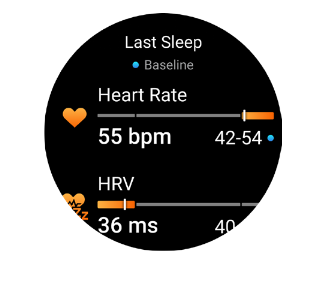
- Health Status: This feature monitors key health metrics—such as resting heart rate, HRV, and Pulse Ox—while you sleep to identify trends that move away from your baseline. These shifts could indicate increased stress from various factors, including activity levels, environmental factors, or potential illness.
Cycling & Performance (Edge Devices)
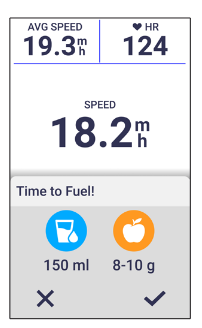
- Smart Fueling: Get real-time guidance during a ride on the recommended grams of carbohydrates and millilitres of water you should consume. Alerts are based on your current fitness, course demands, and environmental factors like heat and humidity.
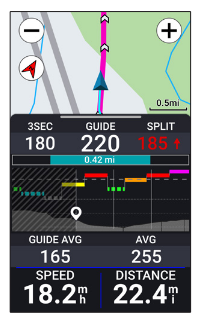
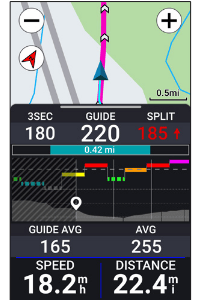
- Power Guide Enhancements: When training with a power meter, Power Guide now manages your effort using recommended power targets that are adjusted for real-time stamina and wind. For mountain activities, the guide also considers your altitude acclimation.
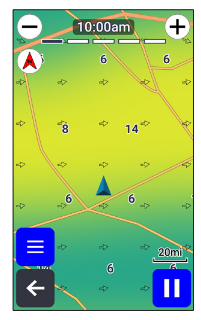
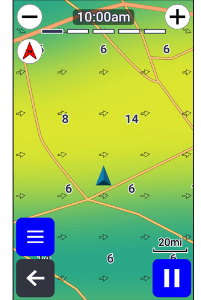
- Real-Time Weather Updates: Monitor the weather mid-ride with radar and wind direction overlays. This requires your compatible smartphone and the Garmin Connect app.
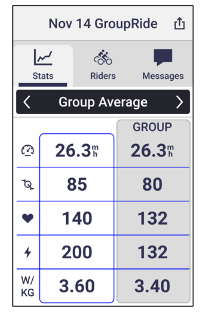
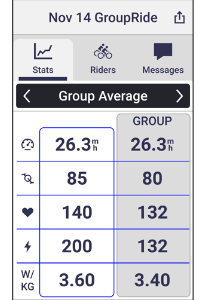
- GroupRide Data Comparisons: An expansion of GroupRide functions that allows you to see your stats (e.g., speed, cadence, heart rate, power) compared to the group average during an active ride.
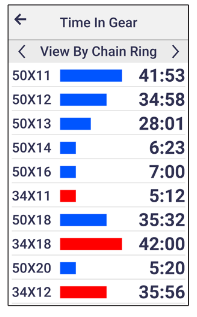
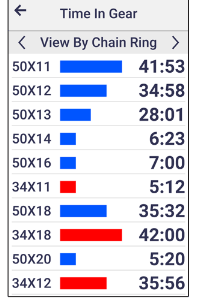
- Gear Ratio Analysis: When paired with electronic shifting, this feature lets you review the total time spent in each gear ratio after your ride.
Device Eligibility
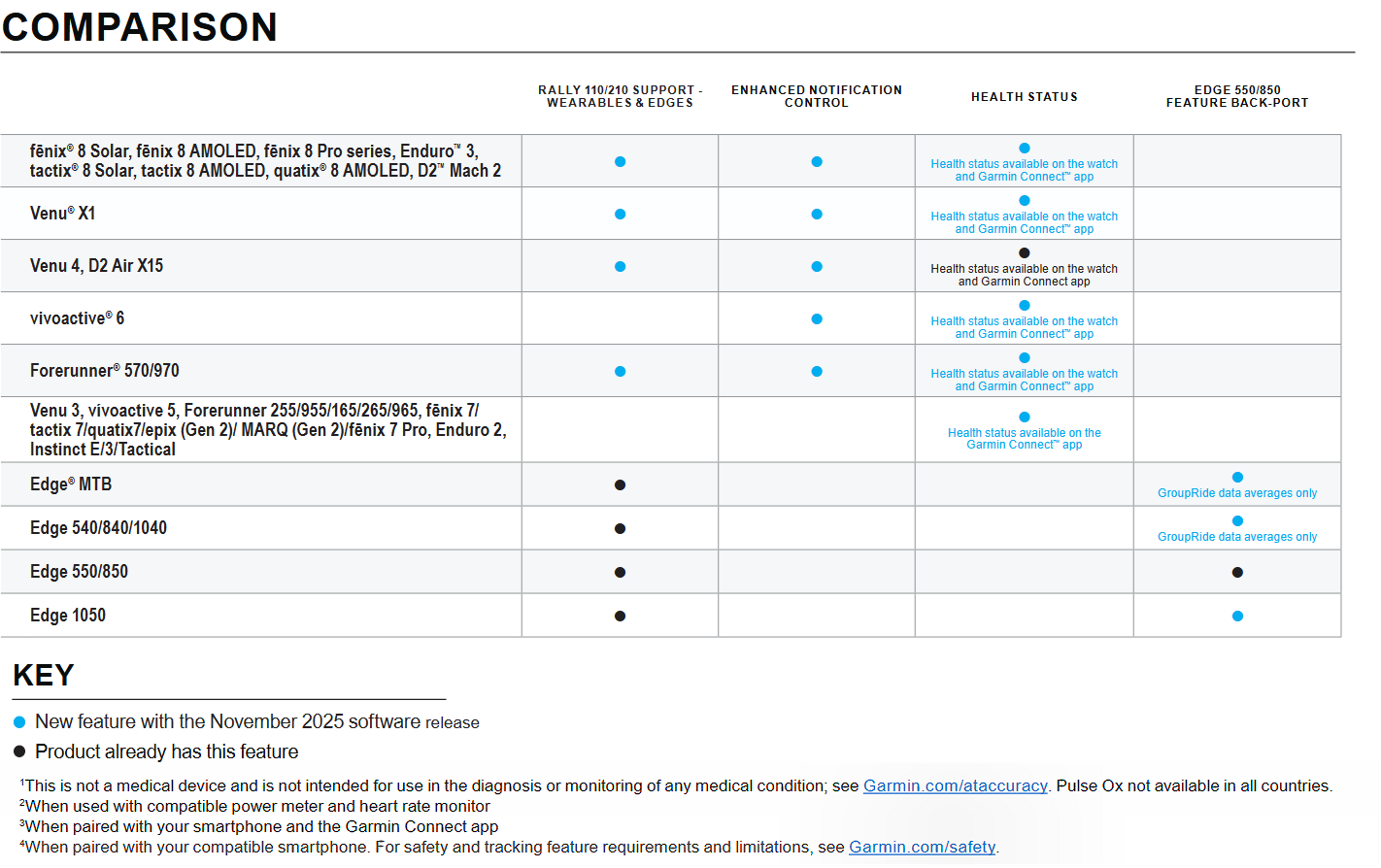
The update covers a wide range of devices. Most core cycling features (Smart Fueling, Power Guide, etc.) are included in the Edge 550/850 feature back-port.
Health Status Feature Support
- On Watch & Garmin Connect App (Full Support):
- Fenix 8, Enduro 3, tactix 8, quatix 8, D2 Mach 2 series.
- Venu X1, Venu 4, D2 Air X15, vivoactive 6, and Forerunner 570/FR970 models.
- On Garmin Connect App Only:
- Venu 3, vivoactive 5, Forerunner 255/955/165/265/965 series.
- fēnix 7, tactix 7, quatix 7, epix (Gen 2), MARQ (Gen 2), fēnix 7 Pro, Enduro 2, Instinct E/3/Tactical series.
Summary
The most significant new features this quarter are those launched on the Venu 4 and Edge 550/850, then rolled across to other qualifying models. We can clearly see that expensive, relatively new models like Forerunner 965 and Fenix 7 Pro no longer qualify – customers have clearly had two years of use and now need to be encouraged to spend another $500-$1000 on a replacement watch!!
The features themselves are generally good, though the Gear Ratio analysis is probably of limited use.
As reported on this site, dcrainmaker, and elsewhere, the Health Status and Lifestyle Logging are Whoop catch-up features, albeit ones not implemented half as well. There’s a very good chance that Garmin is gunning towards a true Whoop competitor, rather than simply the Index Sleep smart Arm Band it released this year.
I particularly like the power, weather and fuelling improvements which should be helpful for quite a few of us at times. Perhaps less valuable are the Group Ride comparisons – I confess to not having tried these out yet, mainly because everyone I cycle with uses Wahoo! for those of you that do cycle in Garmin-heavy groups, I suspect the power stats will make interesting reading! Garmin’s GroupRide feature is probably one area the company will continue to expand over the coming years, perhaps ultimately becoming a more data-rich alternative to Strava.
Looking forward to 2026, there will be many feature surprises. Of those I’m pretty sure about, improvements to triathlon transition management and support for HYROX racing are top of the list.
For the complete Garmin Fenix series guide, covering all current models, history and buying advice: Garmin Fenix hub.
Last Updated on 3 October 2026 by tfk the5krunner
Small things I always use
- Garmin 90-degree charging adapter: Charges your Garmin from any USB-C cable. Essential when travelling. I use one.
- Body Glide: The blue anti-chafe stick swimmers and runners carry. I use it.
- Speedo earplugs: Fewer ear infections and no cold-water dizziness. I use them.
- Dryrobe Advance: My winter changing robe for open-water swims. I use one. A cheaper option is the AONYIYI changing robe.
- Maurten: Race fuel that stays easy on the stomach. I use them.
- Garmin charging puck: The quickest way to top up before a session. I use one.
- Injinji: Toe socks that stop rubbing, so you run more. I use them.
- Ultimate toe protectors: Stop black toenails on long runs. They work. I use them.
- Compressport R2 v2 calf sleeves: My calf sleeves of choice. I use them.
- Cellucor C4: My pre-workout before hard sessions.
- TPU tubes: Schwalbe Aerothan, Tubolito and Pirelli SmarTube. Light, tiny spares. I use all three.
- G8 insoles: Adjustable insoles that are good. I use them.
- Cycplus Cube: A 97g electric pump that gets a road tyre rideable in two minutes. I carry one. 5% off with code THE5KRUNNER.
Watches and sensors
- Polar H10: My daily driver for waking HRV.
- Polar Verity Sense: My backup arm-worn HR sensor.
- Nomad bedside charger: Charges my iPhone and Apple Watch overnight. I use it, and many of their bands.
- Train.Red: The best muscle oxygen sensor I’ve used.
- Tymewear: Accurate heart rate and reliable ventilatory zones. I use it to pace endurance rides over an hour.
- Garmin Forerunner 970: A pro-grade triathlon watch. I use this.
- Apple Watch Ultra 4: My daily smartwatch. No phone needed on rides.
- Garmin Fenix 9 Pro: I’ve just bought one.
On the bike
- Continental GP5000 for everyday riding, and Aero 111 on the front for special occasions.
- Helmets: Specialized S-Works Evade 3 for road riding, and Rudy Project Wing for TT-style races. I use both.
- Ravemen FR300: A front light that mounts under your Garmin or Wahoo. I use one.
- Wahoo TRACKR Radar: I use it on one bike and Varia on the other. They perform the same.
- Garmin Varia RTL515: Radar that warns you of cars from behind. I use this model.
- Wahoo ELEMNT Roam 3: The bike computer that’s easy to use. I use mine on most rides.
- Favero Assioma Pro RS2: Accurate power pedals that swap easily between bikes. I use this model.
Home and indoor training
- NPE Runn: Makes my basic treadmill smart, sending more accurate speed and distance to my watch and Zwift. I use it.
- Google Wifi: Keeps Zwift connected in my pain cave. I use it.
- Apple TV 4K: Zwift on the big screen. I use two.
- Google Nest Doorbell (wired, 2nd gen): My video doorbell, running in both Google Home and Apple Home. I use it.
Health, recovery and sleep
- FreeStyle Libre 3 Plus: Shows how my blood sugar responds to diet.
- hDrop: Measures my sweat loss in summer and indoors.
- Fourth Frontier Zone: Checks my heart under load in hard sessions.
- Oura Ring 5: My partner’s recovery tracker of choice.
- Kineon MOVE+: Red light therapy for niggles. It works.
- Eight Sleep: A cooling mattress cover my partner and I use nightly.
Reader-Powered Content

This content is not sponsored. It’s mostly me behind the labour of love, which is this site, and I appreciate everyone who supports it.
Support the site: Follow (free, fewer ads) · Subscribe (paid, ad-free) · Buy Me A Coffee ❤️
Written by real people, with AI assistance. Fact-checked and verified for originality. See the Editorial Policy. FTC: Affiliate Disclosure — some links pay commission. As an Amazon Associate, I earn from qualifying purchases.
tfk is the founder and author of the5krunner, an independent endurance sports technology publication. With 20 years of hands-on testing of GPS watches and wearables, and competing in triathlons at an international age-group level, tfk provides in-depth expert analysis of fitness technology for serious athletes and endurance sport competitors. ID

No reason Health Status isn’t available on all the watches. The Instinct 3 isn’t that old, and has all the required telemetry. You’re already paying a Garmin premium, just give me access the the update algorithm already. What’s the Garmin premium? How about $200 for a scale that’s as accurate as one you can get for $50 (which for non-weight status isn’t very accurate), but doesn’t upload to the Garmin app.
It’s just a simple glance and the data summarized is surfaced from existing sleep, HRV, and resting HR stats tracked by the fenix 7 era watches. It’s a bit naff that they can’t be bothered to put the glance on the older generation firmware.
“data summarized is surfaced from existing sleep, HRV, and resting HR stats”
Correct. The article implies [*] that the health status feature itself monitors those stats, but as you said, all Heath Status actually does is identify deviations from baseline average ranges. All of these stats were collected and the baselines were calculated before Health Status ever existed. (For example you can already see your 7 day average resting HR and current baseline sleeping HRV range in other places.)
[*] “Health Status: This feature monitors key health metrics—such as resting heart rate, HRV, and Pulse Ox—while you sleep to identify trends that move away from your baseline. ”
“It’s a bit naff that they can’t be bothered to put the glance on the older generation firmware.”
I mean the reason they do this is always because they want you to buy a newer watch if you want that feature. It’s really as simple as that. I always see a lot of arguments (not specifically from you) that Garmin could “easily” bring some new feature to older watches if they wanted to. I would say that the cost is always non-zero (any software developer knows that even a “5 minute bug fix” comes with a ton of red tape, testing, etc. which balloons the true cost to be much higher than 5 minutes) and besides, Garmin doesn’t want to do it.
Btw, part of the cost of making any change at all is the possibility of breaking something that used to work – this happens with Garmin software all the time. (Yes, I know it happens to everyone.)
To be clear I am not defending or endorsing Garmin’s decisions. Just pointing out that there are obvious reasons for why they do what they do.
“It’s just a simple glance”
To be clear, only the newer gen watches (like FR970) are getting Health Status as both a glance and a page in the Connect app and website. Older gen watches (like FR955/FR965) – which are still supported via firmware updates – are only getting the page in Connect, but not the glance.
Again, it reflects the principle that users of older watches don’t get all the latest and greatest stuff.
The reason – as always – is Garmin wants you to buy a newer watch if you want this feature. I’m not defending or endorsing this behaviour, only pointing out reality.
I will never understand why some users seem to think:
– every product/feature decision must be made with only technical constraints in mind, and never marketing/business constraints
– it’s only “fair” to omit features which are physically incapable of being implemented on a given device due to *hardware* constraints. In other words, market segmentation via features is only “fair” is if it’s based on hardware differentiation, never due to “artificially” crippling software. By this reasoning, Garmin should bring a ton of new features to the 10 year old Forerunner 230, as long as they aren’t limited by hardware.
It’s funny because people don’t realize that hardware differences can also be seen as “artificial”, to a certain extent. When you buy a less expensive consumer version of a GPU, you may not realize that the super-expensive “studio” version is identical to the consumer version except for different drivers and maybe some trivial difference the board to identify it as the expensive model. It’s often possible to hack drivers to trick the consumer version into working like the studio version.
Also, when you by a slower, cheaper version of a CPU, you’re often buying what was actually a more expensive, faster CPU that failed certain quality control checks.
Finally, Garmin isn’t the only company that differentiates models via “artificial” software differences (although they probably do it to a greater extent than companies with a more modern business model, like Apple, who prefer to nickel and dime customers with a ton of subscriptions). Apple itself differentiates the Apple Watch Ultra with “Precision Start” for the Workouts app, which allows the user to select a sport (such as Run) and thereby enable GPS/HR without having activity recording automatically start after a countdown, but instead, the user gets to press a button to start the recording whenever they want (e.g. when they have a solid GPS lock). Users of non-ultra Apple Watches have to resort to other workarounds to get a solid fix before starting an activity recording, like opening a different app that uses GPS and waiting for a fix there. Of course “precision start” is laughably trivial for Garmin users, as Garmin has probably had this feature for longer than some Garmin users have been alive (or at least, longer than they’ve been using Garmins). And of course, Apple could “easily” bring Precision Start to non-Ultra Apple Watches, but guess what, they want to reserve that feature as selling point for the Ultra models.