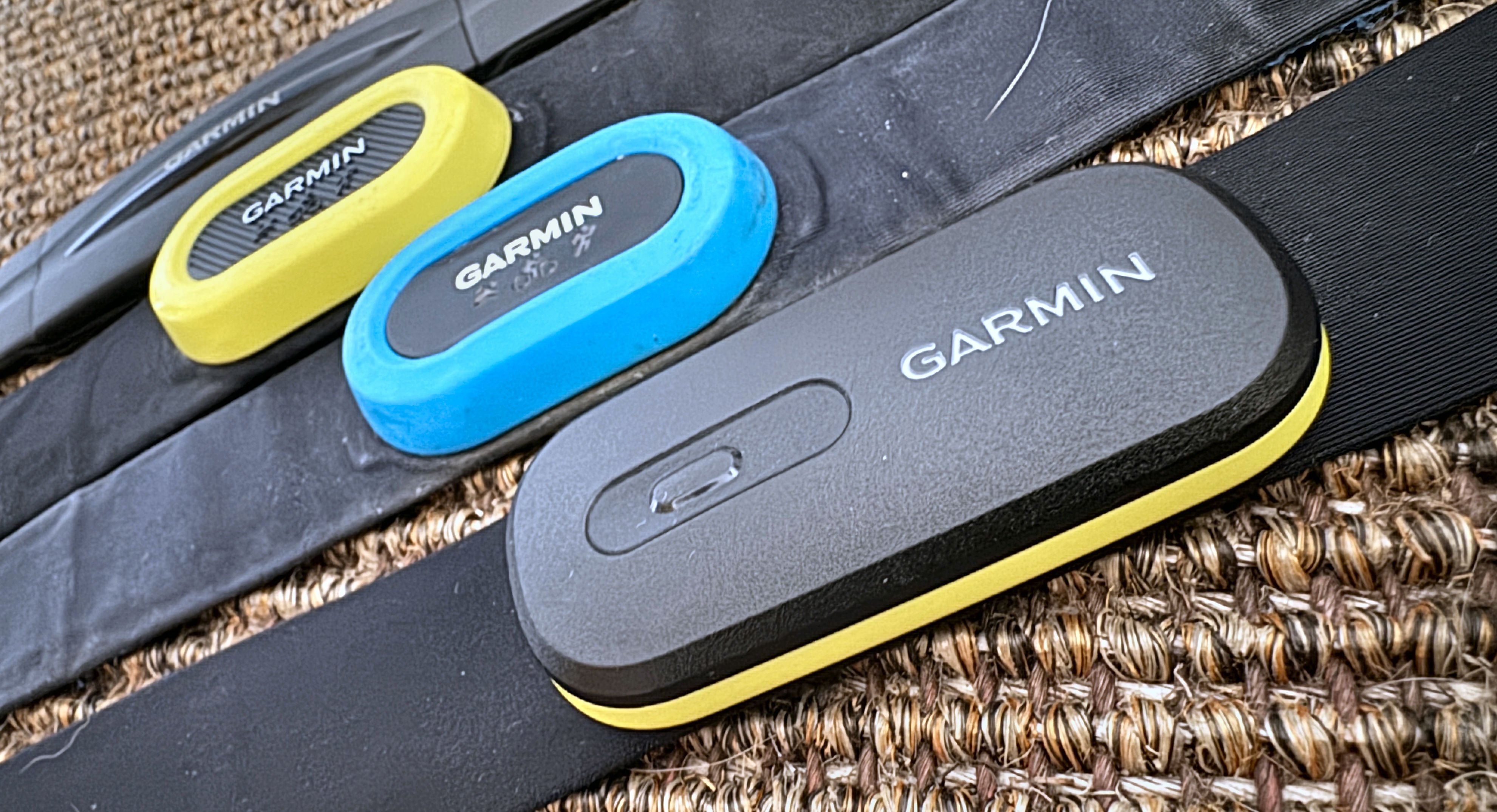
Fourth Frontier X2 vs Garmin HRM 600 – A Buyer’s Decision Making Guide
Both Garmin and Fourth Frontier have recently launched their best-ever straps with top-end features. But they have different top-end features, intended for different buyers, though there is overlap in their wider abilities.
TL;DR – Garmin’s HRM 600 digs deep into the technicalities and possibilities within its ecosystem, whereas Fourth Frontier X2 digs deeper into heart health.
This contains affiliate links. Purchasing via these links supports the site at no extra cost to you.
The discounts shown below are the best for BFCM.
Tech Basics
Both are competent devices.
- Frontier X2: Continuous single-lead ECG, detects arrhythmias, ST changes, cardiac strain, standalone recording, display, button
- Garmin HRM 600: Traditional HR/HRV/R-R, advanced running dynamics, standalone recording, button
Health Basics
At the highest level of HR detail, Garmin Connect and its watches recognise the continuously varying time between beats (HRV/RR) at up to 5 data points per second (5Hz).
Fourth Frontier’s app saves 125 data points per second (25x as many), enough to fully reconstruct an ECG waveform with P-Q-R-S-T peaks and valleys.
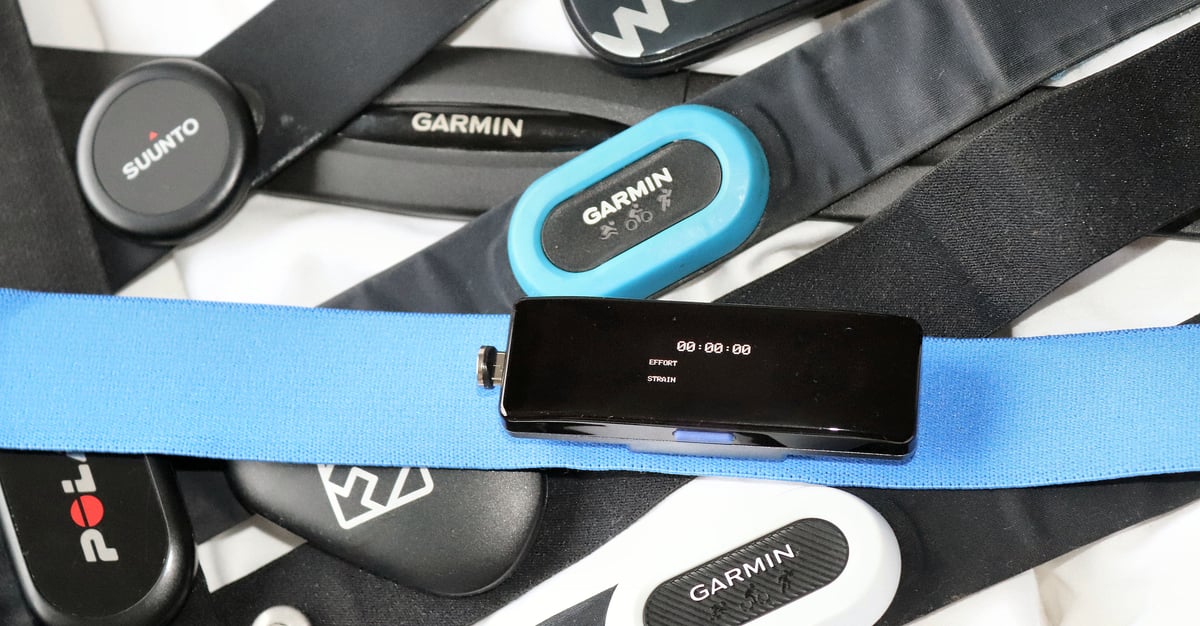
Head-to-Head
Perhaps the most confusing aspect to explain is that you will read that HRV straps like Garmin HRM600 or Polar H10 are ECG straps – and this is not always true.
| Metric | Frontier X2 | Garmin HRM 600 |
| HR accuracy | Matches Polar H10 | Matches Polar H10 |
| HRV | Reliable long-term trends | Slightly under-reads at rest in my tests |
| ECG / Arrhythmia | Yes, doctor-ready PDFs | No (HRV/RR only) |
| Strain / Effort | Cardiac strain + haptic alerts | Workout intensity only |
| Breathing rate | Yes | Yes |
| Running dynamics | Basic Body Shock | Full (Step Speed Loss, etc.) |
| Compatibility | BLE only (phone + Garmin) | ANT+ & BLE unlimited |
| Battery | 24 h continuous ECG | 2 months daily / 60 h sport |
| Price (2025) | $405 (use discount) | $170 |
Buy Frontier X2 if:
- You’re concerned: You’re over 40, have family heart history,
- You want a safety backup: You train at high intensity and want the comfort of extra heart safety features
- You want to aid the medical diagnostic process: You want arrhythmia alerts and shareable ECG reports.
Buy HRM 600 if:
- You race, train daily in the Garmin ecosystem,
- You want watch-free recording for the Garmin ecosystem (e.g. gym)
- You want accurate swim HR
- You just need rock-solid sports HR + running metrics.
Garmin HRM 600
High-end, watch-free heart rate recording strap.
 +other retailers
Verdict
- Heart health priority > Frontier X2
- Pure performance + simplicity > HRM 600
- No budget limits & paranoid > both! Wear Frontier X2 for harder workouts
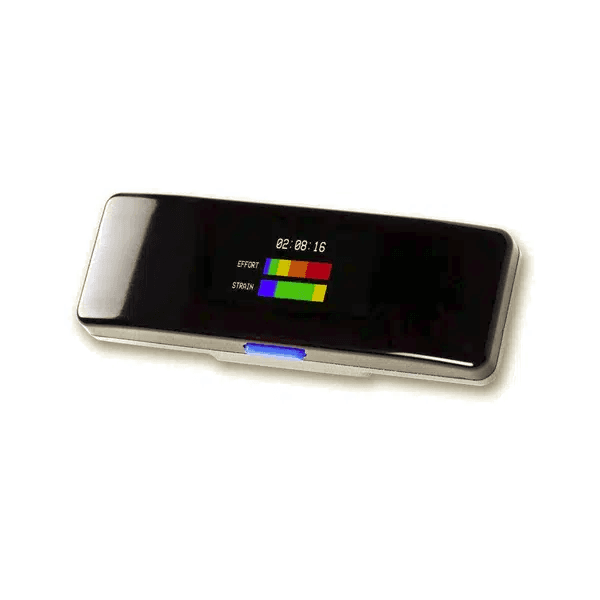
Fourth Frontier X2
24x7 ECG, real-time alerts and sports tracking.

Last Updated on 3 October 2026 by tfk the5krunner
Small things I always use
- Garmin 90-degree charging adapter: Charges your Garmin from any USB-C cable. Essential when travelling. I use one.
- Body Glide: The blue anti-chafe stick swimmers and runners carry. I use it.
- Speedo earplugs: Fewer ear infections and no cold-water dizziness. I use them.
- Dryrobe Advance: My winter changing robe for open-water swims. I use one. A cheaper option is the AONYIYI changing robe.
- Maurten: Race fuel that stays easy on the stomach. I use them.
- Garmin charging puck: The quickest way to top up before a session. I use one.
- Injinji: Toe socks that stop rubbing, so you run more. I use them.
- Ultimate toe protectors: Stop black toenails on long runs. They work. I use them.
- Compressport R2 v2 calf sleeves: My calf sleeves of choice. I use them.
- Cellucor C4: My pre-workout before hard sessions.
- TPU tubes: Schwalbe Aerothan, Tubolito and Pirelli SmarTube. Light, tiny spares. I use all three.
- G8 insoles: Adjustable insoles that are good. I use them.
- Cycplus Cube: A 97g electric pump that gets a road tyre rideable in two minutes. I carry one. 5% off with code THE5KRUNNER.
Watches and sensors
- Polar H10: My daily driver for waking HRV.
- Polar Verity Sense: My backup arm-worn HR sensor.
- Nomad bedside charger: Charges my iPhone and Apple Watch overnight. I use it, and many of their bands.
- Train.Red: The best muscle oxygen sensor I’ve used.
- Tymewear: Accurate heart rate and reliable ventilatory zones. I use it to pace endurance rides over an hour.
- Garmin Forerunner 970: A pro-grade triathlon watch. I use this.
- Apple Watch Ultra 4: My daily smartwatch. No phone needed on rides.
- Garmin Fenix 9 Pro: I’ve just bought one.
On the bike
- Continental GP5000 for everyday riding, and Aero 111 on the front for special occasions.
- Helmets: Specialized S-Works Evade 3 for road riding, and Rudy Project Wing for TT-style races. I use both.
- Ravemen FR300: A front light that mounts under your Garmin or Wahoo. I use one.
- Wahoo TRACKR Radar: I use it on one bike and Varia on the other. They perform the same.
- Garmin Varia RTL515: Radar that warns you of cars from behind. I use this model.
- Wahoo ELEMNT Roam 3: The bike computer that’s easy to use. I use mine on most rides.
- Favero Assioma Pro RS2: Accurate power pedals that swap easily between bikes. I use this model.
Home and indoor training
- NPE Runn: Makes my basic treadmill smart, sending more accurate speed and distance to my watch and Zwift. I use it.
- Google Wifi: Keeps Zwift connected in my pain cave. I use it.
- Apple TV 4K: Zwift on the big screen. I use two.
- Google Nest Doorbell (wired, 2nd gen): My video doorbell, running in both Google Home and Apple Home. I use it.
Health, recovery and sleep
- FreeStyle Libre 3 Plus: Shows how my blood sugar responds to diet.
- hDrop: Measures my sweat loss in summer and indoors.
- Fourth Frontier Zone: Checks my heart under load in hard sessions.
- Oura Ring 5: My partner’s recovery tracker of choice.
- Kineon MOVE+: Red light therapy for niggles. It works.
- Eight Sleep: A cooling mattress cover my partner and I use nightly.
Reader-Powered Content

This content is not sponsored. It’s mostly me behind the labour of love, which is this site, and I appreciate everyone who supports it.
Support the site: Follow (free, fewer ads) · Subscribe (paid, ad-free) · Buy Me A Coffee ❤️
Written by real people, with AI assistance. Fact-checked and verified for originality. See the Editorial Policy. FTC: Affiliate Disclosure — some links pay commission. As an Amazon Associate, I earn from qualifying purchases.
tfk is the founder and author of the5krunner, an independent endurance sports technology publication. With 20 years of hands-on testing of GPS watches and wearables, and competing in triathlons at an international age-group level, tfk provides in-depth expert analysis of fitness technology for serious athletes and endurance sport competitors. ID

I don’t think that Frontier X2 and HRM 600 should be compared. HRM 600 gives a bunch of running dynamic metrics, but a sampling rate of 5 Hz and a reporting rate of 1 Hz are quite insufficient for serious heart series analysis. Frontier uses a sampling rate of 125 Hz, similar to Polar H10 (130 Hz), so they should be compared. Polar records a full 1-channel ECG. Polar Sensor Logger is free and records ECG and accelerometer data but does not interpret the data. ECG analysis for Polar H10 needs a subscription (has a free tier), records ECG only, calculates ECG parameters, and detects ectopic beats, but it does not interpret ECG. It saves data in the European Data Format (a standard file format for the exchange and storage of multichannel biological and physical signals). It can also be used for 24-hour recording.
hi
yes i think you are right and have made an edit. I had heard that hrm600 does collect data at 100+Hz but never had it cofirmed other than in my mind. yes the 5Hz is a limitation of FIT files which backtracks to what garmin devices do i assume
i’m making this comparison to avoid confusion in some buyers minds.
yes a vs. H10 could be useful too. Fewer non sporty people are aware of Polar’s lab grade devices
Hi — please take a look at this paper: https://pubmed.ncbi.nlm.nih.gov/31004219/
You can copy‑paste a FIT file with good-quality R‑R intervals into ChatGPT and ask for R‑R interval (RRI)–based HRV analysis. RRI analysis can suggest ectopic beats and many arrhythmias, but it has limitations and usually requires ECG confirmation. Key points:
Ectopic beats (premature atrial contractions — PACs; premature ventricular contractions — PVCs)
Appear as isolated short R‑R intervals (premature beat), often followed by a longer compensatory pause.
Frequent PACs/PVCs produce irregular RRI sequences and reduced HRV complexity.
Bigeminy/trigeminy produce alternating RRI patterns (short, long, short, long…).
Atrial fibrillation (AF)
RRI signature: markedly irregular RRIs with loss of periodicity and altered low‑frequency structure.
Poincaré plots lose stable sinus clusters; sample entropy is typically increased.
Atrial flutter with variable block
Fixed block (e.g., 2:1) → regular RRIs; variable block → patterned irregularity (repeating groups).
HRV metrics often fall between AF and normal sinus rhythm.
Supraventricular tachycardia (SVT) and paroxysmal tachycardias
Sudden sustained runs of shortened RRIs; HRV drops sharply during episodes.
Onset and termination appear as abrupt RRI changes.
Sinus arrhythmia and sinus node dysfunction
Sinus arrhythmia: physiologic respiratory-cycle RRI variation — high HF power.
Sinus node dysfunction (pauses/exit block): long RRIs/pauses, increased variance, intermittent very low heart rate.
Atrioventricular (AV) block
2:1 or 3:1 AV block: repeating RRI patterns (constant ratio), producing multimodal RRI histograms.
High‑degree or variable AV block: long pauses and grouped beating.
Ventricular tachycardia (VT) and ventricular fibrillation (VF)
VT: sustained series of short, often regular RRIs (rapid rate); HRV is minimal during the run.
VF: chaotic, highly variable or nonphysiologic RRIs; frequently not analyzable from single‑lead R detection.
Notes and caveats:
Accurate R‑peak detection is essential; missed or false detections can mimic arrhythmia.
Single‑lead RRI analysis cannot reliably distinguish PACs from PVCs (requires ECG morphology).
Short recordings may miss paroxysmal events; ambulatory/long‑term monitoring improves detection.
RRI/HRV findings are supportive; definitive diagnosis requires clinical ECG review.
Strong correlations to
Frequent PVCs
Sustained ventricular tachycardia (VT)
Atrial fibrillation (AF)
Long pauses (sinus node exit block or high‑degree AV block)
Fixed‑ratio AV block (e.g., 2:1, 3:1)
I have a Frontier X2, Garmin HRM 600, Polar H10, and Polar Verity Sense heart rate monitors. I think each are useful in various scenarios.
Sticking to the X2, I cannot use this device for running. Even with wetting the electrodes and keeping it tight, the X2 stuggles to discern heart rate effectively. The biggest issue is that when the data is even mildly noisy, it will report a heart rate of 0. This plays serious games with any algorithm. If you’re trying to track your training load or VO2 max, you need clean heart rate data. The X2 simply isn’t reliable for running.
For cycling, I have had great luck. 3 concurrent bluetooth connections is fabulous. When jarring movement is minimal, the ECG analysis is fantastic. I captured a 6-beat NSVT event that I was able to share with my cardiologist. You can’t do that with any of the other heart rate monitors in my collection. Capturing PVCs is usally very accurate as well, and the Frontier site is great at analyzing data since it will highlight where there is a break from normal sinus rhythm, for any reason.
The X2 samples data at 1000hz, similar to the Polar H10 and I would presume the HRM 600, although Garmin doesn’t publish that information.
One problem I have with Frontier is that they are not friendly when it comes to exporting your data. There are no options as of January 2026 to export a second-by-second summary of heart rate data via CSV. You can export an EKG file as a PDF. However, it is not machine readable since its just a series of images.
Regarding ectopic heartbeats, you can see them by looking at RR-intervals on sites such as runalyze. PVCs typically present as beats both above and below the baseline, usually with a deviation of approximately 50-100 ms due to their premature and compensatory nature. So, there are other ways to monitor your PVC burden during exercise if you don’t want to spend the money on the X2. However, an EKG readout is infinitely more actionable. So, your mileage may vary.