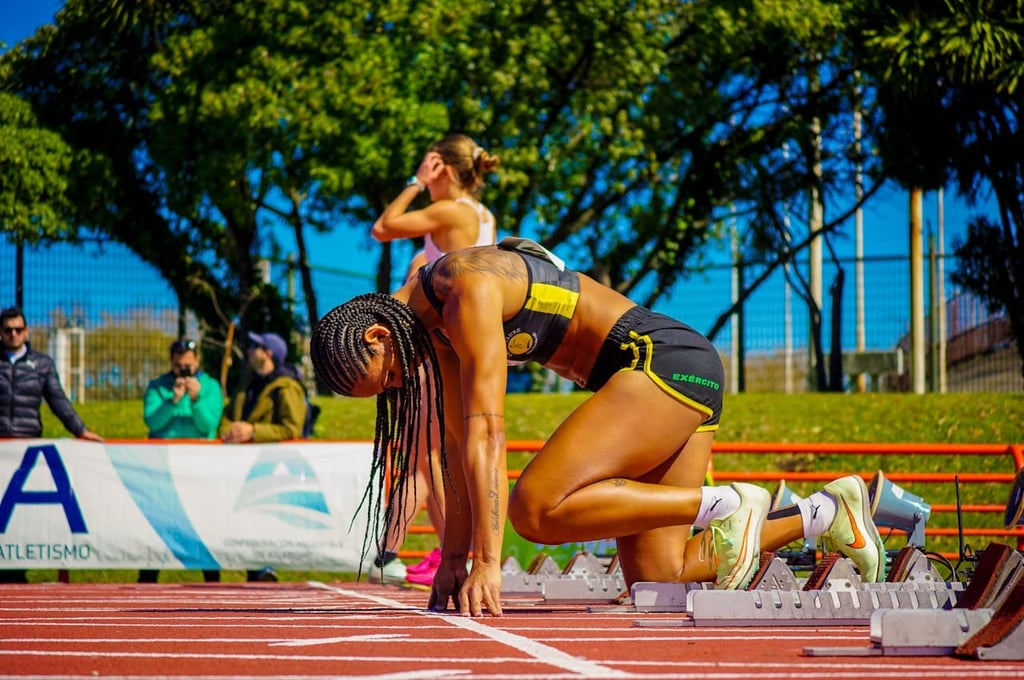
Garmin’s imminent announcement of 5Hz GNSS/GPS recording for downhill mountain biking, as recently reported by this site, signals a significant advancement in sports tracking technology. While this feature initially targets a niche sport, its implications extend to a wide range of activities, including windsurfing, sprinting, and motor racing. This article examines the significance of 5Hz recording, its benefits in sports technology, and its potential impact across various sports.
The Current Landscape
High-frequency GNSS recording isn’t new. Other products, such as the Qstarz BT-Q1300ST, already support 5Hz recording for sports like skiing. Team sports analytics platforms, such as Catapult and STATSports, also leverage similar capabilities for football, rugby and even motor racing. Within Garmin’s ecosystem, heart rate variability (HRV) data is already recorded at 5Hz, demonstrating the company’s experience with high-frequency data. However, Garmin’s move to 5Hz GNSS recording marks a shift toward broader use across its other metrics and devices.
What exactly is Garmin adding in 2025?
In the June/July timeframe, Garmin is adding the ability for downhill MTBers to record downhill stretches at 5Hz.
Source: Me via @Johnw (thank you)
Are you sure?: Yes.
Why Now?
The adoption now of 5Hz GNSS recording may stem from both market and technological factors.
With finite resources, Garmin may have prioritised other innovations, such as updating its running power model to incorporate elevation gain from 3D-GNSS rather than barometric data. Recent advancements in GNSS chipsets, particularly Synaptics’ dual-frequency (L1/L5) chips, likely enable more accurate and reliable 5Hz recording. These chips offer improved 2D and 3D accuracy, crucial for sports that require precise positional data.
Benefits of 5Hz Recording
Higher-frequency data, such as 5Hz, captures rapid changes with greater precision, offering several advantages:
- Accurate Tracks: Unlike 1Hz GNSS, which can produce blocky tracks with straight-line segments, 5Hz recording provides visually-perfect path representations, especially around sharp turns. This eliminates the artificially smoothed, inaccurate arcs seen with Apple Watch data.
- Precise Speeds: Peak speed measurements are more accurate, critical for high-speed sports like windsurfing or skiing.
- Detailed Acceleration: 5Hz data provides a more accurate capture of acceleration changes, allowing for more precise analysis of sprints or rapid manoeuvring.
- Improved Segment/Lap Times: More frequent data points enhance the accuracy of time measurements, from times between race gates or laps to Strava segments.
Consider HRV as an analogy. While 1Hz heart rate data suffices for pacing a marathon, 5Hz recording enables interbeat (R-R) measurements, unlocking HRV metrics like SDNN or rMSSD. These metrics offer valuable insights into sleep stages, recovery, and overall health. 5Hz data has vastly expanded the metrics we use. Similarly, 5Hz GNSS data unlocks detailed movement analysis for sports, with many more uses than initially imagined here.
Which Sports Benefit?
Several sports stand to gain from 5Hz GNSS recording due to their high-speed or dynamic nature:
- Windsurfing/Speed Surfing: Pro speed surfers emphasise the need for peak speed capture and rapid signal recapture after submergence, both of which are enhanced to some degree by 5Hz data.
- Skiing/Snowboarding: Slalom events and jumps benefit from precise speed profiles and turn tracking, potentially combined with accelerometer data for jump distance.
- Motor Sports: Cars, karts, and bikes cover significant distances in one second at race speeds. 5Hz data can map racing lines, although higher frequencies than 5Hz may be required.
- Sprinting (Running/Cycling): More frequent data improves the analysis of acceleration and peak speeds; although higher-frequency cycling power data may offer better insights when available (indoors and outdoors).
- Team Sports: Precise tracking of player positioning and acceleration enhances tactical analysis in sports like soccer. It could perhaps add to a greater understanding of muscular strain arising from rapid movements that heart rate alone will miss.
Is This Technology New?
While 5Hz GNSS recording may seem novel, older chipsets used by Garmin, such as MediaTek’s MT3333, supported up to 10Hz; however, Garmin opted to use 1Hz, possibly due to limitations in the Fit file format (capped at 5Hz) and other factors. Modern chipsets, like Synaptics’ dual-frequency models, offer superior L5 band accuracy, making the gains from 5Hz recording more attainable. Other products, such as recent Sony chipsets, also support high-frequency recording but may face performance trade-offs.
Garmin’s implementation likely strikes a balance between accuracy, power efficiency, and ecosystem compatibility.
Sensor Data in Context
To understand the role of 5Hz GNSS recordings, consider the broader sensor capabilities in sports watches:
| Data Type | Max Sampling Rate (Internal) | Typical Recorded Rate | 5 Hz Recording? |
|---|---|---|---|
| Accelerometer/Gyroscope | 50–200 Hz | 5–25 Hz | Yes |
| Running Dynamics | 50–100 Hz (raw), 5–10 Hz (processed) | Up to 5 Hz | Yes |
| Cycling Dynamics | 50–200 Hz (sensor) | 1–4 Hz | Sometimes |
| Heart Rate (optical) | 1–25 Hz | 1–5 Hz | Sometimes |
| HRV (chest strap) | 500–1,000 Hz (R-R intervals) | 1–5 Hz (metrics) | Yes |
| GPS | 1–10 Hz (advanced GNSS) | 1 Hz | Rare..soon! |
| Cycling Power | 64–200 Hz (sensor) | 1–2 Hz | No, possible soon? |
Source: Various, not validated
Takeaway
Garmin’s 5Hz GNSS recording, starting with downhill mountain biking, should mark the start of a new and interesting journey for the company with its sports data.
For some sports, this will be a game-changer, notably those that require high-resolution tracking of speed, position, and acceleration. By capturing data at a rate of five times per second, Garmin will deliver near-perfect movement profiles, benefiting high-speed and dynamic sports such as windsurfing, skiing, and motor racing. As Garmin integrates this capability across its ecosystem, driven by advanced chipsets like Synaptics’ dual-frequency models, athletes can expect enhanced performance insights, perhaps going some way to rivalling specialised systems like Catapult or Qstarz.
The usual runner and cyclist readers of this blog, perhaps, shouldn’t get too excited. Our Strava segments might just be a little bit more accurate 😉
Last Updated on 3 October 2026 by the5krunner
Small things I always use
- Garmin 90-degree charging adapter: Charges your Garmin from any USB-C cable. Essential when travelling. I use one.
- Body Glide: The blue anti-chafe stick swimmers and runners carry. I use it.
- Speedo earplugs: Fewer ear infections and no cold-water dizziness. I use them.
- Dryrobe Advance: My winter changing robe for open-water swims. I use one. A cheaper option is the AONYIYI changing robe.
- Maurten: Race fuel that stays easy on the stomach. I use them.
- Garmin charging puck: The quickest way to top up before a session. I use one.
- Injinji: Toe socks that stop rubbing, so you run more. I use them.
- Ultimate toe protectors: Stop black toenails on long runs. They work. I use them.
- Compressport R2 v2 calf sleeves: My calf sleeves of choice. I use them.
- Cellucor C4: My pre-workout before hard sessions.
- TPU tubes: Schwalbe Aerothan, Tubolito and Pirelli SmarTube. Light, tiny spares. I use all three.
- G8 insoles: Adjustable insoles that are good. I use them.
- Cycplus Cube: A 97g electric pump that gets a road tyre rideable in two minutes. I carry one. 5% off with code THE5KRUNNER.
Watches and sensors
- Polar H10: My daily driver for waking HRV.
- Polar Verity Sense: My backup arm-worn HR sensor.
- Nomad bedside charger: Charges my iPhone and Apple Watch overnight. I use it, and many of their bands.
- Train.Red: The best muscle oxygen sensor I’ve used.
- Tymewear: Accurate heart rate and reliable ventilatory zones. I use it to pace endurance rides over an hour.
- Garmin Forerunner 970: A pro-grade triathlon watch. I use this.
- Apple Watch Ultra 4: My daily smartwatch. No phone needed on rides.
- Garmin Fenix 9 Pro: I’ve just bought one.
On the bike
- Continental GP5000 for everyday riding, and Aero 111 on the front for special occasions.
- Helmets: Specialized S-Works Evade 3 for road riding, and Rudy Project Wing for TT-style races. I use both.
- Ravemen FR300: A front light that mounts under your Garmin or Wahoo. I use one.
- Wahoo TRACKR Radar: I use it on one bike and Varia on the other. They perform the same.
- Garmin Varia RTL515: Radar that warns you of cars from behind. I use this model.
- Wahoo ELEMNT Roam 3: The bike computer that’s easy to use. I use mine on most rides.
- Favero Assioma Pro RS2: Accurate power pedals that swap easily between bikes. I use this model.
Home and indoor training
- NPE Runn: Makes my basic treadmill smart, sending more accurate speed and distance to my watch and Zwift. I use it.
- Google Wifi: Keeps Zwift connected in my pain cave. I use it.
- Apple TV 4K: Zwift on the big screen. I use two.
- Google Nest Doorbell (wired, 2nd gen): My video doorbell, running in both Google Home and Apple Home. I use it.
Health, recovery and sleep
- FreeStyle Libre 3 Plus: Shows how my blood sugar responds to diet.
- hDrop: Measures my sweat loss in summer and indoors.
- Fourth Frontier Zone: Checks my heart under load in hard sessions.
- Oura Ring 5: My partner’s recovery tracker of choice.
- Kineon MOVE+: Red light therapy for niggles. It works.
- Eight Sleep: A cooling mattress cover my partner and I use nightly.
Reader-Powered Content

This content is not sponsored. It’s mostly me behind the labour of love, which is this site, and I appreciate everyone who supports it.
Support the site: Follow (free, fewer ads) · Subscribe (paid, ad-free) · Buy Me A Coffee ❤️
Written by real people, with AI assistance. Fact-checked and verified for originality. See the Editorial Policy. FTC: Affiliate Disclosure — some links pay commission. As an Amazon Associate, I earn from qualifying purchases.
tfk is the founder and author of the5krunner, an independent endurance sports technology publication. With 20 years of hands-on testing of GPS watches and wearables, and competing in triathlons at an international age-group level, tfk provides in-depth expert analysis of fitness technology for serious athletes and endurance sport competitors. ID
