Garmin Just Put 25 Hz GNSS in the Catalyst 2 — Can the Fenix 9 Get It Too?
Garmin’s new Catalyst 2 brings 25 Hz multi-GNSS positioning to motorsport. The obvious question for regular readers here: could that capability be added to a watch later?
The answer comes down to what “25 Hz” actually means in the Catalyst 2 — and what the GPS chips inside Garmin’s wearables are capable of doing.
The Current Chipset Ceiling – it’s actually 10Hz, not 5Hz – the ceiling is not the full story
Garmin watches have shipped with GNSS (GPS) chips from two main vendors: Airoha and, more recently, Synaptics. Both have performance limits documented by their respective manufacturers.
The Airoha AG3335 series — widely used across the Garmin lineup — is hardware rated for a maximum navigation output rate of 10 Hz. The newer Synaptics SYN4778, a dual-frequency L1/L5 chip targeting wearable applications, does not document output above 10 Hz in published materials, though independent confirmation of its maximum rate remains limited. No manufacturer material for either chip references 20 Hz or 25 Hz standalone GNSS capability.
Thus, the current wearable GNSS silicon from the two vendors Garmin uses tops out at approximately 10 Hz.
What Catalyst 2’s “25 Hz” Actually Means
Garmin satellites fix at 10 Hz, separately record onboard motion sensor data, and blend both into a single position stream at 25 Hz. That’s high-end automotive GNSS practice, with some competitors and older Garmin devices resolving at 10 Hz.
Why Watches Face Additional Problems
Setting aside chipset limits, watches face structural constraints that don’t exist in a dash-mounted motorsport device: power budgets are tight on Garmin’s ageing internal architectures, and storage cannot write data fast enough to keep up. Even that ignores recording constraints: FIT files are typically written at 5 records per second for standard position data, though the specification does permit higher-rate data to be stored using arrays within individual records — a technique Garmin already applies to accelerometer and gyroscope logging.
These are ecosystem constraints that represent engineering trade-offs that must be addressed before higher-rate positioning can be meaningfully exposed to the buyer on the watch or in post-activity analysis.
The Paths to 25 Hz on a Wrist
Three routes exist, with very different likelihoods.
New GNSS silicon rated above 10 Hz. No current wearable chip from Airoha or Synaptics supports it. That means a next-generation chip or a new vendor. Some of my research found that the u-blox M10 family already supports 25 Hz in GPS-only mode and 10 Hz in full multi-GNSS mode. The UBX-M10150-CC, launched in November 2024 and aimed squarely at sports watches, reaches 12 Hz in high-performance mode. The UBX-M10150-KB, released in October 2025, targets a different market segment and is a larger chip; it is not a direct wearable successor. The silicon exists. Garmin has not adopted u-blox chips, likely due to price, accuracy, and power efficiency.
A fused output rate using the motion sensor already in the watch is technically feasible. But a 5 Hz recording (2025) already carries a significant battery penalty for downhill sport modes.
A selective high-rate sport mode for motorsport, ski racing or sail racing that trades battery for position resolution. The most realistic near-term path is consistent with how Garmin has previously differentiated activity profiles.
The practical ceiling for standard FIT position records sits at 5 Hz, though the specification’s array mechanism already accommodates higher-rate sensor data. Whether Garmin would extend that approach to GNSS position streams for niche sports remains an open question.
Some ideas I had include parallel streams that could log standard 5 Hz position alongside additional staggered streams recorded as developer fields, effectively reconstructing a higher-rate track in the FIT file for Garmin’s analytics to interpret — without breaking the FIT file ecosystem. Alternatively, higher-rate acceleration derived directly from the sensors, rather than inferred from position changes, could be recorded with the same timestamps, capturing what raw position data misses.
The Bottom Line
Think of your Fenix-owning friends who own Porsches for track days, go skiing or sail racing. These buyers may want higher-resolution data for more precise speed and positioning.
Wearable GNSS chipsets currently used by Garmin are limited to approximately 10 Hz navigation output. Catalyst 2’s 25 Hz figure is almost certainly a sensor-fusion rate, not a raw GNSS one. Bringing that to a watch will require a newer chip generation or a firmware-enabled fused positioning mode with meaningful battery trade-offs.
This is all technically possible, but architecturally non-trivial for a watch. The speculation here is not evidenced in anything Garmin or its chipset vendors have published for wearables.
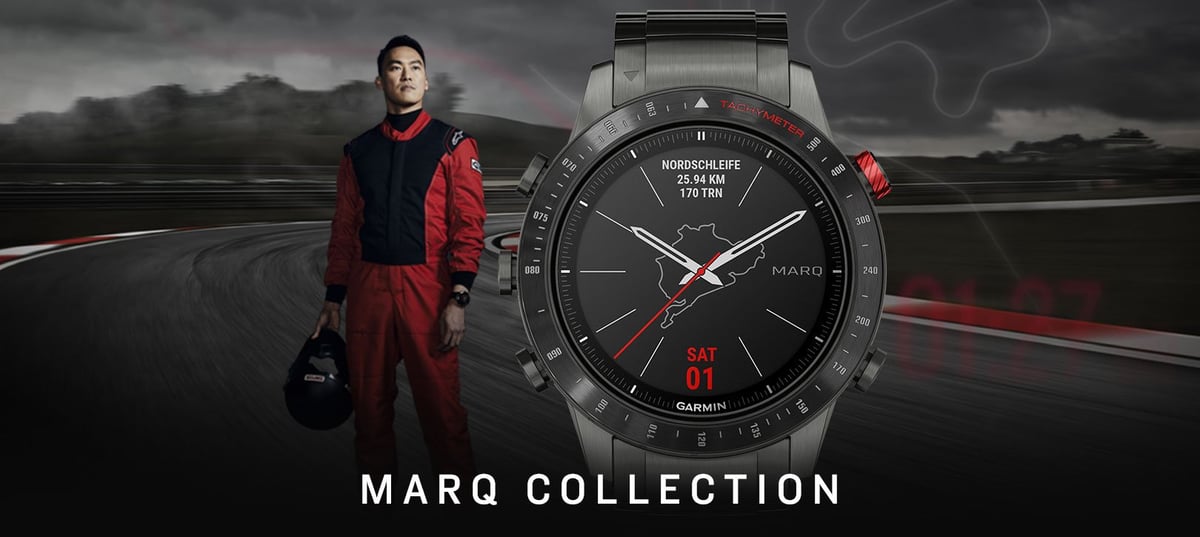
Then again, the Fenix 9 hasn’t been released yet. It could feature in that or one of its derivatives (MARQ).
Likelihood: slim.
For the complete Garmin Fenix series guide, covering all current models, history and buying advice: Garmin Fenix hub.
Last Updated on 27 May 2026 by tfk the5krunner
Small things I always use
- Garmin 90-degree charging adapter: Charges your Garmin from any USB-C cable. Essential when travelling. I use one.
- Body Glide: The blue anti-chafe stick swimmers and runners carry. I use it.
- Speedo earplugs: Fewer ear infections and no cold-water dizziness. I use them.
- Dryrobe Advance: My winter changing robe for open-water swims. I use one. A cheaper option is the AONYIYI changing robe.
- Maurten: Race fuel that stays easy on the stomach. I use them.
- Garmin charging puck: The quickest way to top up before a session. I use one.
- Injinji: Toe socks that stop rubbing, so you run more. I use them.
- Ultimate toe protectors: Stop black toenails on long runs. They work. I use them.
- Compressport R2 v2 calf sleeves: My calf sleeves of choice. I use them.
- Cellucor C4: My pre-workout before hard sessions.
- TPU tubes: Schwalbe Aerothan, Tubolito and Pirelli SmarTube. Light, tiny spares. I use all three.
- G8 insoles: Adjustable insoles that are good. I use them.
- Cycplus Cube: A 97g electric pump that gets a road tyre rideable in two minutes. I carry one. 5% off with code THE5KRUNNER.
Watches and sensors
- Polar H10: My daily driver for waking HRV.
- Polar Verity Sense: My backup arm-worn HR sensor.
- Nomad bedside charger: Charges my iPhone and Apple Watch overnight. I use it, and many of their bands.
- Train.Red: The best muscle oxygen sensor I’ve used.
- Tymewear: Accurate heart rate and reliable ventilatory zones. I use it to pace endurance rides over an hour.
- Garmin Forerunner 970: A pro-grade triathlon watch. I use this.
- Apple Watch Ultra 4: My daily smartwatch. No phone needed on rides.
- Garmin Fenix 9 Pro: I’ve just bought one.
On the bike
- Continental GP5000 for everyday riding, and Aero 111 on the front for special occasions.
- Helmets: Specialized S-Works Evade 3 for road riding, and Rudy Project Wing for TT-style races. I use both.
- Ravemen FR300: A front light that mounts under your Garmin or Wahoo. I use one.
- Wahoo TRACKR Radar: I use it on one bike and Varia on the other. They perform the same.
- Garmin Varia RTL515: Radar that warns you of cars from behind. I use this model.
- Wahoo ELEMNT Roam 3: The bike computer that’s easy to use. I use mine on most rides.
- Favero Assioma Pro RS2: Accurate power pedals that swap easily between bikes. I use this model.
Home and indoor training
- NPE Runn: Makes my basic treadmill smart, sending more accurate speed and distance to my watch and Zwift. I use it.
- Google Wifi: Keeps Zwift connected in my pain cave. I use it.
- Apple TV 4K: Zwift on the big screen. I use two.
- Google Nest Doorbell (wired, 2nd gen): My video doorbell, running in both Google Home and Apple Home. I use it.
Health, recovery and sleep
- FreeStyle Libre 3 Plus: Shows how my blood sugar responds to diet.
- hDrop: Measures my sweat loss in summer and indoors.
- Fourth Frontier Zone: Checks my heart under load in hard sessions.
- Oura Ring 5: My partner’s recovery tracker of choice.
- Kineon MOVE+: Red light therapy for niggles. It works.
- Eight Sleep: A cooling mattress cover my partner and I use nightly.
Reader-Powered Content

This content is not sponsored. It’s mostly me behind the labour of love, which is this site, and I appreciate everyone who supports it.
Support the site: Follow (free, fewer ads) · Subscribe (paid, ad-free) · Buy Me A Coffee ❤️
Written by real people, with AI assistance. Fact-checked and verified for originality. See the Editorial Policy. FTC: Affiliate Disclosure — some links pay commission. As an Amazon Associate, I earn from qualifying purchases.
tfk is the founder and author of the5krunner, an independent endurance sports technology publication. With 20 years of hands-on testing of GPS watches and wearables, and competing in triathlons at an international age-group level, tfk provides in-depth expert analysis of fitness technology for serious athletes and endurance sport competitors. ID
