Coros + Wahoo: no merger yet. Garmin should be worried
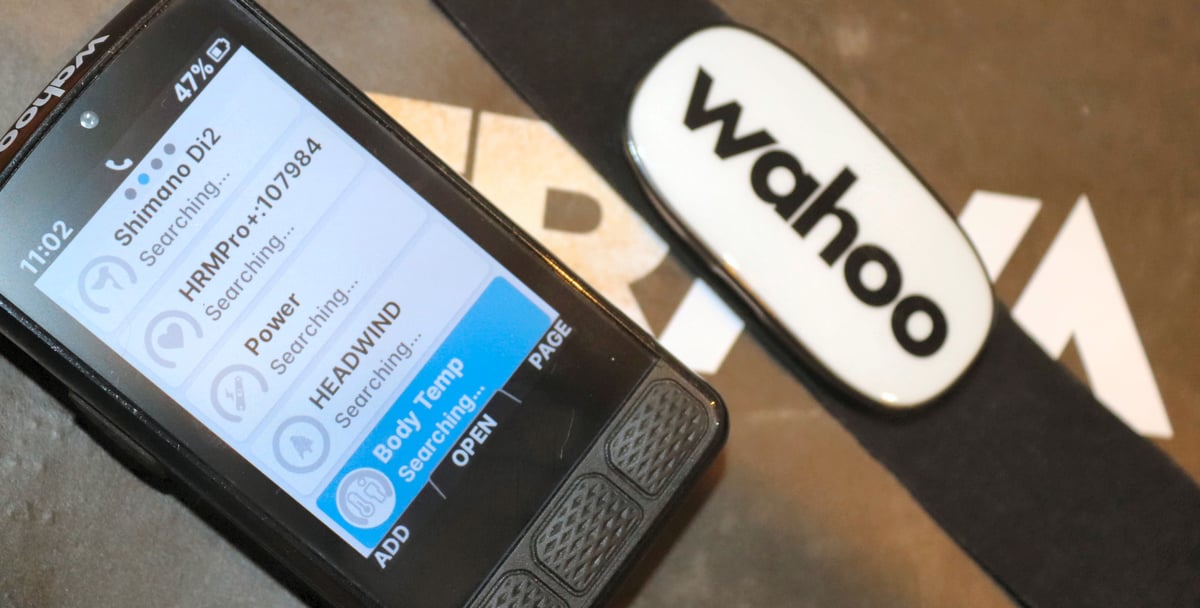
Coros and Wahoo have announced a two-way partnership covering workout data sync, Kickr Run treadmill integration, and mutual hardware reselling. On the face of it a good move.
Nobody at the cafe stop was happy
I’m on a club outing and series of rides based in Mallorca ahead of the 312 and we are pretty much all Wahoo owners. The group were uniformly unhappy with the news, albeit in a mostly disinterested way, as they are cyclists first and by no means runners or triathletes. It seems that single-ecosystem Wahoo owners read this tie-up as brand and image dilution with no upside.
I use both ecosystems and do see a benefit, but I am perhaps the exception to the rule.
What was announced
Per DC Rainmaker, the announcement has four components:
- Two-way API sync between the Coros and Wahoo platforms, with structured workouts and route sync promised later
- Coros watches pair directly with the Kickr Run treadmill over a proprietary Bluetooth channel, sending ground contact time and cadence
- Wahoo will sell the Coros Pace 4 and Apex 4 on its site
- Wahoo watch faces coming to the Coros app, with Wahoo-branded bands and a Wahoo Pace 4 later this year
- Both companies state software only beyond watch bands, no joint hardware planned
Let’s not dwell on the watchfaces and bands. There is no substance here.
No hardware hookup, and there won’t be one
Each brand has a distinct identity and design language, and joint hardware would dilute both for no strategic gain. Wahoo watch bands for Coros watches are mostly cosmetic, not hardware in any meaningful sense.
Merger unlikely
Cooperation does not mean there will be a merger or takeover. The two product sets are clearly complementary but there is more to a successful merger than complementary products.
- Manufacturing and distribution footprints are too different to integrate cleanly
- The only product-level reason to merge would be the Dura, which on my reading is not a reason
- Whether Coros stays in bike computers at all is an open question. A Dura gen 2 is not confirmed, though I suspect it will happen as Coros is strategically weak with its main focus on watches (although doing well there).
The network effect against Garmin is virtually nil today
FIT, ANT+, Bluetooth, Strava and TrainingPeaks already cover most cross-brand data needs. This partnership adds platform-native sync, useful for sure but incremental in nature.
The move might one day amount to something if other second-tier players react similarly, but tighter coordination between independent brands runs into collusion and price-fixing territory fast. The anti-Garmin alliance narrative sounds bigger than it is so the anti-Garmin brigade need not get overly excited.
Consumer upside depends on who actually owns both
- The tech complementarity works on paper: Wahoo head unit plus Coros watch
- In practice, how many people own both today? Few
- Most serious multisport buyers went Garmin-only for ecosystem reasons
- People like me are in the minority: Garmin for primary logging and running, Wahoo as an afterthought for power pacing and training
- The real question is whether this partnership converts single-ecosystem Garmin owners over time, not whether it pleases the handful of existing dual buyers
For serious multisport athletes looking to buy tech, to be clear, Garmin is the only show in town. Garmin has set the standards and rules here and they are hard to follow.
But the 40/50+ year olds market for triathlon is changing. Will the new, younger generation of multisporters create a new and different wave of triathlon tech? The HYROX discipline (and similar) plus young Coros runners both present opportunities to realistically compete with Garmin.
Distribution: a genuine win for both sides
Wahoo reselling Coros boosts Coros visibility to cyclists who might never have looked at the Pace 4 or Apex 4. The Kickr Run gets exposure to Coros’s younger, running-heavy customer base. Both sides gain channel reach without cannibalising their own sales.
This is a win-win.
Let’s wait to see if this becomes more than a WINette.
The Hammerhead and Suunto precedent
Hammerhead and Suunto announced their partnership in April 2022, pairing Karoo 2 heatmaps with ride sync to the Suunto app. It was framed at the time as a first step with more to come. Four years on, no meaningful second step has materialised. Hammerhead sits inside SRAM, Suunto has moved on. The lesson for Coros and Wahoo: judge this in twelve months, not today.
Why not Polar?
- Polar would have been the more natural European counterpart for Wahoo: independent, no competing bike computer, an established API, genuine training science heritage. Polar is strong in Europe, strong a data privacy, strong in sports algorithms, strong in running and hiking (and more).
- Coros likely won because it had product momentum and a US-facing distribution fit Wahoo wanted. Either that or it was a more agile negotiator.
- Speed beat theoretical fit
The product overlap is real but strategically irrelevant
Heart rate straps are a rounding error in the overlap calculation for both companies.
Bike computers only matter to concerns about overlap if Coros commits to a Dura gen 2 and makes it competitive – neither are certain.
In the absence of a merger, small overlaps do not need resolving.
What this does not fix
- Neither Coros nor Wahoo has a proper on-device third-party app ecosystem
- Garmin Connect IQ and the Suunto app store let developers extend the watch itself
- An API partnership does not fix that. It is a platform gap, not a data gap
Let’s not get excited. Direct workout and route syncs between the two haven’t even happened yet.
The bottom line
Modest consumer upside, and genuine strategic upside for Wahoo, which gets a watch line without having to build one. The only real downside I can see is Wahoo being tarred by association if Coros hits another security or data incident.
For how the Wahoo deal fits the brand’s position, see our COROS GPS watch guide.
For the full picture of Wahoo across bike computers, trainers, and software, see the Wahoo hub.
Last Updated on 3 October 2026 by tfk the5krunner
Small things I always use
- Garmin 90-degree charging adapter: Charges your Garmin from any USB-C cable. Essential when travelling. I use one.
- Body Glide: The blue anti-chafe stick swimmers and runners carry. I use it.
- Speedo earplugs: Fewer ear infections and no cold-water dizziness. I use them.
- Dryrobe Advance: My winter changing robe for open-water swims. I use one. A cheaper option is the AONYIYI changing robe.
- Maurten: Race fuel that stays easy on the stomach. I use them.
- Beet It Sport nitrate shots: Beetroot shots I take in the days before a race. I use them.
- Garmin charging puck: The quickest way to top up before a session. I use one.
- Injinji: Toe socks that stop rubbing, so you run more. I use them.
- Ultimate toe protectors: Stop black toenails on long runs. They work. I use them.
- Compressport R2 v2 calf sleeves: My calf sleeves of choice. I use them.
- Cellucor C4: My pre-workout before hard sessions.
- TPU tubes: Schwalbe Aerothan, Tubolito and Pirelli SmarTube. Light, tiny spares. I use all three.
- G8 insoles: Adjustable insoles that are good. I use them.
- Cycplus Cube: A 97g electric pump that gets a road tyre rideable in two minutes. I carry one. 5% off with code THE5KRUNNER.
Watches and sensors
- Polar H10: My daily driver for waking HRV.
- Polar Verity Sense: My backup arm-worn HR sensor.
- Nomad bedside charger: Charges my iPhone and Apple Watch overnight. I use it, and many of their bands.
- Train.Red: The best muscle oxygen sensor I’ve used.
- Tymewear: Accurate heart rate and reliable ventilatory zones. I use it to pace endurance rides over an hour.
- Garmin Forerunner 970: A pro-grade triathlon watch. I use this.
- Apple Watch Ultra 4: My daily smartwatch. No phone needed on rides.
- Garmin Fenix 9 Pro: I’ve just bought one.
On the bike
- Continental GP5000 for everyday riding, and Aero 111 on the front for special occasions.
- Helmets: Specialized S-Works Evade 3 for road riding, and Rudy Project Wing for TT-style races. I use both.
- Ravemen FR300: A front light that mounts under your Garmin or Wahoo. I use one.
- Wahoo TRACKR Radar: I use it on one bike and Varia on the other. They perform the same.
- Garmin Varia RTL515: Radar that warns you of cars from behind. I use this model.
- Wahoo ELEMNT Roam 3: The bike computer that’s easy to use. I use mine on most rides.
- Favero Assioma Pro RS2: Accurate power pedals that swap easily between bikes. I use this model.
Home and indoor training
- NPE Runn: Makes my basic treadmill smart, sending more accurate speed and distance to my watch and Zwift. I use it.
- Google Wifi: Keeps Zwift connected in my pain cave. I use it.
- Apple TV 4K: Zwift on the big screen. I use two.
- Google Nest Doorbell (wired, 2nd gen): My video doorbell, running in both Google Home and Apple Home. I use it.
Health, recovery and sleep
- FreeStyle Libre 3 Plus: Shows how my blood sugar responds to diet.
- hDrop: Measures my sweat loss in summer and indoors.
- Fourth Frontier Zone: Checks my heart under load in hard sessions.
- Oura Ring 5: My partner’s recovery tracker of choice.
- Eight Sleep: A cooling mattress cover my partner and I use nightly.
Reader-Powered Content

This content is not sponsored. It’s mostly me behind the labour of love, which is this site, and I appreciate everyone who supports it.
Support the site: Follow (free, fewer ads) · Subscribe (paid, ad-free) · Buy Me A Coffee
Written by real people, with AI assistance. Fact-checked and verified for originality. See the Editorial Policy. FTC: Affiliate Disclosure — some links pay commission. As an Amazon Associate, I earn from qualifying purchases.
tfk is the founder and author of the5krunner, an independent endurance sports technology publication. With 20 years of hands-on testing of GPS watches and wearables, and competing in triathlons at an international age-group level, tfk provides in-depth expert analysis of fitness technology for serious athletes and endurance sport competitors. See the gear tfk uses. ID

I’m disappointed in Polar , I’ve been waiting for years to get back into the Polar Ecosystem but without a bike computer it’s pointless for me as a runner and a cyclist. I had hoped for a Polar/Wahoo collaboration.
What I get from the little chitchat desfit had with both the ceo’s both companies have their own goal.
Coros just wants to connect with everyone and everything. They would integrate with garmin devices if they had a chance.
Wahoo needs a broader ecosystem to compete with garmin. And like you said, Coros has more momentum now a days than Polar.
And for me? I own a wahoo bike computer and a Suunto watch. Am I swapping my watch for a Coros anytime soon? Nah. I already have all the integration I want. Would I prefer a more integrated ecosystem like garmin? Nah. Forerunner 965 irritations drove me away and since then garmin way to expensive for what they offer.
Did he speak with them or jsut quoted press releases? i’ve been a bit out of the loop over the last week or so being abroad.
Yes, the Coros weakness is essentilly that they are probably highly reliant on the PACE series with the other watches good but marginal and the bike computer jsut simply not great.
He did speak with them, all of them sitting in the same room.
Dura and Bolt/Roam are so different they might as well be considered not competing at all.
Bolt users now have an option to get hardware for the occasional ultra distance without leaving their cozy home cloud and Dura buyers don’t have to defect to Garmin if they want something more casual but still need long distance capability. I’d say it’s a win for both company even in the bike has unit field. (but “no dura 2” is a likely future nonetheless)
agreed. I almost didn’t bother commenting on that overlap.