
COROS Pace 4 In-Depth Review (2026 update): AMOLED, Dual-Band GPS, Battery Life & FR165 Comparison
Coros Pace 4 is the latest in a successful series of capable, entry-level running watches and a surprisingly big upgrade over its predecessor, Pace 3. Here’s a detailed review of the flagship Coros Pace 4, warts and all.
One of the best sports watch options for under $250.
Every Coros watch tends to come with the maximum number of features the company can cram in, so the big news today lies elsewhere in the hardware: an upgrade to an AMOLED display from the previous MIP display, significantly more battery life than the Pace 3, and the latest optical HR sensor.
Coros will try to wow you with two clever microphone-based features, but leave you scratching your head, wondering why there is no speaker. Dig deeper, and you’ll find that there are no contactless payments and no way to support streaming music services, even though it can pair with Bluetooth headphones. Offline maps arrived later, by firmware in September 2026.
Odd choices – a microphone but no speakers, Spotify and payments are absent.
Note: I bought this Coros Pace 4 with my own money. I do get a retailer commission if you buy from one of the links. Thank you for supporting the work here.
Solid | Unremarkable | Best Value - choose your favourite description.
"Solid" is my favourite one-word summary
The Pace 4 has an annoyingly good set of features for an annoyingly ‘low’ price. At least, that’s what Garmin might think.
Garmin should be worried. The COROS Pace 4 handles the core running tasks most athletes actually need, offering high-accuracy GPS and a high-resolution AMOLED screen for the same price as their entry-level Forerunner 165. Yes, Garmin’s ecosystem is broader, but let’s be real: most Pace 4 buyers won’t research any ecosystem’s capabilities to that level of detail.
Pros
- AMOLED Display: Impressively bright and colourful
- Performance: Lag-free responsiveness.
- Lightweight Design: Comfortable, small and featherlight – 32g.
- Battery Life: 41 hours in High GPS mode or 6 days with AOD
- Training Tools: Features the full COROS EvoLab suite (recovery, training load, race predictor, VO2max), Effort Pace, and advanced running dynamics.
- New Action Button: Ideal for shortcuts.
- GPS/GNSS Accuracy – as close to faultless as you’ll get.
Cons
- No Mapping: only breadcrumb navigation.
- Optical HR Accuracy: Tweaks needed for hard efforts and outdoors use
- Music Limitations: No Spotify/streaming services, just MP3.
- Small Text: small font sizes on a small-format watch.
- No Speaker: Oddly has a microphone but lacks a speaker.
- No contactless payments
- No 3rd party apps or watchfaces
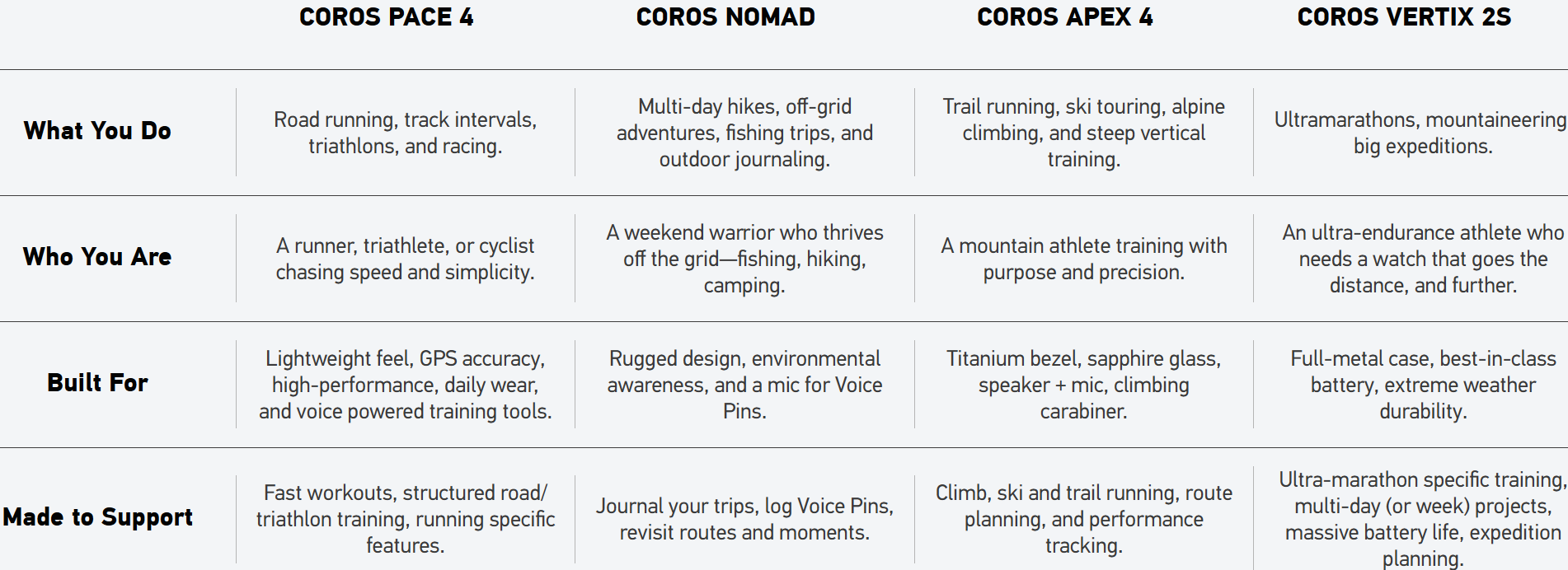
COROS Pace 4 vs Garmin Forerunner 165: Feature Showdown
The Garmin Forerunner 165 is the Pace 4’s primary competitor at the $249 price point. The choice comes down to hardware (Coros) versus smart features/ecosystem (Garmin).
| Feature | COROS Pace 4 ($249) – Coros Win | Garmin FR165 ($249) – Garmin Win |
|---|---|---|
| GPS Accuracy | Dual-Frequency (L1+L5) Multi-Band | All-Systems (Single Band) |
| Max GPS Battery | 31 Hours (Dual-Freq) | 19 Hours (GPS-only), 17 Hours (All-Systems) |
| Sports Profiles | Triathlon/Multisport Mode, Cycling Power Meter Support | No Triathlon, No Cycling Power Meter Support |
| Music | Offline MP3 only (No Spotify Streaming) | Spotify, Deezer, Amazon Music (Music Version) |
| Payments (NFC) | No | Garmin Pay |
Design & Hardware: Is the COROS Pace 4 AMOLED Display Good?
Yes, the 1.2-inch, 390 x 390 resolution AMOLED display is impressively bright and colourful. At 1,500 nits, the contrast and readability are excellent, even in direct sunlight, providing a significant upgrade over the Pace 3’s MIP display.
The plastic-like look is normal at this price point and is widely liked for sports watches that are typically used only during activities. The aesthetics predate this generation of technology by well over a decade, but it’s an aesthetic with a wide appeal. The digital crown at the 2 o’clock position looks visually awkward, but it’s positioned there to avoid accidental presses and maximise the ease of scrolling through menus and screens. A sensible compromise alongside an unremarkable overall design.
- Display: 1.2-inch, 390 x 390 resolution, Always-On AMOLED Touch Screen. Protected by Mineral Glass. Resolution is roughly four times that of the Pace 3, which used a 240 x 240 MIP panel.
- Controls: Features a Digital Dial, a Back Button, and the new Action Button. The display is touch-enabled, allowing you to swipe through widgets.
- Build: The bezel and cover material are Fibre-Reinforced Polymer and water-resistant up to 5 ATM.
- Bands: 22mm Quick Release (silicone – 40g, nylon – 32g).
- Charging: New USB-C adapter
- New charger is incompatible with the older Pace 3.
Listen to the discussion
Coros has committed to AMOLED displays; the one on Pace 4 is not the brightest on the market by a long chalk, but it’s more than bright enough for me at 1,500 nits. The contrast and readability are more than good enough, even in sunlight. Three backlight settings are available: Standard, High, and Max. Default screen behaviour is gesture-based, with always-on display optional.
Next, we have the ‘action’ button, better known for its use on the Apple Watch Ultra. It’s great when used as a shortcut during sports, but it has no function outside of sports. Another oddity. When combined with the crown, its design choice eliminates the need for five buttons, but… why not simply have five buttons? What’s wrong with that?
Under the hood is Coros’s fastest processor ever. This puts Garmin to shame, although luckily for Garmin at this price point, you only really notice poor screen performance and lags on maps. Garmin still sells no current watch with maps at this price, and Coros added maps to the Pace 4 in September 2026.
Pace 4 Beyond the Workout: Daily Usage and Smart Features
As a smartwatch, Coros does OK but lacks payment support (workaround), lacks an app store, and only offers decade-old MP3 music support (no Spotify streaming). However, it’s slowly catching up here, already supporting message/call alerts, as well as GoPro/Insta360 controls.
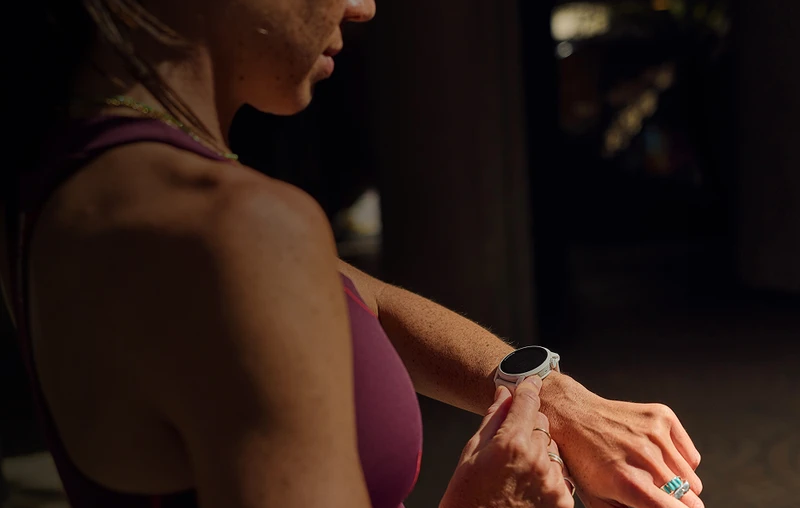
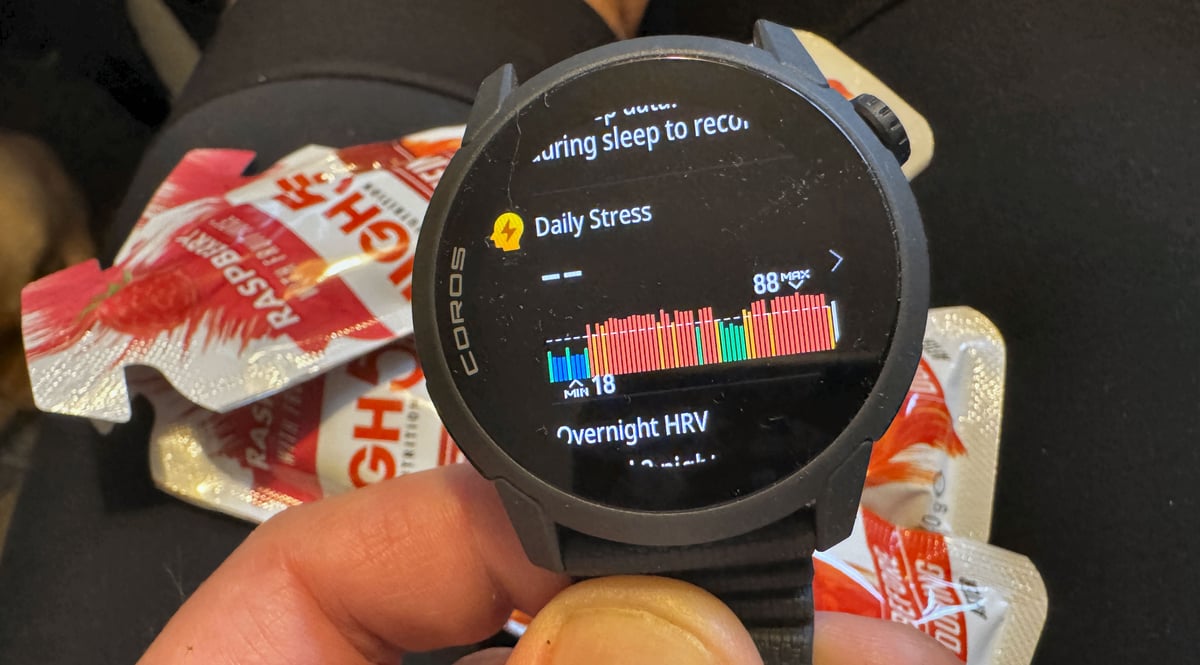
Health tracking probably does as much as it needs to, covering sleep, HRV, recovery and a wellness check. Like most wearable companies in this area, the features have been somewhat overextended beyond what the science says, but all the competition does the same.
The Pace 4 launched with women’s health features, starting with menstrual cycle tracking.
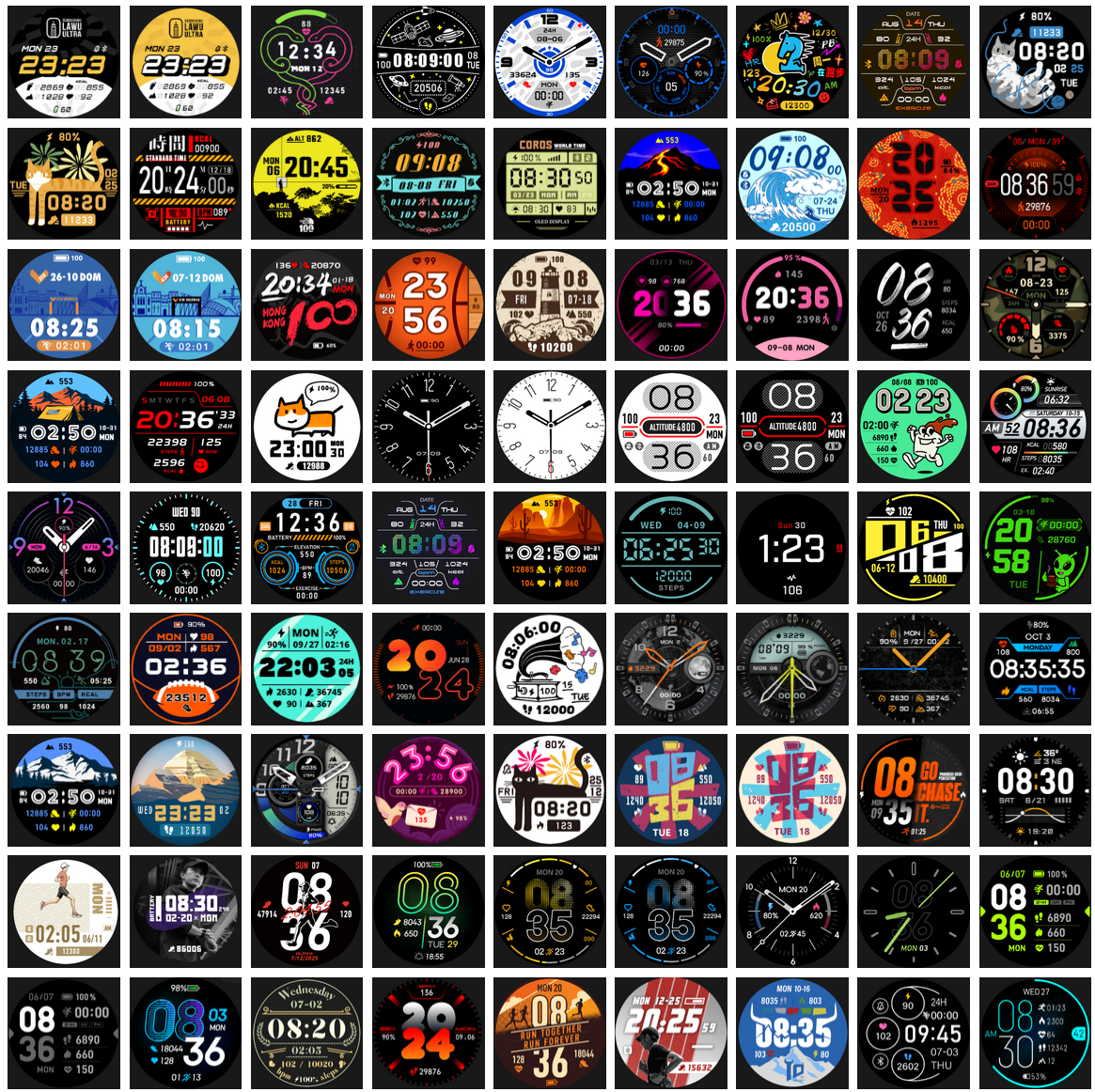
The watch is also decently customisable through various watch faces and a minimal number of widgets. I’m not a fan of the Coros watchface and menu aesthetic, but you may be. Here is an article covering all Pace 4’s faces, or check out the following montage of all of them!
A display-based flashlight is now available, accessible from the controls menu with adjustable intensity. The feature uses the AMOLED panel itself rather than a dedicated LED, so it serves as a useful aid in low light rather than a substitute for a torch.
Comprehensive Sports Usage and Training Capabilities
It’s got the lot. All the sports. All the degrees of accuracy. All the sensors.
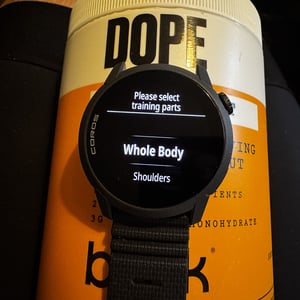
- Sport Profiles: These and more – road running, trail running, indoor running, track running, cycling (road/indoor), pool and open-water swimming, strength training, triathlon/multisport, and various team/paddle sports.
- GPS Modes: Max Accuracy (Dual Frequency, all systems) or High Accuracy (All Systems, single frequency) modes are available, and both offer great accuracy in most situations, with the latter using less battery. An interesting tidbit is that the GPS-only mode has been removed. This is because the chipset manufacturer can only deliver relatively small additional battery savings by offering that mode, so it’s not worth including.
- Connectivity: Most sensor types are supported, but only with Bluetooth accessories, such as heart rate monitors, cycling power meters, and, of course, the COROS running POD 2 (not a power pod like Stryd – also supported).
Whilst lagging behind many of the subtle nuances and sheer depth of features offered by Garmin, beyond the headlines, Coros does more than most other competitors to support the sports needs of just about every athlete.
There are over 40 sports modes, including various types of running (outdoor, indoor, trail, track), cycling (road, mountain, gravel, indoor), climbing, swimming (pool, open water), and multisport activities like Triathlon. Each profile offers a reasonable degree of customisation, allowing up to 8 data fields per page, various layouts, and configurable button and activity alert settings, all managed through the COROS smartphone app.
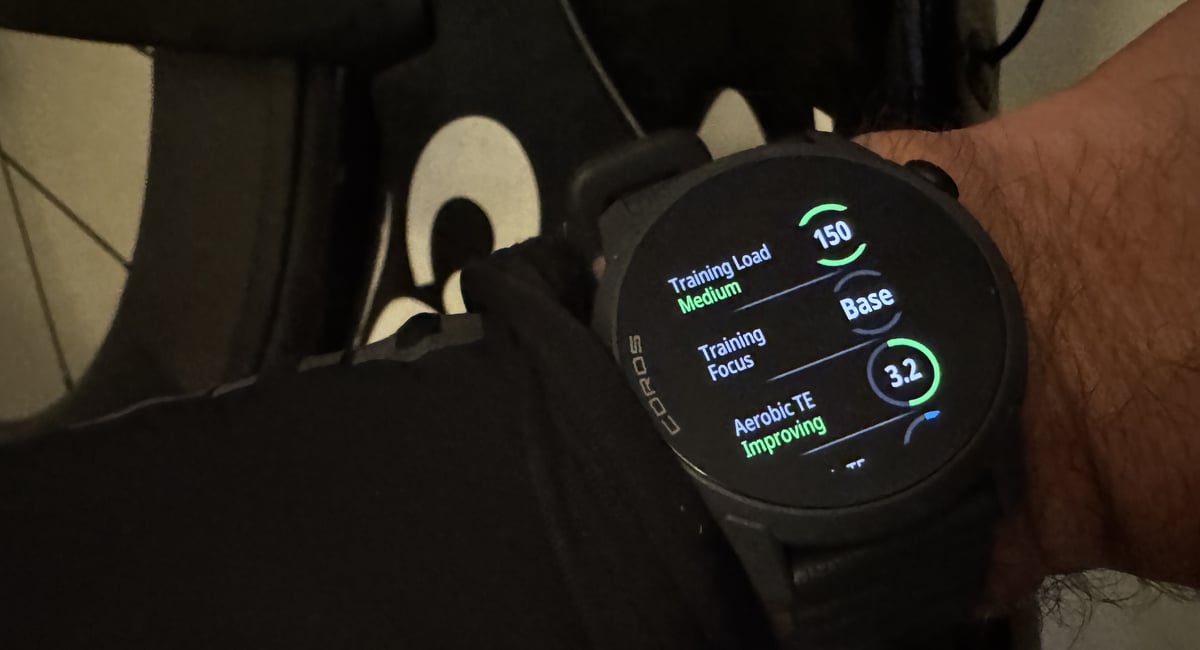
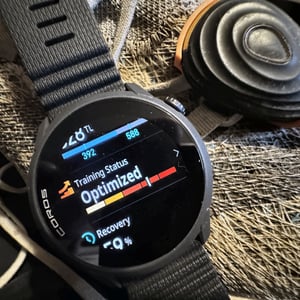
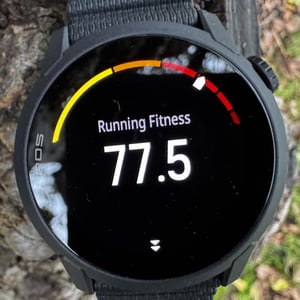
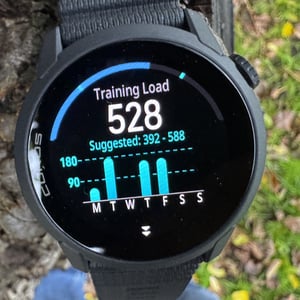
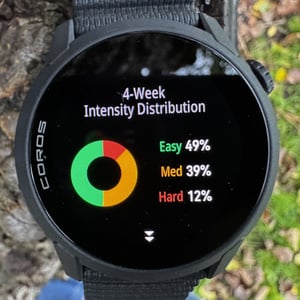
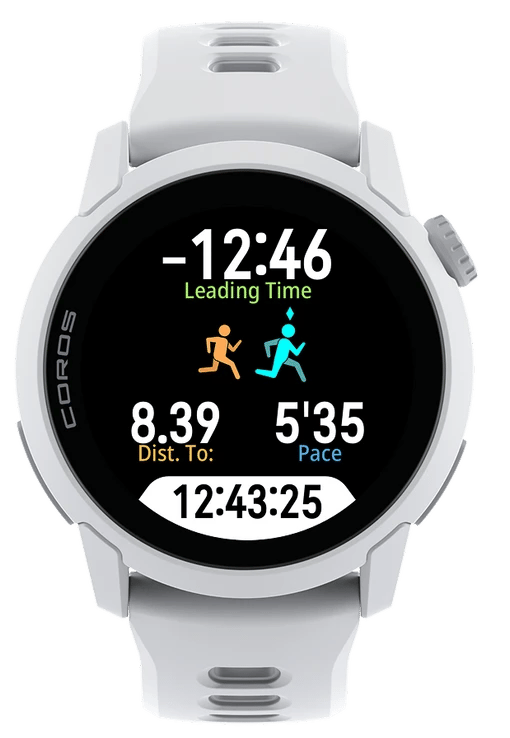
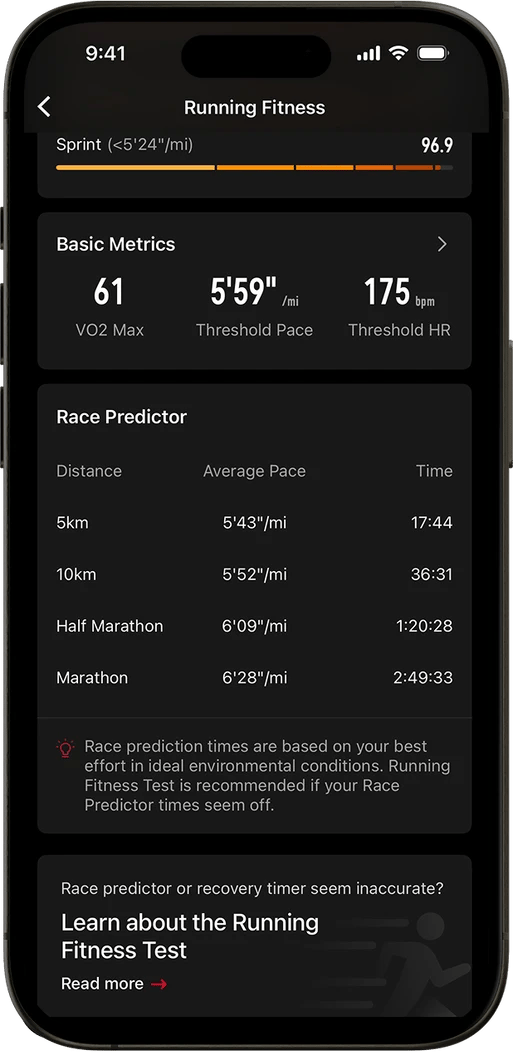
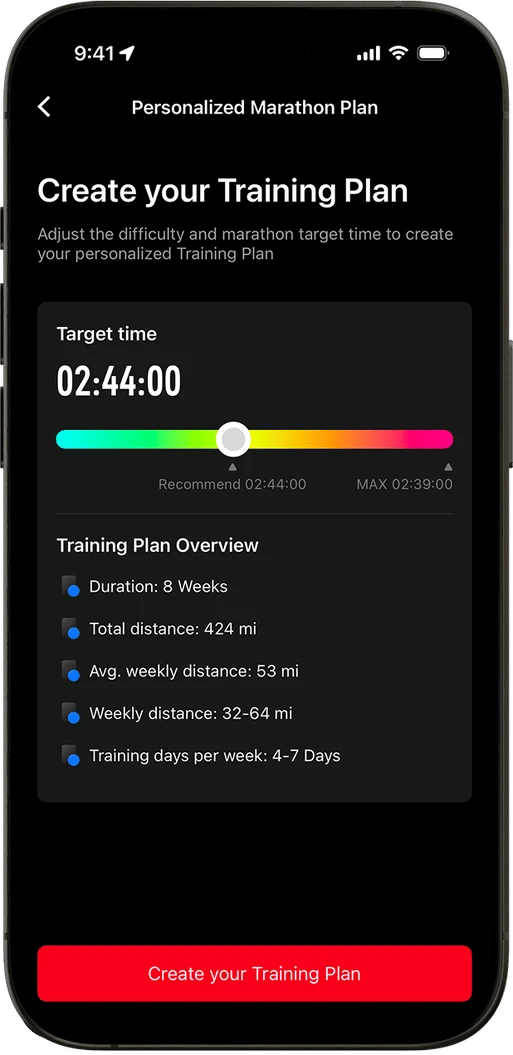
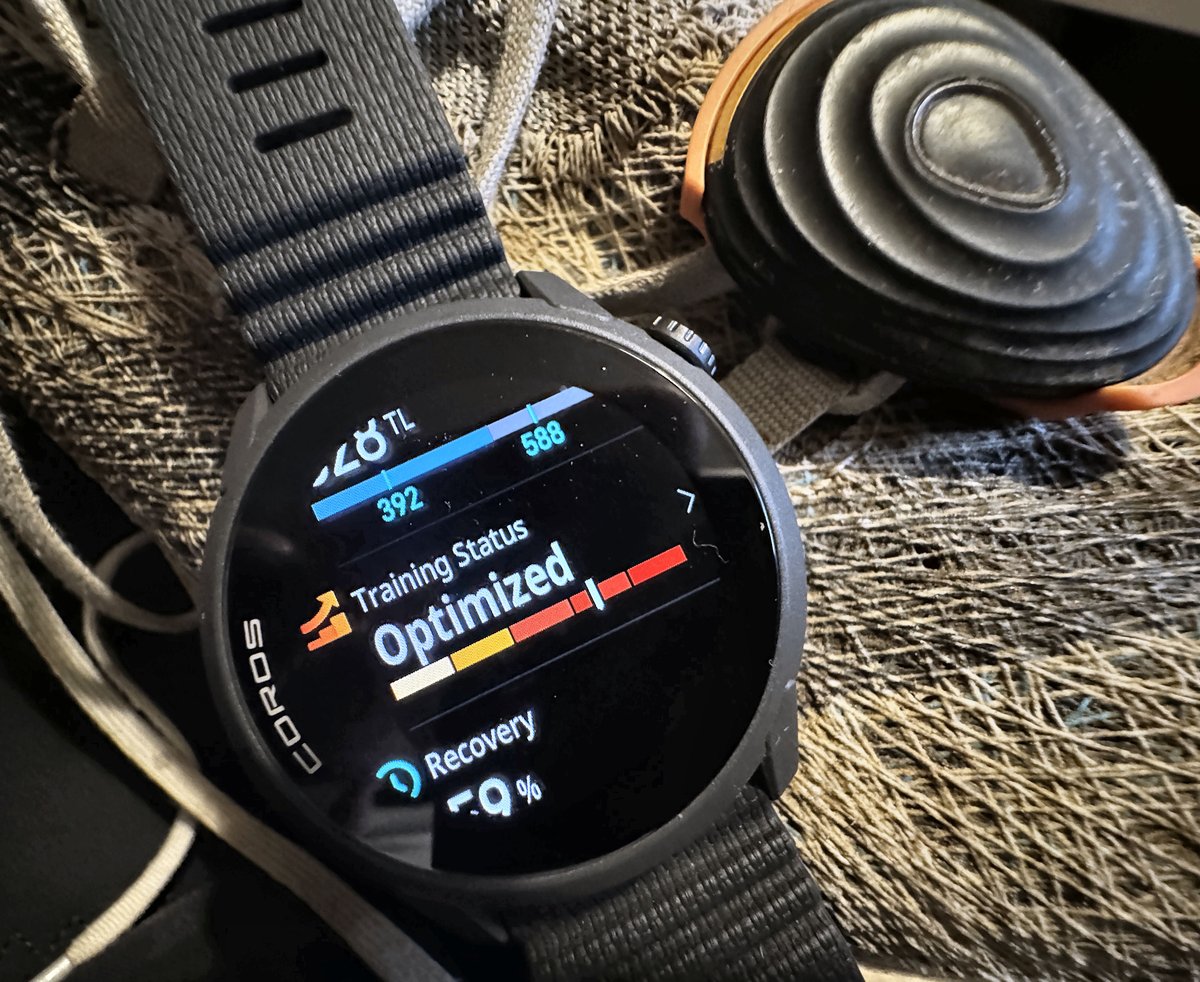
Coros Training Metrics (EvoLab) covers the most useful measures also offered by Garmin, such as Training Load, Base Fitness, Training Status, Recovery Timer, Running Fitness, and Race Predictor. A few aspects are still being refined, and there have been some hiccups in the past; however, this entire capability will continue to evolve and improve.
One persistent quirk is that the on-watch Training Load metric still resets each Monday morning, which does not reflect how recovery actually works. The Coros app now displays Training Load as a 7-day rolling average, but the watch face has yet to follow suit.
One downside, which is becoming less important every year, is that support is limited to Bluetooth sensors, not ANT+. Counterbalanced against that essentially cycling-only need, you can broadcast your heart rate from the watch to gym equipment in the gym.
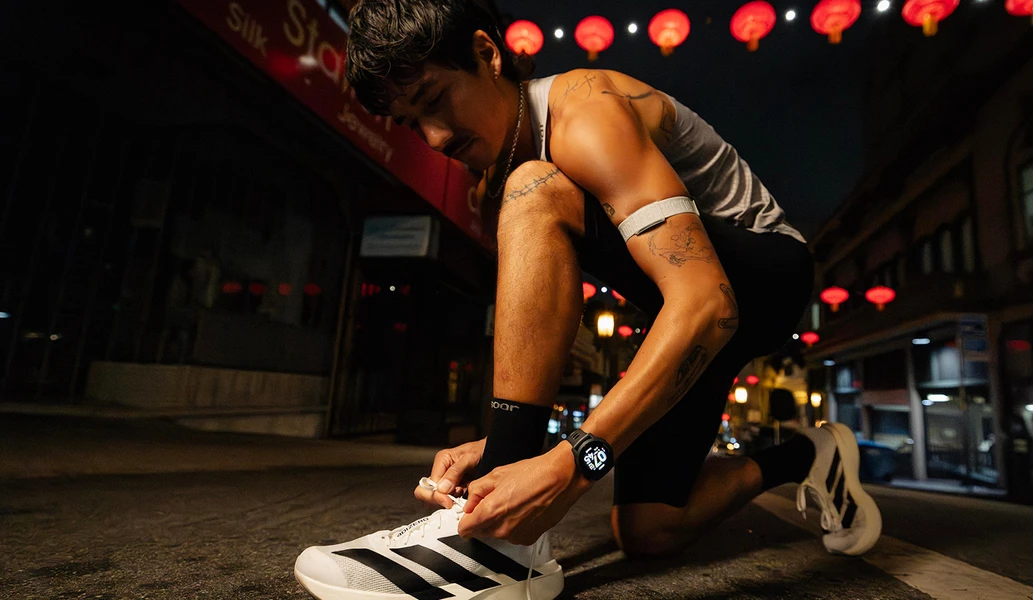
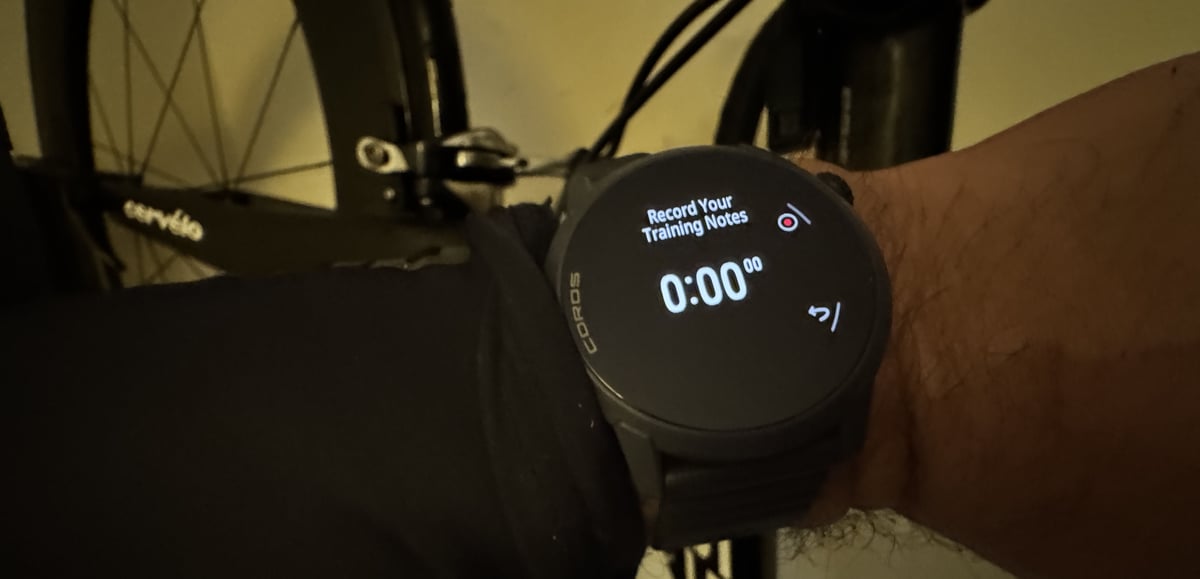
Unique Training Features: Voice
More Coros innovation – this unfinished feature had to start somewhere. That somewhere is here.
Coros has introduced voice pins and perceived effort notes. Those features could have been named better, but the former lets you save a note mid workout along with a GPS point like ‘Great coffee here‘, whereas the latter adds the option to dictate a note at the end of your workout – this could be great for posterity or for your coach, if you have one. To my knowledge, these voice notes cannot be shared outside the Coros ecosystem (e.g. to your coach).
Mapping and Navigation: Maps Added in September 2026
Pace 4 launched without maps. A September 2026 firmware update added them.
Coros added offline maps with street and trail names and points of interest to the Pace 4 in its September 2026 update, first released as a public beta. They are the same maps as on the Pace Pro, Apex 4 and NOMAD, downloaded by region through Map Manager in the Coros app. The Pace 4 has 4GB of storage against the Pace Pro’s 32GB, so plan on a home region and a travel destination rather than a whole continent; a UK and Ireland map takes around 0.5GB. As on every Coros watch, the watch does not recalculate a route if you go off course.
Before the maps update, you could only follow simple breadcrumb routes after loading up a GPX file. That’s the 10-year-old way of navigating, and it doesn’t work too well, though breadcrumb routes remain available. Routes can be imported from Komoot, Strava, or as raw GPX files, or built directly in the Coros app and synced to the watch.
Pace 4 Battery Life: Endurance for the Long Haul
Pace 4’s battery life is nearly doubled.
Technology has moved on. While batteries have shown modest improvement over the last decade, the real story is the development of more efficient displays, GPS chips, and optical HRMs. Even AMOLED displays are now performing as well as some MIP displays from five years ago, and we are seeing impressive improvements across all brands. No doubt the tech will improve further, but even if not, the situation today for all the sports watch companies is exceptional.
What is the COROS Pace 4 Battery Life in GPS Mode?
The COROS Pace 4 battery life is significantly improved, offering up to 41 hours in High GPS mode or 31 hours in the highly accurate Max GPS Dual Frequency mode. Daily use with Always-On Display provides approximately six days of charge.
I’ll cover some detailed comparisons further below; just enjoy these levels of performance. 30 hours of full GPS recording in an Always-On display (AD) model…Wow.
- Daily Use: 19 days (standard – wrist turn enabled display) / 6 days (AOD).
- High GPS Mode (All Systems): 41 hours (standard) / 30 hours (AOD).
- Max GPS Mode (Dual Frequency): 31 hours (standard) / 24 hours (AOD).
In real-world testing in Max GPS mode with the always-on display enabled, battery drain settles at roughly 4% per hour, in line with the published 24-hour figure.
COROS Pace 4 – Key Technical Specifications
The only downer here is the mineral glass lens. This will scratch relatively easily compared to Gorilla or Sapphire glass. That said, mineral glass is itself an upgrade over the plastic lens fitted to the Pace 3.
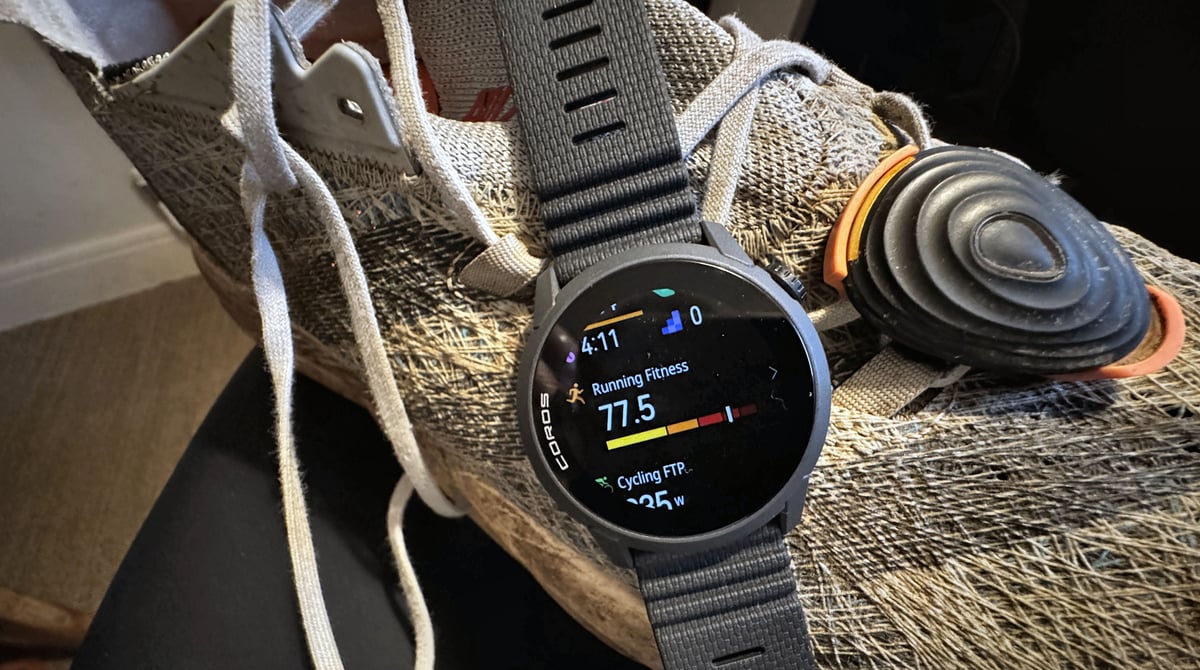
These are the key specs for completeness. As we mentioned elsewhere, it’s affordable, accurate, compact, lightweight, and features a bright screen.
- Price: $249 / £229.
- Weight: 32g with the nylon band.
- Display: 1.2 inches, AMOLED, 390 x 390 pixels.
- Storage: 4GB, shared by maps and music.
- GPS: All-Satellite Dual-Frequency.
Full specifications, battery modes and activity profiles are in the COROS Pace 4 specifications.
Coros Pace 4 – Detailed Accuracy Tests
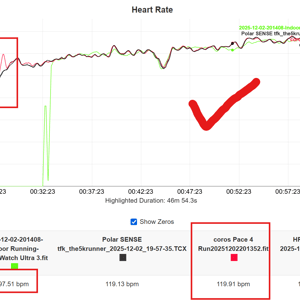
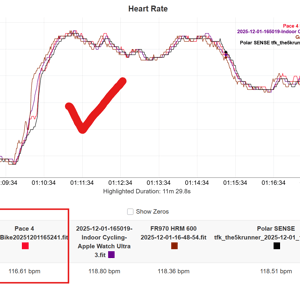
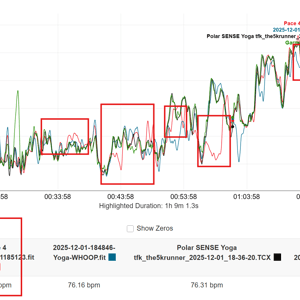
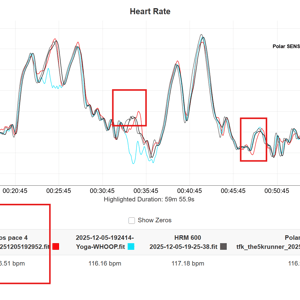
The results of my accuracy tests so far over indoor and outdoor running and cycling are best summarised as: market-leading GPS/GNSS accuracy and pretty good optical HR accuracy.
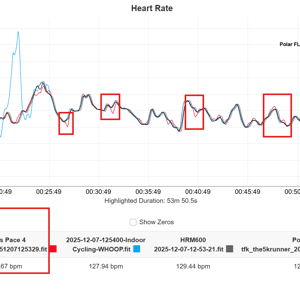
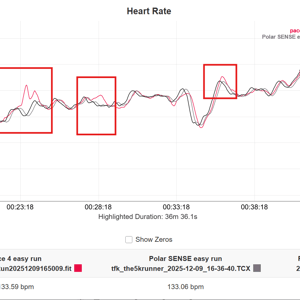
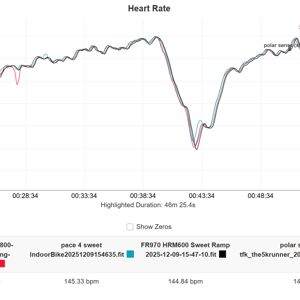
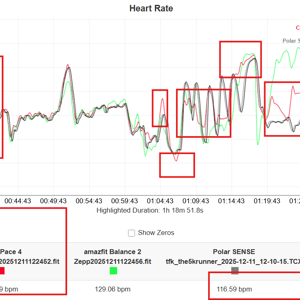
Optical HR Accuracy Test Results
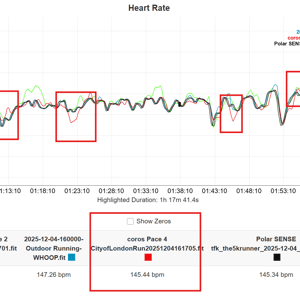
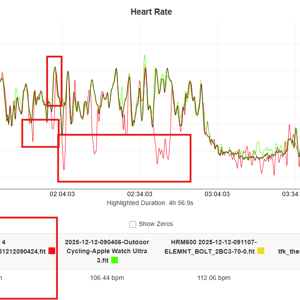
These charts for running, cycling, cardio(gym) and yoga show good but slightly mixed results. The worst results are for yoga, where significant wrist movements and restricted blood flow are likely causes of the inaccuracies, mainly showing as under-reporting. Other indoor usage on the treadmill and stationary bike is close to excellent, albeit in an easy test. There is evidence of periodic lags in which the heart rate lags behind the live values. On a more strenuous off-road hill rep session, the Pace 4 was very average. And on a 3-hour outdoor ride, there were repeated periods of under-reading (not dropouts), resulting in a significant 3.5% overall error.
An extensive outdoor Z2/Z3 endurance run was very good but not excellent, due to a few minutes of under-reading. Acceptable levels of error.
Coros Pace 4 Dual Frequency GNSS/GPS Accuracy Test Results
Coros Pace 4 is one of the most accurate sports watches for GPS/GNSS…ever. Period. I’ll show two sets of results for now and update with more later.
First to show is my standard running GPS test, which I’ve performed on almost every GPS watch over the last 10 years. Pace 4 isn’t the best. Pace 3 is…just! Here are the full results and methodology.
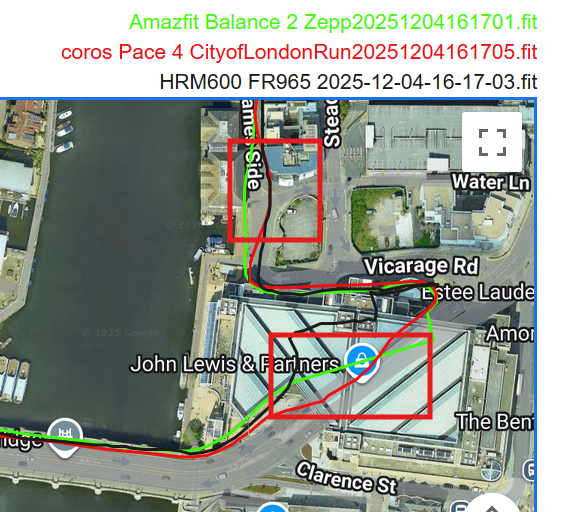
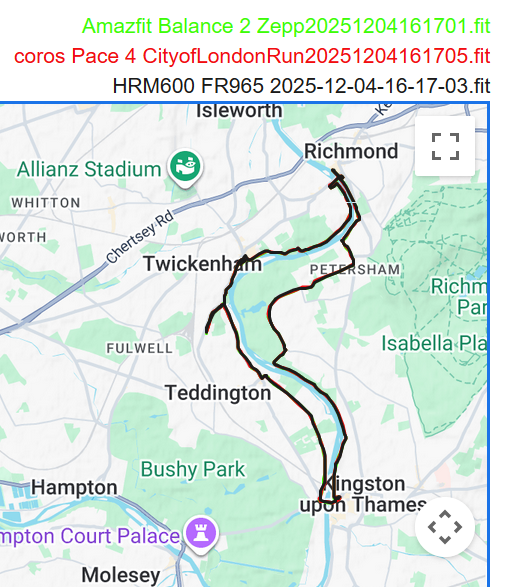
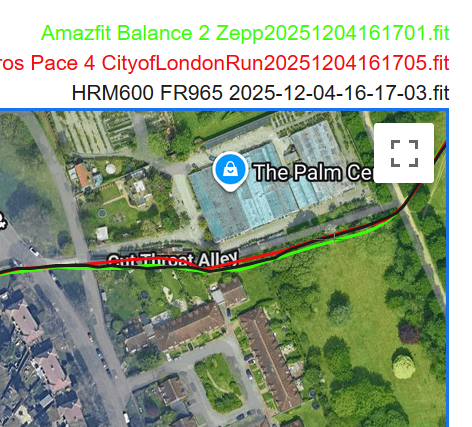
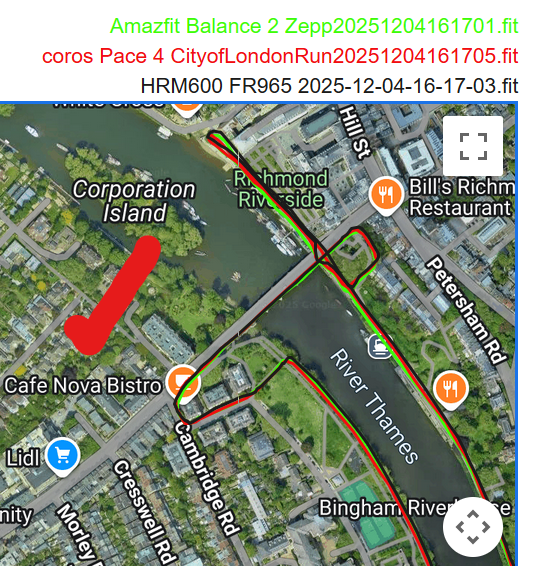
None of the dual-frequency (L1+L5) sports watches correctly handles multi-path signals. Despite that, the results of modern GNSS chipsets are generally noticeably better than anything that has come before. They come close to perfection. It’s just the multipath (reflected signals) issue they need to resolve.
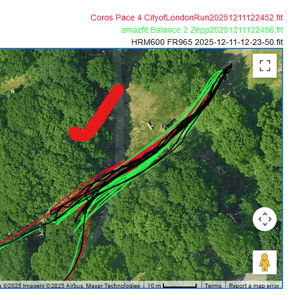
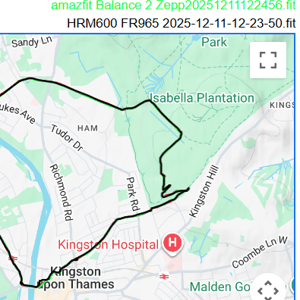
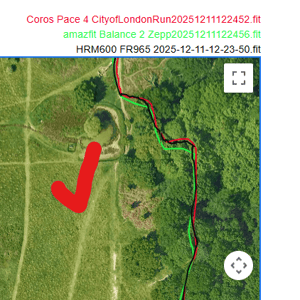
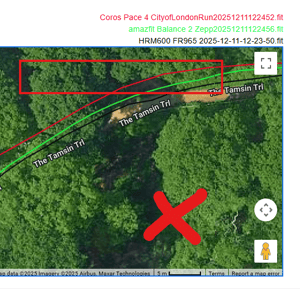
The second run has test areas that are mostly off-road and include hills and decent tree coverage in places. Pace 4 had the best GPS -on-test against the FR970 and Amazfit Balance 2, however, it did stray slightly from the correct path on one tree-covered section.
Wider Competitive Landscape and Range Analysis
Go Coros for better hardware, Go Garmin for better features
The main Garmin competitor is the Forerunner 165; both devices are the same size and feature AMOLED displays.
- Pace 4 Advantages: More accurate GNSS/GPS Dual-Band, twice the battery life, support for cycling power meters, multisport, and new microphone features.
- Forerunner 165 Advantages: Superior health/wellness tools (like Body Battery) and superior smartwatch features such as NFC payments and support for streaming services like Spotify. Superior training/planning ecosystem.
Update, September 2026: The Garmin Forerunner 70 replaced the Forerunner 55 in May 2026 at £219.99 / $249.99 and is now the Garmin matched to the Pace 4 on price. In my testing it produced the best 10-mile GPS result of any single-frequency watch I have tested and kept heart rate within tight limits across seven sessions. It averaged 18.6 hours of GPS battery in my testing against Garmin’s 23-hour GPS-only claim, while the Pace 4 drained at roughly 4 per cent an hour in dual-frequency mode with the always-on display, which projects to about 25 hours. The Forerunner 70 has no Garmin Pay, no music storage, no maps and no power meter support.
If you are looking for an even higher level of features, from the perspective of Coros, the spanner in the works is the usually more expensive Garmin Forerunner 255, which is discounted to $199 in sales and adds higher-end features like triathlon.
Range Analysis: COROS Pace 4 vs. COROS Pace Pro & Pace 3
The older Coros Pace 3 hits the sweet spot with pricing
- Pace 4 ($249) vs. Pace Pro (New Price: $299): The Pace Pro is larger (46mm), with 32GB of storage for maps against the Pace 4’s 4GB, and an ECG sensor. Both now carry the same offline maps. Pace 4 is lighter and smaller, features the new microphone/voice capabilities, and offers slightly improved battery life in specific modes.
- Pace 4 vs. Pace 3 (New Price $199): The Pace 4 updates the display to AMOLED (Pace 3 uses Memory LCD/MIP) and significantly increases battery life in Max GPS mode (31 hours vs. 15 hours). The Pace 4 also features a third Action Button and a microphone.
- Pace 4 vs. Pace 4 Pro ($449 / £389): The Pace 4 Pro, launched in September 2026, adds a 1.47 inch 3,500-nit AMOLED, a titanium bezel, sapphire glass, a speaker, ECG, 32GB of storage and 60 hours of all-systems GPS battery. See the Pace 4 Pro specifications and the Coros Pace upgrade guide.
Coros prices its watches slightly above what they are worth. They are still good, but a similarly priced Garmin alternative is usually better. However, once Coros prices properly, as with the $199 Pace 3, then it becomes a go-to recommendation.
Coros Pace 4 vs Pace 3 vs Pace Pro Battery Life: Detailed Comparisons
Pace Pro and Pace 4 use the new-generation hardware, which is why their battery life is so much better.
| Model | Daily Use (AOD Off) | Max GPS Mode (Dual Freq) | High GPS Mode (All Systems) |
|---|---|---|---|
| Pace 4 | 19 Days | 31 Hours | 41 Hours |
| Pace Pro | 20 Days | 31 Hours | 38 Hours |
| Pace 3 | 15 Days | 15 Hours | 25 Hours |
Quick answers
Is the Coros Pace 4 worth upgrading from the Pace 3?
Yes if you want AMOLED, double the GPS battery life, the new optical heart rate sensor, and voice features. No if you have a working Pace 3 and the $199 Pace 3 price reflects the value you actually use.
Does the Coros Pace 4 have offline maps?
Yes, since the September 2026 firmware update, first released as a public beta. The maps carry street and trail names and points of interest. The 4GB of storage limits how many regions fit, so the $299 Pace Pro with 32GB suits anyone who wants larger areas.
Does the Coros Pace 4 work with Spotify or other streaming services?
No. The Pace 4 supports offline MP3 playback to Bluetooth headphones only. There is no Spotify, Deezer, Amazon Music, or any streaming service support, and Coros has not committed to a timeline for adding it.
Does the Coros Pace 4 support contactless payments?
No. There is no NFC payment support. Garmin Pay on the Forerunner 165 remains the differentiator at this price point.
Does the Coros Pace 4 support ANT+ sensors?
No. Bluetooth sensors only, including heart rate monitors and cycling power meters. The watch can broadcast its heart rate over Bluetooth to gym equipment.
Is the Coros Pace 4 compatible with the original Coros POD?
Yes. The Pace 4 supports the Coros POD and POD 2.
Can the Coros Pace 4 import routes from Strava or Komoot?
Yes. Routes can be synced from Strava and Komoot through the Coros app, loaded as raw GPX files, or built directly in the app.
How accurate is the Coros Pace 4 GPS?
Very accurate. With dual-frequency (L1+L5) tracking enabled, GPS performance is at the top of the market. Multipath errors in dense urban canyons remain an unresolved industry-wide limitation.
How accurate is the heart rate sensor on the Coros Pace 4?
Acceptable to good. Indoor use, steady-state running, and treadmill work are close to chest-strap accuracy. Outdoor cycling and high-intensity interval transitions show periodic under-reading. For serious training a chest strap remains the better choice.
What is the Coros Pace 4 battery life?
Up to 19 days of standard daily use or 6 days with always-on display. GPS recording reaches 41 hours in High GPS mode and 31 hours in Max Dual-Frequency mode. Always-on display reduces these figures to 30 and 24 hours respectively.
Can the Coros Pace 4 record a triathlon?
Yes. A dedicated multisport mode is included, which the Garmin Forerunner 165 lacks.
Does the Coros Pace 4 support cycling power meters?
Yes, over Bluetooth. Single-sided and dual-sided power meters that broadcast over BLE are supported.
Does the charger from the Pace 3 work with the Pace 4?
No. The Pace 4 uses a new USB-C adapter that is not compatible with the older Pace 3 charger.
Does the Pace 4 have an ECG sensor?
No. The Pace Pro and Pace 4 Pro have ECG sensors.
Can the Coros Pace 4 broadcast heart rate to a bike computer?
Yes, over Bluetooth. ANT+ broadcast is not supported, so older Garmin Edge units that only listen on ANT+ will not pair.
What is the best alternative to the Coros Pace 4?
The Garmin Forerunner 70 at $249.99 for Garmin’s ecosystem and training metrics, or the discounted Forerunner 165. The Coros Pace Pro at $299 for 32GB of map storage, ECG and a slightly larger screen. The Coros Pace 4 Pro at $449 for a brighter screen, titanium, a speaker and 60 hours of battery. The Coros Pace 3 at $199 for buyers who want the core Coros experience for less.
Marketing and Strategic Considerations
- Target Buyer: Coros is ideal for any level of athlete seeking a lightweight, simple, dedicated running watch.
- Value Proposition: COROS is competitively priced at $249–$449 across the current Pace range, offering a decent set of features for the money. COROS sets itself apart with a fair approach to firmware updates, which reach most of its watches until their storage fills.
Coros Updates
Coros tends to have decent quarterly feature updates even for 4-5 year old devices, until a watch’s storage fills: the Pace 2 stopped receiving features in September 2024 (see the Coros Pace upgrade guide). Here are some updates since the review was published
- Coros September 2026 update – offline maps with street and trail names on the Pace 4 (public beta), Voice Control, cycling Climb Alerts, an Adventure Journal timeline, and Torque and Total Work metrics.
- Pace 4 Pro (September 2026): a premium Pace with a 1.47 inch 3,500-nit AMOLED, titanium bezel, sapphire glass, speaker, ECG and 60-hour battery. See the Pace 4 Pro specifications.
- What future features to expect – streaming music and payments? Both have been mentioned by the brand in passing
- Pace 4 Black Crystal (April 2026) – $279 variant adding a 6000-series aluminium alloy bezel with PVD coating, translucent injection-moulded lugs, and a silk-screened silicone band. Internals are identical to the standard Pace 4.
- Coros March 2026 update (V 3.1508.0) – Pace Strategy (PacePro-equivalent), Hill Alerts (ClimbPro-equivalent), Hyrox-style Hybrid Fitness mode, Weekly Distance widget, off-wrist Passcode lock, Finish Pause for structured workouts, sleep mode persistence improvements, and larger notification font.
- Coros January 2026 update (V 3.1408.0) – voice training notes accessible directly from the post-workout summary screen, VO2Max added to the Running Fitness widget, refinements to strength training weight input.
- Coros December 2025 update – media control and voice note
- Coros September 2025 – 3D flyovers
- Coros July 2025 app 4.0 update
- Coros July 2024 feature updates
- Coros September 2024 update – gear tracking, sleep quality and nap detection, and the last feature update for the Pace 2
Coros Pace 4 price: where to buy
Pace 4 is on sale now globally.
Take Out: COROS Pace 4 Review
Get the Pace 4, and you will join a growing army of like-minded runners who love what this challenger brand offers as an alternative to Garmin’s Forerunner 165.
Beware the details.
The Coros ecosystem is simply not as mature as Garmin’s. Garmin’s features are deeper, richer, and broader in scope – does everyone need that? Probably not if you want a sports watch solely to record your activities. As a smart ecosystem, Coros has a way to go to catch up with Garmin.
Spotify, Payments, and the all-important third-party app store are all absent, and will remain so for years.
Maps arrived in September 2026.
Pace 4 now has maps, added by firmware in September 2026. Whilst few of us regularly use maps, I’d like to bet that most of us will want to use them a couple of times a year. Coros Pace Pro at $299 remains the choice if you want 32GB of storage for larger map regions. Garmin’s cheapest current watch with onboard maps is the Forerunner 970 at $749.99, which is too high a price point for casual map usage.
Your call must weigh the benefits (AMOLED display, battery life, speed, voice features, offline maps) against the drawbacks (mixed HR accuracy, 4GB of map storage, no streaming music integration, no 3rd-party apps).

Source and Resources
- Coros Pace 4 – Product Page
- Coros Pace 4 – Product Manual
- Alternative YouTube opinion: Fit Gear Hunter or DCRainmaker
- Buy Coros Pace 4 – UK / EUR / USA
- Coros on Reddit (heavily moderated by the brand)
Related Reviews
See how the Coros Pace 4 compares in our Best Triathlon Watch 2026 roundup. For alternatives in this price range, see the Garmin Forerunner 165 Review. Wahoo’s entry into wearables, the Wahoo Ace, takes a different approach to training metrics.
For how the Pace 4 sits against the rest of the lineup, see our guide to every COROS GPS watch.
Last Updated on 30 September 2026 by the5krunner
Small things I always use
- Garmin 90-degree charging adapter: Charges your Garmin from any USB-C cable. Essential when travelling. I use one.
- Body Glide: The blue anti-chafe stick swimmers and runners carry. I use it.
- Speedo earplugs: Fewer ear infections and no cold-water dizziness. I use them.
- Maurten: Race fuel that stays easy on the stomach. I use them.
- Garmin charging puck: The quickest way to top up before a session. I use one.
- Injinji: Toe socks that stop rubbing, so you run more. I use them.
- Cellucor C4: My pre-workout before hard sessions.
- TPU tubes: Schwalbe Aerothan, Tubolito and Pirelli SmarTube. Light, tiny spares. I use all three.
Watches and sensors
- Polar H10: My daily driver for waking HRV.
- Polar Verity Sense: My backup arm-worn HR sensor.
- Nomad bedside charger: Charges my iPhone and Apple Watch overnight. I use it, and many of their bands.
- Train.Red: The best muscle oxygen sensor I’ve used.
- Garmin Forerunner 970: A pro-grade triathlon watch. I use this.
- Apple Watch Ultra 4: My daily smartwatch. No phone needed on rides.
- Garmin Fenix 9 Pro: I’ve just bought one.
On the bike
- Continental GP5000 for everyday riding, and Aero 111 on the front for special occasions.
- Ravemen FR300: A front light that mounts under your Garmin or Wahoo. I use one.
- Wahoo TRACKR Radar: I use it on one bike and Varia on the other. They perform the same.
- Garmin Varia RTL515: Radar that warns you of cars from behind. I use this model.
- Wahoo ELEMNT Roam 3: The bike computer that’s easy to use. I use mine on most rides.
- Favero Assioma Pro RS2: Accurate power pedals that swap easily between bikes. I use this model.
Home and indoor training
- Google Wifi: Keeps Zwift connected in my pain cave. I use it.
- Apple TV 4K: Zwift on the big screen. I use two.
- Google Nest Doorbell (wired, 2nd gen): My video doorbell, running in both Google Home and Apple Home. I use it.
Health, recovery and sleep
- FreeStyle Libre 3 Plus: Shows how my blood sugar responds to diet.
- hDrop: Measures my sweat loss in summer and indoors.
- Fourth Frontier Zone: Checks my heart under load in hard sessions.
- Oura Ring 5: My partner’s recovery tracker of choice.
- Kineon MOVE+: Red light therapy for niggles. It works.
- Eight Sleep: A cooling mattress cover my partner and I use nightly.
Reader-Powered Content

This content is not sponsored. It’s mostly me behind the labour of love, which is this site, and I appreciate everyone who supports it.
Support the site: Follow (free, fewer ads) · Subscribe (paid, ad-free) · Buy Me A Coffee ❤️
Written by real people, with AI assistance. Fact-checked and verified for originality. See the Editorial Policy. FTC: Affiliate Disclosure — some links pay commission. As an Amazon Associate, I earn from qualifying purchases.
tfk is the founder and author of the5krunner, an independent endurance sports technology publication. With 20 years of hands-on testing of GPS watches and wearables, and competing in triathlons at an international age-group level, tfk provides in-depth expert analysis of fitness technology for serious athletes and endurance sport competitors. ID

Your AI podcast on this watch is really good. You could be forgiven thinking the presenters had real personalities.
ty
even the intonation and deliberate pauses or changes in speech patterns are excellent.
on the negative side AI is effectivly going to be God in 5-10 years. Well, God with an off switch
There sure is a lot of unsexy black boarder around the display. Previous Paces did conceal it better.
Prices is still fair but there’s also Suunto Race / Race S.
Some offers for a Pace Pro with maps for around 350€.
Vantage M3 for 300€.
And some Garmins on discount.
The Pace 1 and 2 for 200€ I considered a great deal. A Pace 4 for 270 not.
Yes, inflation and fancy screen but I’d personally opt for the Suunto.
But I appreciate every no frills pure sports watch nonetheless.
I really like what they put in this little watch.
All the basics are here, sports profiles for almost everybody, configurable, solid multisports (embedded triathlon, customizable ones, even “loop” bricks are easily designed, something Suunto still can’t do).
Swim metrics are OK for me, better than Suunto only “Auto-detection” mode for Race S and above, and not available on Suunto Run.
Suuntos can’t properly track swimming sets, as it’s not possible to use the lap button as it should work (i.e manual detection of intervals times), and you have to rely on the sometimes wonky auto-intervals detection (Run doesn’t have that…neither a working lap button).
Coros syncs with external services to get your workout of the day – you have to upgrade to Race S to have this at Suunto. Sensors management, despite coming many years late, is still buggy. It works well on Coros.
I see little point in getting the similary priced Suunto Run versus this Pace 4. Usability is also better on Coros SW, despite using Suuntos for maaaaany years.
Actually this Pace 4 looks like what I’ve always dreamed of coming from Wahoo: a modern Rival. No frills, solid sports mode, connectivity. Pair it with an AW and you’re good 🙂