Full specifications, features and battery life for the Apple Watch Ultra 4, the brand’s rugged multisport flagship.
| Manufacturer | Apple |
| Type | GPS multisport smartwatch |
| Series | Watch Ultra |
| Released | 2026 |
| Price at launch | $799 / £749 / €899 |
| Predecessor | Apple Watch Ultra 3 |
| Successor | — |
| Case size | 49mm |
| Thickness | 12mm (Apple changed its measurement methodology between Ultra 2 and Ultra 3 to exclude the HR sensor bulge; the physical case has been the same since Ultra 1) |
| Weight | 63.0g (natural), 63.1g (black) |
Specifications and features as at launch. Requires iPhone 11 or newer with iOS 27 or later.
Expert opinion | What’s new | Specifications | Battery life | Features | Comparisons | Further reading
Expert opinion
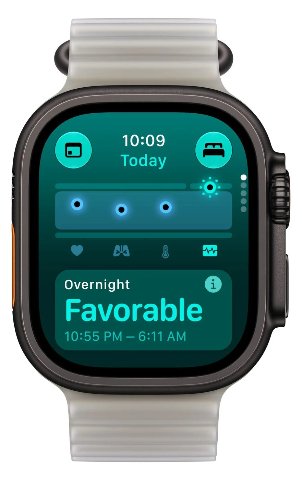
The Ultra 4 carries the same 49mm case dimensions as Ultra 3, with a marginal weight increase of 1.4g to 63.0g. The chip upgrade from S10 to S11 is the headline hardware change, bringing Apple Intelligence and a new Readiness app alongside the existing Vitals stack. Battery life is the most meaningful practical improvement: Apple claims 50 hours in normal use, up from 42 hours on Ultra 3, with Low Power Mode rising to 84 hours from 72 and a new 18-hour continuous GPS outdoor workout figure replacing the previous 14-hour GPS claim. The GNSS specification drops GLONASS from the constellation list compared with Ultra 3, retaining GPS, Galileo, QZSS and BeiDou. The display, sensors, satellite connectivity, durability ratings and connectivity hardware are otherwise unchanged. For Ultra 3 owners the upgrade case rests almost entirely on battery life and the S11 chip’s AI features.
Apple Watch Ultra 4
GPS adventure watch
What’s new versus Ultra 3
Hardware-exclusive (Ultra 4 only)
- S11 SiP processor (up from S10); Audio Intelligence via S11 Secure Exclave: Sound Recognition, Live Rewind, Siri Recap, Shazam (Live Rewind and Siri Recap arrive in beta late 2026)
- Health Sensing System: more capable optical sensors with larger, more power-efficient green LEDs; eight photodiode windows with double photodiodes in each (up from four single windows on Ultra 3); ECG electrode surface area +24%; background HR switched from infrared to green LEDs for continuous sampling
- High-frequency background heart rate tracking; Recovery HRV added
- Readiness app: daily 0–10 score — requires Series 12 or Ultra 4
- Daytime vitals view
- Improved calorie estimates from more accurate continuous HR data
- Battery life rises to 50 hours normal use (from 42); Low Power Mode rises to 84 hours (from 72)
- Outdoor workout battery rises to 18 hours (from 14); Extended Workout mode (25 hours); Max Extended Workout mode (45 hours)
- 15-minute charge delivers 18 hours of use (up from 12); 5-minute charge delivers 10 hours sleep tracking (up from 8)
- GNSS: GLONASS no longer listed (GPS, Galileo, QZSS, BeiDou retained)
watchOS 27 features (also available on Series 9, 10, 11, Ultra 2, Ultra 3, SE 3)
- Siri AI powered by Apple Intelligence (beta, English first, not initially available in EU)
- Single tap gesture selects highlighted Smart Stack widget; expanded Smart Stack suggestions
- Steps watch face complication; improved step count, distance algorithms and step sync between Health and Fitness apps
- Advanced Cycle Tracking: perimenopause and menopause support
- Workout Buddy without iPhone nearby (requires Wi-Fi or cellular), now in Spanish
- Check In safety feature
- Health Age in redesigned iPhone Health app (iOS 27; available to all supported watch users)
Display, case dimensions, materials, water resistance, satellite connectivity, Wi-Fi, Bluetooth and NFC are unchanged from Ultra 3.
Specifications
| Display | |
|---|---|
| Type | LTPO3 OLED, always-on |
| Area | 1,245 sq mm |
| Resolution | 422 x 514px, 326 ppi |
| Brightness | 3,000 nits max, 1 nit min |
| Glass | Flat sapphire crystal |
| Physical | |
| Case size | 49mm |
| Width | 44mm |
| Thickness | 12mm (same physical case as Ultra 1; Apple changed measurement methodology after Ultra 2 to exclude HR sensor bulge) |
| Weight | 63.0g (natural), 63.1g (black) |
| Materials | Grade 5 titanium (100% recycled), sapphire crystal |
| Water resistance | 100m (ISO 22810:2010); EN13319 dive certified to 40m; IP6X dust resistant |
| Processor | S11 SiP; dedicated Secure Exclave for Audio Intelligence; 4-core Neural Engine |
| Storage | 64GB |
| Sensors and positioning | |
| GNSS | Precision dual-frequency L1+L5: GPS, Galileo, QZSS, BeiDou |
| Heart rate | Health Sensing System: more capable optical sensors with larger, more power-efficient green LEDs; eight photodiode windows with double photodiodes in each (up from four single windows on Ultra 3); ECG electrode surface area +24% vs Ultra 3; green LEDs used for continuous background HR (previously infrared); electrical ECG |
| Altimeter | Barometric, always-on |
| Compass | Magnetic |
| Other | SpO2, skin temperature, water depth (40m), water temperature, high-g accelerometer, high dynamic range gyroscope, ambient light sensor |
| © the5krunner. Link required. | |
| Connectivity and battery | |
| Cellular | 5G RedCap and LTE (model A3579) |
| Satellite | Globalstar, Emergency SOS, two-way messaging and Find My |
| Wireless | Wi-Fi 4 (802.11n), 2.4GHz and 5GHz; Bluetooth 5.3; UWB (2nd gen); NFC. No ANT+. |
| Battery, normal use | Up to 50 hours |
| Battery, outdoor workout | Up to 18 hours |
| Battery, Extended Workout | Up to 25 hours (Low Power Mode active during workout) |
| Battery, Max Extended Workout | Up to 45 hours (Low Power Mode active, alerts and splits off) |
| Battery, Low Power Mode | Up to 84 hours smartwatch |
| Fast charging | 80% in about 45 minutes; 15 minutes gives 18 hours normal use; 5 minutes gives 10 hours sleep tracking |
| Operating system | watchOS 27 at launch |
Battery life
Apple claims up to 50 hours of normal use, up from 42 hours on Ultra 3, and up to 84 hours in Low Power Mode, up from 72. Outdoor workout battery rises to 18 hours from 14 hours. Two new workout modes extend runtime further: Extended Workout enables Low Power Mode during exercise for up to 25 hours, though running form metrics are unavailable; Max Extended Workout adds to that by disabling alerts and splits for up to 45 hours. A 15-minute charge delivers 18 hours of normal use; 5 minutes gives 10 hours of sleep tracking. Apple rates the battery for around 1,000 charge cycles before capacity falls to 80%.
Features
Full feature detail is covered on the Apple Watch specifications index.
Satellite and safety
- Satellite Emergency SOS, two-way messaging and Find My via Globalstar, free for two years after activation
- Check In, 86dB siren, fall detection, crash detection, last-cellular-location waypoint
Sports omissions
- No ANT+ protocol
- Apple avoids the word “broadcast”, but GymKit should send heart rate to compatible gym equipment after an NFC tap; untested here, as the equipment is hard to find.
- No FTMS smart trainer control
- No GPX route import to native Workout app (third-party apps fill this gap)
Triathlon
- Manual and automatic transitions, custom multisport profiles for triathlon, duathlon and brick workouts
- Per-leg metrics and total event time
- 18-hour outdoor workout limit; full Ironman feasible without Low Power Mode for the first time
Apple Watch Ultra 4
GPS adventure watch
Comparisons and upgrade guides
- Apple Watch Ultra 4 upgrade guide, whether to upgrade from an older Ultra or Series watch
- Apple Watch Ultra 4 vs Ultra 3, what changed
- Apple Watch Ultra 4 vs Series 12, same software, different hardware
- Garmin Fenix 9 vs Apple Watch Ultra 4, which to buy
- Galaxy Watch Ultra 2 vs Apple Watch Ultra 4, the phone decides
- Galaxy Watch vs Apple Watch charging speed, who is ahead
Further reading
- the5krunner Apple Watch Ultra 3 review
- Apple Watch Ultra 3 specifications
- Apple Watch specifications index
- Apple heart rate accuracy white paper (PDF)
Small things I always use
- Garmin 90-degree charging adapter: Charges your Garmin from any USB-C cable. Essential when travelling. I use one.
- Body Glide: The blue anti-chafe stick swimmers and runners carry. I use it.
- Speedo earplugs: Fewer ear infections and no cold-water dizziness. I use them.
- Dryrobe Advance: My winter changing robe for open-water swims. I use one. A cheaper option is the AONYIYI changing robe.
- Maurten: Race fuel that stays easy on the stomach. I use them.
- Beet It Sport nitrate shots: Beetroot shots I take in the days before a race. I use them.
- Garmin charging puck: The quickest way to top up before a session. I use one.
- Injinji: Toe socks that stop rubbing, so you run more. I use them.
- Ultimate toe protectors: Stop black toenails on long runs. They work. I use them.
- Compressport R2 v2 calf sleeves: My calf sleeves of choice. I use them.
- Cellucor C4: My pre-workout before hard sessions.
- TPU tubes: Schwalbe Aerothan, Tubolito and Pirelli SmarTube. Light, tiny spares. I use all three.
- G8 insoles: Adjustable insoles that are good. I use them.
- Cycplus Cube: A 97g electric pump that gets a road tyre rideable in two minutes. I carry one. 5% off with code THE5KRUNNER.
Watches and sensors
- Polar H10: My daily driver for waking HRV.
- Polar Verity Sense: My backup arm-worn HR sensor.
- Nomad bedside charger: Charges my iPhone and Apple Watch overnight. I use it, and many of their bands.
- Train.Red: The best muscle oxygen sensor I’ve used.
- Tymewear: Accurate heart rate and reliable ventilatory zones. I use it to pace endurance rides over an hour.
- Garmin Forerunner 970: A pro-grade triathlon watch. I use this.
- Apple Watch Ultra 4: My daily smartwatch. No phone needed on rides.
- Garmin Fenix 9 Pro: I’ve just bought one.
On the bike
- Continental GP5000 for everyday riding, and Aero 111 on the front for special occasions.
- Helmets: Specialized S-Works Evade 3 for road riding, and Rudy Project Wing for TT-style races. I use both.
- Ravemen FR300: A front light that mounts under your Garmin or Wahoo. I use one.
- Wahoo TRACKR Radar: I use it on one bike and Varia on the other. They perform the same.
- Garmin Varia RTL515: Radar that warns you of cars from behind. I use this model.
- Wahoo ELEMNT Roam 3: The bike computer that’s easy to use. I use mine on most rides.
- Favero Assioma Pro RS2: Accurate power pedals that swap easily between bikes. I use this model.
Home and indoor training
- NPE Runn: Makes my basic treadmill smart, sending more accurate speed and distance to my watch and Zwift. I use it.
- Google Wifi: Keeps Zwift connected in my pain cave. I use it.
- Apple TV 4K: Zwift on the big screen. I use two.
- Google Nest Doorbell (wired, 2nd gen): My video doorbell, running in both Google Home and Apple Home. I use it.
Health, recovery and sleep
- FreeStyle Libre 3 Plus: Shows how my blood sugar responds to diet.
- hDrop: Measures my sweat loss in summer and indoors.
- Fourth Frontier Zone: Checks my heart under load in hard sessions.
- Oura Ring 5: My partner’s recovery tracker of choice.
- Eight Sleep: A cooling mattress cover my partner and I use nightly.
Reader-Powered Content

This content is not sponsored. It’s mostly me behind the labour of love, which is this site, and I appreciate everyone who supports it.
Support the site: Follow (free, fewer ads) · Subscribe (paid, ad-free) · Buy Me A Coffee
Written by real people, with AI assistance. Fact-checked and verified for originality. See the Editorial Policy. FTC: Affiliate Disclosure — some links pay commission. As an Amazon Associate, I earn from qualifying purchases.
